
Chef Juliette
Various Almond Preparations
Five almond preparations, one discipline: remove the skins cleanly, dry every kernel through, then cut, toast, or cloak it in pale caramel without letting its fragrant oils escape.
A cooking platform built around craft, culture, and the stories behind what we eat.
Created by Chef Juliette
Based on No. 2636, Charlotte Renaissance, from Le Guide Culinaire (1907) by Auguste Escoffier
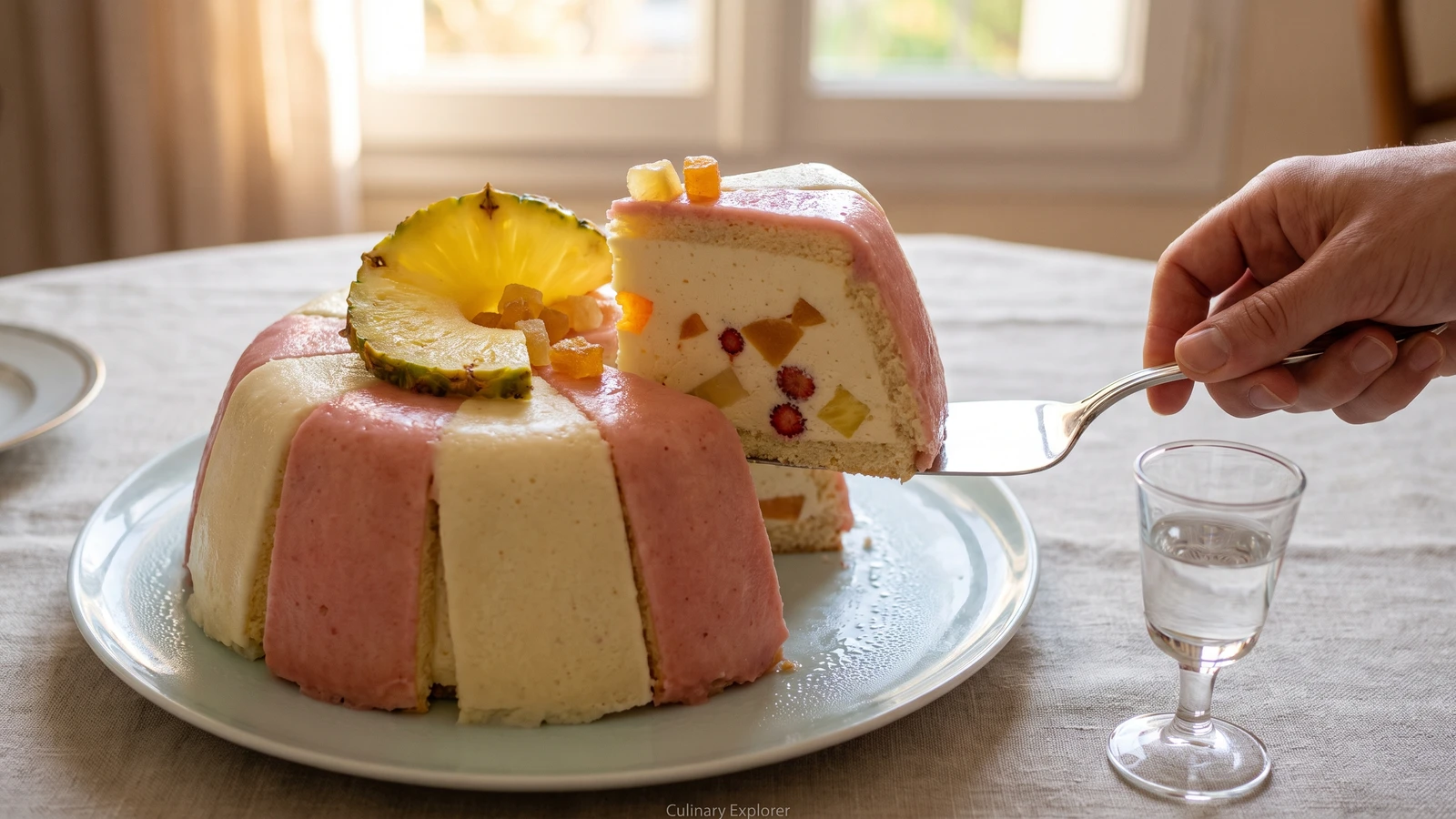
Pink-and-white génoise panels enclose vanilla bavarois jeweled with raw kirsch-soaked fruit, while a decorated pineapple round turns this chilled charlotte into a generous celebration dessert.
Charlotte Renaissance (a vanilla bavarois charlotte lined with glazed génoise and raw kirsch fruit) teaches control of temperature. The one true thing is this: the crème anglaise must meet the whipped cream while it is cool enough not to melt it, yet still fluid enough to fold without lumps. Hold that narrow moment and the bavarois sets like ivory satin around fruit that tastes fresh, never stewed.
The original assumed a pastry section with génoise ready, stored white and pink fondant, enough hands to cut identical panels, and an ice chest waiting beside the bench. At home, one finished sheet of the referenced génoise, a thin powdered-sugar glaze, and an ordinary refrigerator do the same honest work. The brigade-sized cake batch and prepared fondant are scaffolding, so they go; the alternating panels, vanilla bavarois, Kirsch-macerated raw fruit, and pineapple crown are the dish and stay. One cook, one stove, one evening.
The fruit goes in raw, exactly as it should. Drain it thoroughly so Kirsch perfumes the bavarois without loosening it, and assemble the charlotte the day it will be served because fresh pineapple slowly weakens gelatin. Before you touch the saucepan, set up the ice bath; cooling the custard to the folding point is the step that decides the whole charlotte.
Charlotte Renaissance belongs to the Parisian grand-kitchen repertory of cold entremets, where charlottes became architectural desserts built from decorated sponge, molded cream, and carefully arranged fruit. The cold charlotte traveled to bourgeois celebration tables as bavarois and génoise replaced the bread and cooked-fruit fillings of simpler hot charlottes. Its raw fruit is deliberate: Kirsch carries the perfume of apricot, peach, pineapple, and wild strawberry without taking away their fresh bite.
Quantity
1 baked 9 by 13-inch (23 by 33 cm) sheet, about 12 ounces (340 g), Pâte à Génoise Fine (No. 2376)
Quantity
1¼ cups (300 ml / 150 g)
sifted
Quantity
2 tablespoons (30 ml / 30 g), plus drops as needed
Quantity
1 small drop
Quantity
2 medium, about 5 ounces (140 g) prepared
peeled and thinly sliced
Quantity
2 medium, about 9 ounces (250 g) prepared
peeled and thinly sliced
Quantity
1 small, yielding 1½ cups (360 ml / 250 g) dice plus 1 thick center slice
peeled and cored
Quantity
1 cup (240 ml / 140 g)
left whole
Quantity
3 tablespoons (45 ml / 43 g)
Quantity
¼ cup (60 ml / 60 g)
Quantity
1 tablespoon plus 1 teaspoon (20 ml / 12 g)
Quantity
1¼ cups (300 ml / 309 g)
Quantity
1
split lengthwise
Quantity
5
Quantity
6 tablespoons (90 ml / 75 g)
Quantity
1¼ cups (300 ml / 300 g)
at least 35 percent fat
Quantity
2 tablespoons (30 ml / 35 g)
cut into small decorative pieces
| Ingredient | Quantity |
|---|---|
| Pâte à Génoise Fine | 1 baked 9 by 13-inch (23 by 33 cm) sheet, about 12 ounces (340 g), Pâte à Génoise Fine (No. 2376) |
| confectioners' sugarsifted | 1¼ cups (300 ml / 150 g) |
| water for the glaze | 2 tablespoons (30 ml / 30 g), plus drops as needed |
| pink food coloring | 1 small drop |
| ripe apricotspeeled and thinly sliced | 2 medium, about 5 ounces (140 g) prepared |
| ripe peachespeeled and thinly sliced | 2 medium, about 9 ounces (250 g) prepared |
| ripe pineapplepeeled and cored | 1 small, yielding 1½ cups (360 ml / 250 g) dice plus 1 thick center slice |
| wild strawberriesleft whole | 1 cup (240 ml / 140 g) |
| Kirsch | 3 tablespoons (45 ml / 43 g) |
| cold water for blooming gelatin | ¼ cup (60 ml / 60 g) |
| powdered gelatin | 1 tablespoon plus 1 teaspoon (20 ml / 12 g) |
| whole milk | 1¼ cups (300 ml / 309 g) |
| vanilla beansplit lengthwise | 1 |
| large egg yolks | 5 |
| caster sugar | 6 tablespoons (90 ml / 75 g) |
| cold heavy creamat least 35 percent fat | 1¼ cups (300 ml / 300 g) |
| candied fruitcut into small decorative pieces | 2 tablespoons (30 ml / 35 g) |
Set a 7-inch (18 cm) charlotte mould on parchment and trace its base. Cut the circle just inside the line so it lies perfectly flat in the bottom, with no wrinkles for the bavarois to remember. Prepare a bowl of ice water large enough to hold the saucepan later, then clear a level shelf in the refrigerator.
Trim the Pâte à Génoise Fine (No. 2376) into enough rectangles to cover the mould wall, each about 1¼ inches (3 cm) wide and cut precisely to the mould's height. Stir the confectioners' sugar with the measured water to make a thick glaze that falls in a slow ribbon. Divide it between two bowls, leave one white, and tint the other pale pink. Glaze one face of each rectangle, alternating the colors, and let them dry until no longer tacky. If the glaze runs into the sponge, it is too thin; add more confectioners' sugar. If it tears beneath the spoon, add water one drop at a time. Ça se rattrape.
Lay the parchment circle in the bottom. Stand the génoise rectangles around the wall with their glazed faces pressed against the mould, alternating white and pink and fitting the edges closely without heavy overlaps. Chill the lined mould while the filling is made so the panels stay firm and upright.
Reserve the thick pineapple slice for the crown. Combine the sliced apricots and peaches, diced pineapple, and whole wild strawberries with the Kirsch. Let them macerate for 20 minutes in the refrigerator, turning them once with a spoon. Drain them thoroughly in a sieve before folding them into the bavarois; the fruit must carry the perfume, not a puddle of liqueur. Keep every piece raw.
Sprinkle the gelatin evenly over the cold water and leave it to bloom for 5 minutes. Put the milk, vanilla seeds, and scraped pod in a saucepan and bring just to the edge of a simmer. Whisk the yolks with the caster sugar until smooth, then pour in the hot milk gradually while whisking. Return everything to the saucepan and cook over low heat, stirring constantly with a flexible spatula, until the crème anglaise (pouring custard) coats the spatula and reaches 180°F to 183°F (82°C to 84°C). Never let it boil. If fine grains appear, remove it from the heat immediately, whisk in a tablespoon of the measured cold cream, blend briefly, and strain; caught early, it can be rescued.
Remove the vanilla pod and stir the bloomed gelatin into the hot crème anglaise until completely dissolved. Set the saucepan in the prepared ice bath and stir gently until the custard is cool, slightly thickened, and beginning to hold the trail of the spatula, about 75°F (24°C). This is the decisive point. If it is warm, it will flatten the cream; if it sets into lumps, warm the pan briefly over lukewarm water and stir until fluid again. Ça se rattrape.
Whip the remaining cold cream to soft peaks that bend at the tip. Fold one-third into the thickened custard to lighten it, then fold in the rest with broad strokes from the bottom of the bowl. Add the well-drained fruit and fold only until evenly distributed. Work without lingering because the gelatin is now setting, but do not beat; the air held by the cream gives the bavarois its tender body.
Spoon the bavarois into the lined mould in three additions, nudging it gently against the génoise so no empty pockets remain. Level the top, cover without touching the surface, and refrigerate for 5 hours, until the center feels firm but still softly resilient. Do not hold the assembled charlotte overnight: fresh pineapple contains an enzyme that gradually weakens gelatin, so this is a same-day dessert by design.
Place a chilled serving plate over the mould and invert both together. Lift the mould straight up. If it resists, wrap the outside with a warm, barely damp towel for 10 seconds and try again, without wetting the génoise. Peel away the parchment, lay the reserved thick pineapple slice in its place, and decorate it with the candied fruit. Cut with a long knife dipped in hot water and wiped dry between slices. The bavarois should stand cleanly while yielding softly to the fork. À table!
1 serving (about 275g)
Culinary guides, cultural storytelling, and the editorial depth that makes cooking meaningful.
Discover Culinary ExplorerChef Juliette
Five almond preparations, one discipline: remove the skins cleanly, dry every kernel through, then cut, toast, or cloak it in pale caramel without letting its fragrant oils escape.

Chef Juliette
A pastry pantry lesson in one tray: filberts warmed only until their red skins release, rubbed clean, cooled, and chopped into a fragrant mise-en-place for cakes, creams, pralines, and petits fours.

Chef Juliette
The smallest pâtisserie discipline decides whether a cake leaves its mould intact: clarified butter in every corner, followed by the lightest veil of dry flour or fécule.
Chef Juliette
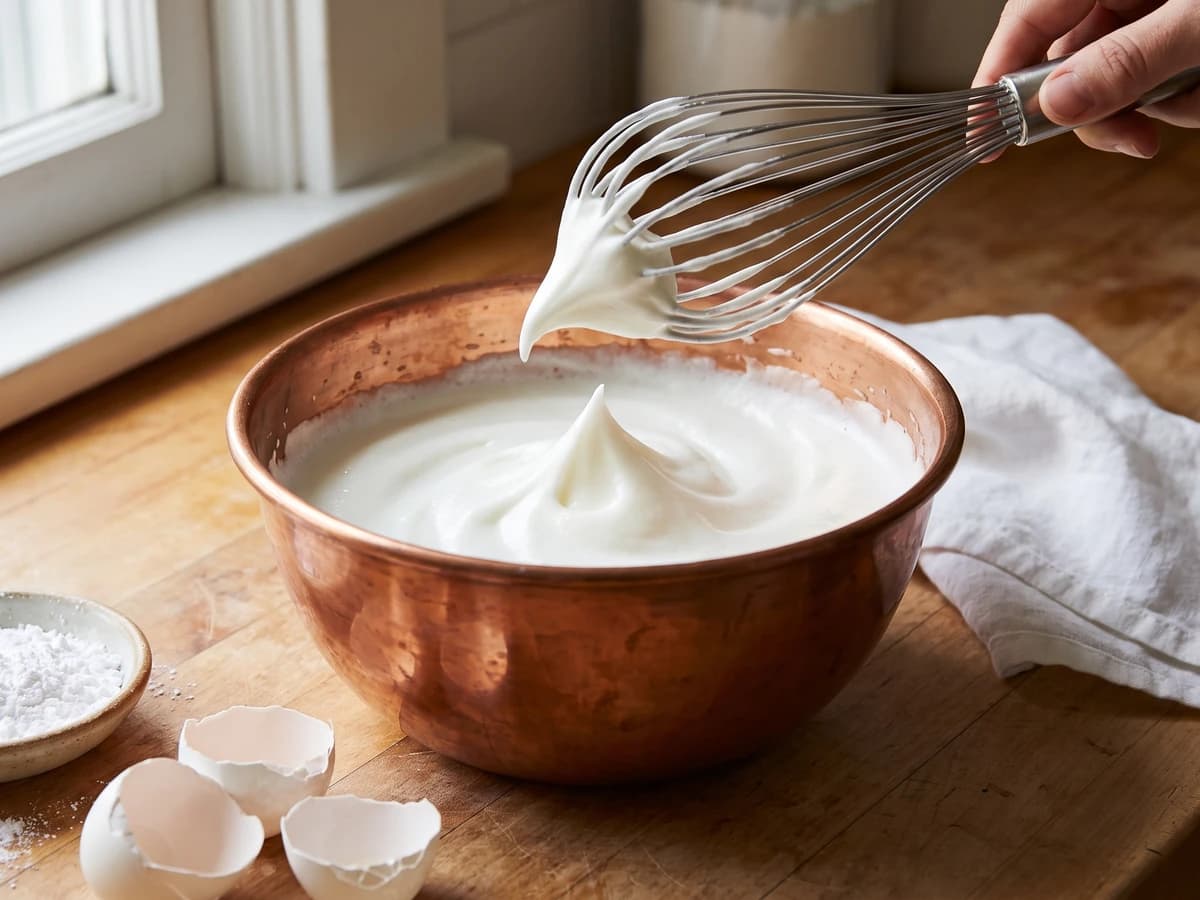
Four whites, one spotless bowl, and a patient change of speed: whisk gently until loosened, then briskly to glossy stiffness, with powdered sugar waiting if the foam begins to granulate.