
Chef Juliette
Various Almond Preparations
Five almond preparations, one discipline: remove the skins cleanly, dry every kernel through, then cut, toast, or cloak it in pale caramel without letting its fragrant oils escape.
A cooking platform built around craft, culture, and the stories behind what we eat.
Created by Chef Juliette
Based on No. 2629, Charlotte à l’Arlequine, from Le Guide Culinaire (1907) by Auguste Escoffier
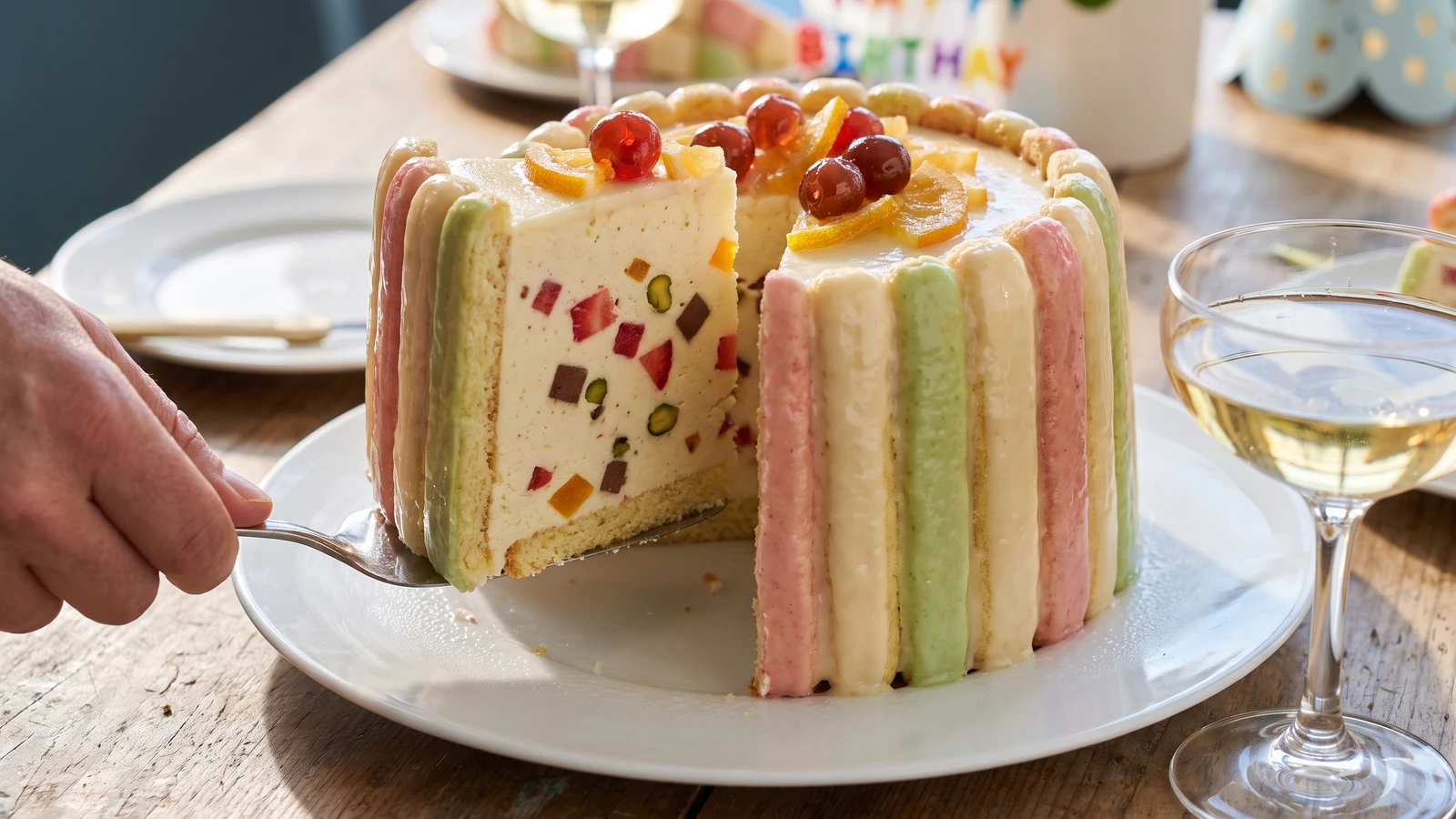
A harlequin charlotte of white, pink, and pale-green glazed génoise, holding a soft cream bavarois scattered with firm dice of strawberry, chocolate, pistachio, and apricot: precision made festive, generous, and entirely possible at home.
Charlotte à l’Arlequine (harlequin charlotte) teaches the architecture of a moulded dessert: the four flavoured bavarois must set firmer than the cream surrounding them. Cut those slabs too soon and their colours smear into the ivory cream; chill them until a knife passes cleanly, and every slice reveals the harlequin pattern promised by the name.
The original entry assumed a pastry brigade with five bavarois preparations waiting, flawn rings across the bench, and a charlotte sized for a dining room. Here one crème anglaise is divided into five parts, four shallow household containers replace the flawn rings, and an 18 cm mould brings the proportions to a celebration table of eight. Making five separate custards was brigade scaffolding, so it goes. The distinct flavours, firm dice, glazed génoise uprights, liquid cream bavarois, and fondant crown are the dish itself, so every one stays. One cook, one stove, one evening.
When it is cut, the sides should shine in alternating white, rose, and pale green, while the centre holds chocolate brown, strawberry red, pistachio green, and apricot gold inside cool cream. The step that decides everything comes before assembly: set the four coloured slabs until the first test cube has sharp, unsmeared corners.
Charlotte à l’Arlequine belongs to the Parisian grande cuisine and pâtisserie table, where the cold charlotte developed from a mould lined with bread or sponge into a bavarois-filled celebration piece. Arlequine refers to Harlequin’s motley stage costume, echoed in the alternating glazed panels and many-coloured interior rather than in any French region’s larder. The dessert travelled readily to home celebrations because the mould performs most of the decoration before the charlotte is turned out.
Quantity
1 thin 30 × 40 cm sheet (about 250 g) Pâte à Génoise Fine (No. 2376)
Quantity
1 thin 18 cm round (about 45 g) Pâte à Génoise Fine (No. 2376)
Quantity
1 cup (240 ml / 300 g)
Quantity
1 tablespoon (15 ml / 15 g)
for loosening the fondant as needed
Quantity
1 to 2 drops
Quantity
1 to 2 drops
Quantity
2 cups (480 ml / 495 g)
Quantity
2/3 cup (160 ml / 135 g)
Quantity
7
Quantity
8 standard sheets (16 g)
divided into 10 g and 6 g portions
Quantity
1/4 cup (60 ml / 65 g)
Quantity
1/4 cup (60 ml / 65 g)
Quantity
1/3 cup (80 ml / 55 g)
finely chopped
Quantity
2 tablespoons (30 ml / 35 g)
Quantity
2 cups (480 ml / 480 g)
divided
Quantity
1 teaspoon (5 ml / 5 g)
Quantity
1/3 cup (80 ml / 85 g)
cut into small pieces
| Ingredient | Quantity |
|---|---|
| Pâte à Génoise Fine for the uprights | 1 thin 30 × 40 cm sheet (about 250 g) Pâte à Génoise Fine (No. 2376) |
| Pâte à Génoise Fine for the top | 1 thin 18 cm round (about 45 g) Pâte à Génoise Fine (No. 2376) |
| white pouring fondant | 1 cup (240 ml / 300 g) |
| waterfor loosening the fondant as needed | 1 tablespoon (15 ml / 15 g) |
| pink food colouring | 1 to 2 drops |
| pale-green food colouring | 1 to 2 drops |
| whole milk | 2 cups (480 ml / 495 g) |
| granulated sugar | 2/3 cup (160 ml / 135 g) |
| large egg yolks | 7 |
| leaf gelatindivided into 10 g and 6 g portions | 8 standard sheets (16 g) |
| smooth seedless strawberry purée | 1/4 cup (60 ml / 65 g) |
| smooth apricot purée | 1/4 cup (60 ml / 65 g) |
| dark chocolatefinely chopped | 1/3 cup (80 ml / 55 g) |
| unsweetened pistachio paste | 2 tablespoons (30 ml / 35 g) |
| cold heavy creamdivided | 2 cups (480 ml / 480 g) |
| neutral oil | 1 teaspoon (5 ml / 5 g) |
| mixed candied fruitcut into small pieces | 1/3 cup (80 ml / 85 g) |
Set an 18 cm straight-sided charlotte mould or deep springform pan on its base and fit a round of parchment snugly over the bottom. Lightly brush four shallow 10 cm containers with the neutral oil and line their bases with parchment or acetate. These are the home equivalent of the original flawn rings: what matters is a shallow, even layer that releases without tearing.
Cut the sheet of Pâte à Génoise Fine (No. 2376) into 18 neat uprights, each about 3.2 cm wide and 8 cm tall. Warm the fondant gently over a bain-marie to 35 to 37°C, loosening it with only enough water to spread in a thin coat; hotter fondant dries dull instead of shining. Reserve one-third, about 100 g, covered for the top. Divide the rest among three bowls, leaving one white and tinting the others pale pink and pale green. Glaze six uprights in each colour and let them stand until the fondant no longer marks a fingertip.
Stand the génoise pieces tightly around the inside of the mould with their glazed faces against the wall, alternating white, pink, and green. Press each upright snugly against its neighbours so the bavarois cannot leak through. If the final space is narrow, trim one strip to fit rather than forcing the circle out of shape.
Soak the 10 g portion of gelatin in very cold water. Bring the milk just below a boil. Whisk the yolks and sugar until smooth, pour in one-third of the hot milk while whisking, then return everything to the saucepan. Cook over low heat, stirring constantly and reaching into the corners, until the crème anglaise coats the spatula and reaches 82 to 84°C. Never let it boil. If it begins to look faintly grainy, pull it from the heat at once, blend briefly, and pass it through a fine sieve. Ça se rattrape. Strain the finished anglaise, weigh it, and divide it three-fifths for the flavoured dice and two-fifths for the surrounding cream. Squeeze the 10 g gelatin dry and dissolve it in the larger, still-warm portion. Cover the smaller portion directly on its surface and refrigerate it.
Divide the warm gelatin-enriched anglaise equally among four bowls. Stir the chocolate into the first until melted and glossy, the strawberry purée into the second, the pistachio paste into the third, and the apricot purée into the fourth. Cool each to 24 to 26°C. Whip half the cream, 1 cup (240 ml / 240 g), to soft peaks and fold one-quarter of it into each flavour. If a mixture begins setting before the cream is folded in, hold its bowl over barely warm water for a few seconds and stir until supple again. Spread each bavarois 1.5 to 2 cm deep in its prepared container. Refrigerate for 2 hours, or chill in the freezer for 30 to 40 minutes followed by 20 minutes in the refrigerator, until firm but not frozen.
Lift each flavoured bavarois slab from its container and peel away the lining. With a long knife dipped in hot water and wiped dry, cut the slabs into large 2 cm dice. Test one cut before continuing. If the blade drags, the corners slump, or colour smears across the cut face, stop and chill the slabs for another 20 to 30 minutes. Do not work faster to compensate. Firmer bavarois is the answer, and it can still be rescued.
Soak the remaining 6 g gelatin in very cold water. Warm about one-third of the reserved plain anglaise until it feels just warm, then squeeze the gelatin dry and dissolve it in this portion. Whisk it back into the remaining anglaise and cool the mixture to 24 to 26°C. Whip the remaining cream, 1 cup (240 ml / 240 g), to soft peaks and fold it through the anglaise. Keep this ordinary cream bavarois somewhat liquid, as the source directs. If it thickens before the dice go in, set the bowl over barely warm water for a few seconds and fold gently until it flows again.
Add the cold strawberry, chocolate, pistachio, and apricot dice to the liquid cream bavarois in two batches. Fold with a broad spatula, lifting from underneath rather than stirring, until the colours are evenly scattered without marked edges or broken corners. Spoon the mixture into the génoise-lined mould, easing it into the perimeter first so no hollow pockets remain. Tap the mould once against a folded towel and level the surface.
Cover the mould without touching the filling and refrigerate for at least 4 hours, preferably until the centre feels firm under light pressure. Do not freeze the assembled charlotte. Freezing dulls the cream and makes the fruit bavarois shed moisture as it thaws.
Gently rewarm the reserved white fondant to 35 to 37°C, adding a few drops of the measured water only if it no longer flows. Spread a smooth, thin coat over the round of Pâte à Génoise Fine (No. 2376). Arrange the candied fruit across it in a simple mosaic and leave the fondant to set for about 15 minutes.
Place the chilled serving plate over the mould and invert the charlotte. Release the springform ring, or lift away a fixed mould; if it clings, press a warm, well-wrung towel against the outside for five seconds and try again. Remove the parchment from the exposed top and replace it with the glazed génoise round, candied fruit facing upward. Rest the charlotte outside the refrigerator for 10 minutes, then cut it with a hot, dry knife, wiping between slices so the harlequin dice remain distinct. À table!
1 serving (about 260g)
Culinary guides, cultural storytelling, and the editorial depth that makes cooking meaningful.
Discover Culinary ExplorerChef Juliette
Five almond preparations, one discipline: remove the skins cleanly, dry every kernel through, then cut, toast, or cloak it in pale caramel without letting its fragrant oils escape.

Chef Juliette
A pastry pantry lesson in one tray: filberts warmed only until their red skins release, rubbed clean, cooled, and chopped into a fragrant mise-en-place for cakes, creams, pralines, and petits fours.

Chef Juliette
The smallest pâtisserie discipline decides whether a cake leaves its mould intact: clarified butter in every corner, followed by the lightest veil of dry flour or fécule.
Chef Juliette
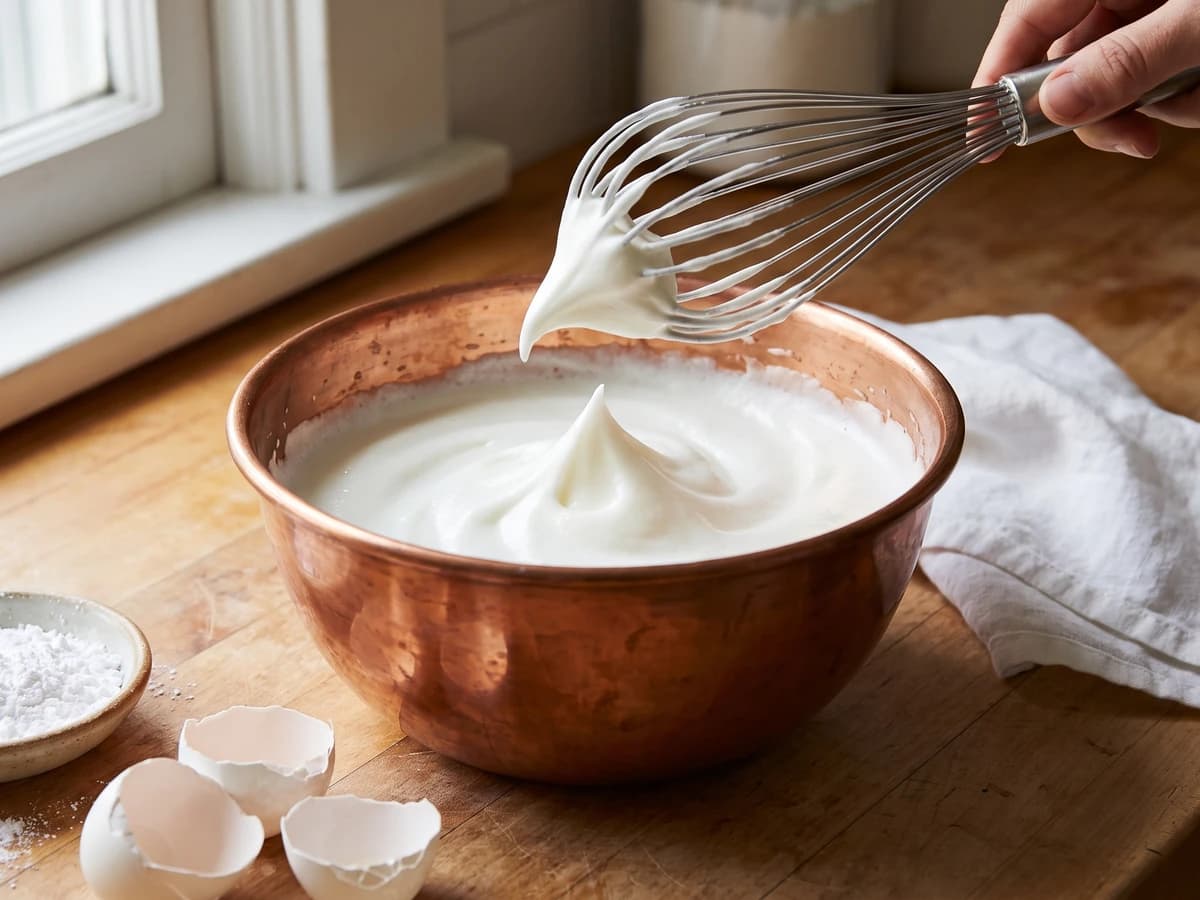
Four whites, one spotless bowl, and a patient change of speed: whisk gently until loosened, then briskly to glossy stiffness, with powdered sugar waiting if the foam begins to granulate.