
Chef Juliette
John Dory (St. Pierre)
John Dory has the delicacy of sole and the firmness of turbot. A light flouring, a quick butter sauté, and nut-brown beurre noisette show exactly why looks never mattered.
A cooking platform built around craft, culture, and the stories behind what we eat.
Created by Chef Juliette
Based on No. 259, White-meat Grills, from Le Guide Culinaire (1907) by Auguste Escoffier
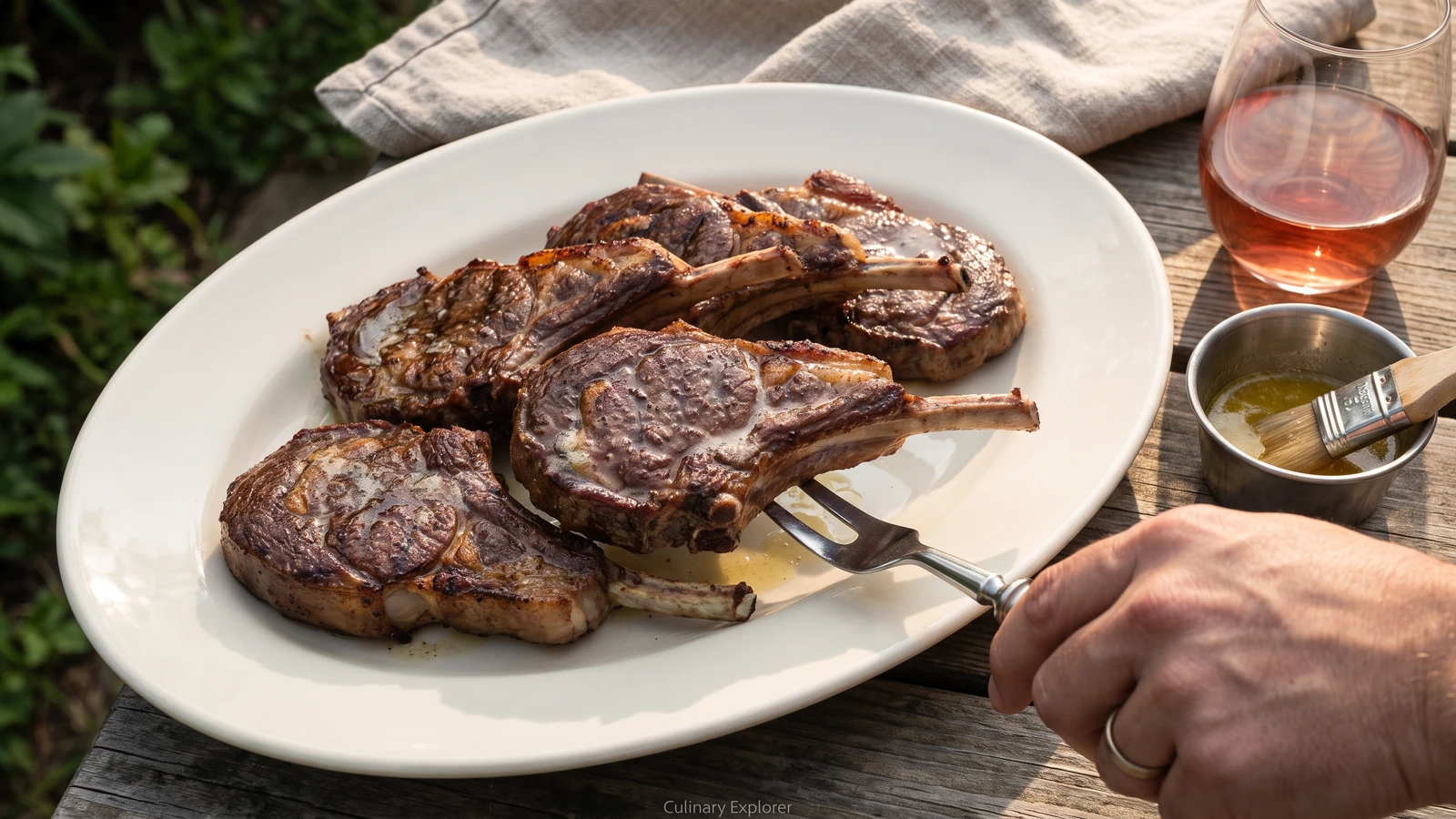
Veal or lamb, a moderate fire, and clarified butter: these grillades color as they cook, staying tender within because patience does the work a fierce sear cannot.
Grillades de viandes blanches teach one true thing: veal and lamb need a moderate fire, not the fierce sear used for beef. Their color and cooking must arrive together. In the book's vocabulary, rissole means to fry brown, but the superficial rissoling demanded by red meat would only dry these tender chops before their centers were ready.
The original method assumed a grillardin tending steady live coals and brushing each portion repeatedly with clarified butter. The entry gives no quantity because the grill station cooked to order; here it becomes four servings on a two-zone outdoor grill or a heavy grill pan. The dedicated station is scaffolding and can go. The moderate heat and frequent butter basting are the dish, and they stay. No saucier, stockpot, or salamander belongs here because the source calls for none.
Done properly, the chops reach the table evenly bronzed rather than blackened, their surfaces shining with butter and their interiors still succulent. If the butter flares or the outside colors before the center is ready, move the meat to gentler heat. Ça se rattrape. Set the fire before the first chop meets it: moderate, steady, and patient.
Grillades de viandes blanches belong to the French classical grillardin's station and to the bourgeois dining table that borrowed its disciplined fire management. Veal and lamb were grouped together as viandes blanches because cooks treated their tender flesh differently from beef, coloring it gradually while it cooked rather than imposing a hard preliminary crust. The method traveled easily into home kitchens because it required no composed sauce or elaborate garnish, only controlled heat, clarified butter, and attention.
Quantity
4 veal chops or 8 lamb chops, each 1 inch (2.5 cm) thick, about 2 lb (900 g) total
choose one meat and pat it very dry
Quantity
1/4 cup (60 ml / 55 g)
warmed until fluid and divided
Quantity
1 1/2 teaspoons (7.5 ml / 9 g)
Quantity
1 teaspoon (5 ml / 2 g)
| Ingredient | Quantity |
|---|---|
| bone-in veal rib chops or bone-in lamb loin chopschoose one meat and pat it very dry | 4 veal chops or 8 lamb chops, each 1 inch (2.5 cm) thick, about 2 lb (900 g) total |
| clarified butterwarmed until fluid and divided | 1/4 cup (60 ml / 55 g) |
| fine sea salt | 1 1/2 teaspoons (7.5 ml / 9 g) |
| freshly ground black pepper | 1 teaspoon (5 ml / 2 g) |
Prepare a two-zone charcoal fire, set a gas grill to medium, or heat a heavy grill pan over medium heat. Aim for about 375 to 400°F (190 to 205°C) at the cooking surface. The grate should color the meat steadily without scorching a thin film of clarified butter. Reserve 1 tablespoon (15 ml / 14 g) of the butter in a clean cup for serving; keep the rest beside the grill for basting.
Blot every surface and the hollows around the bones completely dry. Season the chops evenly with the salt and pepper, then brush both sides with a thin coat of clarified butter. Wet meat cooks pale and damp, while too much butter drips into the fire; dryness and a light coating give you gradual, even color.
Lay the chops over the moderate part of the fire with space between them. Grill veal for 5 to 6 minutes on the first side or lamb for 3 to 4 minutes. Brush the exposed surfaces lightly with clarified butter every 1 to 2 minutes. Do not press the meat, and do not chase dark grill marks. The principle is happening in front of you: cooking and coloring are advancing together.
Turn the chops and continue grilling and basting, allowing another 4 to 6 minutes for veal or 3 to 4 minutes for lamb. Check the thickest part with an instant-read thermometer, keeping the probe away from the bone; the center must reach 145°F (63°C), followed by at least a 3-minute rest. The source judges doneness when the issuing juice is quite white, meaning pale rather than bloody at the bone, but a thermometer is the more dependable home equivalent. If the outside colors too quickly while the center lags, move the chops to the cooler zone or lower the pan heat. Ça se rattrape. Discard any butter left in the basting cup because the brush touched the meat during cooking.
Transfer the chops to a warm platter and rest them for 5 minutes, loosely covered. Brush them with the clean reserved clarified butter just before serving, giving the surface a fine gloss without drowning it. Bring the grillades to the table whole, with their honest bronze color and juices kept inside where they belong. À table!
1 serving (about 140g)
Culinary guides, cultural storytelling, and the editorial depth that makes cooking meaningful.
Discover Culinary ExplorerChef Juliette
John Dory has the delicacy of sole and the firmness of turbot. A light flouring, a quick butter sauté, and nut-brown beurre noisette show exactly why looks never mattered.

Chef Juliette
Fresh haddock proves its delicacy in the meunière pan: a fine flour crust, moist pearly flakes, and beurre noisette sharpened with lemon and parsley, ready from one skillet in half an hour.
Chef Juliette
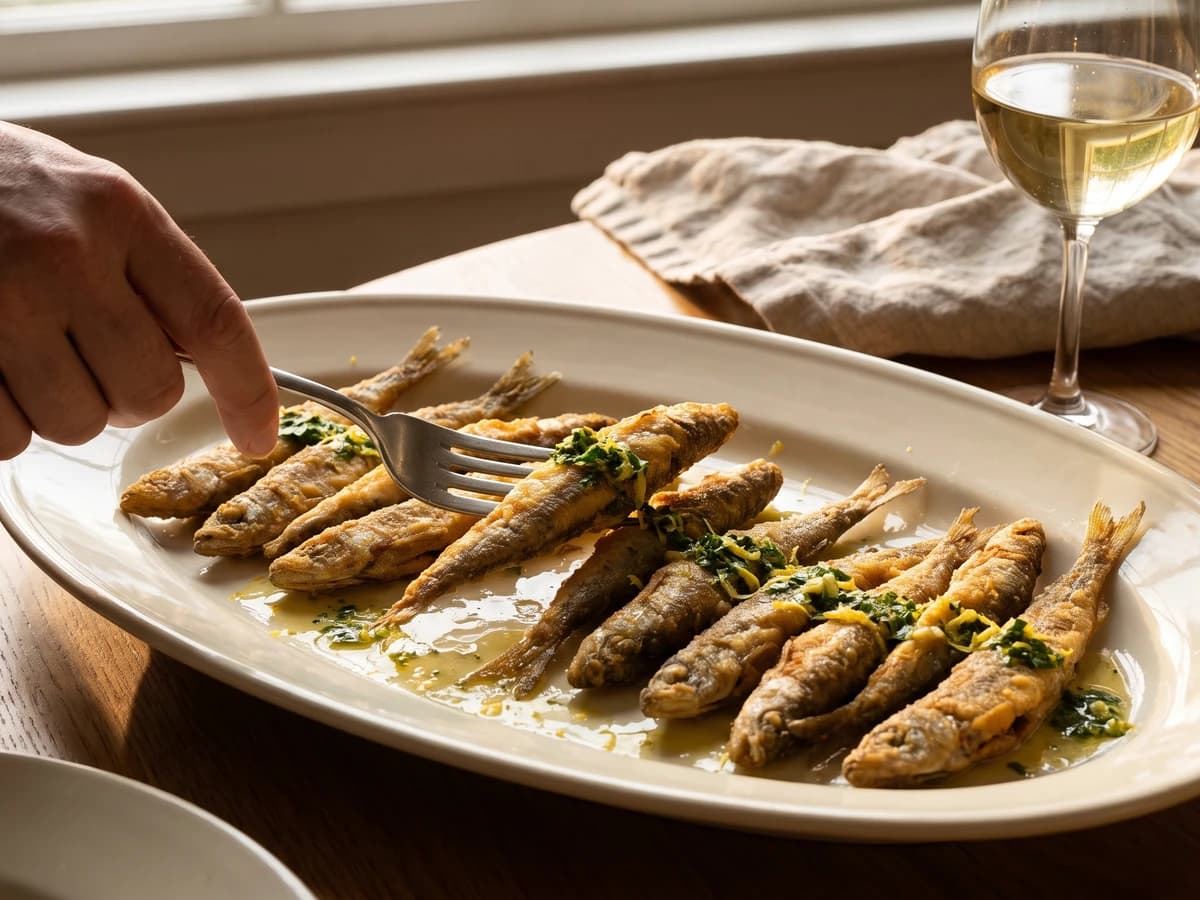
Éperlans à l’Anglaise turns small fish into a lesson in disciplined coating: boned smelts under a close, crisp crumb, pan-fried in clarified butter and finished with bright, half-melted maître d’hôtel butter.

Chef Juliette
Tiny smelts, shallot, mushrooms, white wine, gratin sauce, and fine bread raspings meet a fierce oven, where the fish must turn tender in the same breath the buttered crust bronzes.