
Chef Juliette
Various Almond Preparations
Five almond preparations, one discipline: remove the skins cleanly, dry every kernel through, then cut, toast, or cloak it in pale caramel without letting its fragrant oils escape.
A cooking platform built around craft, culture, and the stories behind what we eat.
Created by Chef Juliette
Based on No. 2544, Marie-Louise Timbale, from Le Guide Culinaire (1907) by Auguste Escoffier
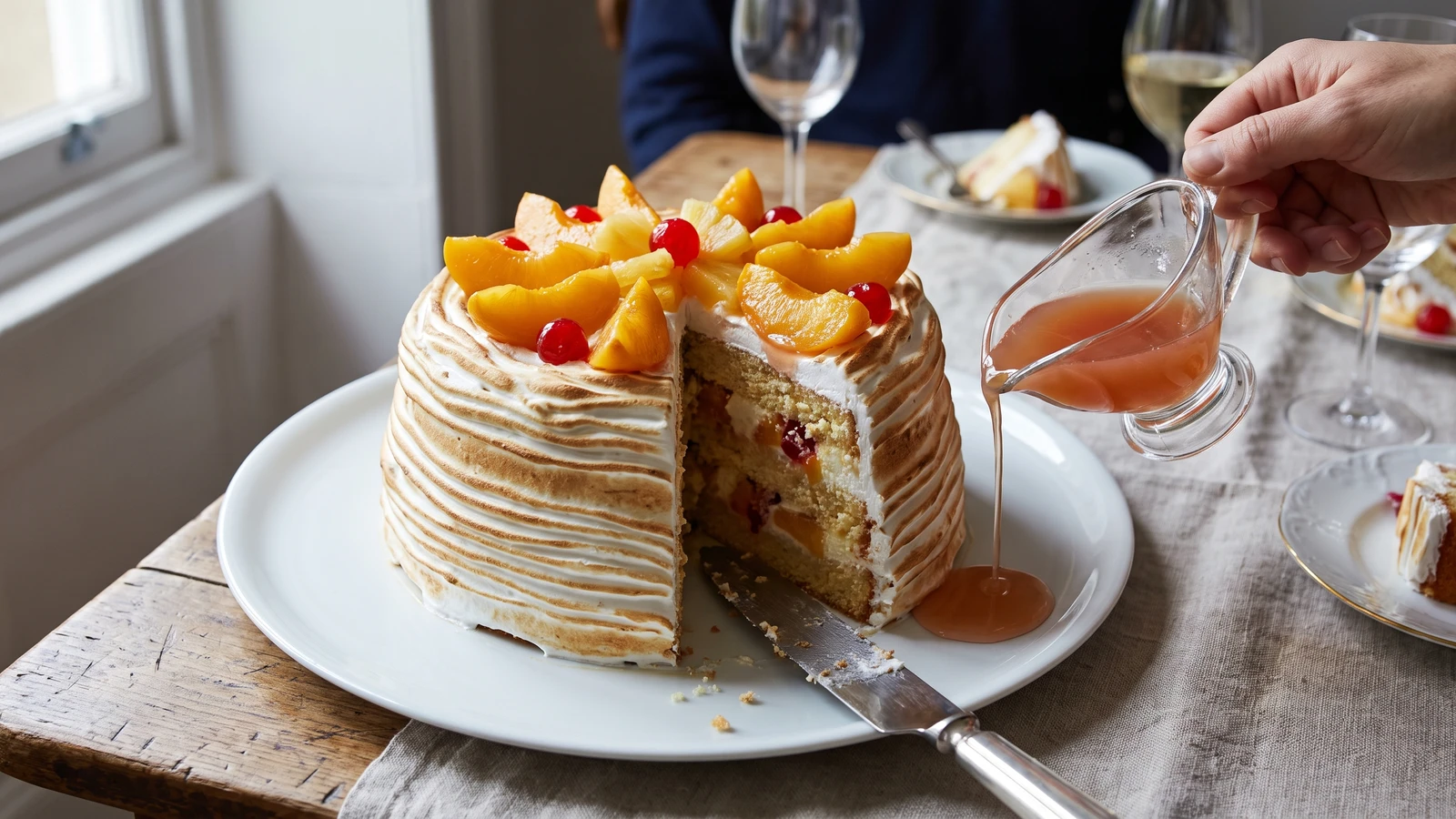
A celebration timbale of day-old Génoise, Italian meringue, peaches, cherries, and pineapple, rebuilt slice by slice and gently bronzed, with a bright Kirsch peach sauce poured beside it.
Timbale Marie-Louise (a Génoise fruit-and-meringue celebration cake) teaches assembly: every component is already cooked, yet the dessert succeeds only when each is dry, cool, and placed with discipline. The one true thing is this: water is the enemy. Wet fruit makes the layers skid, while fierce heat draws syrup from Italian meringue and leaves it weeping.
The brigade version assumes a deep-mould Génoise waiting from the previous day, poached fruit draining in the pastry kitchen, Italian meringue ready in its basin, and another pair of hands minding the peach sauce. At home, the Pâte à Génoise Fine and Meringue à l’Italienne remain finished preparations made from their own entries. That separation is brigade scaffolding, so we don't rebuild either formula here. A 6-inch deep Charlotte mould gives a generous cake for eight, and a low home oven does the colouring. The salamander stays off because its fierce top heat is exactly wrong for this meringue. One cook, one stove, one evening.
The half-inch walls, the cork-shaped center, and the layered fruit are the dish itself, so they stay. When the timbale is right, its pale-gold meringue carries a crown of peaches above the rim, and each cut reveals Génoise, white meringue, and jewel-coloured salpicon. Before the knife touches the cake, drain and blot every piece of fruit. That single minute protects every layer.
Timbale Marie-Louise belongs to the Parisian grand-kitchen repertoire of named entremets, where plain Génoise became celebration food through preserved fruit, Italian meringue, and a liqueur sauce. Timbale names the drum-shaped architecture rather than a particular batter, and French kitchens used that form for savory and sweet preparations before the pastry version passed to bourgeois celebration tables. Its distinction is not a frozen center, as the silhouette may suggest, but a brief mild-oven colouring that leaves the layered cake warm and the meringue dry.
Quantity
1 Pâte à Génoise Fine (No. 2376), 6 inches (15 cm) in diameter and 4 inches (10 cm) deep
baked in a deep Charlotte mould
Quantity
2½ cups (600 ml / 430 g) Meringue à l’Italienne (No. 2383)
Quantity
8 halves (about 3 cups / 720 ml / 650 g)
home-poached or canned in light syrup, well drained with the syrup reserved
Quantity
⅓ cup (80 ml / 55 g)
poached or canned in juice, drained and cut into ¼-inch (6 mm) dice
Quantity
⅓ cup (80 ml / 60 g)
well drained and cut into ¼-inch (6 mm) dice
Quantity
½ cup (120 ml / 125 g)
Quantity
1 teaspoon (5 ml / 5 g)
Quantity
1 tablespoon (15 ml / 14 g)
| Ingredient | Quantity |
|---|---|
| day-old Pâte à Génoise Finebaked in a deep Charlotte mould | 1 Pâte à Génoise Fine (No. 2376), 6 inches (15 cm) in diameter and 4 inches (10 cm) deep |
| freshly prepared Meringue à l’Italienne | 2½ cups (600 ml / 430 g) Meringue à l’Italienne (No. 2383) |
| poached peach halveshome-poached or canned in light syrup, well drained with the syrup reserved | 8 halves (about 3 cups / 720 ml / 650 g) |
| pineapplepoached or canned in juice, drained and cut into ¼-inch (6 mm) dice | ⅓ cup (80 ml / 55 g) |
| pitted poached cherries or jarred sour cherrieswell drained and cut into ¼-inch (6 mm) dice | ⅓ cup (80 ml / 60 g) |
| reserved peach syrup | ½ cup (120 ml / 125 g) |
| fresh lemon juice | 1 teaspoon (5 ml / 5 g) |
| Kirsch | 1 tablespoon (15 ml / 14 g) |
Set the peaches, pineapple, and cherries in a sieve for 30 minutes, then blot them gently. Reserve two peach halves for the sauce and cut four into slender wedges for the crown. Dice the remaining two peach halves and combine them with the pineapple and cherries to make the salpicon, a neat, even dice. The pieces must feel dry rather than syrupy; if they still shine, blot them again. Moisture left here will loosen the meringue later.
Set the day-old Pâte à Génoise Fine (No. 2376) upright on a board. Score a circle ½ inch (1.25 cm) inside its edge. Mark the knife blade so you can stop ½ inch (1.25 cm) above the base, then cut straight down around the circle. Slip a small offset spatula beneath the cut crumb and lift it out in one cork-shaped piece. Slice this plug horizontally into ½-inch (1.25 cm) rounds, keeping them in order. If the plug tears, don't discard it. Ça se rattrape: fit the pieces together before slicing, and the meringue will bind them during assembly.
Purée the two reserved peach halves with the peach syrup and lemon juice until completely smooth. Pour the purée into a small saucepan and simmer gently for 5 to 7 minutes, stirring often, until it lightly naps the back of a spoon. Pass it through a fine sieve and hold it off the heat. If it becomes too thick, loosen it with a spoonful of reserved syrup; if thin, return it to the pan for another minute. Stir in the Kirsch only after the sauce leaves the heat so its fragrance remains clear.
Set the hollow Génoise shell on a parchment-lined baking sheet. Spread each crumb round with a layer of Meringue à l’Italienne (No. 2383) about ⅛ inch (3 mm) thick, then scatter it evenly with salpicon, leaving a narrow bare edge. Coat the exterior and rim of the shell with more meringue, using simple upward strokes and reserving about ½ cup (120 ml / 85 g). Return the rounds to the cavity one by one, in their original order, fruit side up. They will rise naturally above the rim. Arrange the peach wedges around the projecting stack, placing a small rosette or spoonful of the reserved meringue between each wedge. If the stack leans, lift off the top rounds, remove some fruit, and rebuild with thinner layers. Ça se rattrape.
Heat the oven to 300°F (150°C), or 275°F (135°C) with a fan, and place a rack in the center. Bake the timbale for 18 to 25 minutes, rotating the sheet once, until the raised ridges are pale biscuit-gold and the surface looks dry and set. The meringue is already cooked; this mild oven colours it without forcing out its syrup. Do not use a broiler or kitchen torch. If beads of syrup appear, remove the timbale at once and spoon away any collected syrup at the base. A pale, dry timbale is correct; more colour isn't worth a weeping meringue.
Let the timbale settle for 5 minutes, then transfer it carefully to a serving platter with two broad spatulas. Rewarm the peach sauce gently without boiling and pour it into a small sauceboat. Cut the timbale with a light sawing motion so each serving receives some outer shell, layered center, and peach crown, then spoon the Kirsch-flavoured peach sauce alongside at the table. Never apologize at your own table. À table!
1 serving (about 210g)
Culinary guides, cultural storytelling, and the editorial depth that makes cooking meaningful.
Discover Culinary ExplorerChef Juliette
Five almond preparations, one discipline: remove the skins cleanly, dry every kernel through, then cut, toast, or cloak it in pale caramel without letting its fragrant oils escape.

Chef Juliette
A pastry pantry lesson in one tray: filberts warmed only until their red skins release, rubbed clean, cooled, and chopped into a fragrant mise-en-place for cakes, creams, pralines, and petits fours.

Chef Juliette
The smallest pâtisserie discipline decides whether a cake leaves its mould intact: clarified butter in every corner, followed by the lightest veil of dry flour or fécule.
Chef Juliette
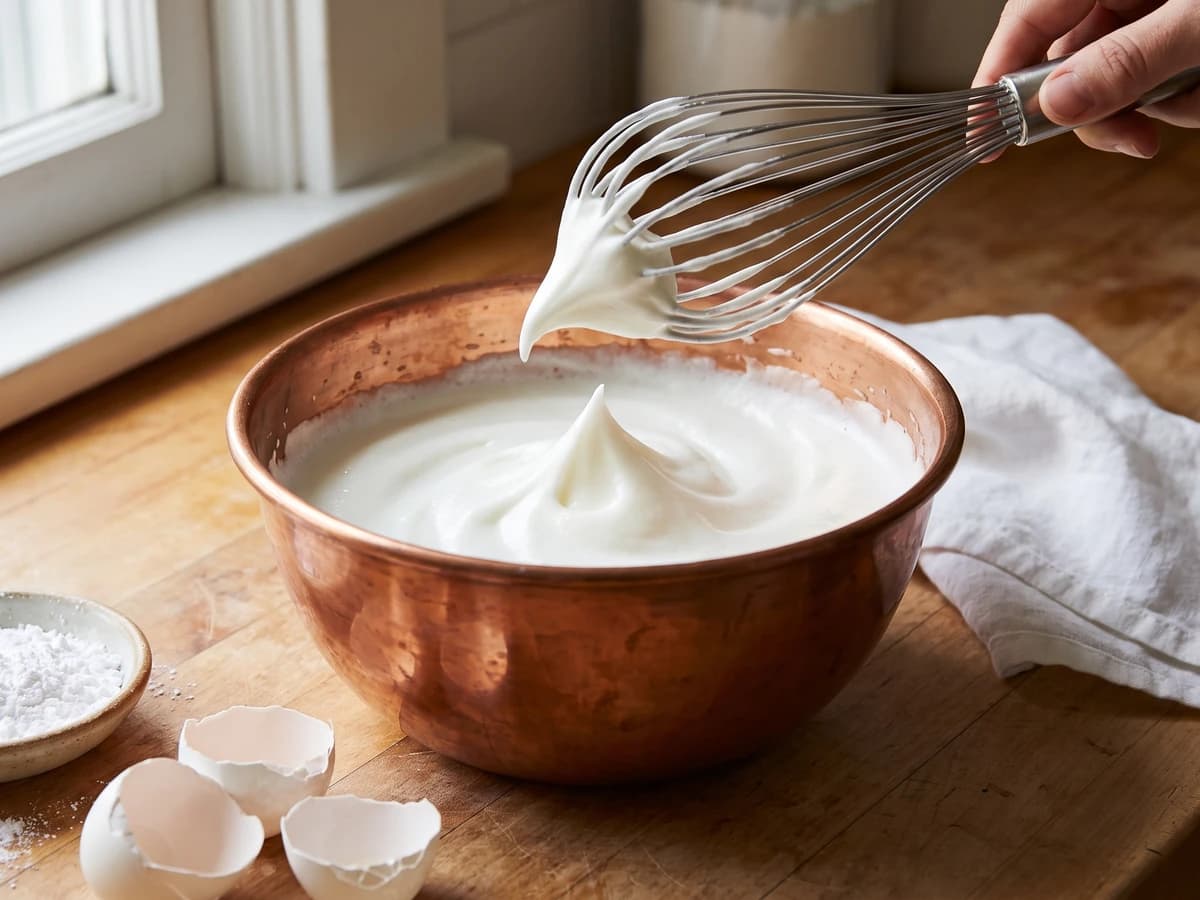
Four whites, one spotless bowl, and a patient change of speed: whisk gently until loosened, then briskly to glossy stiffness, with powdered sugar waiting if the foam begins to granulate.