
Chef Juliette
Various Almond Preparations
Five almond preparations, one discipline: remove the skins cleanly, dry every kernel through, then cut, toast, or cloak it in pale caramel without letting its fragrant oils escape.
A cooking platform built around craft, culture, and the stories behind what we eat.

Created by Chef Juliette
Based on No. 2472, Surprise Omelet Elizabeth, from Le Guide Culinaire (1907) by Auguste Escoffier
Omelette Surprise Élisabeth hides vanilla ice and violets beneath a bronzed meringue shell, then takes its spun-sugar veil at the table: cold, crisp, floral, and built for celebration.
Omelette Surprise Élisabeth (Elizabeth’s surprise omelet) teaches one true thing: cold survives fierce heat when insulation and speed work together. The Pâte à Génoise Fine is the cushion, vanilla ice and violets make the cold heart, and thick meringue serves as both ornament and shield. The spun sugar is not decoration made ahead. It is the final gesture, brittle and glinting for the few dry minutes it grants you.
The original assumed the pastry equivalent of a stockpot always on the fire: Pâte à Génoise Fine (No. 2376), Ordinary Meringue (No. 2382), and hard-frozen ice ready at separate stations, with several hands to assemble them and a very hot oven for immediate colouring. Here the brigade handoff goes, because it is scaffolding. A small metal platter, an ordinary freezer, and a fully heated broiler give one cook the honest equivalent. The thick, unbroken meringue shield and the last-minute sugar veil are the dish, so those stay exactly where they belong.
Before you touch the heat, inspect the meringue at the base. It must seal the ice and Génoise completely, with no thin patch or pinhole. That seal decides whether the centre remains firm while the outside bronzes.
Omelette surprise, also called omelette norvégienne in Parisian service, belongs to the French grand-dessert repertoire, where Génoise and meringue turned frozen cream into a table spectacle by insulating it from fierce oven heat. The Norwegian name is a joke about hot and cold, not a claim of Scandinavian origin; the Élisabeth variation distinguishes itself with vanilla ice, crystallised violets, and spun sugar added as the dish goes out. It travelled from formal dining rooms to celebration tables because its drama rests on sound pastry logic: cake beneath, meringue sealed around, heat applied briefly.
Quantity
1 oval cushion, 7 x 4 x 1½ inches (18 x 10 x 4 cm; about 6 oz / 170 g) (No. 2376)
Quantity
2 cups (475 ml / 300 g)
frozen very firm
Quantity
⅓ cup (80 ml / 25 g)
divided
Quantity
2½ cups (590 ml / 175 g) (No. 2382)
freshly prepared with pasteurised egg whites
Quantity
1 home-scale assembly and rapid-colouring method (No. 2466)
Quantity
1 cup (240 ml / 200 g)
Quantity
5 tablespoons (75 ml / 75 g)
divided, with 1 tablespoon reserved for rescuing crystallised syrup
| Ingredient | Quantity |
|---|---|
| Pâte à Génoise Fine | 1 oval cushion, 7 x 4 x 1½ inches (18 x 10 x 4 cm; about 6 oz / 170 g) (No. 2376) |
| vanilla ice creamfrozen very firm | 2 cups (475 ml / 300 g) |
| crystallised violetsdivided | ⅓ cup (80 ml / 25 g) |
| Ordinary Meringuefreshly prepared with pasteurised egg whites | 2½ cups (590 ml / 175 g) (No. 2382) |
| Example: Norwegian Omelet | 1 home-scale assembly and rapid-colouring method (No. 2466) |
| granulated sugar | 1 cup (240 ml / 200 g) |
| water (optional)divided, with 1 tablespoon reserved for rescuing crystallised syrup | 5 tablespoons (75 ml / 75 g) |
Clear a level freezer shelf and chill the broiler-safe platter for 20 minutes. Set the oval cushion of Pâte à Génoise Fine (No. 2376) in its centre. Have the ice cream, violets, meringue, spatula, and piping bag ready before assembly begins, because softening ice gives you unnecessary trouble.
Spread a thin layer of vanilla ice over the Génoise, scatter two-thirds of the crystallised violets across it, then mound the remaining ice into a compact oval dome. Keep the ice within the cake’s edges so the meringue can meet the Génoise cleanly. If the surface turns glossy or begins to slump, stop and freeze the whole platter for 15 minutes. Firm ice shapes; soft ice argues. Freeze the completed dome for 30 minutes.
Reserve about ¼ cup (60 ml / 20 g) of the Ordinary Meringue (No. 2382) for repairs. Spread the rest over the ice and exposed Génoise in an even layer about ⅔ inch (1.5 cm) thick, carrying it all the way down to the platter so no cake or ice remains visible. Pipe simple ridges with any meringue left on the surface, then press the remaining crystallised violets lightly into those ridges. If the meringue slides, the ice has softened; freeze it for 15 minutes and continue with a cold spatula. Ça se rattrape. Freeze the sealed omelette until hard, at least 2 hours.
Ten minutes before serving, heat the broiler to its highest setting with a rack about 6 inches (15 cm) below the element. Cover the nearby work surface with parchment. Put the sugar and ¼ cup (60 ml / 60 g) of the water in a small heavy saucepan, heat gently until clear, then boil without stirring until the syrup reaches 311 to 320°F (155 to 160°C) and turns pale amber. If crystals form at the edge, cover the pan for 30 seconds so the trapped moisture washes them down. If the syrup turns opaque and grainy, remove it from the heat, wait until the bubbling stops, add the reserved tablespoon (15 ml / 15 g) of water carefully, and dissolve it again over low heat. Ça se rattrape.
Remove the syrup from the heat and let it cool for 2 minutes while you take the omelette directly from freezer to broiler. Complete the rapid colouring directed by Example: Norwegian Omelet (No. 2466), using the broiler as the home equivalent of its very hot oven. Broil for 45 to 90 seconds, rotating the platter once, until the ridges are bronzed but the valleys remain pale. If a seam opens, remove the platter immediately, patch it with the reserved meringue, and return it only long enough to set the repair. Uniform colour is not worth melted ice.
Dip two forks held back-to-back into the amber syrup and sweep them briskly in broad arcs about 12 inches (30 cm) above the omelette, laying fine threads across it until the meringue wears a loose, glinting veil. If the syrup falls in drops, it is still too hot; wait 30 seconds. If it hardens on the forks, warm it gently until fluid and try again. The correct texture resembles thick honey and pulls into long threads. Damp air collapses spun sugar in minutes, so never refrigerate the finished omelette.
Carry the omelette to the table at once. Dip a thin knife in hot water, wipe it completely dry, and cut four generous portions with decisive strokes, cleaning the blade between cuts. You want bronzed meringue, soft Génoise, cold vanilla ice, violet perfume, and crisp caramel in each serving. À table!
1 serving (about 215g)
Culinary guides, cultural storytelling, and the editorial depth that makes cooking meaningful.
Discover Culinary ExplorerChef Juliette
Five almond preparations, one discipline: remove the skins cleanly, dry every kernel through, then cut, toast, or cloak it in pale caramel without letting its fragrant oils escape.

Chef Juliette
A pastry pantry lesson in one tray: filberts warmed only until their red skins release, rubbed clean, cooled, and chopped into a fragrant mise-en-place for cakes, creams, pralines, and petits fours.

Chef Juliette
The smallest pâtisserie discipline decides whether a cake leaves its mould intact: clarified butter in every corner, followed by the lightest veil of dry flour or fécule.
Chef Juliette
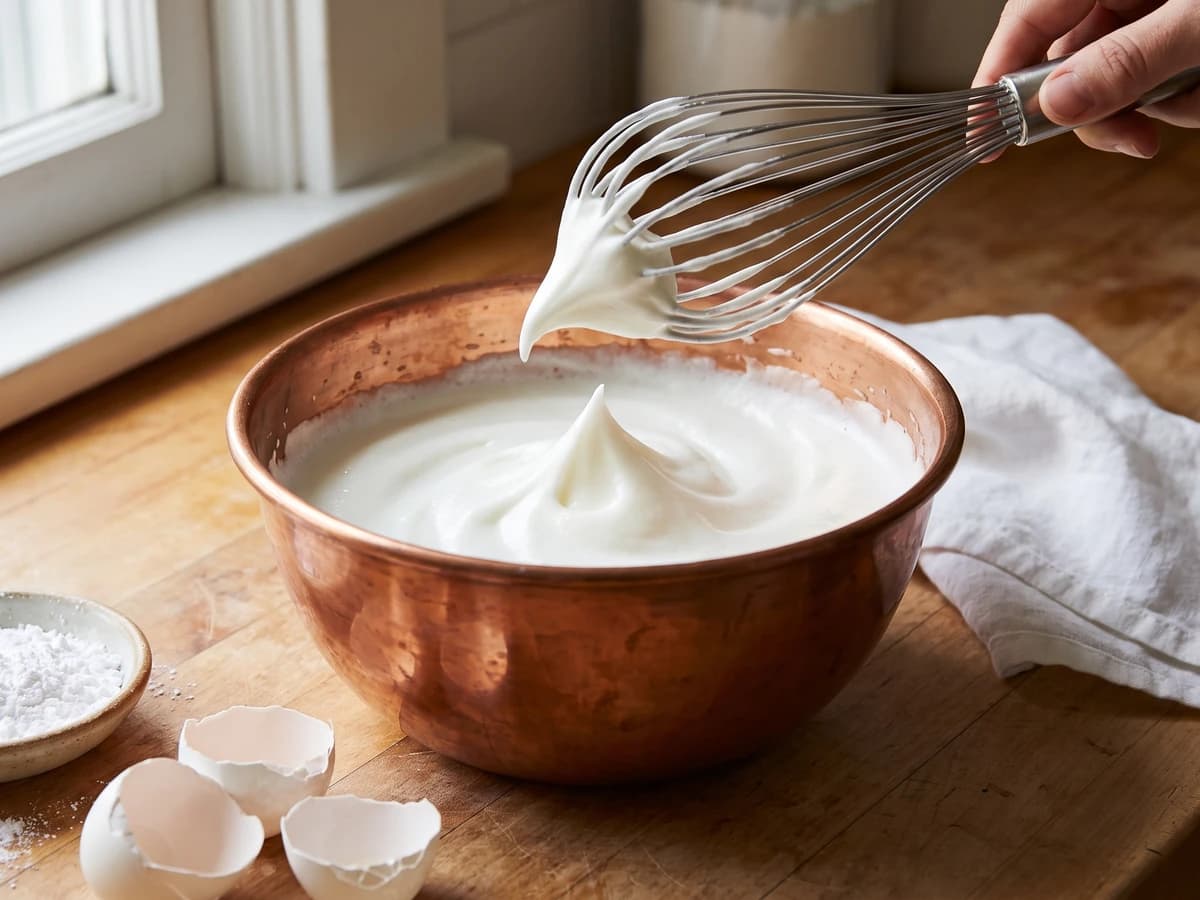
Four whites, one spotless bowl, and a patient change of speed: whisk gently until loosened, then briskly to glossy stiffness, with powdered sugar waiting if the foam begins to granulate.