
Chef Juliette
Various Almond Preparations
Five almond preparations, one discipline: remove the skins cleanly, dry every kernel through, then cut, toast, or cloak it in pale caramel without letting its fragrant oils escape.
A cooking platform built around craft, culture, and the stories behind what we eat.

Created by Chef Juliette
Based on No. 2379, Savoy-biscuit Paste, from Le Guide Culinaire (1907) by Auguste Escoffier
Biscuit de Savoie rises on egg foam alone: ribboned yolks, equal weights of flour and potato starch, and stiff whites folded last for a tall, golden cake whose crumb stays feather-dry and light.
Pâte à Biscuit de Savoie (Savoy-biscuit paste) teaches the cleanest lesson in sponge work: air is the leavening, and every bit of height comes from the ribboned yolks and stiff whites you build with your own whisk. There is no baking powder, no butter in the paste, and nowhere for careless folding to hide. When it is right, the cake rises tall and butter-gold from the mold, with a pale crumb so fine and dry it seems to dissolve on the tongue.
The original assumed a fourteen-egg basin, several molds, and a regular moderate oven judged by a practiced hand. For one cook, one stove, one evening, the formula becomes four eggs in one 8-inch mold and a measured 325°F oven. The proportions and sequence remain intact. Brigade volume is scaffolding and can go; the ribbon, equal weights of flour and fécule de pomme de terre (potato starch), and stiff whites folded last are the dish and must stay.
Pâte à Génoise Fine (No. 2376) is the book's cross-reference for recognizing the ribbon stage, not a batter to add here. Your yolk mixture must fall from the beater in a broad ribbon that rests visibly before sinking back. After that, the fold decides everything: loosen the thick base with some white, lift the remainder through gently, and send the filled mold straight to the oven.
Biscuit de Savoie belongs to Savoy and is traditionally associated with the court at Chambéry, where pastry cooks turned eggs, sugar, and flour into a high molded cake with no chemical leavening. It traveled from court pastry rooms to family celebration tables throughout the Alpine region, valued for a crumb light enough to accompany fruit, cream, or simply a glass poured for company. Despite biscuit suggesting something crisp in English, the French name here describes an egg-raised sponge, and the fécule is what gives its crumb that particularly fine, dry tenderness.
Quantity
4
at room temperature, separated
Quantity
⅔ cup (160 ml / 130 g)
Quantity
2 teaspoons (10 ml / 8 g)
Quantity
⅓ cup plus 1 tablespoon (95 ml / 50 g)
very dry
Quantity
6 tablespoons plus 1 teaspoon (95 ml / 50 g)
sifted
Quantity
1 tablespoon (15 ml / 14 g)
softened, for the mold
Quantity
1 tablespoon (15 ml / 8 g)
Quantity
Reference only: Pâte à Génoise Fine (No. 2376), 0 added
consult for the ribbon-stage definition
| Ingredient | Quantity |
|---|---|
| large eggsat room temperature, separated | 4 |
| superfine sugar | ⅔ cup (160 ml / 130 g) |
| vanilla sugar | 2 teaspoons (10 ml / 8 g) |
| all-purpose flourvery dry | ⅓ cup plus 1 tablespoon (95 ml / 50 g) |
| potato starchsifted | 6 tablespoons plus 1 teaspoon (95 ml / 50 g) |
| unsalted buttersoftened, for the mold | 1 tablespoon (15 ml / 14 g) |
| potato starch for the mold | 1 tablespoon (15 ml / 8 g) |
| Pâte à Génoise Fine (No. 2376) (optional)consult for the ribbon-stage definition | Reference only: Pâte à Génoise Fine (No. 2376), 0 added |
Set a rack in the lower-middle of the oven and heat it to 325°F (165°C), or 300°F (150°C) in a fan oven. Brush an 8-inch (20 cm), 8-cup (1.9 L) tall tube or Savoy mold with a thin, complete coat of softened butter. Dredge it with the tablespoon of potato starch, turning the mold until every buttered surface is veiled, then knock out the excess. Prepare the mold before whipping anything; this paste cannot wait once the whites are folded.
Whisk the flour and 50 g of potato starch together, then pass them through a fine sieve twice onto a sheet of parchment. They should fall freely with no damp lumps. Modern sealed flour and starch usually need no further drying, but if yours has clumped in a humid cupboard, spread the mixture on a tray in a 225°F (110°C) oven for 10 minutes and cool it completely before sifting. Warm flour would collapse the foam.
Put the yolks and superfine sugar in a large bowl. Beat with an electric hand mixer at medium-high speed for 6 to 8 minutes, scraping the bowl once or twice, until the mixture is very pale, thick, and several times its original volume. Lift the beaters: the mixture must fall in a broad ribbon and remain on the surface for about 3 seconds before slowly leveling. Pâte à Génoise Fine (No. 2376) supplies the book's definition of this stage; it is a reference, not an ingredient in the Savoy paste. If the ribbon vanishes immediately, keep whisking. Add the vanilla sugar and beat just long enough to distribute it.
Wash and dry the beaters thoroughly, then beat the whites in a spotless bowl. Begin at medium speed until they are evenly foamy, then increase the speed and beat until they form very stiff, upright peaks while still looking smooth rather than grainy. Stop the instant the peak stands. Grease or a trace of yolk prevents the whites from mounting, so use a clean bowl and beaters; patience, not additives, gives the source formula the froth it requires.
Sift one-third of the flour and potato-starch mixture over the ribboned yolks. Cut down through the center with a broad flexible spatula, sweep across the bottom, and lift the paste over itself while turning the bowl. Repeat with the remaining dry mixture in two additions. The base will become thick and may look alarming. Ça se rattrape: fold in about one-quarter of the beaten whites somewhat firmly to loosen it, then add the remaining whites in two portions with lighter, broader folds. If a dry pocket appears at the bottom, scoop beneath that pocket and lift it through two or three times instead of stirring the whole bowl. Stop as soon as no dry flour or large white streaks remain.
Spoon the paste carefully into the prepared mold, filling it no more than two-thirds full so the remaining space receives the rise. Do not bang the mold on the counter; smooth the surface lightly with the spatula and put it straight into the oven. Bake without opening the door for 25 minutes, then test at 30 minutes. It is ready when the top is evenly golden, springs back under a gentle fingertip, and a fine skewer inserted near the center comes out dry, usually after 30 to 35 minutes. If the center still trembles or the skewer carries wet paste, return it to the oven for 5 minutes. A pale, underbaked center sinks as it cools.
Let the cake stand in its mold for 10 minutes, then loosen only where necessary with a thin knife and turn it onto a wire rack. Set it upright and cool completely before cutting, at least 30 minutes; the crumb finishes setting as it cools, and slicing early compresses the very lightness you worked to build. Serve in generous wedges. À table!
1 serving (about 50g)
Culinary guides, cultural storytelling, and the editorial depth that makes cooking meaningful.
Discover Culinary ExplorerChef Juliette
Five almond preparations, one discipline: remove the skins cleanly, dry every kernel through, then cut, toast, or cloak it in pale caramel without letting its fragrant oils escape.

Chef Juliette
A pastry pantry lesson in one tray: filberts warmed only until their red skins release, rubbed clean, cooled, and chopped into a fragrant mise-en-place for cakes, creams, pralines, and petits fours.

Chef Juliette
The smallest pâtisserie discipline decides whether a cake leaves its mould intact: clarified butter in every corner, followed by the lightest veil of dry flour or fécule.
Chef Juliette
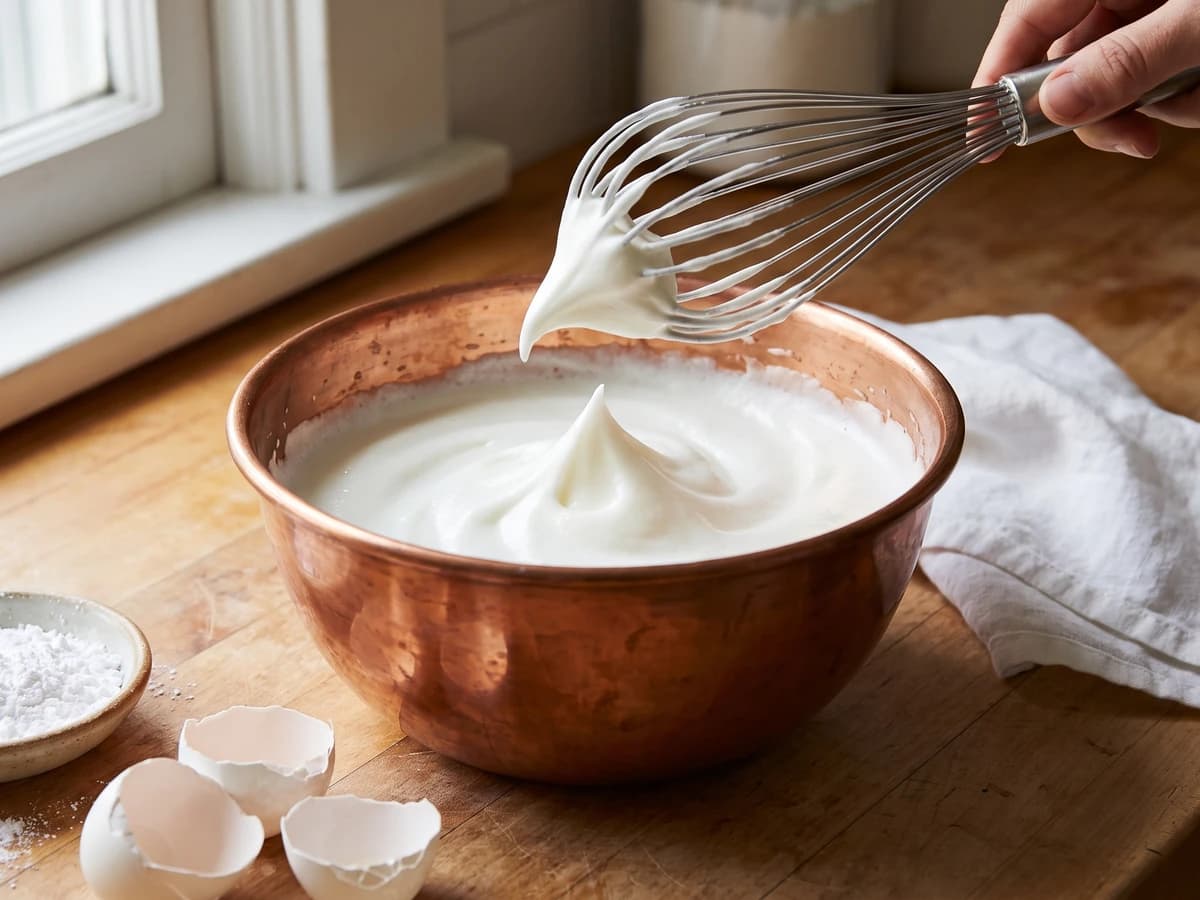
Four whites, one spotless bowl, and a patient change of speed: whisk gently until loosened, then briskly to glossy stiffness, with powdered sugar waiting if the foam begins to granulate.