
Chef Juliette
Flan aux Carottes
A pale short-paste shell holds silken, lightly sweet carrot purée beneath neat glazed half-discs, their butter syrup catching the light: a classical tart poised between vegetable course and sweet.
A cooking platform built around craft, culture, and the stories behind what we eat.

Created by Chef Juliette
Based on No. 2311, Condés au Fromage, from Le Guide Culinaire (1907) by Auguste Escoffier
These crisp, butter-gold Condés carry a cayenne-warmed Béchamel studded with Gruyère and Parmesan, proving that cold sauce and careful reduction matter more than pastry-shop ceremony.
Condés au fromage (cheese-topped puff-paste fingers) teach one exact lesson: Béchamel, a milk sauce thickened with a white roux, must be completely cold before the Gruyère and Parmesan dice go in. Warm sauce rounds their corners into itself; cold sauce holds them as small, distinct pockets until the oven takes over. That chilling is the dish, not a courtesy.
The original kitchen assumed puff-paste trimmings waiting at the pastry bench, a saucier reducing Béchamel, and enough hands to make one tray while another service continued. Here, one chilled ribbon prepared through Allumettes (No. 2299), a one-quart saucepan, parchment, and a measured home oven do the same work. Separate stations and brigade quantities are scaffolding and can go; the reduction, full chilling, cayenne, and tiny cheese dice stay. The quantities below make one generous dinner-party tray. One cook, one stove, one evening.
Expect butter-gold edges, a crisp laminated base, and an ivory cheese layer freckled bronze across the top. Reduce the Béchamel until it mounds, then cool it all the way through before folding in the cheese. If the dice begin to smear, stop and chill the mixture again. Ça se rattrape.
The Condé name belongs to the Parisian classical repertoire rather than a regional farmhouse table, and it appears across both sweet and savory preparations named for the princely house. Condés au fromage sit among savory petits fours for the apéritif, using feuilletage trimmings with the thrift a professional pastry bench demanded. Despite the better-known almond Condés, this formula is resolutely cheese: reduced Béchamel, cayenne, Gruyère, and Parmesan, cut and baked by the pattern of Allumettes (No. 2299).
Quantity
1 ribbon from 8 ounces (225 g) all-butter puff-paste trimmings
chilled
Quantity
1 cup (240 ml / 245 g)
Quantity
2 tablespoons (30 ml / 28 g)
Quantity
1/4 cup (60 ml / 30 g)
Quantity
1/4 teaspoon (1.25 ml / 1.5 g)
Quantity
1/8 teaspoon (0.6 ml / 0.2 g)
Quantity
1/3 cup (80 ml / 45 g)
cut into 1/8-inch (3 mm) dice
Quantity
1/4 cup (60 ml / 35 g)
cut into 1/8-inch (3 mm) dice
| Ingredient | Quantity |
|---|---|
| unfilled puff-paste ribbon prepared according to Allumettes (No. 2299)chilled | 1 ribbon from 8 ounces (225 g) all-butter puff-paste trimmings |
| whole milk | 1 cup (240 ml / 245 g) |
| unsalted butter | 2 tablespoons (30 ml / 28 g) |
| plain flour | 1/4 cup (60 ml / 30 g) |
| fine salt | 1/4 teaspoon (1.25 ml / 1.5 g) |
| cayenne pepper | 1/8 teaspoon (0.6 ml / 0.2 g) |
| Gruyèrecut into 1/8-inch (3 mm) dice | 1/3 cup (80 ml / 45 g) |
| Parmesancut into 1/8-inch (3 mm) dice | 1/4 cup (60 ml / 35 g) |
Begin with the chilled, unfilled puff-paste ribbon from Allumettes (No. 2299), already prepared through its ribbon stage. Keep it refrigerated on parchment while you make the filling. If the pastry bends limply or beads with butter, chill it for 15 minutes before proceeding; cold restores its structure as long as the butter has not leaked away.
Melt the butter in a heavy one-quart saucepan over low heat. Add the flour and stir steadily for 2 minutes, reaching into the corners, until the mixture looks smooth and smells faintly of warm biscuit without taking colour. This is a roux blanc, a white roux, and its gentle cooking removes the raw flour taste while keeping the sauce ivory.
Add the milk in four additions, whisking each one completely smooth before the next. Bring the Béchamel to a gentle simmer, then cook for 8 to 10 minutes, stirring constantly with a spatula, until it has reduced to about 3/4 cup (180 ml / about 200 g). It is ready when a line drawn across the pan floor stays open for a moment and the sauce falls from the spatula in a heavy mound, not a ribbon. Stir in the salt and cayenne. If lumps remain, whisk off the heat and pass the sauce through a fine sieve while it is still hot.
Scrape the reduced Béchamel onto a wide shallow plate and press parchment directly against its surface. Let it lose its fiercest heat for 10 minutes, then refrigerate for 35 to 45 minutes, until cold all the way through. Stir it once until smooth, then fold in the Gruyère and Parmesan dice with as few strokes as possible. If the cheese begins to smear or lose its square edges, stop and chill the mixture for another 15 minutes. Ça se rattrape. The sauce must be cold before the cheese goes in; this is the step that decides the dish.
Set the prepared ribbon from Allumettes (No. 2299) on a cold board. Spread the cheese Béchamel over it in a thick, even layer, using the flat of a knife and a light hand so you do not crush the laminated pastry beneath. If the filling softens while you work, return the whole ribbon to the refrigerator until firm before cutting.
Cut and cook the filled ribbon as directed in Allumettes (No. 2299). For the home-equipment translation, set the pieces on a parchment-lined heavy baking sheet and bake in a fully preheated 400°F (200°C) conventional oven, or 375°F (190°C) convection oven. Begin checking at 12 minutes; the Condés are ready when their sides show distinct butter-gold layers, the bases feel crisp, and the cheese surface is spotted with bronze. If the tops colour before the bases are done, cover them loosely with foil and move the tray one rack lower for the final few minutes.
Leave the Condés on the baking sheet for 3 minutes, then move them to a rack so their undersides remain crisp. Serve warm, when the pastry flakes cleanly under the teeth and the little cheese pockets are still glossy. Do not pile them while warm or the lower pastries will soften. À table!
1 serving (about 125g)
Culinary guides, cultural storytelling, and the editorial depth that makes cooking meaningful.
Discover Culinary ExplorerChef Juliette
A pale short-paste shell holds silken, lightly sweet carrot purée beneath neat glazed half-discs, their butter syrup catching the light: a classical tart poised between vegetable course and sweet.
Chef Juliette
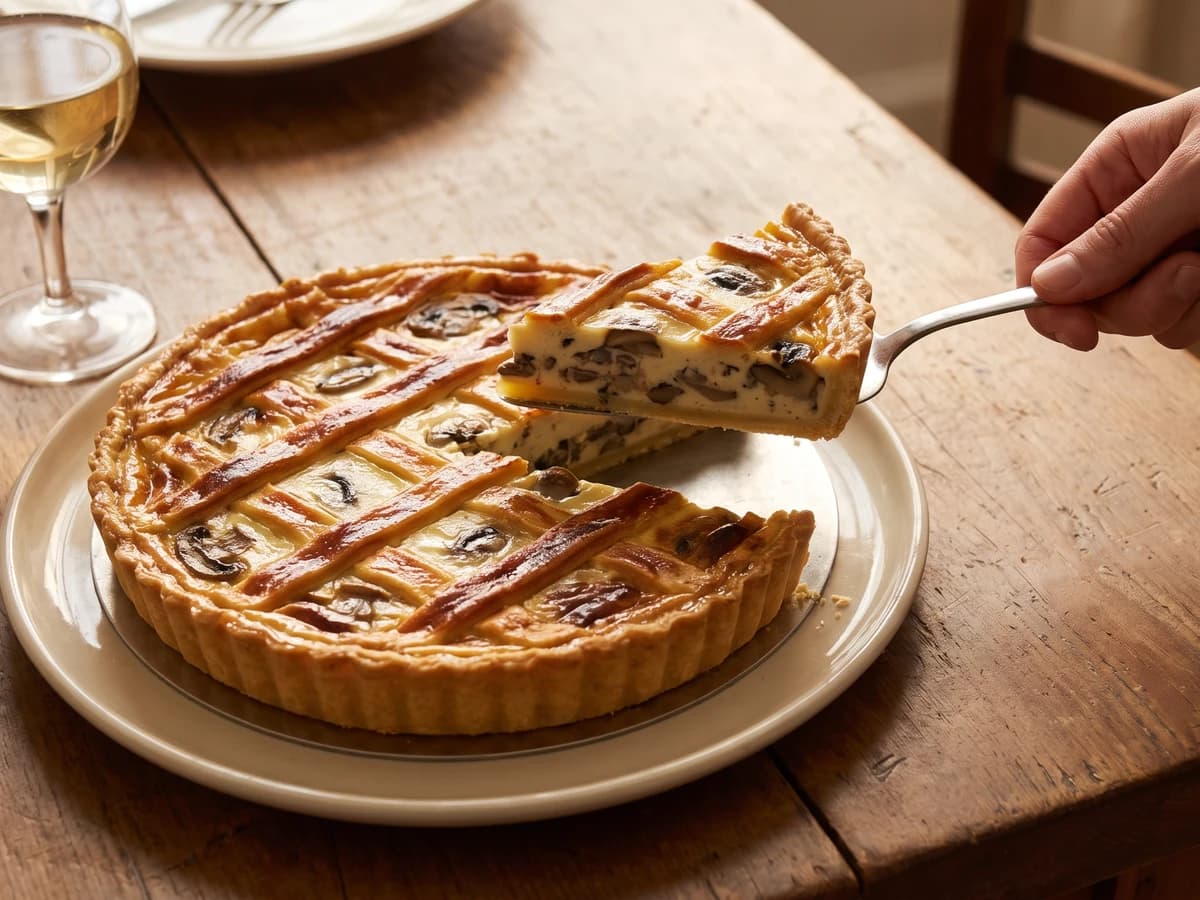
A hot mushroom flan under a butter-gold lattice, with cream reduced close around barely opened caps and a crisp short-paste base protected by one discipline: cool the filling completely.
Chef Juliette
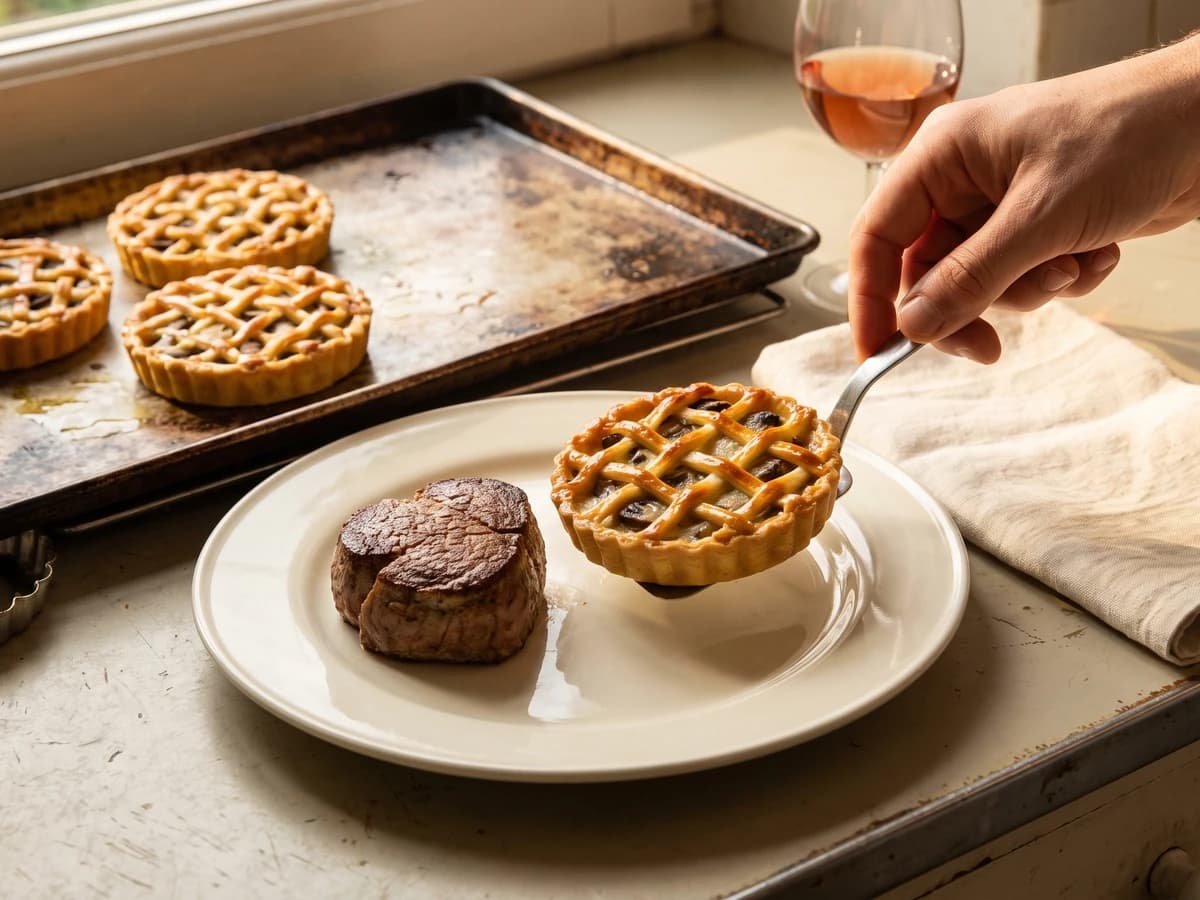
Four little mushroom flans, latticed and gilded, baked hard and fast until butter-gold: a classical garnish scaled to the meat it accompanies and served before its crispness has time to fade.

Chef Juliette
Morels surrender their liquor, then take it back as a glossy cream-and-butter sauce inside burnished puff pastry. The lesson is simple and absolute: reduce with patience, then heat gently and never boil.