
Chef Juliette
Flan aux Carottes
A pale short-paste shell holds silken, lightly sweet carrot purée beneath neat glazed half-discs, their butter syrup catching the light: a classical tart poised between vegetable course and sweet.
A cooking platform built around craft, culture, and the stories behind what we eat.
Created by Chef Juliette
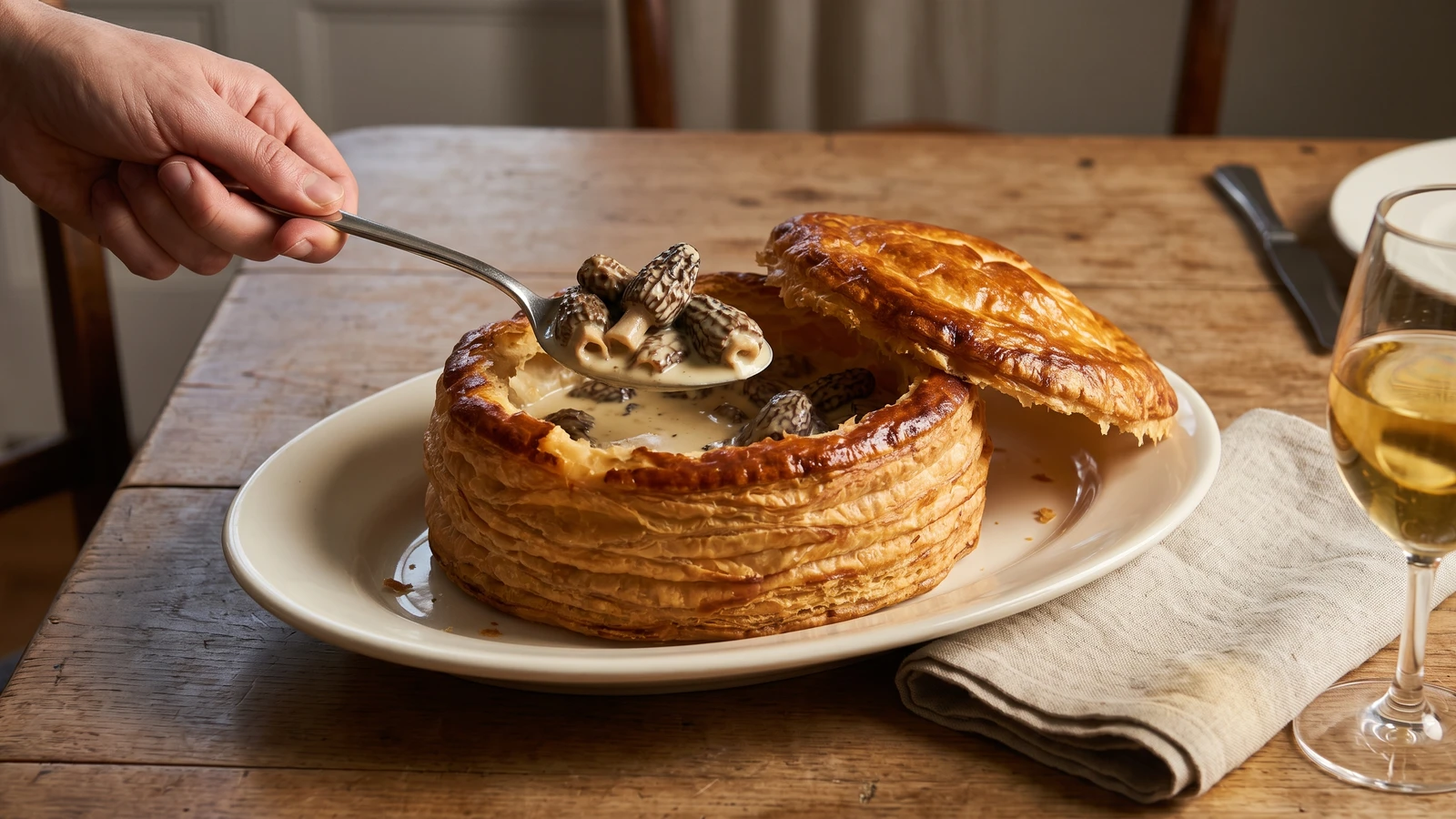
Based on No. 2085, Tourte de Morilles, from Le Guide Culinaire (1907) by Auguste Escoffier
Morels surrender their liquor, then take it back as a glossy cream-and-butter sauce inside burnished puff pastry. The lesson is simple and absolute: reduce with patience, then heat gently and never boil.
Tourte de morilles (morels in puff pastry) teaches the economy of mushroom cookery: the liquor is not runoff, it is the foundation. The morels give up their woodland intensity, the pan concentrates it, and cream and butter return it as a sauce that clings rather than floods. Lose that liquor and you lose the dish.
The classical entry assumes Morels (Morilles) (No. 2080) already cooked at one station, a Vol-au-Vent Crust (No. 2390) waiting from the pastry station, and a saucier, the sauce cook, free to watch one small reduction. At home, the honest equivalent is one prepared batch from a pound of fresh morels and one 8-inch shell for four. The source's vol-au-vent option is used because a finished shell receives the filling without a second bake, which could boil and split the sauce. The brigade handoff is scaffolding and can go. The reduction and gentle finishing heat are the dish and must stay. One cook, one stove, one evening.
Before the pan meets the heat, measure the reserved liquor so you know precisely what reducing it by one quarter means. Once the cream and butter enter, the sauce must become hot and glossy without boiling. That quiet finish decides everything.
Tourte de morilles sits at the meeting point between the spring mushroom cookery of the Jura in Franche-Comté and the grand French pastry kitchen, where a prized garnish became a centerpiece inside puff pastry. In this preparation, the regional ingredient enters the classical canon through discipline: the sandy caps are washed, their liquor is retained and reduced, and the filling is served in a tourte or vol-au-vent rather than buried beneath a heavy gravy. Washing morels is not sacrilege; their honeycombed caps trap grit, and careful washing protects both sauce and teeth.
Quantity
1 batch Morels (Morilles) (No. 2080), prepared from about 8 loosely packed cups (1.9 L / 1 lb / 454 g) fresh morels
Quantity
2 tablespoons (30 ml / about 30 g)
Quantity
2 tablespoons (30 ml / 1 oz / 28 g)
cut into small pieces
Quantity
1 Vol-au-Vent Crust (No. 2390), 8 inches (20 cm)
| Ingredient | Quantity |
|---|---|
| cooked Morels (Morilles), drained well with all cooking liquor reserved | 1 batch Morels (Morilles) (No. 2080), prepared from about 8 loosely packed cups (1.9 L / 1 lb / 454 g) fresh morels |
| very thick heavy cream | 2 tablespoons (30 ml / about 30 g) |
| unsalted buttercut into small pieces | 2 tablespoons (30 ml / 1 oz / 28 g) |
| baked Vol-au-Vent Crust, cover reserved | 1 Vol-au-Vent Crust (No. 2390), 8 inches (20 cm) |
Heat the oven to 350°F (180°C). Drain the cooked Morels (Morilles) (No. 2080) over a bowl for 5 minutes, collecting every drop of their cooking liquor. Let gravity work without pressing the mushrooms, which would bruise them and cloud the liquor. Measure the liquor and note its volume; cover the morels so their surfaces don't dry.
Pour the measured cooking liquor into a small, wide saucepan and bring it to a lively simmer. Reduce it by one quarter, stopping when three-quarters of the original volume remains. Keep the reduction clean and fluid rather than boiling it down to a salty glaze. If it goes too far, add enough hot water to restore the three-quarter mark. Ça se rattrape. Transfer 1 teaspoon of the reduced liquor to a small cup and reserve it for finishing or rescue.
Set the baked Vol-au-Vent Crust (No. 2390) and its cover on a baking sheet. Warm them for 6 to 8 minutes, until the pastry feels crisp and its butter-gold layers regain their fragrance. Place the shell on its serving platter and keep it near the stove. Warm the shell empty; baking it after filling would risk boiling the cream sauce.
Lower the heat beneath the reduced liquor until it is barely trembling. Stir in the thick cream, then add the butter a few pieces at a time, swirling or whisking until each addition disappears and the sauce becomes glossy. Heat it thoroughly without letting it boil. If the sauce turns oily or beads around the edge, remove it from the heat immediately. Put the reserved teaspoon of liquor in a clean warm bowl, then whisk in the split sauce one spoonful at a time until smooth. If the sauce stays glossy, simply whisk the reserved liquor back into the pan.
Add the drained Morels (Morilles) (No. 2080) to the sauce and toss them gently until every honeycombed surface gleams. Hold the pan over the lowest heat only until the mushrooms are hot through, about 2 to 3 minutes. Do not simmer. The finished sauce should cling lightly to the morels while leaving a generous spoonful in the bottom of the pan.
Spoon the morels and every drop of their sauce into the warm Vol-au-Vent Crust (No. 2390), letting the filling mound just above the rim. Set the pastry cover slightly askew so the morels remain visible, then bring the tourte to the table immediately. Cut through the pastry with a serrated knife and spoon the creamy filling over each portion. À table!
1 serving (about 185g)
Culinary guides, cultural storytelling, and the editorial depth that makes cooking meaningful.
Discover Culinary ExplorerChef Juliette
A pale short-paste shell holds silken, lightly sweet carrot purée beneath neat glazed half-discs, their butter syrup catching the light: a classical tart poised between vegetable course and sweet.
Chef Juliette
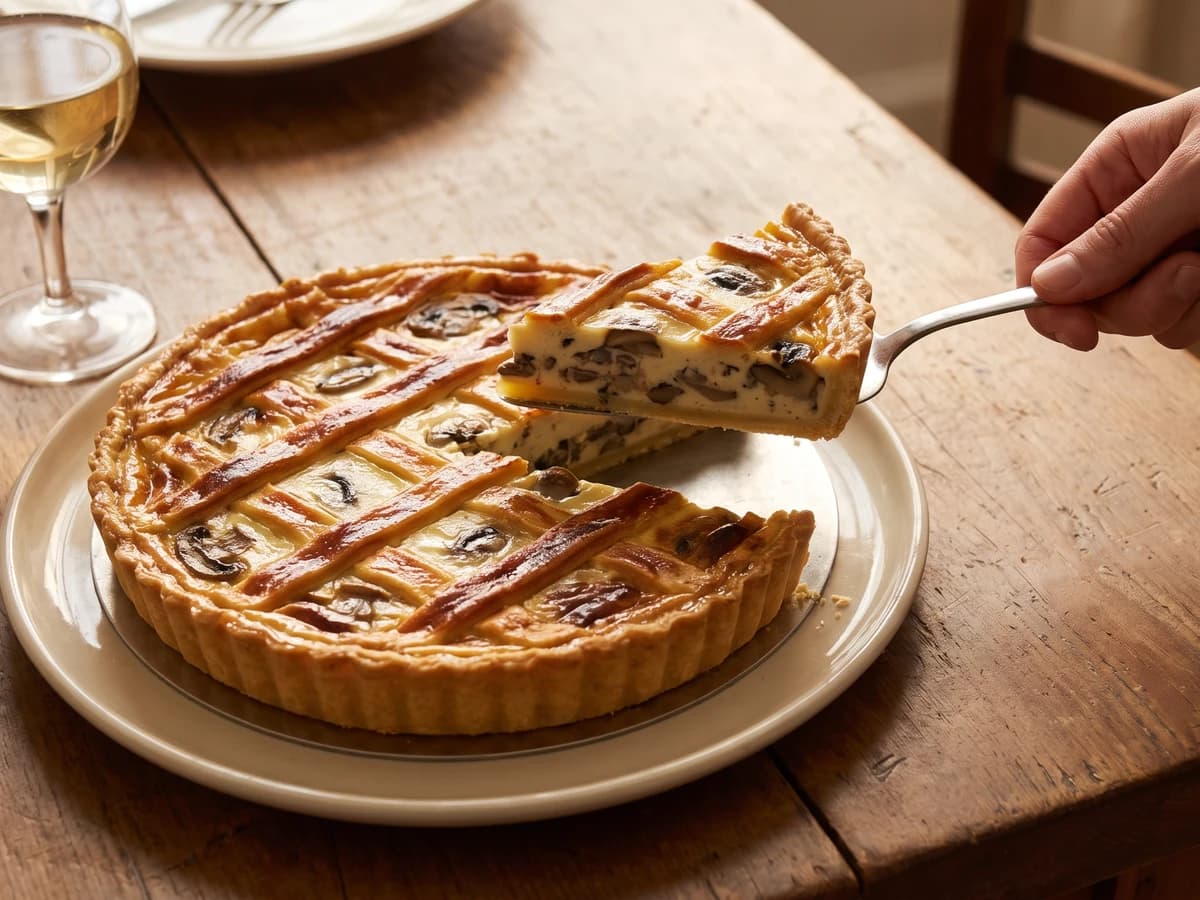
A hot mushroom flan under a butter-gold lattice, with cream reduced close around barely opened caps and a crisp short-paste base protected by one discipline: cool the filling completely.
Chef Juliette
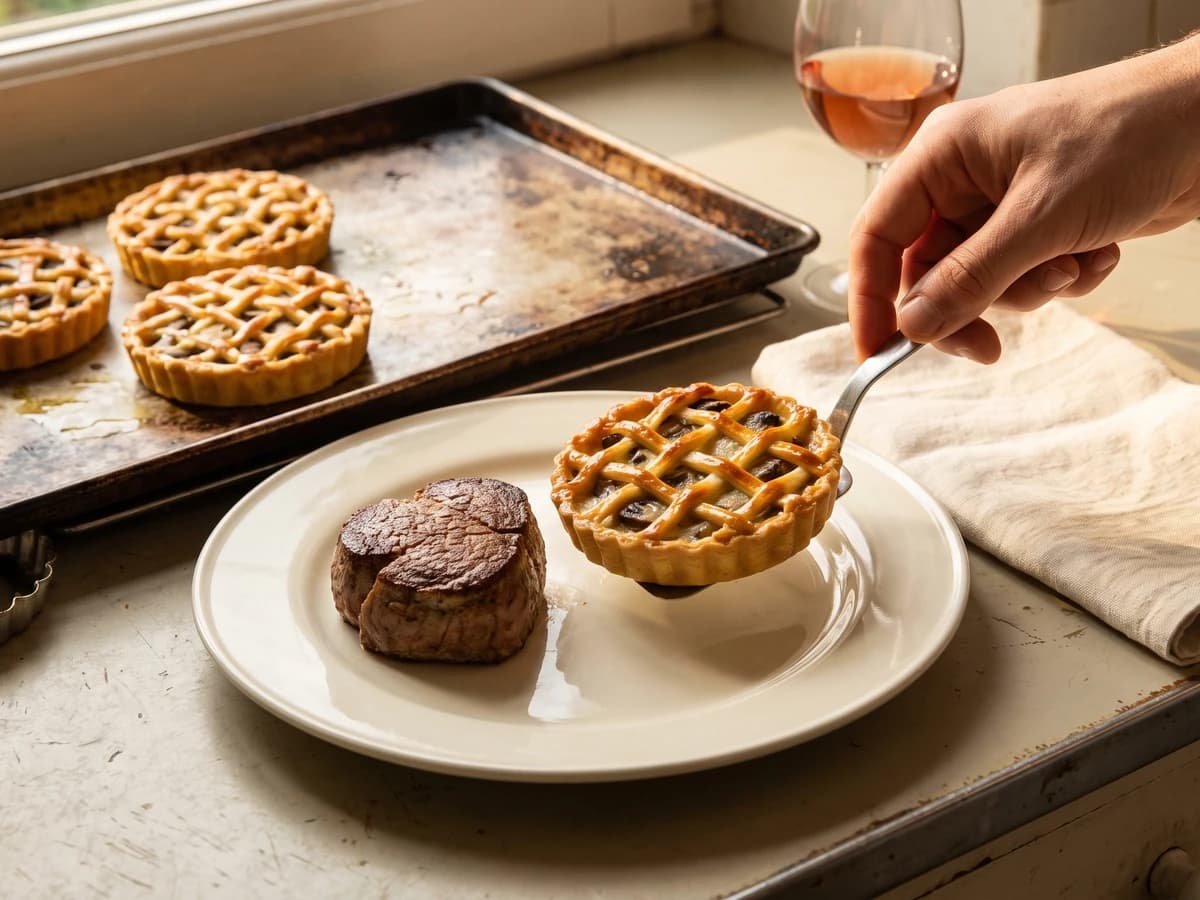
Four little mushroom flans, latticed and gilded, baked hard and fast until butter-gold: a classical garnish scaled to the meat it accompanies and served before its crispness has time to fade.
Chef Juliette
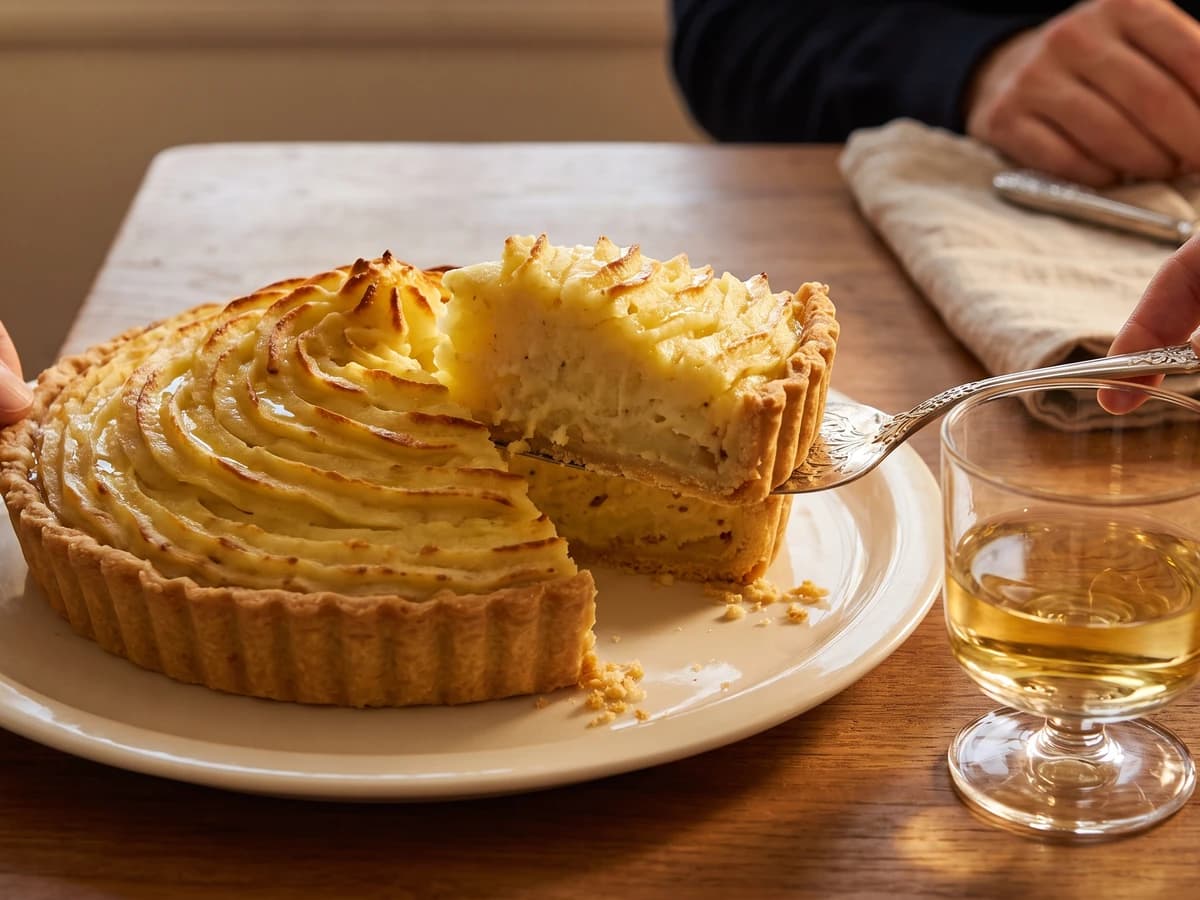
Pommes de terre mousseline turns baked potato, butter, yolks, and whisked cream into a pale-crusted tart with an airy domed filling, piped in ridges and glazed gold just before serving.