
Chef Juliette
Flan aux Carottes
A pale short-paste shell holds silken, lightly sweet carrot purée beneath neat glazed half-discs, their butter syrup catching the light: a classical tart poised between vegetable course and sweet.
A cooking platform built around craft, culture, and the stories behind what we eat.

Created by Chef Juliette
Based on No. 2299, Allumettes, from Le Guide Culinaire (1907) by Auguste Escoffier
Allumettes make one demand before the tray reaches the oven: reduce the Gruyère Béchamel until it holds on a knife, so the puff paste rises into butter-gold layers instead of soaking flat.
Allumettes (matchstick pastries) teach the discipline of dryness. Puff paste can lift only when the layer above it is light enough to travel upward, so the Béchamel must be reduced until it clings to the flat of a knife without running. A loose sauce doesn't merely make a softer pastry. It soaks the lamination and stops the rise.
The source entry assumed puff paste waiting at the pastry bench and a saucier handing over Béchamel already reduced. At home, use honest all-butter puff pastry and make half a cup of sauce in a small saucepan; two 12-inch ribbons replace the open-ended brigade strip because twenty-four pieces fit one household tray. The staffed pastry bench is scaffolding and may go. Cold lamination, exact thickness, and hard reduction are the dish, and they stay. One cook, one stove, one evening.
When they're right, the allumettes rise into narrow butter-gold layers beneath a bronzed Parmesan top, with cayenne arriving quietly after the cheese. Get the sauce right before you touch the pastry: it must hold on the knife.
Allumettes belong to the Parisian classical hors-d'oeuvre tray and pâtisserie bench rather than to a particular regional larder, their narrow rectangular shape giving the preparation its name. The same precise cut appears in pommes allumettes, while sweet pâtisserie uses the name for slim glazed pastries of similar form. This cheese-and-Béchamel version carries the discipline of the grand pastry kitchen into the apéritif, yet needs nothing beyond a saucepan, a cold rolling pin, and a moderate home oven.
Quantity
9 ounces (250 g)
chilled
Quantity
1 tablespoon (15 ml / 14 g)
Quantity
1 tablespoon (15 ml / 8 g)
Quantity
¾ cup (180 ml / 185 g)
Quantity
1 tablespoon (15 ml / 7 g)
finely grated
Quantity
1 generous pinch (0.3 ml / 0.1 g)
Quantity
⅛ teaspoon (0.6 ml / 0.8 g)
Quantity
¼ cup (60 ml / 20 g)
finely grated
| Ingredient | Quantity |
|---|---|
| all-butter puff pastrychilled | 9 ounces (250 g) |
| unsalted butter | 1 tablespoon (15 ml / 14 g) |
| all-purpose flour | 1 tablespoon (15 ml / 8 g) |
| whole milk | ¾ cup (180 ml / 185 g) |
| Gruyèrefinely grated | 1 tablespoon (15 ml / 7 g) |
| cayenne pepper | 1 generous pinch (0.3 ml / 0.1 g) |
| fine sea salt | ⅛ teaspoon (0.6 ml / 0.8 g) |
| Parmesanfinely grated | ¼ cup (60 ml / 20 g) |
Melt the butter in a small heavy saucepan over medium-low heat. Stir in the flour and cook this roux for about 90 seconds, until it bubbles as a smooth white paste without taking colour. Add the milk in three portions, whisking each one completely smooth before adding the next. Bring it to a gentle simmer, then cook for 6 to 8 minutes, stirring and scraping the pan continuously, until only about ½ cup remains. Test it with the flat of a table knife: the sauce must hold an opaque coat without running when the knife is tilted. If it remains pourable, keep reducing rather than adding flour. If lumps appear, pass the hot sauce through a fine-mesh sieve, return it to the pan, and continue. Ça se rattrape. Remove it from the heat and stir in the Gruyère, cayenne, and salt until smooth. Spread the Béchamel on a shallow plate and cool for 10 to 15 minutes, stirring twice to prevent a skin. It must be cool before it touches the butter-rich pastry.
Heat the oven to 375°F (190°C), or 350°F (175°C) with a fan, and place a rack in the centre. Roll the cold puff pastry between two sheets of baking parchment into a rectangle 6 inches by 12 inches (15 cm by 30 cm) and about ⅕ inch (5 mm) thick. Trim the sides cleanly, then cut lengthwise to make two ribbons, each 3 inches (7.5 cm) wide. If the pastry becomes soft, shiny, or sticky, slide it onto a board and chill it for 10 minutes. Warm butter smears between the layers; cold butter keeps them distinct.
Divide the cooled Béchamel between the two ribbons and spread it in a thin, even coat almost to the edges. Use the full sauce, but don't leave ridges or heavy pockets. Sprinkle the Parmesan evenly over the surface, then press it gently into the Béchamel with the flat of a broad knife, exactly enough to anchor the cheese without crushing the pastry. If the sauce slides or squeezes outward, it is still too warm; chill the ribbons until the topping holds still.
Cut each topped ribbon crosswise into twelve rectangles, each 1 inch by 3 inches (2.5 cm by 7.5 cm). Press the knife straight down and lift it cleanly rather than sawing, which seals and distorts the laminated edges. Lightly moisten a bare metal baking sheet with cold water and shake off every excess drop; the surface should carry a fine film, never puddles. Arrange the allumettes about 1 inch (2.5 cm) apart and chill the entire tray for 15 minutes. The source's moistened tray remains useful, while this short chill replaces the speed and cold workspace of a pastry brigade.
Bake for 12 minutes without opening the oven during the first 10. The allumettes are ready when their sides show separate golden layers, their bases feel dry, and the Parmesan is mottled deep gold. A home oven may ask for another 2 to 4 minutes. If the tops colour before the sides are fully risen, lower the tray one rack and reduce the heat to 350°F (175°C) for the final few minutes. If a test piece bends or feels damp underneath, return the tray at once; another 3 minutes usually restores it.
Lift the allumettes from the tray with a thin spatula while the cheese is still pliable, then rest them on a wire rack for 5 minutes. Serve warm, when the edges are crisp, the pastry separates into buttery leaves under the teeth, and the concentrated Béchamel remains tender beneath its Parmesan crust. Pass them with the first glass before dinner. À table!
1 serving (about 100g)
Culinary guides, cultural storytelling, and the editorial depth that makes cooking meaningful.
Discover Culinary ExplorerChef Juliette
A pale short-paste shell holds silken, lightly sweet carrot purée beneath neat glazed half-discs, their butter syrup catching the light: a classical tart poised between vegetable course and sweet.
Chef Juliette
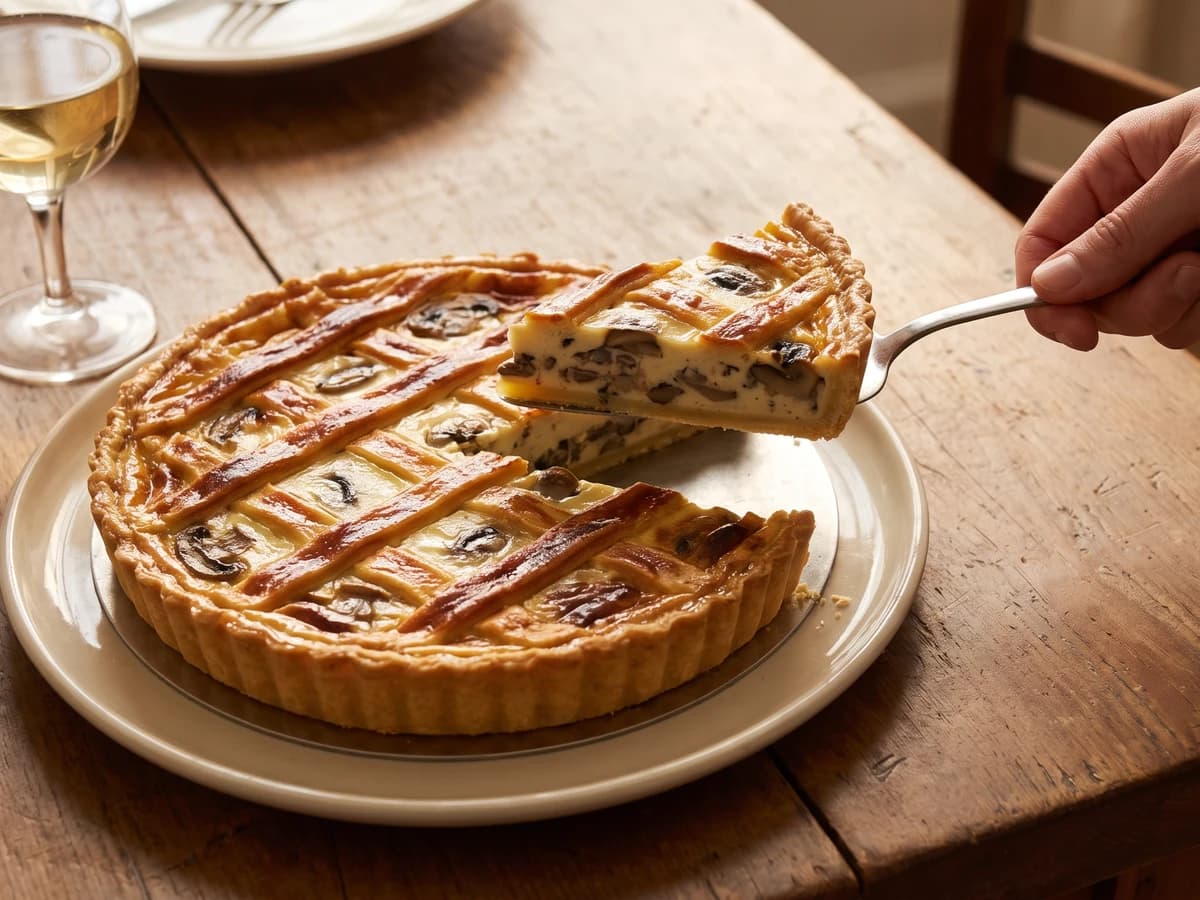
A hot mushroom flan under a butter-gold lattice, with cream reduced close around barely opened caps and a crisp short-paste base protected by one discipline: cool the filling completely.
Chef Juliette
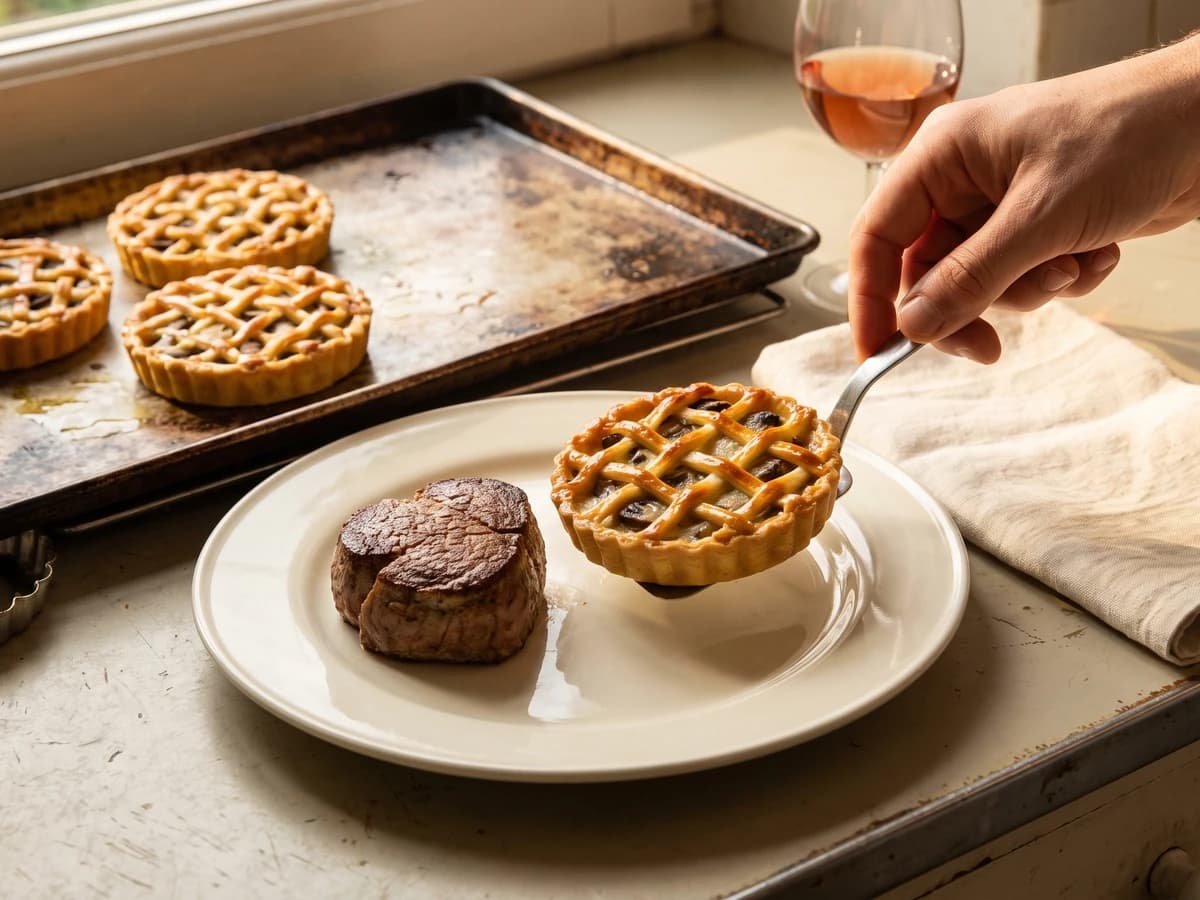
Four little mushroom flans, latticed and gilded, baked hard and fast until butter-gold: a classical garnish scaled to the meat it accompanies and served before its crispness has time to fade.

Chef Juliette
Morels surrender their liquor, then take it back as a glossy cream-and-butter sauce inside burnished puff pastry. The lesson is simple and absolute: reduce with patience, then heat gently and never boil.