Chef Juliette
Suet Dumpling
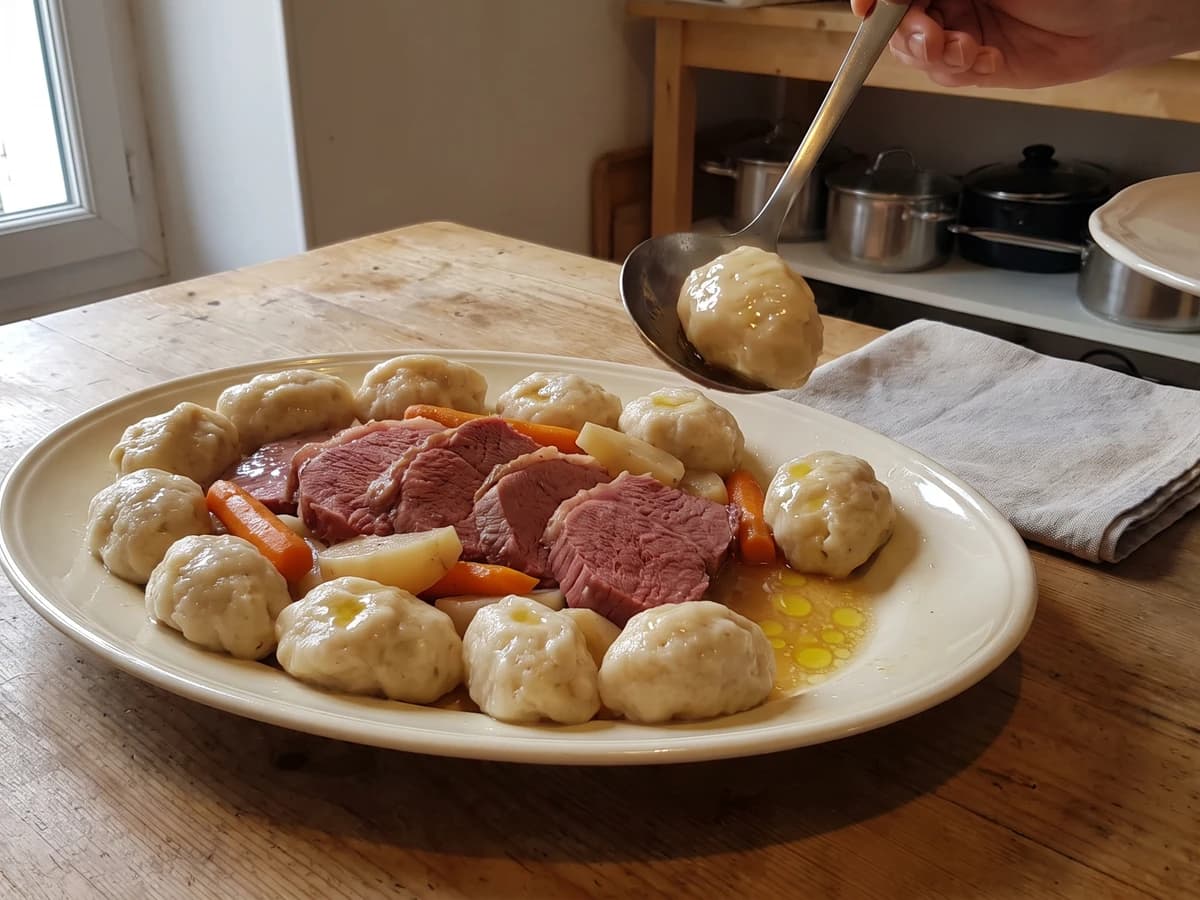
Boulettes au suif, poached beside salt beef, turn equal weights of flour and finely chopped suet into tender, rich dumplings. Keep the beef liquor at a bare tremble and the old garnish works beautifully at home.
A cooking platform built around craft, culture, and the stories behind what we eat.
Created by Chef Juliette
Based on No. 2225, Pommes de Terre au Lard, from Le Guide Culinaire (1907) by Auguste Escoffier
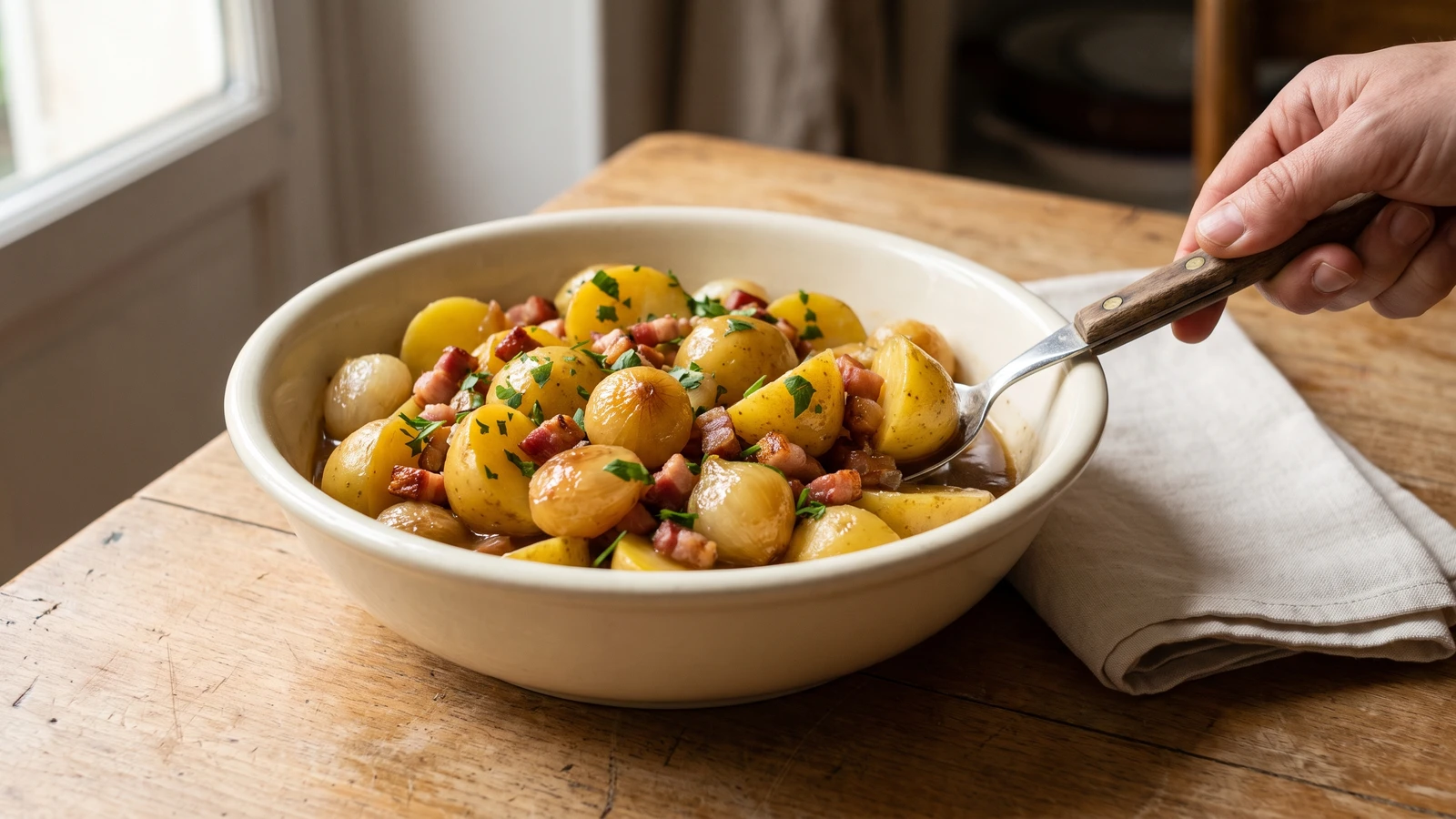
Salt pork, onions, butter, flour, and consommé teach the quiet grammar of a one-pot braise, coating tender potatoes in a savory, glossy gravy that asks only for gentle heat and patience.
Pommes de Terre au Lard (potatoes with salt pork) teaches how a little browned flour turns cooking fat and consommé into a proper braising sauce. Know the one true thing before touching the pan: the flour must lose its raw paleness in the butter before the consommé arrives. That brief roux gives the dish its nutty depth and lets the gravy cling to every quartered potato.
The formula assumed a saucier beside a stockpot of consommé that never went cold, a service timbale, and enough mouths for twice this batch. At home, use ready-to-use consommé, one wide covered casserole, and a warmed deep serving bowl. I have halved the book's quantities for four, measured the butter the formula left to the cook's judgment, and replaced perfect brigade turning with neatly trimmed potato quarters. The proportions, flavorings, and order of cooking remain intact. One cook, one stove, one evening.
Keeping consommé on the fire all day and shaping every potato into an identical ornament are brigade scaffolding. Frizzling the pork and onions, browning the roux, and cooking the potatoes under a lid are the dish itself. Watch the roux above all: light hazelnut, never scorched, before you moisten it.
Pommes de terre au lard belongs to French cuisine bourgeoise, the well-run household table rather than any single province. Professional kitchens carried the familiar union of stored potatoes and cured pork into the national classical repertoire by giving it a precise sequence: frizzle the garnish, brown flour in the fat, moisten with consommé, then cook everything gently under a lid. The words au lard mean that unsmoked salted pork forms the dish's foundation, not that smoked bacon is merely scattered over finished potatoes.
Quantity
1/2 cup (120 ml / 115 g), prepared according to Blanchings (No. 273)
cut into 1/2-inch dice
Quantity
1 tablespoon plus 1 teaspoon (20 ml / 18 g)
Quantity
6
peeled and left whole
Quantity
1 3/4 tablespoons (26 ml / 14 g)
Quantity
1 1/2 cups (355 ml / 355 g)
Quantity
3 cups (710 ml / 450 g)
peeled, quartered, and neatly trimmed
Quantity
1
Quantity
1/8 teaspoon (0.6 ml / 0.3 g)
Quantity
1 tablespoon (15 ml / 4 g)
moderately chopped
| Ingredient | Quantity |
|---|---|
| unsmoked salt pork bellycut into 1/2-inch dice | 1/2 cup (120 ml / 115 g), prepared according to Blanchings (No. 273) |
| unsalted butter | 1 tablespoon plus 1 teaspoon (20 ml / 18 g) |
| small white boiling onionspeeled and left whole | 6 |
| all-purpose flour | 1 3/4 tablespoons (26 ml / 14 g) |
| ready-to-use beef consommé | 1 1/2 cups (355 ml / 355 g) |
| yellow-fleshed potatoespeeled, quartered, and neatly trimmed | 3 cups (710 ml / 450 g) |
| bouquet garni of parsley stems, thyme, and bay leaf | 1 |
| freshly ground black pepper | 1/8 teaspoon (0.6 ml / 0.3 g) |
| flat-leaf parsleymoderately chopped | 1 tablespoon (15 ml / 4 g) |
Have the diced salt pork prepared according to Blanchings (No. 273), then drain and dry it well. Trim only the thin corners from the potato quarters so they cook evenly; turning them into perfect matching shapes wastes good potato and belongs to brigade presentation, not the success of the dish. Tie the bouquet garni securely so it can be lifted out whole.
Melt the butter in a wide, heavy casserole over medium heat. Add the salt pork and whole onions together, then cook for 8 to 10 minutes, turning often, until the pork is lightly bronzed at its edges and the onions have taken an even butter-gold color. Frizzle them without scorching the butter. If the butter darkens too quickly, lift the casserole from the heat for half a minute and lower the flame before continuing. Remove the pork and onions with a slotted spoon, leaving the butter and rendered fat behind.
Sprinkle the flour into the hot fat and stir continuously over medium-low heat for 2 to 3 minutes. This is the roux, flour cooked in fat, and it should turn light hazelnut and smell faintly toasted. Pale flour leaves the gravy pasty; black flecks make it bitter. If it colors unevenly, pull the casserole from the heat and keep stirring until the pan calms, then return it over a lower flame.
Pour in the consommé gradually, stirring firmly and scraping the browned film from the bottom after each addition. Bring the sauce to a gentle simmer, then add the pepper. If the roux gathers into lumps, stop pouring and whisk off the heat until smooth before adding the remaining consommé. Ça se rattrape. The finished sauce should be fluid enough to move around the potatoes, not thick like finished gravy.
Add the potatoes, browned salt pork, onions, and bouquet garni. Turn everything gently so the sauce reaches every piece, then cover and cook at the barest simmer for 25 to 30 minutes. Shake the casserole occasionally instead of stirring, which can break the softening potatoes. They are ready when a small knife enters without resistance but the quarters still hold their shape.
Discard the bouquet garni. If the potatoes are tender but the sauce remains thin, lift the potatoes, pork, and onions into a warmed deep serving bowl and reduce the sauce uncovered for a minute or two; if it has tightened too far, loosen it with a spoonful of hot water. Taste before adding anything, since both the salt pork and consommé carry salt. Spoon the glossy sauce over the potatoes, scatter moderately with parsley, and serve at once. À table!
1 serving (about 250g)
Culinary guides, cultural storytelling, and the editorial depth that makes cooking meaningful.
Discover Culinary ExplorerChef Juliette
Boulettes au suif, poached beside salt beef, turn equal weights of flour and finely chopped suet into tender, rich dumplings. Keep the beef liquor at a bare tremble and the old garnish works beautifully at home.

Chef Juliette
Bread, flour, frangipane, and rice become four cool, supple panades for binding forcemeats, each changing body and flavor while preserving tenderness. The finest Mousselines need none, and knowing that distinction is the lesson.

Chef Juliette
Panade au pain is bread, milk, salt, heat, and attention: stir until the paste releases cleanly, butter it against a skin, and you have the quiet binder behind tender French farces.

Chef Juliette
Panade de farine teaches the drying stroke behind pâte à choux: flour meets boiling buttered water, then stays over the fire until the paste gathers, smooths, and quits the pan cleanly.