Chef Juliette
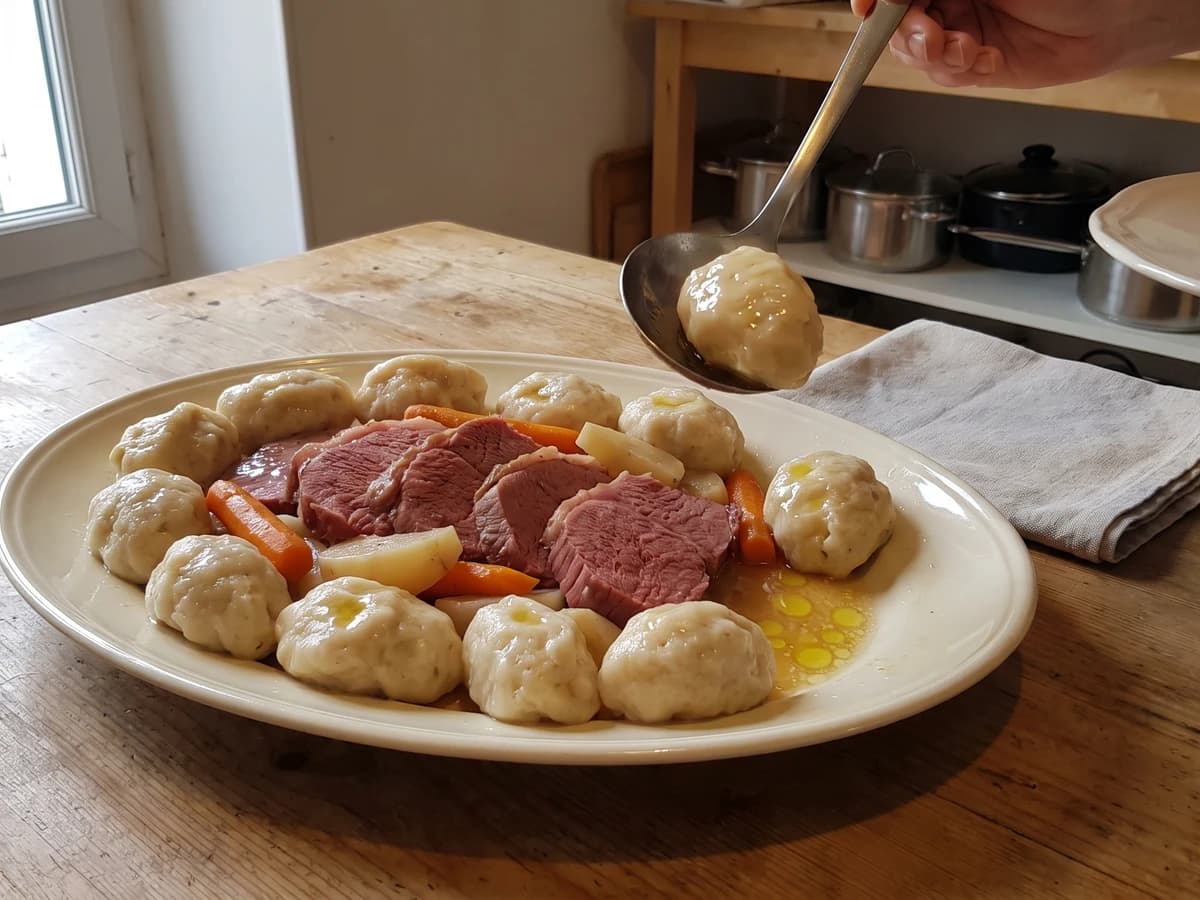
Suet Dumpling
Boulettes au suif, poached beside salt beef, turn equal weights of flour and finely chopped suet into tender, rich dumplings. Keep the beef liquor at a bare tremble and the old garnish works beautifully at home.
A cooking platform built around craft, culture, and the stories behind what we eat.

Created by Chef Juliette
Based on No. 2191, Petits Pois à la Bonne-Femme, from Le Guide Culinaire (1907) by Auguste Escoffier
Petits Pois à la Bonne-Femme brings sweet peas, browned small onions, and diced bacon together in a light roux and glossy consommé reduction, teaching the home cook how sauce and vegetable finish at the same moment.
Petits Pois à la Bonne-Femme (peas in the household manner) teaches one exact thing: the peas and their sauce must finish together. A roux (a cooked butter-and-flour binding) gives the consommé just enough body, but reduction does the real work. Before touching the pan, know this: a wide surface matters more than fierce heat, because the liquid must fall by half without boiling the peas into submission.
The original assumed a stockpot of consommé never off the fire, separate hands attending the garnish, and a quantity suited to brigade service. Here the quantity is halved for four, good prepared consommé replaces the standing stockpot, and one wide sauté pan carries the whole method. The ever-ready stock and extra hands were scaffolding, so they can go. The light roux and the reduction by half are the dish, and they stay untouched. One cook, one stove, one evening.
At the table, the peas should remain sweet and distinct, the small onions softly golden, and the bacon tucked through a sauce that gleams rather than sits heavily. The moment to guard is the final reduction: the sauce must reach its proper body just as the peas turn tender.
Petits Pois à la Bonne-Femme belongs to cuisine bourgeoise, the French household table, rather than to one province. Classical kitchens codified the domestic combination of peas, small onions, bacon, and broth by binding the liquid with a light roux, then reducing it around the vegetables. The name bonne-femme describes this practical household manner, not a particular cook, and the bacon-bound preparation is distinct from petits pois à la française, whose familiar family often includes lettuce.
Quantity
1 heaped cup (170 g / 6 oz)
peeled
Quantity
1 tablespoon (15 ml / 14 g)
Quantity
1 scant tablespoon (14 ml / 7 g / 1/4 oz)
Quantity
1/2 cup (120 ml / 120 g)
Quantity
2 cups (280 g / 10 oz)
Quantity
6 stems
tied into a small bunch
| Ingredient | Quantity |
|---|---|
| small pearl onionspeeled | 1 heaped cup (170 g / 6 oz) |
| breast of bacondiced | 1/3 cup (55 g / 2 oz), prepared according to Blanchings (No. 273) |
| unsalted butter | 1 tablespoon (15 ml / 14 g) |
| plain flour | 1 scant tablespoon (14 ml / 7 g / 1/4 oz) |
| prepared consommé | 1/2 cup (120 ml / 120 g) |
| freshly shelled peas | 2 cups (280 g / 10 oz) |
| flat-leaf parsleytied into a small bunch | 6 stems |
Have the diced breast of bacon prepared according to Blanchings (No. 273), then pat it thoroughly dry so it fries instead of spitting in the butter. Peel the small onions, tie the parsley stems together, and measure the consommé before the pan goes on. Keep the peas cool until their turn.
Melt the butter in a wide sauté pan over medium-low heat. Add the onions and fry them for 7 to 9 minutes, rolling them often, until golden in patches but still holding their shape. They need not be tender yet. If the butter begins coloring before the onions do, lower the heat and add a teaspoon of consommé; the onions need patient contact with the pan, not scorched milk solids. Lift them out with a slotted spoon.
Add the diced bacon prepared according to Blanchings (No. 273) to the same pan and fry for 2 to 3 minutes, until its edges take a little color and its fat begins to render. Scatter the flour over the bacon and stir for 1 minute, keeping the roux pale. Pour in the consommé gradually while stirring and scraping the pan floor, then bring it to a boil for 30 seconds. If the flour gathers into lumps, take the pan off the heat and whisk firmly until smooth. Ça se rattrape.
Add the peas, fried onions, and tied parsley to the sauce. Return everything to a lively uncovered simmer and cook for 8 to 12 minutes, turning the mixture gently, until the peas are tender and the sauce has reduced by half to a light, glossy coating. This timing is the dish. If the sauce tightens before the peas are tender, add consommé or water one tablespoon at a time. If the peas become tender while the sauce remains loose, lift the peas, onions, and bacon out with the slotted spoon, reduce the sauce alone for a minute or two, then return them to the pan.
Remove the parsley bunch and roll the peas gently through the finished sauce. Taste before reaching for salt, because both the bacon and reduced consommé have brought their own. The sauce should cling in a thin sheen, with no floury heaviness and no puddle beneath the peas. Spoon everything into a warm serving dish and bring it straight to the table. À table!
1 serving (about 140g)
Culinary guides, cultural storytelling, and the editorial depth that makes cooking meaningful.
Discover Culinary ExplorerChef Juliette
Boulettes au suif, poached beside salt beef, turn equal weights of flour and finely chopped suet into tender, rich dumplings. Keep the beef liquor at a bare tremble and the old garnish works beautifully at home.

Chef Juliette
Bread, flour, frangipane, and rice become four cool, supple panades for binding forcemeats, each changing body and flavor while preserving tenderness. The finest Mousselines need none, and knowing that distinction is the lesson.

Chef Juliette
Panade au pain is bread, milk, salt, heat, and attention: stir until the paste releases cleanly, butter it against a skin, and you have the quiet binder behind tender French farces.

Chef Juliette
Panade de farine teaches the drying stroke behind pâte à choux: flour meets boiling buttered water, then stays over the fire until the paste gathers, smooths, and quits the pan cleanly.