Chef Juliette
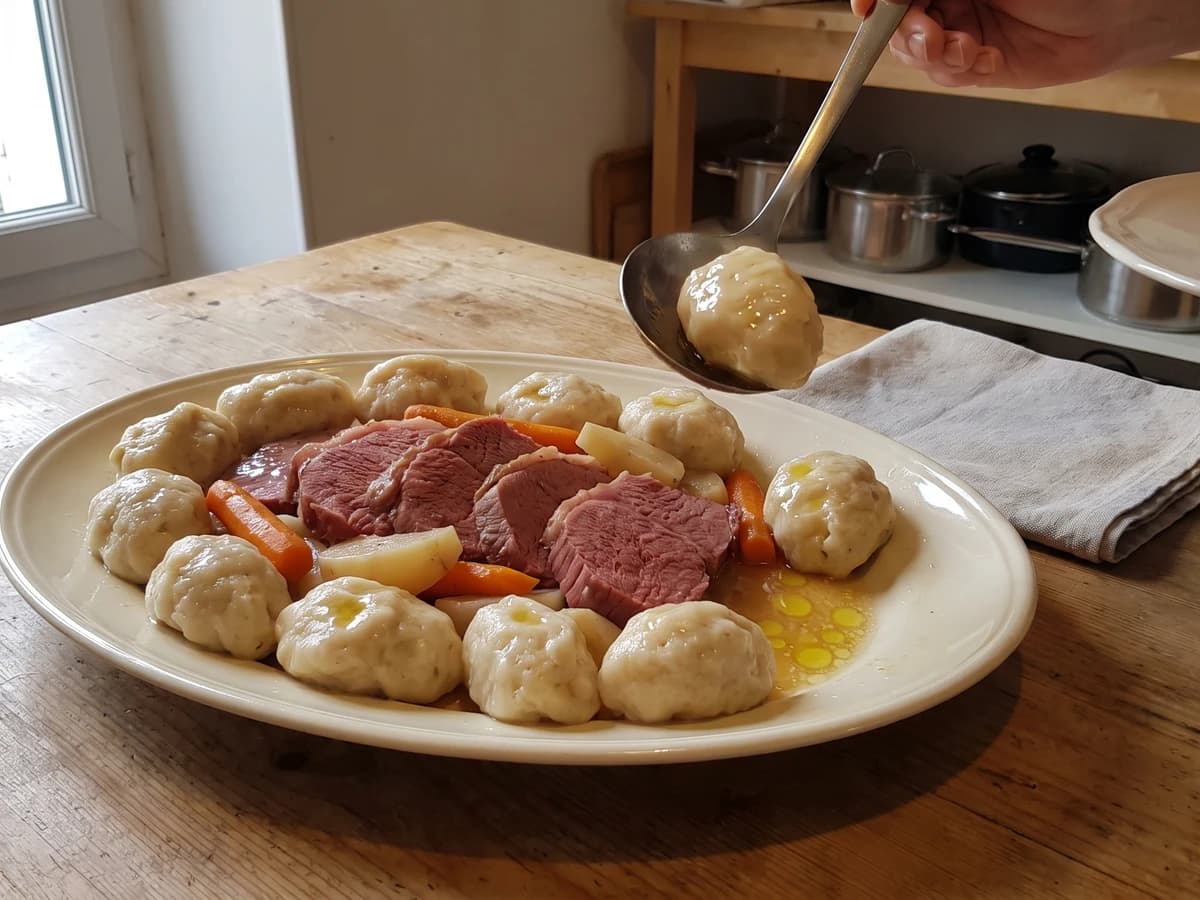
Suet Dumpling
Boulettes au suif, poached beside salt beef, turn equal weights of flour and finely chopped suet into tender, rich dumplings. Keep the beef liquor at a bare tremble and the old garnish works beautifully at home.
A cooking platform built around craft, culture, and the stories behind what we eat.

Created by Chef Juliette
Based on No. 2081, Morilles à la Crème, from Le Guide Culinaire (1907) by Auguste Escoffier
Morels, butter, onion, and cream become one glossy sauce when every drop of mushroom liquor is reduced, not discarded: a woodland side dish scaled for one cook and four generous plates.
Morilles à la Crème (morels in cream) teaches one true thing before you touch the pan: the liquor released by the mushrooms is not waste, it is the foundation of the sauce. Reduce it patiently, add the cream only after it has concentrated, and the finished sauce tastes deeply of morels rather than cream poured over them.
The terse brigade entry assumes a mushroom cook and a saucier already fluent in the cream treatment used for Cèpes. Here the professional quantity becomes enough for four, and one wide, lidded skillet carries the whole job. Only the service scaffolding has gone. The butter-and-onion stew, the reduction of the morels' own liquor, and the boiling down with cream remain because those steps are the dish. One cook, one stove, one evening.
The morels should arrive dark and tender, their honeycombed caps cupping a glossy ivory-brown sauce. The moment that matters is just before the cream enters: uncover the pan and concentrate the mushroom liquor until only a few syrupy spoonfuls remain. C'est la même grammaire. Extraction first, reduction second, cream last.
Morilles à la crème belongs especially to the Jura and Franche-Comté, where spring morels enter cream sauces served with poultry, veal, and pastry cases. Jura cooks also marry morels with vin jaune, but wine is not intrinsic to this plainer canonical treatment; butter, onion, mushroom liquor, and cream are sufficient. The grand-kitchen direction to treat morels like Cèpes records a shared method of extracting and reducing mushroom juices, not a claim that the two mushrooms taste or behave alike.
Quantity
8 cups loosely packed (2 L / 450 g)
trimmed and cleaned, small ones left whole and large ones halved lengthwise
Quantity
4 tablespoons (60 ml / 57 g)
Quantity
½ cup (120 ml / 75 g)
finely chopped
Quantity
1 cup (240 ml / 240 g)
Quantity
¾ teaspoon (4 ml / 4 g)
divided
Quantity
¼ teaspoon (1 ml / 0.5 g)
| Ingredient | Quantity |
|---|---|
| fresh morelstrimmed and cleaned, small ones left whole and large ones halved lengthwise | 8 cups loosely packed (2 L / 450 g) |
| unsalted butter | 4 tablespoons (60 ml / 57 g) |
| yellow onionfinely chopped | ½ cup (120 ml / 75 g) |
| heavy cream | 1 cup (240 ml / 240 g) |
| fine sea saltdivided | ¾ teaspoon (4 ml / 4 g) |
| ground white pepper | ¼ teaspoon (1 ml / 0.5 g) |
Trim away the earthy stem ends and split any large morels lengthwise so you can inspect their hollow centres. Swish the mushrooms briefly in a large bowl of cold water, lift them out so the grit stays behind, and repeat with fresh water until no sand remains. Drain well and spread them on towels, patting the honeycombed caps dry. The washing water goes away; the cooking liquor does not.
Melt the butter in a 30 cm heavy skillet over medium-low heat. Add the onion and half the salt, then cook for 5 to 6 minutes, stirring often, until soft and translucent without taking colour. The onion is supporting the morels, not competing with them, so lower the heat if its edges begin to bronze.
Add the morels and remaining salt, turning them carefully through the butter. Étuver means to stew gently in butter under a lid, letting the ingredient produce its own cooking liquor. Cover and cook over medium-low heat for 8 minutes, shaking the pan once or twice, then uncover and continue cooking for 8 to 10 minutes. The morels must become thoroughly tender while their liquor reduces to a few dark, syrupy spoonfuls. Do not drain the pan. Those juices belong in the sauce.
Pour in the heavy cream and bring it to a lively but controlled simmer. Cook uncovered for 7 to 10 minutes, stirring and scraping the pan floor often, until the cream takes on the colour of the mushroom juices and coats the morels in a glossy layer. If the mushrooms are tender but the sauce remains thin, lift them out with a slotted spoon, reduce the cream alone, then return them. If the sauce tightens until it looks greasy, remove the pan from the heat and whisk in 1 tablespoon of cool water until the gloss returns. Ça se rattrape.
Season with the white pepper, taste, and correct the salt. The sauce should pool slowly from a spoon, neither watery nor stiff enough to sit in a mound. Transfer the Morilles à la Crème to a warmed shallow serving dish and bring them straight to the table beside roast chicken, veal, or a simple omelette. À table!
1 serving (about 160g)
Culinary guides, cultural storytelling, and the editorial depth that makes cooking meaningful.
Discover Culinary ExplorerChef Juliette
Boulettes au suif, poached beside salt beef, turn equal weights of flour and finely chopped suet into tender, rich dumplings. Keep the beef liquor at a bare tremble and the old garnish works beautifully at home.

Chef Juliette
Bread, flour, frangipane, and rice become four cool, supple panades for binding forcemeats, each changing body and flavor while preserving tenderness. The finest Mousselines need none, and knowing that distinction is the lesson.

Chef Juliette
Panade au pain is bread, milk, salt, heat, and attention: stir until the paste releases cleanly, butter it against a skin, and you have the quiet binder behind tender French farces.

Chef Juliette
Panade de farine teaches the drying stroke behind pâte à choux: flour meets boiling buttered water, then stays over the fire until the paste gathers, smooths, and quits the pan cleanly.