
Chef Juliette
Bouillabaisse à la Marseillaise
Marseille's great fish stew, saffron-gold and garlic-scented, proves that a hard boil can be the careful choice: it binds olive oil into broth before the whole pot meets bread.
A cooking platform built around craft, culture, and the stories behind what we eat.
Created by Chef Juliette
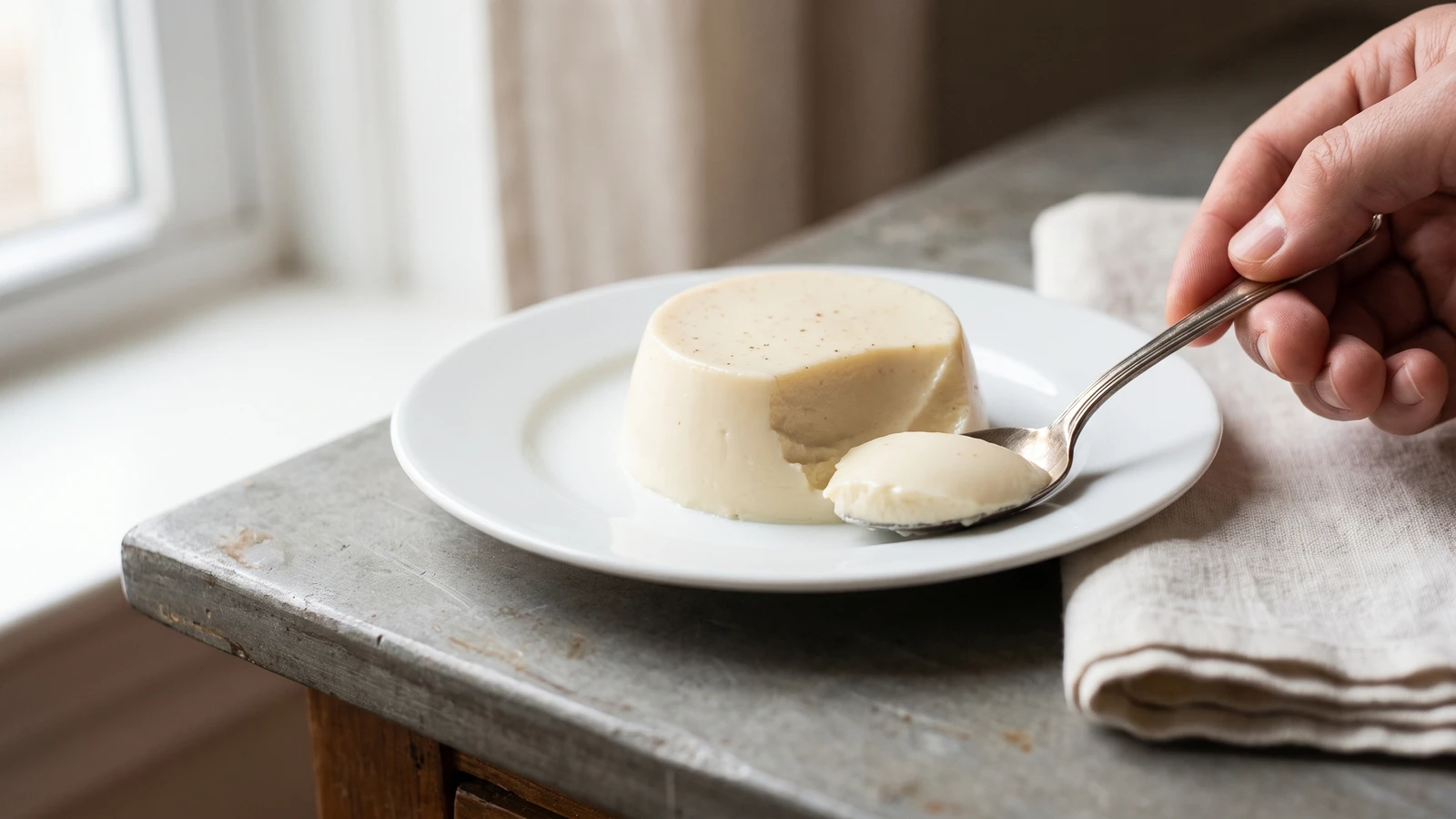
Based on No. 207, Deslignac or Cream Royale, from Le Guide Culinaire (1907) by Auguste Escoffier
Thin cream, one egg, and six yolks meet the gentlest bain-marie, setting into an ivory crème royale that trembles under the spoon and teaches the whole discipline of custard.
Deslignac ou Crème Royale (a savory cream custard) teaches the gentlest rule in the custard family: the bain-marie must poach, never boil. Its reward is an ivory set so fine that a spoon meets almost no resistance, then the custard trembles back into place. Heat it hard and the eggs tighten into grains; hold it below the boil and cream, egg, salt, and nutmeg become silk.
The original entry assumed a brigade hand watching the poaching corner and fine muslin ready beside the basin. Its single pint of thin cream is already a sensible home quantity, so the amount and the one-egg-to-six-yolk ratio stay exactly as written. A fine sieve, damp muslin, and a low oven replace the watched poaching pan. Those are scaffolding changes; gradual tempering and the quiet bain-marie are the dish itself and must stay.
Cooking well is not cooking fancy. Pour the cream slowly, strain without pressing, and judge the custard by its tremble rather than the clock. The one step that decides everything is this: keep the bain-marie below a boil from first pour to final set.
Deslignac belongs to the Parisian classical practice of royales, savory egg custards poached in molds and cut into neat pieces for soup service. It is not a potage crème: the cream is held inside the custard, while royale names the poached garnish itself. The cream-rich Deslignac formula passed readily from grand soup service to bourgeois tables because a home bain-marie could reproduce the same fine set without professional equipment.
Quantity
2⅜ cups (568 ml / 580 g)
Quantity
1
Quantity
6
Quantity
¼ teaspoon (1.25 ml / 1.5 g)
Quantity
⅛ teaspoon (0.6 ml / 0.3 g)
Quantity
1 teaspoon (5 ml / 5 g)
softened, for the mold
| Ingredient | Quantity |
|---|---|
| thin cream, about 18 to 20 percent fat | 2⅜ cups (568 ml / 580 g) |
| large egg | 1 |
| large egg yolks | 6 |
| fine sea salt | ¼ teaspoon (1.25 ml / 1.5 g) |
| freshly grated nutmeg | ⅛ teaspoon (0.6 ml / 0.3 g) |
| unsalted buttersoftened, for the mold | 1 teaspoon (5 ml / 5 g) |
Heat the oven to 300°F (150°C) with a rack in the middle. Butter a 7-inch (18 cm) round mold or shallow 1-quart baking dish very lightly, leaving no thick streaks. Set it inside a deep roasting pan and bring a kettle of water to a boil. The roasting pan is the home equivalent of the brigade's watched poaching bath, giving the eggs gentle, even heat.
Pour the thin cream into a medium saucepan and heat it over medium heat until bubbles gather around the edge and the cream rises into its first full boil. Remove it immediately. The original says to boil the cream, and that brief boil stays; prolonged boiling would reduce it and disturb the formula.
Whisk the whole egg and six yolks in a heatproof bowl until completely blended but not foamy. Pour in the hot cream little by little, beginning with a thin thread and whisking constantly. Once the eggs have warmed, add the remaining cream in a steadier stream, then whisk in the salt and nutmeg. If a few cooked threads appear, stop pouring and whisk firmly until smooth; ça se rattrape, and the muslin will catch what remains. A mixture that becomes grainy throughout has gone too far and must be remade.
Dampen a square of clean muslin or fine cheesecloth, wring it well, and use it to line a fine-mesh sieve set over a jug. Pour the custard through without pressing on the cloth. Let it stand for two minutes, then lift away any foam with a spoon. Straining is what gives the Deslignac its close, silken interior; pressing only forces trapped bubbles back through.
Pour the strained custard into the prepared mold and cover it loosely with foil. Set the roasting pan in the oven, then add enough just-boiled water to reach halfway up the mold. Poach for 35 to 45 minutes, until the edges are set and the center moves as one soft, trembling piece when nudged. An instant-read thermometer at the center should register 169 to 174°F (76 to 79°C). There should be no browning and no hard bubbles in the bath.
Lift the mold from the bain-marie and uncover it. Cool for 20 minutes, then refrigerate for at least 1½ hours, until thoroughly cold and firm enough to cut. Run a thin knife around the edge, dip the base of the mold in warm water for five seconds, and invert it onto a board or flat plate. If it clings, warm the base for another three seconds. Patience, not force.
Cut the Deslignac with a hot, dry knife into small dice, diamonds, or narrow lozenges. Set the pieces in warmed shallow bowls immediately before the surrounding soup is added, so they warm through without breaking apart. The custard should hold its shape on the spoon and yield without resistance. À table!
1 serving (about 90g)
Culinary guides, cultural storytelling, and the editorial depth that makes cooking meaningful.
Discover Culinary ExplorerChef Juliette
Marseille's great fish stew, saffron-gold and garlic-scented, proves that a hard boil can be the careful choice: it binds olive oil into broth before the whole pot meets bread.

Chef Juliette
Waterzoi asks fresh, bone-in river fish to thicken its own buttery broth, with parsley root and pepper for company. No flour, no stockpot, just a brisk simmer watched closely.
Chef Juliette
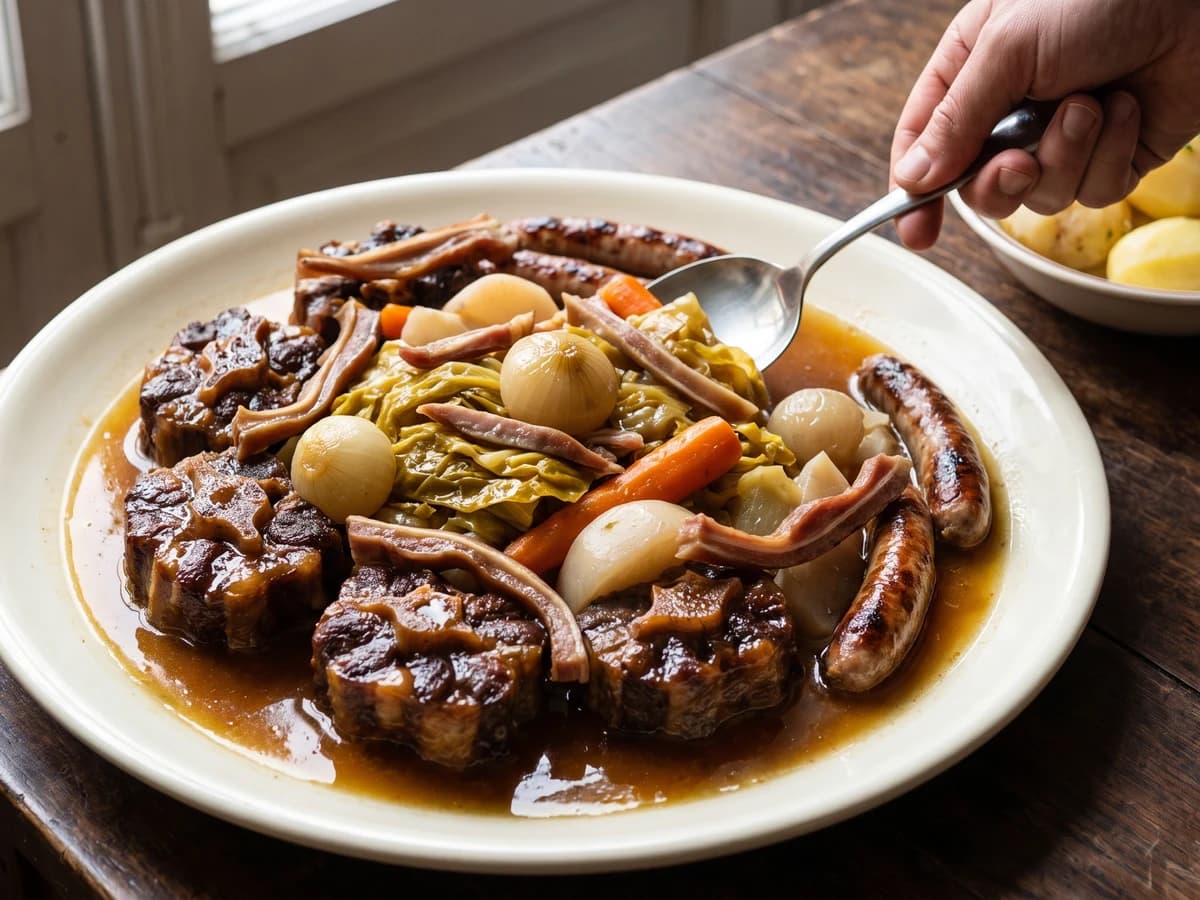
Queue de Bœuf en Hochepot gathers oxtail, pig's trotter and ear, cabbage, roots, and grilled chipolatas around a clear, gelatin-rich broth whose quiet simmer keeps every piece tender and distinct.

Chef Juliette
Beef shoulder larded with bacon, sharpened by red wine and vinegar, then sealed with garlic, vegetables, and dry lemon peel until the low oven turns it yielding and the gravy darkly glossy.