
Chef Juliette
John Dory (St. Pierre)
John Dory has the delicacy of sole and the firmness of turbot. A light flouring, a quick butter sauté, and nut-brown beurre noisette show exactly why looks never mattered.
A cooking platform built around craft, culture, and the stories behind what we eat.

Created by Chef Juliette
Based on No. 1939, Pluviers Dorés (Golden Plover), from Le Guide Culinaire (1907) by Auguste Escoffier
Pluviers dorés need no disguise: four small game birds, buttered and roasted fast on crisp canapés, with their pan fond drawn into a glossy jus de rôti for the table.
Pluviers dorés (golden plover) teach the discipline of roasting small game: the bird already carries its own deep flavor, and the one true thing to know before touching a pan is that minutes decide it. Butter and fierce heat give the skin its bronze. One careless turn too long takes the breast from juicy to dry.
The grand kitchen could call on a saucier, a stock never off the fire, and a salamander, but this entry asks for none of them. Its real assumptions were oven-ready birds and a turning spit. At home, a preheated heavy skillet, a hot oven, and one turn by hand reproduce that even roast for four. The birds are fully eviscerated and checked with a thermometer, honest modern safeguards for wild game. The spit and brigade are scaffolding; the quick roast is the dish. One cook, one stove, one evening.
Set each bird on a canapé (a crisp toast base) and finish the pan as a jus de rôti (roasting jus), enough gloss and savor to carry every bite without disguising the plover. Start checking the temperature before you believe it's ready. That early check is the step that matters most.
Pluviers dorés belong to the market-game repertoire of Picardy and Normandy, moving from marsh and pasture through game dealers to Parisian bourgeois tables. The canon treats them without ceremony: normally roasted, sometimes prepared en salmis, but expressly unsuited to an important dinner, a reminder that menu rank followed fashion as much as flavor. For the salmis, the skin is discarded before the cullis is made; this recipe follows the entry's primary direction and roasts the birds whole and plainly.
Quantity
4, each about 6 to 8 oz (170 to 225 g)
plucked and fully eviscerated
Quantity
6 tablespoons (90 ml / 85 g)
divided
Quantity
4 slices (about 5½ oz / 160 g total)
crusts trimmed
Quantity
1 teaspoon (5 ml / 6 g)
Quantity
½ teaspoon (2.5 ml / 1 g)
Quantity
½ cup (120 ml / 120 g), plus 1 tablespoon (15 ml / 15 g) if needed
| Ingredient | Quantity |
|---|---|
| legally sourced, oven-ready golden ploversplucked and fully eviscerated | 4, each about 6 to 8 oz (170 to 225 g) |
| unsalted butterdivided | 6 tablespoons (90 ml / 85 g) |
| pain de miecrusts trimmed | 4 slices (about 5½ oz / 160 g total) |
| fine sea salt | 1 teaspoon (5 ml / 6 g) |
| freshly ground black pepper | ½ teaspoon (2.5 ml / 1 g) |
| water | ½ cup (120 ml / 120 g), plus 1 tablespoon (15 ml / 15 g) if needed |
Heat the oven to 450°F (230°C), with a rack in the upper-middle position. Melt 2 tablespoons (30 ml / 28 g) butter in a 12-inch (30 cm) ovenproof skillet over medium heat. Fry the pain de mie until crisp and deep gold on both sides, about 2 minutes per side, then set the canapés on a wire rack. Wipe loose crumbs from the skillet and place it in the oven for 8 minutes; the hot metal stands in for the turning spit's immediate heat.
While the skillet heats, inspect each bird under a strong light and feel carefully along any shot channels. Remove visible pellets and trim away bruised or heavily bloodshot flesh; reject any bird with a sour smell or sticky cavity. Do not rinse the birds, since splashing only spreads contamination. Pat them thoroughly dry, season inside and out with the salt and pepper, and tie the legs loosely together. Melt 2 tablespoons (30 ml / 28 g) butter and brush it over every surface.
Using dry oven mitts, lift out the hot skillet and arrange the plovers breast-side up without crowding. Roast for 6 minutes, turn each bird onto one side for 3 minutes, then onto the other side for another 3 minutes, basting with the butter in the pan at every turn. Return them breast-side up and begin checking immediately with a fine-probe thermometer. Remove each bird separately when both the inner thigh and thickest breast reach 165°F (74°C), usually after another 2 to 5 minutes. The skin should be taut and chestnut-bronze. If it darkens too quickly, cover only the breast with a small piece of foil; if one bird cooks ahead of the others, take it out rather than making it wait.
Place each plover on a canapé set on a warm serving platter and rest uncovered for 5 minutes. The bread catches the buttery juices while the skin stays crisp. If a bird went beyond its temperature, rest it for only 3 minutes and serve it with a generous spoonful of jus; no sauce can uncook the breast, but quick service prevents the dryness from taking over.
Pour away excess fat from the skillet, leaving the mahogany fond and about 1 teaspoon behind; discard any blackened butter solids, which taste bitter. Set the pan over medium-high heat, add ½ cup (120 ml / 120 g) water, and scrape until every savory brown trace dissolves. Reduce by half, then take the skillet off the heat. Monter au beurre (finish by whisking in cold butter) with the remaining 2 tablespoons (30 ml / 28 g), added a little at a time, until the jus shines and lightly coats a spoon. If greasy beads appear, stop and whisk in 1 teaspoon cold water away from the heat before continuing slowly. Ça se rattrape. Taste and correct the seasoning.
Spoon the jus around the plovers and over the edges of the canapés, leaving the bronzed skin uncovered. Give each guest one whole bird and offer the remaining jus at the table. Small game has fine bones, so provide a sharp knife and let everyone eat attentively. Cooking well is not cooking fancy. À table!
1 serving (about 230g)
Culinary guides, cultural storytelling, and the editorial depth that makes cooking meaningful.
Discover Culinary ExplorerChef Juliette
John Dory has the delicacy of sole and the firmness of turbot. A light flouring, a quick butter sauté, and nut-brown beurre noisette show exactly why looks never mattered.

Chef Juliette
Fresh haddock proves its delicacy in the meunière pan: a fine flour crust, moist pearly flakes, and beurre noisette sharpened with lemon and parsley, ready from one skillet in half an hour.
Chef Juliette
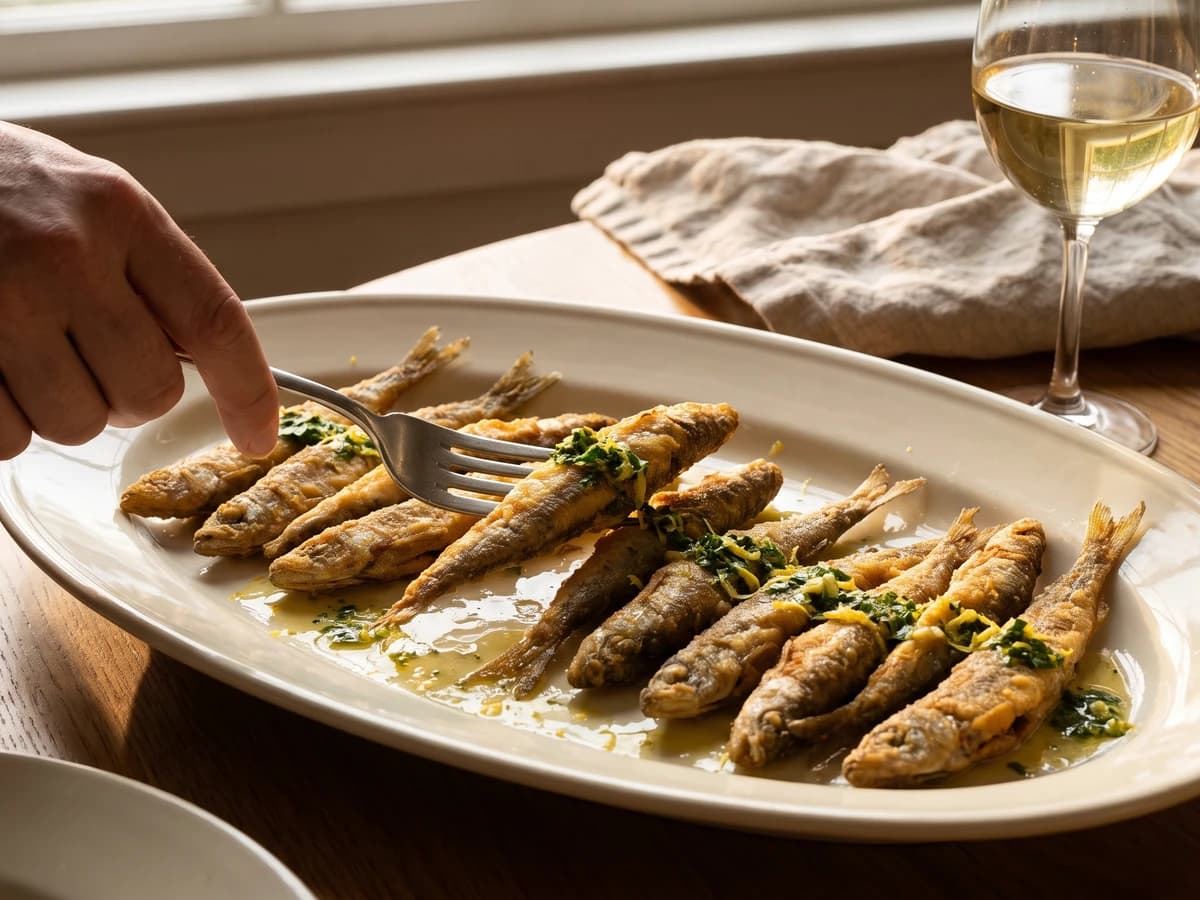
Éperlans à l’Anglaise turns small fish into a lesson in disciplined coating: boned smelts under a close, crisp crumb, pan-fried in clarified butter and finished with bright, half-melted maître d’hôtel butter.

Chef Juliette
Tiny smelts, shallot, mushrooms, white wine, gratin sauce, and fine bread raspings meet a fierce oven, where the fish must turn tender in the same breath the buttered crust bronzes.