
Chef Juliette
John Dory (St. Pierre)
John Dory has the delicacy of sole and the firmness of turbot. A light flouring, a quick butter sauté, and nut-brown beurre noisette show exactly why looks never mattered.
A cooking platform built around craft, culture, and the stories behind what we eat.
Created by Chef Juliette
Based on No. 1936, Canards Sauvages (Wild Duck), from Le Guide Culinaire (1907) by Auguste Escoffier
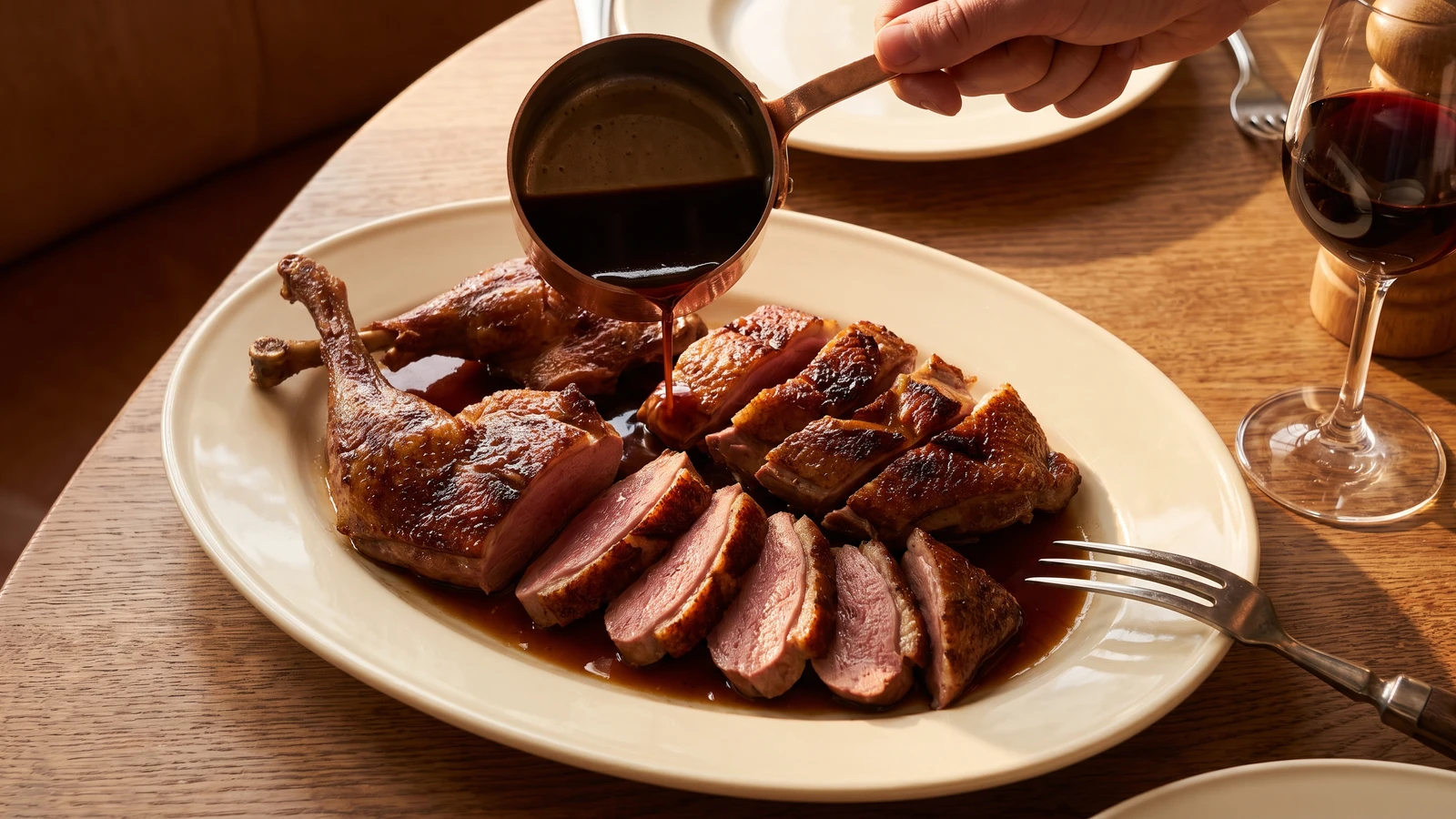
Canards sauvages needs fierce heat, a calm hand, and no overcooking: roast two lean birds until the skin bronzes, then press the warm carcasses into a glossy, wine-dark jus.
Canards sauvages rôtis teaches one uncompromising truth: wild duck carries little forgiving fat, so roast it fiercely, measure the breast early, and pull it while the flesh is still rosy. Gentle roasting only gives the lean meat more time to dry. Heat first, attention second, and no wandering away from the stove.
The source is brief because its professional kitchen supplied everything the page left unsaid: a rôtisseur at the spit, a saucier beside a stockpot never off the fire, a duck press, and a salamander for fierce finishing heat. At home, a heavy roasting pan and the upper oven rack replace the spit and salamander, good unsalted stock replaces the permanent stockpot, and a sturdy sieve with a ladle replaces the press. Two small birds feed four. One cook, one stove, one evening.
The brigade coordination was scaffolding, so it can go. What stays is the intent: hard roasting, rosy breast, and a warm carcass pressed into the jus until the sauce tastes unmistakably of the bird. Begin checking the breast before you think it can be ready. A thin sauce can reduce another minute; dry wild duck cannot be sent backward.
Canards sauvages belong to shooting tables from the ponds of Sologne to the marshes of the Somme, while Rouen in Normandy gave the canon its most exacting language of pressed duck and concentrated sauce. Professional kitchens carried roast wild duck into salmis and the Rouennaise family, using the carcass as deliberately as the breast meat. Salmis is often mistaken for a stew begun with raw duck, but it starts with roasted game, which is carved and finished gently in sauce so the lean flesh remains tender.
Quantity
2, each 1¼ to 1½ pounds (570 to 680 g)
necks, wing tips, hearts, and gizzards reserved
Quantity
2 teaspoons (10 ml / 12 g), plus more to taste
Quantity
1 teaspoon (5 ml / 2 g)
Quantity
3 tablespoons (45 ml / 42 g)
softened and divided
Quantity
2, about ½ cup (120 ml / 80 g)
thinly sliced
Quantity
1 cup (240 ml / 235 g)
Quantity
2 cups (480 ml / 480 g)
Quantity
1
Quantity
4 tablespoons (60 ml / 57 g)
cut into small cubes
| Ingredient | Quantity |
|---|---|
| whole oven-ready wild ducksnecks, wing tips, hearts, and gizzards reserved | 2, each 1¼ to 1½ pounds (570 to 680 g) |
| fine sea salt | 2 teaspoons (10 ml / 12 g), plus more to taste |
| freshly ground black pepper | 1 teaspoon (5 ml / 2 g) |
| unsalted buttersoftened and divided | 3 tablespoons (45 ml / 42 g) |
| small shallotsthinly sliced | 2, about ½ cup (120 ml / 80 g) |
| dry red wine | 1 cup (240 ml / 235 g) |
| unsalted duck or chicken stock | 2 cups (480 ml / 480 g) |
| bouquet garni of parsley stems, thyme, and bay | 1 |
| cold unsalted buttercut into small cubes | 4 tablespoons (60 ml / 57 g) |
Run your fingers carefully over each duck and remove any pinfeathers or visible shot. Cut away bloodshot or badly bruised flesh rather than carrying its metallic bitterness into the jus. Remove the necks, wing tips, hearts, and gizzards for the sauce, discarding any organ damaged by shot. Pat the birds very dry, season them inside and out with the salt, and leave them at room temperature for 30 minutes while you begin the sauce. Tie the legs loosely together, but don't bind the birds into tight parcels; exposed skin browns better.
Melt 1 tablespoon (15 ml / 14 g) of the softened butter in a 2-quart saucepan over medium-high heat. Brown the necks, wing tips, hearts, and gizzards until they leave a dark fond, the browned deposits that give the sauce its backbone. Add the shallots and cook until lightly colored. Pour in the red wine, scrape the pan floor clean, and reduce to about ¼ cup (60 ml / 60 g). Add the stock and bouquet garni, then simmer briskly for 20 to 25 minutes. Strain, pressing the trimmings firmly, and reduce the liquid to about 1 cup (240 ml / 240 g). Keep it warm.
Heat the oven to 475°F (245°C) with a heavy roasting pan on a rack in the upper third. Rub the ducks with the remaining 2 tablespoons (30 ml / 28 g) softened butter and the pepper, then place them breast-side up in the hot pan. Roast for 10 minutes, rotate the pan, and continue for 8 to 14 minutes. Begin checking early. For the classical rosy service, pull the birds when the thickest part of each breast reaches 140°F (60°C); the temperature will rise as they rest. The fierce upper heat replaces the old salamander and gives the skin its bronze before the lean breast dries. If you require the public-health target of 165°F (74°C), lower the oven to 400°F (205°C) after the first 10 minutes and continue cooking to that temperature.
Transfer the ducks to a board and rest them for 10 minutes with the breast skin uncovered. Pour the roasting juices into the sauce foundation, leaving behind any scorched specks. Remove each leg through the joint, then take off the breasts in whole lobes by following the breastbone with a sharp knife. If a leg joint still feels firm, return the legs to the oven for 5 to 8 minutes while the breasts continue resting. Keep the breast lobes whole until the sauce is finished so they lose as little juice as possible.
Cut the warm carcasses into manageable pieces with poultry shears. Set them in a sturdy fine-mesh sieve or chinois over the saucepan and crush firmly with the base of a ladle, forcing every dark juice into the sauce. Ladle a little hot sauce over the bones, press once more, then discard the spent carcasses. A professional kitchen used a duck press and a saucier working beside it; the sieve and ladle are the honest home equivalent. The apparatus is scaffolding and can go. Pressing the warm carcass is the dish and must stay.
Bring the sauce to a full simmer for 3 minutes, then reduce it until about ¾ cup (180 ml / 180 g) remains and it lightly coats the back of a spoon. Taste before adding salt, because the reduction concentrates everything. Remove the pan from the heat and make the jus monté au beurre, finished by whisking in cold butter, one cube at a time. Do not boil it again. If the sauce turns greasy or separates, stop adding butter and whisk in 1 teaspoon (5 ml / 5 g) cold water off the heat. Ça se rattrape. If it becomes too intense, loosen it with a spoonful of warm stock.
Slice each breast across the grain into thick pieces and arrange them with the legs on a warmed platter. Spoon a little sauce beneath and around the meat, keeping the bronzed skin exposed, then serve the remaining jus from a warm sauceboat. Canards sauvages waits for nobody once carved. À table!
1 serving (about 190g)
Culinary guides, cultural storytelling, and the editorial depth that makes cooking meaningful.
Discover Culinary ExplorerChef Juliette
John Dory has the delicacy of sole and the firmness of turbot. A light flouring, a quick butter sauté, and nut-brown beurre noisette show exactly why looks never mattered.

Chef Juliette
Fresh haddock proves its delicacy in the meunière pan: a fine flour crust, moist pearly flakes, and beurre noisette sharpened with lemon and parsley, ready from one skillet in half an hour.
Chef Juliette
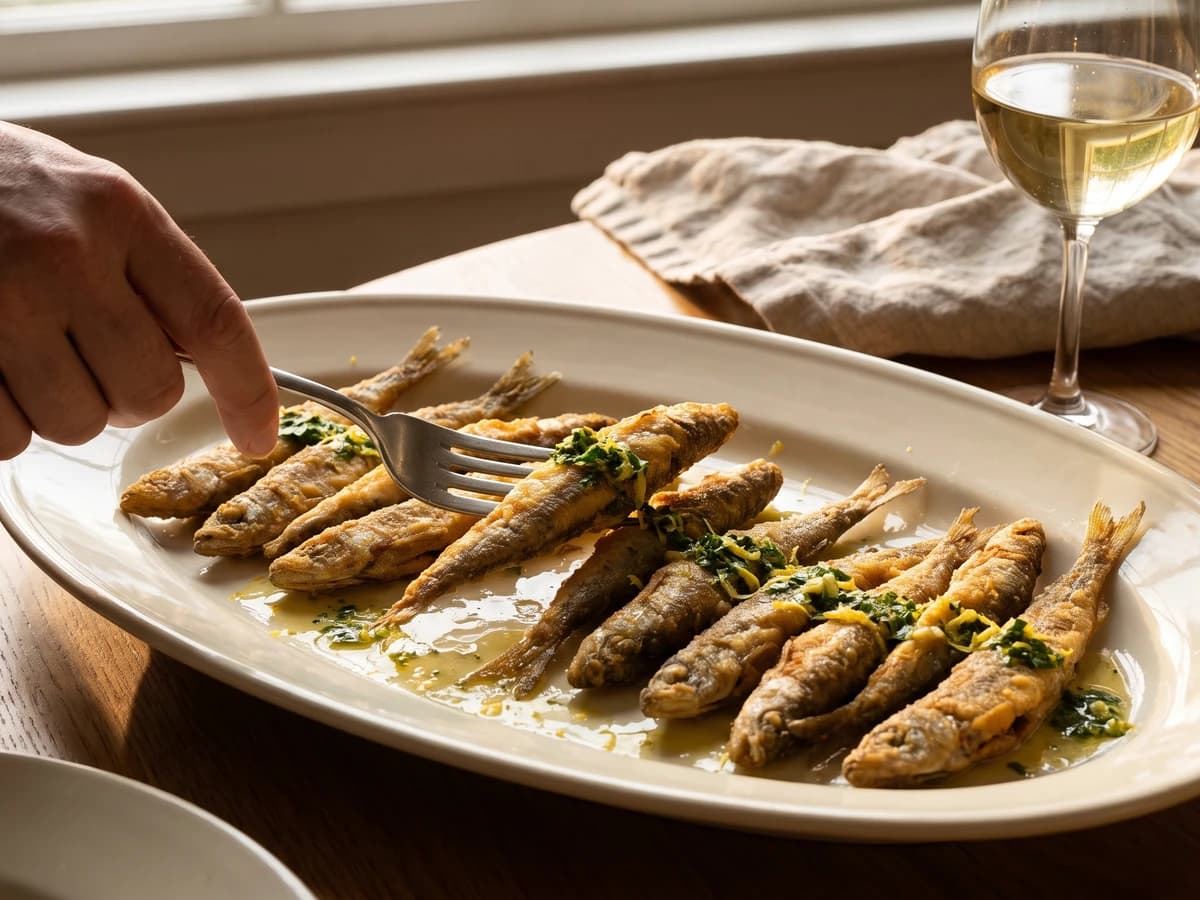
Éperlans à l’Anglaise turns small fish into a lesson in disciplined coating: boned smelts under a close, crisp crumb, pan-fried in clarified butter and finished with bright, half-melted maître d’hôtel butter.

Chef Juliette
Tiny smelts, shallot, mushrooms, white wine, gratin sauce, and fine bread raspings meet a fierce oven, where the fish must turn tender in the same breath the buttered crust bronzes.