
Chef Juliette
John Dory (St. Pierre)
John Dory has the delicacy of sole and the firmness of turbot. A light flouring, a quick butter sauté, and nut-brown beurre noisette show exactly why looks never mattered.
A cooking platform built around craft, culture, and the stories behind what we eat.
Created by Chef Juliette
Based on No. 1928, Grives et Merles Froids, from Le Guide Culinaire (1907) by Auguste Escoffier
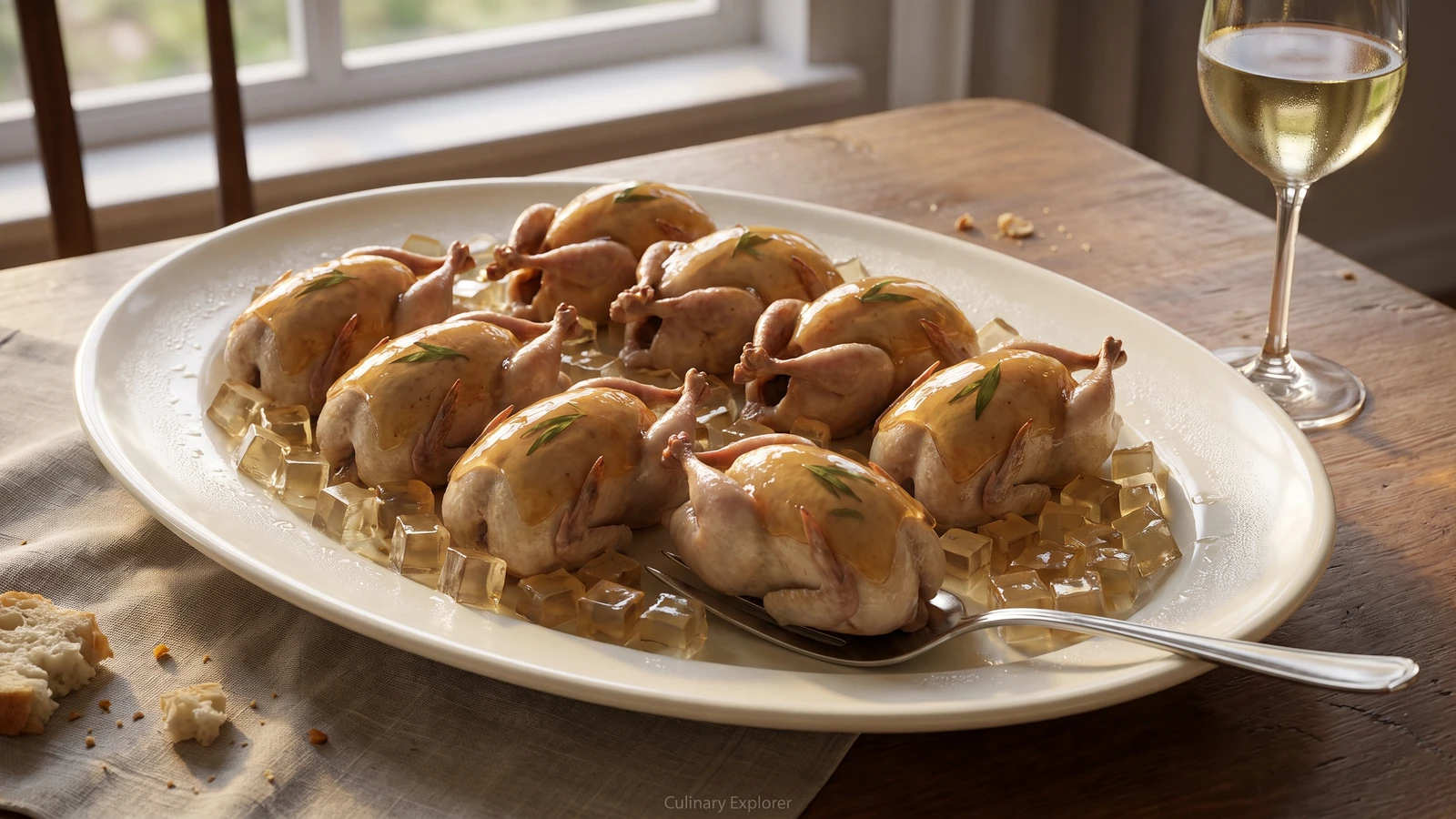
Chilled quail take the place of protected wild songbirds, poached gently in aromatic liquor and lacquered beneath clear Madeira aspic. The lesson is patience: each cold layer must set before the next is poured.
Grives et Merles Froids (cold thrushes and blackbirds) teaches the discipline of gelée (clear savory jelly): the next layer goes on only when the last is cold and just firm. Pour warm jelly over a barely set coat and the whole surface slides into cloudy ridges. That is the one true thing to know before touching a pan.
The source assumes a garde-manger with the cold quail formulas already mastered, a stockpot never off the fire, enough birds for a buffet, and legal access to wild thrushes and blackbirds. A home kitchen gets farmed quail, one shallow pan, powdered gelatin, and a refrigerator. The substitution is exact in intent because the entry itself directs the cold quail repertoire onto these birds, except anything built around a Granité; this version takes the clear jelly path. One cook, one stove, one evening of work, then the cold finishes the job.
The brigade's battery of molds, decorative trimming, and repeated pots of aspic is scaffolding, so it goes. Gentle poaching, cooling the birds in their own liquor, clarifying that liquor, and setting each jelly coat separately are the dish, so they stay. The reward is a platter of small bronze birds beneath a lucid amber glaze, chilled through but not numb. Before assembly, make certain both the quail and the jelly are truly cold; that single pause decides the finish.
Grives belonged especially to the game larders of Provence, while merles also appeared on hunting tables in Corsica and the Mediterranean South. The grand kitchen carried both birds into the garde-manger, the cold side of the classical kitchen, and treated them according to the same family of preparations used for quail, sometimes under clear jelly and sometimes in richer cold presentations. The source entry is therefore a rule of equivalence rather than a separate formula, and farmed quail preserves that rule today where wild songbirds are protected or tightly restricted.
Quantity
8 (about 5 to 6 oz / 140 to 170 g each)
giblets removed and patted dry
Quantity
2 teaspoons (10 ml / 12 g)
divided
Quantity
1 teaspoon (5 ml / 2 g)
lightly crushed
Quantity
2 tablespoons (30 ml / 28 g)
Quantity
2 medium (about 1/2 cup / 120 g)
sliced
Quantity
1 medium (about 3/4 cup / 100 g)
sliced
Quantity
1 large stalk (about 1/2 cup / 60 g)
sliced
Quantity
1 cup (240 ml / 240 g)
Quantity
1/2 cup (120 ml / 120 g)
divided
Quantity
4 cups (960 ml / 960 g)
Quantity
2 cups (480 ml / 480 g)
divided
Quantity
1
Quantity
2
Quantity
2 tablespoons plus 1 teaspoon (35 ml / 21 g)
Quantity
1 tablespoon (15 ml / 15 g)
Quantity
24
Quantity
1 teaspoon (5 ml / 3 g)
Quantity
1 tablespoon (15 ml / 15 g)
| Ingredient | Quantity |
|---|---|
| farmed whole quailgiblets removed and patted dry | 8 (about 5 to 6 oz / 140 to 170 g each) |
| fine sea saltdivided | 2 teaspoons (10 ml / 12 g) |
| black peppercornslightly crushed | 1 teaspoon (5 ml / 2 g) |
| unsalted butter | 2 tablespoons (30 ml / 28 g) |
| shallotssliced | 2 medium (about 1/2 cup / 120 g) |
| carrotsliced | 1 medium (about 3/4 cup / 100 g) |
| celerysliced | 1 large stalk (about 1/2 cup / 60 g) |
| dry white wine | 1 cup (240 ml / 240 g) |
| medium-dry Madeiradivided | 1/2 cup (120 ml / 120 g) |
| unsalted chicken stock | 4 cups (960 ml / 960 g) |
| waterdivided | 2 cups (480 ml / 480 g) |
| bouquet garni of parsley stems, thyme, and bay | 1 |
| large egg whites | 2 |
| unflavored powdered gelatin | 2 tablespoons plus 1 teaspoon (35 ml / 21 g) |
| fresh lemon juice | 1 tablespoon (15 ml / 15 g) |
| small tarragon leaves | 24 |
| additional unflavored powdered gelatin (optional) | 1 teaspoon (5 ml / 3 g) |
| cold water for additional gelatin (optional) | 1 tablespoon (15 ml / 15 g) |
Season the quail inside and out with 1 teaspoon of the salt, then tie each bird's legs loosely together so it keeps a compact shape. Leave them in the cold while you slice the vegetables and prepare a large ice bath. The ice bath is part of the mise en place, not an afterthought; these birds must cool quickly while resting in their own cooking liquor.
Melt the butter in a wide, heavy casserole over medium heat. Brown the quail in two batches, turning until the skin is evenly pale bronze rather than deeply roasted, then lift them out. Add the shallots, carrot, and celery and cook gently for 5 minutes without darkening them. Pour in the white wine and 1/4 cup (60 ml / 60 g) of the Madeira, scraping up the fond, the flavorful glaze on the pan floor. Reduce the wine by half.
Add the chicken stock, 1 3/4 cups (420 ml / 420 g) of the water, the bouquet garni, and the peppercorns. Hold back the remaining water for adjusting the jelly. Simmer the liquor gently for 10 minutes, then return the quail breast-side up. Lay a round of baking parchment directly on the surface and cover the pan. Poach at the barest tremble for 18 to 22 minutes, turning the birds once, until the thickest part of a thigh reaches 165°F (74°C). A boil tightens the meat and clouds the liquor, so lower the heat the moment the surface becomes lively.
Transfer the quail to a shallow nonreactive dish. Strain the hot cooking liquor over them, discarding the vegetables and bouquet garni, then set the dish in the prepared ice bath. Move the liquor gently around the birds until it is no longer warm, about 20 minutes. Cover and refrigerate the birds submerged in their liquor for about 2 hours. Do not leave the deep cooking pot to cool on the counter; quick, shallow chilling protects both texture and safety.
Lift out the cold quail, remove their strings, and blot them very dry. Keep them covered in the refrigerator. Skim every trace of set fat from the cold liquor, then whisk in the egg whites until frothy. Heat very slowly in a clean saucepan, stirring gently only until white flecks begin to rise. Stop stirring and hold the liquid at a bare simmer for 15 minutes while the whites gather into a raft. Make a small opening in the raft and ladle the clear liquor through a fine sieve lined with damp cheesecloth. Never press the raft. If hard boiling breaks it into the liquor, let everything settle for 10 minutes and strain again through fresh damp cloth.
Add the remaining 1/4 cup (60 ml / 60 g) Madeira and the lemon juice to the clarified liquor. Measure it, then reduce gently or add enough of the reserved water to make exactly 4 cups (960 ml / 960 g). Taste a spoonful chilled over ice and add the remaining salt as needed; cold mutes seasoning. Put 3/4 cup (180 ml / 180 g) of the cold liquor in a bowl and sprinkle the 21 g gelatin evenly over it. Leave it for 5 minutes. Heat the remaining liquor until hot but not boiling, then whisk in the bloomed gelatin until completely dissolved. Test a spoonful on a cold saucer for 5 minutes. It should hold a clean, tender wobble. If it remains loose, bloom the optional 3 g gelatin in the 1 tablespoon water and melt it into the warm aspic. If it is too firm, loosen it with reserved water, a tablespoon at a time.
Chill a 16 to 18 inch (40 to 45 cm) rimmed oval platter. Pour in enough aspic to make a 1/4 inch (6 mm) base, then refrigerate it for 15 to 20 minutes, until set but still slightly tacky. Cool the remaining aspic over ice until it thickens to the consistency of light syrup. If it sets in the bowl, warm it briefly over barely warm water and stir until fluid again.
Arrange the cold, dry quail in two close rows on the set base. Spoon a very thin film of syrupy aspic over each bird and refrigerate for about 10 minutes. Press three tarragon leaves onto each tacky breast, seal them with another thin coat, and chill again. Repeat until every bird wears three or four clear coats. Each coat must be cold and firm before the next goes on. If a warm coat melts the one beneath it, stop, collect the loose jelly, chill the birds until firm, and begin that coat again more thinly. Ça se rattrape.
Pour any remaining aspic into a shallow tray, let it set, then cut it into small irregular cubes and arrange them around the quail. Cover the platter without touching the glaze and refrigerate for at least 4 hours, preferably overnight. Bring it out 10 minutes before serving so the jelly softens from rigid to tender while remaining properly cold. Serve two quail per person with sharp dressed leaves and toasted country bread. À table!
1 serving (about 285g)
Culinary guides, cultural storytelling, and the editorial depth that makes cooking meaningful.
Discover Culinary ExplorerChef Juliette
John Dory has the delicacy of sole and the firmness of turbot. A light flouring, a quick butter sauté, and nut-brown beurre noisette show exactly why looks never mattered.

Chef Juliette
Fresh haddock proves its delicacy in the meunière pan: a fine flour crust, moist pearly flakes, and beurre noisette sharpened with lemon and parsley, ready from one skillet in half an hour.
Chef Juliette
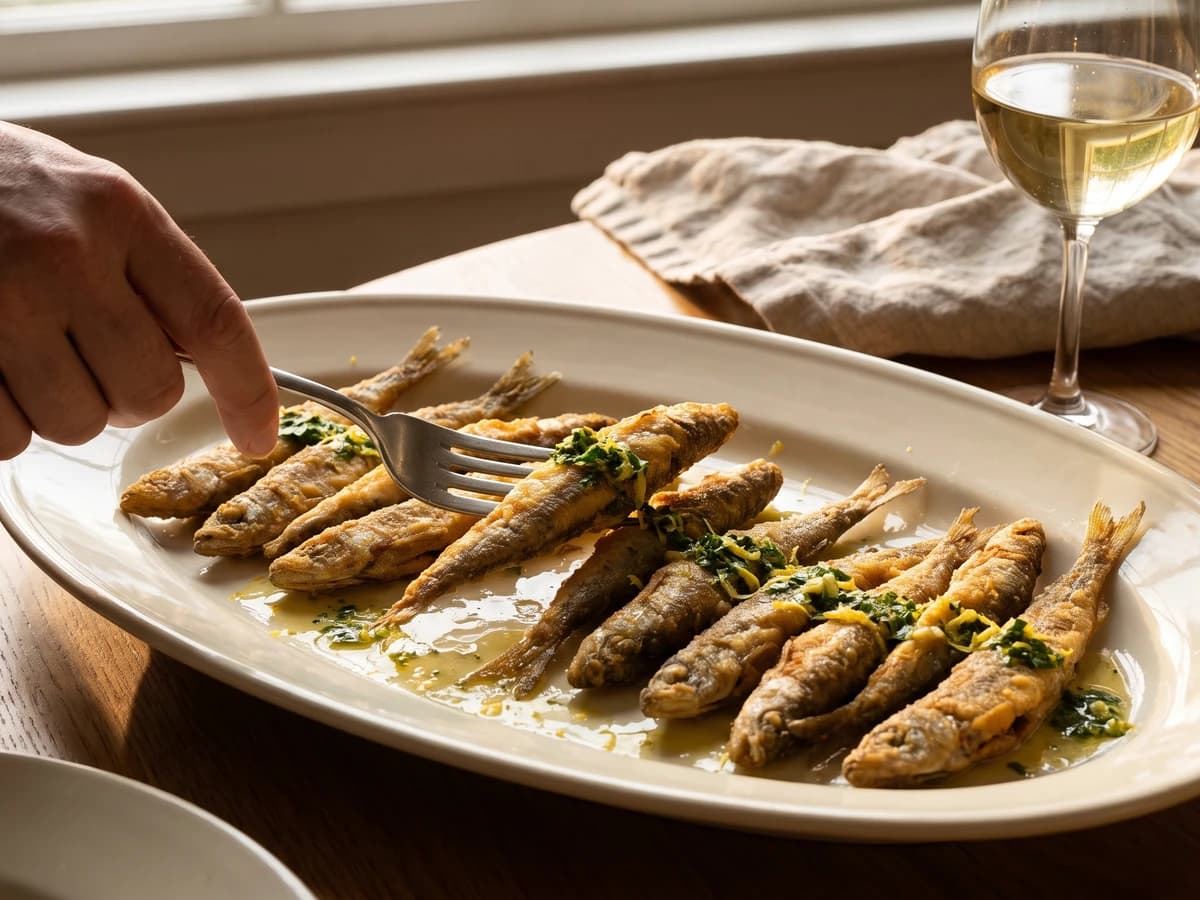
Éperlans à l’Anglaise turns small fish into a lesson in disciplined coating: boned smelts under a close, crisp crumb, pan-fried in clarified butter and finished with bright, half-melted maître d’hôtel butter.

Chef Juliette
Tiny smelts, shallot, mushrooms, white wine, gratin sauce, and fine bread raspings meet a fierce oven, where the fish must turn tender in the same breath the buttered crust bronzes.