
Chef Juliette
John Dory (St. Pierre)
John Dory has the delicacy of sole and the firmness of turbot. A light flouring, a quick butter sauté, and nut-brown beurre noisette show exactly why looks never mattered.
A cooking platform built around craft, culture, and the stories behind what we eat.

Created by Chef Juliette
Based on No. 1926, Grives ou Merles à la Bonne-Femme, from Le Guide Culinaire (1907) by Auguste Escoffier
Small birds teach fast sautéing: farmed quail, salted bacon, real butter, crisp croûtons, and brandy lifted from the fond, covered in a hot cocotte and rushed straight to the table.
Grives ou Merles à la Bonne-Femme (thrushes or blackbirds in the good-wife style) teaches timing, not complication. The one true thing to know before touching a pan is that everything must be ready to move: croûtons crisp, cocotte hot, table set. Small birds go cold faster than you can arrange them, and the covered rush to the table is part of the technique.
A saucier on staff, a stockpot never off the fire, and a salamander have no work here. The professional assumption was parallel hands, freshly dressed game, and a hot cocotte, a small lidded casserole, waiting beside the range. In a home kitchen, farmed jumbo quail are the honest equivalent because grives and merles are restricted or unavailable in many places; one skillet works in sequence, and the oven heats the cocotte. I have changed the bird and scaled the dish to four, not the flavorings, order, or per-bird proportions of poitrine salée, unsmoked salt pork, and serving butter. Parallel hands are brigade scaffolding. Butter-fried croûtons, the hot cocotte, and brandy lifting the fond, the browned film in the skillet, are the dish.
The result is unabashedly generous: bronze quail, tiny salty cubes, crisp bread drinking in butter, and just enough brandy to sharpen the pan juices. One cook, one stove, one evening. The deciding step is the short sauté: color the quail deeply and cook them through without letting the butter scorch.
Grives ou merles à la bonne-femme belongs to the bourgeois French game table rather than to one province, drawing on the seasonal hunting of small birds in vineyard and orchard country. Bonne-femme does not name one universal sauce; here it means a direct household manner, birds sautéed with salted pork, transferred to a hot cocotte, and finished with fried bread and their own brandy-lifted pan juices. Classical kitchens formalized the proportions and service, while the present home table turns to farmed quail wherever wild thrushes and blackbirds cannot lawfully be bought.
Quantity
4 (about 6 to 7 oz / 170 to 200 g each)
oven-ready and patted very dry
Quantity
3/4 cup (4 oz / 113 g)
cut into very small dice
Quantity
3 tablespoons (45 ml / 43 g)
divided
Quantity
1/3 cup (80 ml / 76 g)
exactly 2/3 oz per bird
Quantity
4 thick slices (about 2 cups / 120 g once cut)
crusts removed and cut into sixteen 2-inch squares
Quantity
3 tablespoons (45 ml / 43 g)
Quantity
2 teaspoons (10 ml / 9 g)
| Ingredient | Quantity |
|---|---|
| jumbo whole farmed quailoven-ready and patted very dry | 4 (about 6 to 7 oz / 170 to 200 g each) |
| poitrine salée (unsmoked salt pork)cut into very small dice | 3/4 cup (4 oz / 113 g) |
| unsalted butter for sautéingdivided | 3 tablespoons (45 ml / 43 g) |
| unsalted butter for the hot cocotteexactly 2/3 oz per bird | 1/3 cup (80 ml / 76 g) |
| firm white bread for square croûtonscrusts removed and cut into sixteen 2-inch squares | 4 thick slices (about 2 cups / 120 g once cut) |
| unsalted butter for frying the croûtons | 3 tablespoons (45 ml / 43 g) |
| brandy, preferably Cognac | 2 teaspoons (10 ml / 9 g) |
Heat the oven to 200°F (95°C) and place a 3-quart lidded cocotte inside, with its lid beside it, so both become thoroughly hot. Tie each quail's legs together if they splay, then pat the birds dry again. Measure the brandy into a small cup, arrange the butter and poitrine salée beside the stove, and set out a rack for the croûtons. Once the birds enter the skillet, there should be no hunt for a spoon or serving dish.
Melt the croûton butter in a wide skillet over medium heat. When the foam quiets, add the bread squares in one layer and fry until crisp and deeply golden on both sides, turning them as necessary, about 4 to 6 minutes. Move them to the rack rather than paper, which traps moisture underneath. If they soften while waiting, return them to a dry skillet for 30 seconds just before service.
Wipe loose crumbs from the skillet and melt 2 tablespoons of the sautéing butter over medium heat, keeping the final tablespoon nearby. Add the poitrine salée and cook until its fat turns translucent and the tiny edges begin to bronze, about 3 minutes. Add the quail breast-side down, leaving room between them, and sauté for 12 to 15 minutes, rolling them onto every side and basting constantly with the butter and rendered pork fat. Add the reserved tablespoon of butter as the pan dries. The birds are ready when their skin is evenly burnished and the thickest part of each thigh reaches 165°F (74°C).
Remove the hot cocotte from the oven and add the full 1/3 cup of serving butter, swirling until it melts. Transfer the quail and every dice of poitrine salée into it, leaving the sautéing skillet and its fond undisturbed. Set the cocotte over low heat for 1 minute and baste the birds with the fresh butter. Arrange the crisp square croûtons around them, keeping their browned faces visible.
Take the sautéing skillet completely off the burner before adding the measured brandy, and never pour directly from the bottle. Scrape the bronze fond into the brandy, then return the skillet to low heat for 15 to 20 seconds, just until the liquid becomes a few fragrant, glossy spoonfuls. If any patch of fond is black, leave it behind; swirl the brandy with a teaspoon of clean butter from the cocotte instead. Spoon the pan swillings over the quail and croûtons, cover at once, and carry the cocotte directly to the table. Do not hold it. À table!
1 serving (about 190g)
Culinary guides, cultural storytelling, and the editorial depth that makes cooking meaningful.
Discover Culinary ExplorerChef Juliette
John Dory has the delicacy of sole and the firmness of turbot. A light flouring, a quick butter sauté, and nut-brown beurre noisette show exactly why looks never mattered.

Chef Juliette
Fresh haddock proves its delicacy in the meunière pan: a fine flour crust, moist pearly flakes, and beurre noisette sharpened with lemon and parsley, ready from one skillet in half an hour.
Chef Juliette
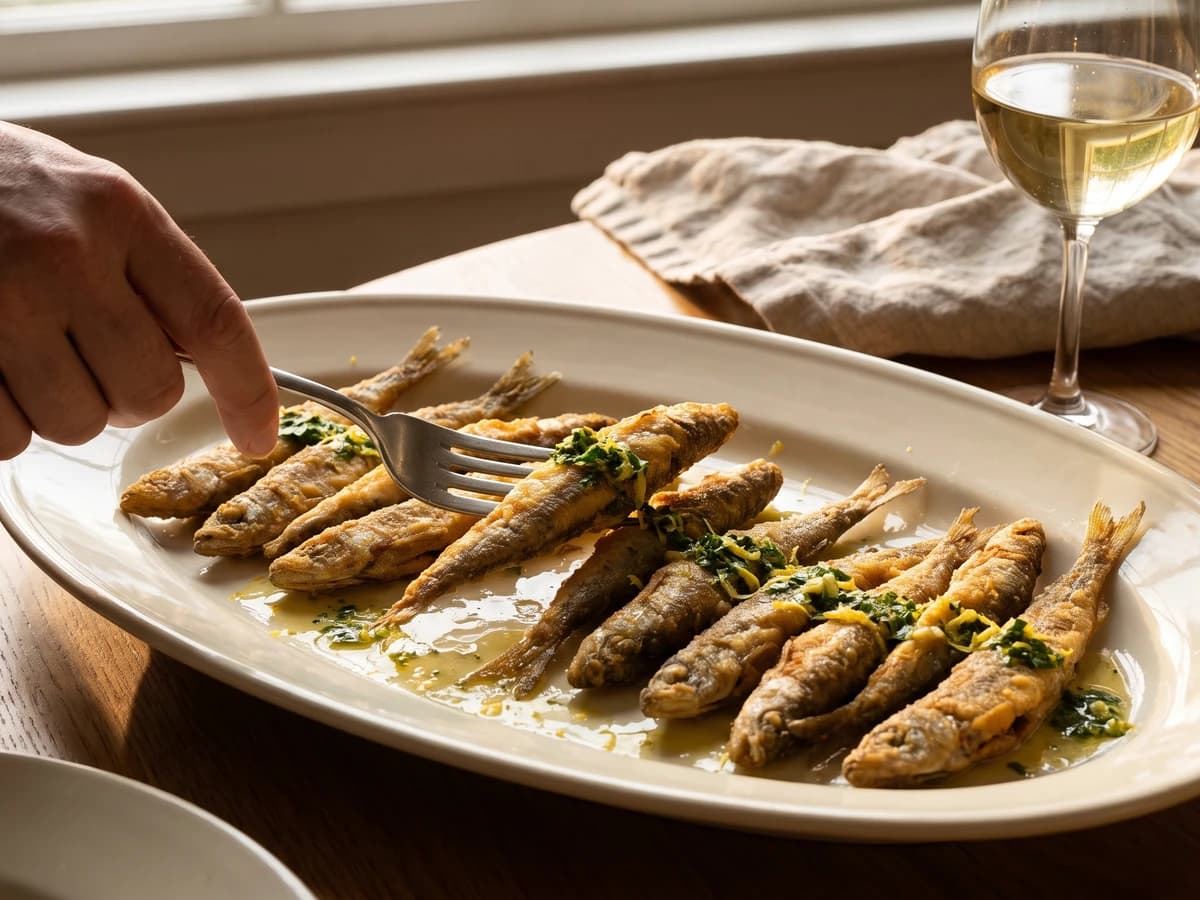
Éperlans à l’Anglaise turns small fish into a lesson in disciplined coating: boned smelts under a close, crisp crumb, pan-fried in clarified butter and finished with bright, half-melted maître d’hôtel butter.

Chef Juliette
Tiny smelts, shallot, mushrooms, white wine, gratin sauce, and fine bread raspings meet a fierce oven, where the fish must turn tender in the same breath the buttered crust bronzes.