
Chef Juliette
John Dory (St. Pierre)
John Dory has the delicacy of sole and the firmness of turbot. A light flouring, a quick butter sauté, and nut-brown beurre noisette show exactly why looks never mattered.
A cooking platform built around craft, culture, and the stories behind what we eat.
Created by Chef Juliette
Based on No. 1925, Grives et Merles de Corse (Thrushes and Corsican Blackbirds), from Le Guide Culinaire (1907) by Auguste Escoffier
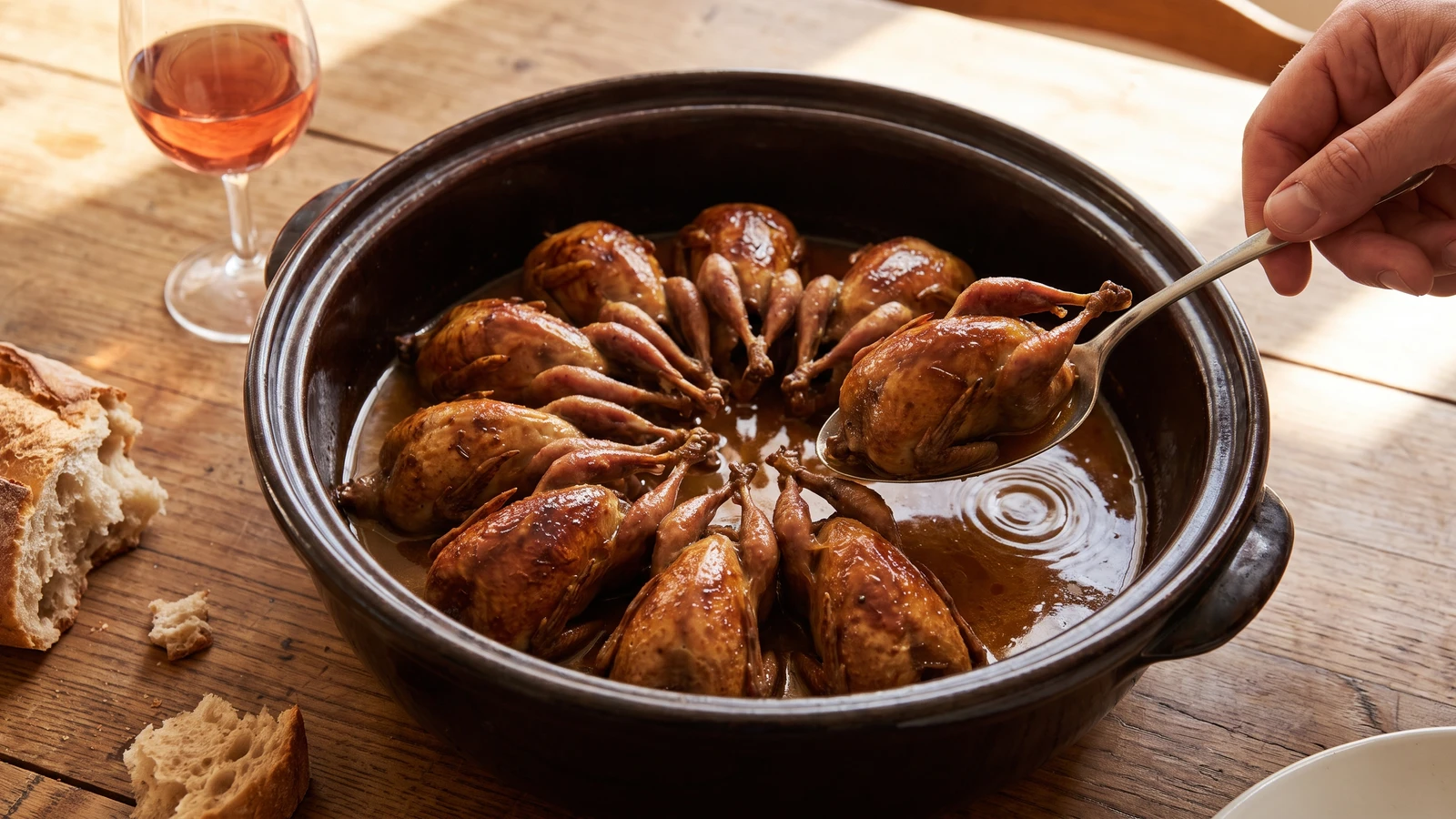
Small Corsican game birds bathed in butter, cooked covered without liquid, then glossed with Cognac and veal stock: poëling preserves their roast character while gathering every drop into the sauce.
Grives et Merles de Corse en casserole teaches the essential difference between poëling and braising: the birds cook in butter, covered but without stock, so their character remains that of a roast. Liquid enters only after the meat is nearly done. Add it sooner and those tiny birds surrender their concentrated woodland flavour to an ordinary braise.
The book's kitchen assumed legally taken small game arriving oven-ready, an earthenware casserole seasoned by long use, a saucier close at hand, and brown veal stock never off the fire. Your equivalents are eight properly dressed birds, one heavy lidded casserole, a fine sieve, and one cup of strong stock made ahead. The vegetable coating, pork fat, and buttered paper of the full Poëlings (No. 250) procedure are brigade scaffolding that the en casserole method itself sets aside. What stays is the dish: abundant butter, enclosed cooking, Cognac near the finish, and ten full minutes of contact between the stock and the cooking butter before that butter is removed. Eight birds give four people two apiece. One cook, one stove, one evening.
Do not add the stock early. That single act decides whether you have poëling or braising, and whether the maquis perfume remains in the birds or disappears into the pot.
Grives et Merles de Corse belongs to Corsica, where thrushes and blackbirds feeding among myrtle, juniper, olives, and maquis berries were prized for a flavour said to arrive already seasoned by the landscape. Household and inn kitchens treated these tiny birds much like quail, especially en casserole or sous la cendre, under the ashes, methods that kept their juices and scent enclosed before grand kitchens codified the same principle as poëling. The perfume comes from the birds' wild diet, not a handful of added Provençal herbs, and only lawfully obtained, properly handled game belongs in the casserole.
Quantity
8 birds (about 2½ to 4½ ounces / 70 to 125 g each)
plucked, drawn, and checked for shot
Quantity
1 teaspoon (5 ml / 6 g)
Quantity
½ teaspoon (2.5 ml / 1 g)
Quantity
7 tablespoons (105 ml / 100 g)
divided
Quantity
3 tablespoons (45 ml / 43 g)
Quantity
1 cup (240 ml / 240 g)
| Ingredient | Quantity |
|---|---|
| Poëlingsthe referenced butter-cooking method | 1 home-scale application Poëlings (No. 250) |
| oven-ready Corsican thrushes or blackbirds, or farmed quailplucked, drawn, and checked for shot | 8 birds (about 2½ to 4½ ounces / 70 to 125 g each) |
| fine salt | 1 teaspoon (5 ml / 6 g) |
| freshly ground black pepper | ½ teaspoon (2.5 ml / 1 g) |
| unsalted butterdivided | 7 tablespoons (105 ml / 100 g) |
| Cognac | 3 tablespoons (45 ml / 43 g) |
| strong unsalted brown veal stock | 1 cup (240 ml / 240 g) |
Heat the oven to 350°F (180°C). Run your fingertips carefully over each bird and remove any stray feathers or shot, then dry the skin and cavities thoroughly. Season inside and out with the salt and pepper. Tuck the wing tips underneath and tie the legs together loosely so the birds cook compactly, but do not bind them into little parcels. Dry skin browns; damp skin remains pale.
Apply Poëlings (No. 250) at home scale. Melt 6 tablespoons (90 ml / 85 g) of the butter in a heavy flameproof casserole just large enough to hold the birds snugly in one layer. When the foam subsides, brown the birds over medium heat, breast-side down first, turning until every side is butter-gold. Work in two batches if necessary, then return them all to the casserole. Keep the final tablespoon of butter in reserve.
Cover the casserole and place it in the oven without adding stock, water, or wine. Baste the birds twice with the butter from the bottom of the pot. Begin checking very small thrushes after 7 minutes and quail after 12 minutes. They are ready for the final colouring when the thickest thigh reaches about 155°F to 160°F (68°C to 71°C). If the butter blackens or smells acrid before then, transfer the birds to a clean casserole and add the reserved butter. Ça se rattrape. Burnt butter left in the sauce does not.
Flamber, to burn off the Cognac: move the casserole to the stove, turn off the burner and extractor, and keep the lid beside you. Pour the measured Cognac into the casserole, never directly from its bottle, then ignite it with a long match if you are comfortable doing so. Let the flame die naturally. For a flame-free equivalent, return the uncovered pan to medium heat and boil the Cognac for 60 to 90 seconds, until its raw alcoholic smell disappears. Return the casserole to the oven uncovered until the birds are deeply bronzed and reach 165°F (74°C) in the thickest thigh, usually another 3 to 6 minutes for thrushes or 6 to 10 minutes for quail.
Transfer the birds to a warm dish and cover them loosely. Pour the brown veal stock into the casserole without first removing the cooking butter. Scrape up the fond and simmer gently for 10 full minutes, allowing the stock to gather the flavour held in the butter. Strain through a fine sieve, let the liquid settle briefly, then spoon off the surface fat. The finished sauce should be clear, concentrated, and just substantial enough to cling lightly to a spoon. If it remains thin, reduce it for another minute or two; if it tightens or tastes too strong, loosen it with a spoonful of stock.
Return the birds to the warm casserole and pour the sauce around them, keeping the bronzed breasts above its surface. Warm over the lowest heat for 2 minutes without boiling, which would dry such small birds. Taste the sauce for salt, then bring the casserole directly to the table and serve two birds to each guest with plenty of sauce. À table!
1 serving (about 230g)
Culinary guides, cultural storytelling, and the editorial depth that makes cooking meaningful.
Discover Culinary ExplorerChef Juliette
John Dory has the delicacy of sole and the firmness of turbot. A light flouring, a quick butter sauté, and nut-brown beurre noisette show exactly why looks never mattered.

Chef Juliette
Fresh haddock proves its delicacy in the meunière pan: a fine flour crust, moist pearly flakes, and beurre noisette sharpened with lemon and parsley, ready from one skillet in half an hour.
Chef Juliette
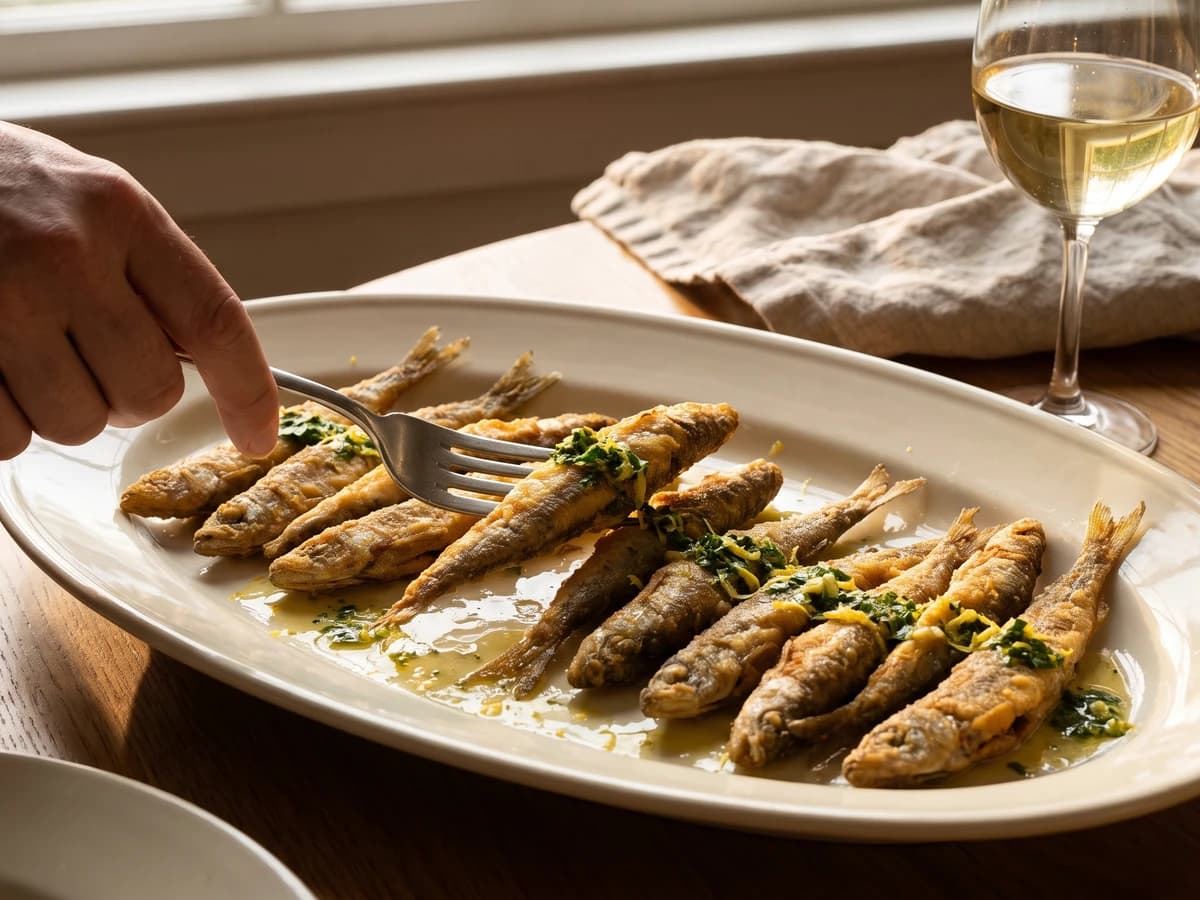
Éperlans à l’Anglaise turns small fish into a lesson in disciplined coating: boned smelts under a close, crisp crumb, pan-fried in clarified butter and finished with bright, half-melted maître d’hôtel butter.

Chef Juliette
Tiny smelts, shallot, mushrooms, white wine, gratin sauce, and fine bread raspings meet a fierce oven, where the fish must turn tender in the same breath the buttered crust bronzes.