
Chef Juliette
John Dory (St. Pierre)
John Dory has the delicacy of sole and the firmness of turbot. A light flouring, a quick butter sauté, and nut-brown beurre noisette show exactly why looks never mattered.
A cooking platform built around craft, culture, and the stories behind what we eat.

Created by Chef Juliette
Based on No. 1924, Gangas, from Le Guide Culinaire (1907) by Auguste Escoffier
Four very fresh sandgrouse, buttered, barded, and roasted fast, with their own fond reduced into a glossy jus: a lesson in protecting lean game without smothering its character.
Gangas Rôtis (roast sandgrouse) teaches the discipline of roasting lean game: freshness first, fierce heat second, and enough protection to keep the breast succulent without hiding its character. The one true thing to know before you touch the pan is that these birds will not forgive age. Buy them legally, have them dressed cleanly, and cook them while the flesh is still firm and clean-smelling.
The old entry assumed a game larder receiving birds at once, a rôtisseur turning them before the fire, a saucier beside a stockpot never off the heat, and a salamander ready to correct pale color. Your honest equivalents are four oven-ready birds, bardage (a protective wrapping of pork fat), a very hot oven, and a jus de rôti (roasting jus) made from the fond in the pan and mounted with cold butter. The spit, extra hands, separate stock, and brigade quantities are scaffolding. Freshness, fast roasting, and protection of the breast are the dish. One cook, one stove, one evening.
The birds should reach the table burnished, glossy with butter, and still succulent beneath their lean skin. Set an instant-read thermometer beside the stove before you begin, because exact doneness is the step that matters most: reach 74°C / 165°F, then stop cooking.
Under the classical heading Gangas, sandgrouse sit in the French national game-bird repertoire rather than in one regional larder, most often roasted and also prepared as Mousses (large molded forcemeats), Mousselines (individual molded portions), or Salmis (roasted game reheated in sauce). Their route ran from the game dealer to the rôtisseur and saucier, where birds from dry open country were handled with the same grammar as grouse and hazel-hen. The warning is precise: for Salmis, the bitter skins and legs are discarded, while every preparation depends on birds treated very fresh.
Quantity
4 birds (about 10 to 12 oz / 280 to 340 g each)
legally sourced, very fresh, giblets removed
Quantity
6 tablespoons (90 ml / 85 g)
2 tablespoons softened and the remainder kept cold, divided
Quantity
4 very thin slices (about 3 oz / 85 g)
for barding
Quantity
1½ teaspoons (7.5 ml / 9 g)
Quantity
1 teaspoon (5 ml / 2 g)
Quantity
1 cup (240 ml / 240 g)
divided
| Ingredient | Quantity |
|---|---|
| oven-ready sandgrouselegally sourced, very fresh, giblets removed | 4 birds (about 10 to 12 oz / 280 to 340 g each) |
| unsalted butter2 tablespoons softened and the remainder kept cold, divided | 6 tablespoons (90 ml / 85 g) |
| unsmoked fatback or unsmoked streaky baconfor barding | 4 very thin slices (about 3 oz / 85 g) |
| fine sea salt | 1½ teaspoons (7.5 ml / 9 g) |
| freshly ground black pepper | 1 teaspoon (5 ml / 2 g) |
| cold waterdivided | 1 cup (240 ml / 240 g) |
Examine each bird before seasoning it. The flesh should feel firm, the surface should not be sticky, and the scent should be faint and clean. If you find sourness, ammonia, or tackiness, stop; unsafe game cannot be rescued by heat or sauce. Pick away remaining pinfeathers, inspect carefully for shot, and wipe the cavities with kitchen paper without rinsing the birds. Pat every surface thoroughly dry. Heat the oven to 230°C / 450°F with a rack in the upper-middle position, and fit a wire rack inside a shallow metal roasting pan.
Rub the birds inside and out with 2 tablespoons of the softened butter. Season evenly with the salt and pepper, including a small pinch inside each cavity. Lay one thin slice of fatback or unsmoked bacon across each breast, then truss the legs close to the body without pulling them over the breast meat. The bardage stands in for the rôtisseur's constant turning and basting, shielding the leanest part while the legs cook through. Let the prepared birds stand for 10 minutes while the oven finishes heating, no longer.
Arrange the birds breast-side up on the rack with space between them. Roast for 8 minutes. Melt 2 tablespoons of the remaining butter, brush it over the birds, and rotate the pan. After 12 minutes total, remove the barding so the skin can bronze, then roast for another 6 to 12 minutes. Begin checking early, inserting the thermometer sideways into the thickest part of a breast and then into the inner thigh without touching bone. Both should reach at least 74°C / 165°F. If the drippings begin turning black before the birds are ready, add a tablespoon of the measured water to the pan at once; if a breast colors too quickly, cover only that breast with its barding slice while the thigh finishes.
Transfer the birds to a warmed platter and rest them uncovered for 10 minutes. Pour excess fat from the roasting pan, leaving the fond, the brown glaze fixed to its floor. Set the pan over medium-high heat, add ¾ cup of the cold water, and scrape until every sound brown speck dissolves. Reduce to about ⅓ cup, 5 to 7 minutes. Black flecks are burnt, not browned; if the fond crossed that line, leave those flecks behind and reduce the water with the clean resting juices instead. Take the pan off the heat and monter au beurre (finish with cold butter), whisking in the final 2 tablespoons a little at a time. If the jus turns greasy or separates, put 1 tablespoon of the reserved cold water in a clean bowl and whisk in the broken jus gradually. Ça se rattrape.
Remove the twine and barding. Set one whole bird before each diner, or lift off the breasts if you prefer to carve in the kitchen. The categorical instruction to discard skin and legs belongs to Salmis, where prolonged contact draws their bitterness into the sauce; for Gangas Rôtis, the birds are served whole and any bitter portion may simply be left. Taste the jus for salt, then spoon it around the birds rather than over their bronzed surfaces. Serve at once. À table!
1 serving (about 195g)
Culinary guides, cultural storytelling, and the editorial depth that makes cooking meaningful.
Discover Culinary ExplorerChef Juliette
John Dory has the delicacy of sole and the firmness of turbot. A light flouring, a quick butter sauté, and nut-brown beurre noisette show exactly why looks never mattered.

Chef Juliette
Fresh haddock proves its delicacy in the meunière pan: a fine flour crust, moist pearly flakes, and beurre noisette sharpened with lemon and parsley, ready from one skillet in half an hour.
Chef Juliette
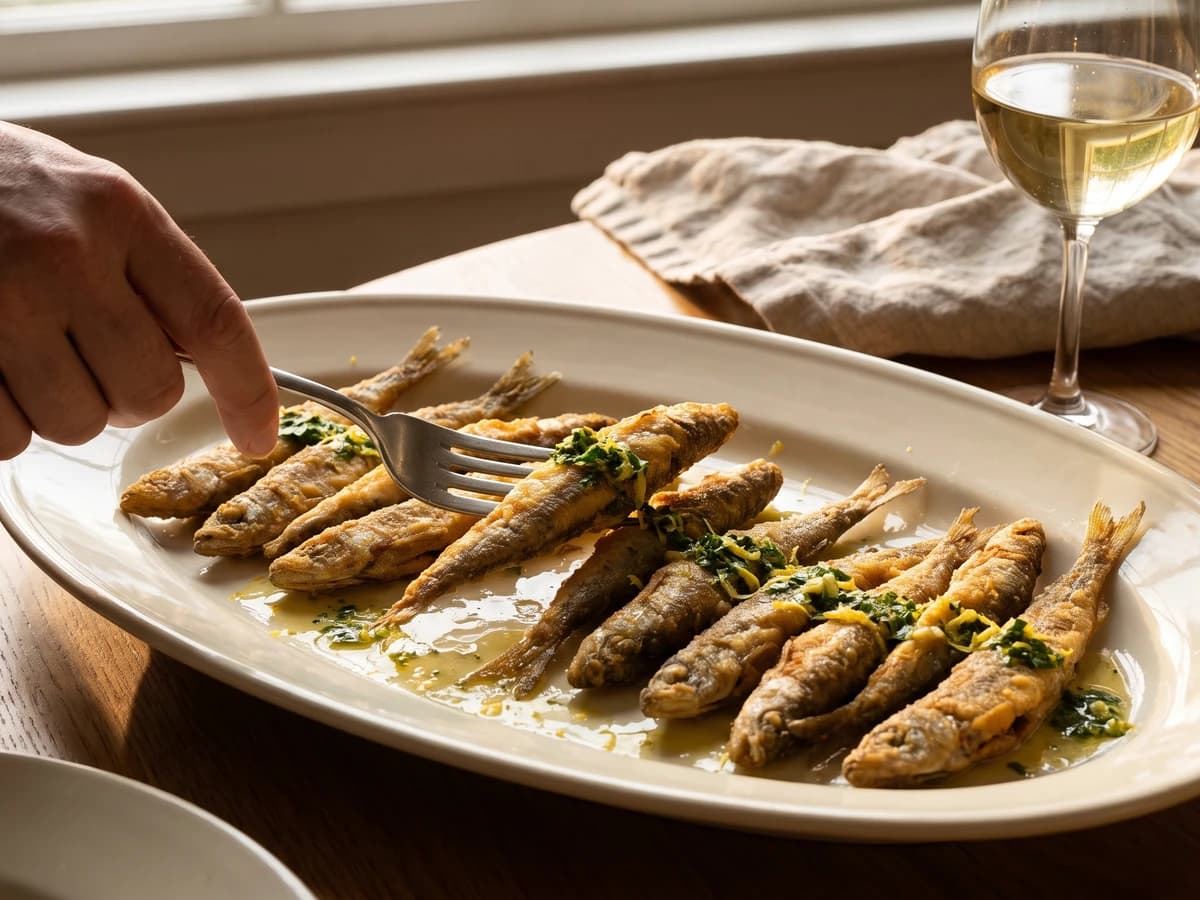
Éperlans à l’Anglaise turns small fish into a lesson in disciplined coating: boned smelts under a close, crisp crumb, pan-fried in clarified butter and finished with bright, half-melted maître d’hôtel butter.

Chef Juliette
Tiny smelts, shallot, mushrooms, white wine, gratin sauce, and fine bread raspings meet a fierce oven, where the fish must turn tender in the same breath the buttered crust bronzes.