
Chef Juliette
John Dory (St. Pierre)
John Dory has the delicacy of sole and the firmness of turbot. A light flouring, a quick butter sauté, and nut-brown beurre noisette show exactly why looks never mattered.
A cooking platform built around craft, culture, and the stories behind what we eat.

Created by Chef Juliette
Based on No. 1918, Land Rail, Roi de Cailles ou Râle de Genêts, from Le Guide Culinaire (1907) by Auguste Escoffier
A protected game bird returns by the source’s own instruction as farmed quail, barded with bacon, roasted quickly, and set on crisp canapés under a glossy shallot jus.
Râle de Genêts Rôti, Roi de Cailles (roast corncrake, also called land rail) teaches the discipline of roasting a very small bird: fierce heat, a protecting band of bacon, and no wandering away. The one true thing is doneness. Its breast has only minutes between succulent and dry, so the thermometer decides, not the clock.
The source assumes a plucked wild bird in the game larder, a roast cook at the range, a saucier alongside, and a pot of game stock never off the fire. A home kitchen has none of that, and corncrake is protected through much of its range, so this version uses four farmed quail, the equivalent the entry itself permits, then builds a small pan jus from their fond and unsalted chicken stock. The separate sauce station and final passing through a chinois are brigade scaffolding and can go; the bacon bard, hard heat, brief rest, and honest deglazing must stay. One cook, one stove, one evening.
The finished birds should be compact and deeply bronzed, their bacon crisp at the edges, with roasting juices sinking into golden canapés beneath them. Set the thermometer beside the stove before the quail meet the skillet; removing each bird the instant it reaches doneness is the step that decides the dish.
The râle de genêts belonged to the French table de chasse of meadow and grain country across northern and central France, where its seasonal fatness and habit of appearing near quail earned it the kitchen name roi de cailles. The name is praise, not taxonomy: corncrake is a rail, distinct from both quail and water rail, and classical cooks applied quail preparations because the birds required similar handling. As corncrake left the ordinary lawful game market, farmed quail became the precise home equivalent authorized by the source entry.
Quantity
4 birds, about 5 to 6 ounces (140 to 170 g) each
giblets removed and birds patted dry
Quantity
4 slices (about 2 ounces / 60 g total)
Quantity
4 small sprigs
Quantity
2 tablespoons (30 ml / 28 g)
divided
Quantity
4 slices (about 5 ounces / 140 g total)
cut into 3-inch (7.5 cm) squares, crusts trimmed
Quantity
1¼ teaspoons (6 ml / 7 g)
divided
Quantity
½ teaspoon (2.5 ml / 1 g)
Quantity
2 tablespoons (30 ml / 20 g)
finely minced
Quantity
⅓ cup (80 ml / 80 g)
Quantity
¾ cup (180 ml / 180 g)
Quantity
1½ tablespoons (22 ml / 21 g)
cubed
Quantity
2 teaspoons (10 ml / 10 g)
divided
Quantity
2 loosely packed cups (about 500 ml / 50 g)
tough stems removed
| Ingredient | Quantity |
|---|---|
| whole farmed quailgiblets removed and birds patted dry | 4 birds, about 5 to 6 ounces (140 to 170 g) each |
| thin-cut unsmoked streaky bacon | 4 slices (about 2 ounces / 60 g total) |
| thyme | 4 small sprigs |
| clarified butterdivided | 2 tablespoons (30 ml / 28 g) |
| country breadcut into 3-inch (7.5 cm) squares, crusts trimmed | 4 slices (about 5 ounces / 140 g total) |
| fine sea saltdivided | 1¼ teaspoons (6 ml / 7 g) |
| freshly ground black pepper | ½ teaspoon (2.5 ml / 1 g) |
| shallotfinely minced | 2 tablespoons (30 ml / 20 g) |
| dry white wine | ⅓ cup (80 ml / 80 g) |
| unsalted chicken stock | ¾ cup (180 ml / 180 g) |
| cold unsalted buttercubed | 1½ tablespoons (22 ml / 21 g) |
| fresh lemon juicedivided | 2 teaspoons (10 ml / 10 g) |
| watercresstough stems removed | 2 loosely packed cups (about 500 ml / 50 g) |
Heat the oven to 450°F (230°C) with a rack in the upper third. Bring the quail out of the cold for twenty minutes, but do not rinse them; check for stray feathers and dry every surface thoroughly. Season the cavities and skin with 1 teaspoon of the salt and all the pepper, place a thyme sprig inside each bird, then tie the legs together. Keep the bacon nearby, but do not cover the breasts yet because bare, dry skin must meet the skillet to brown.
Heat a 12-inch (30 cm) ovenproof skillet over medium heat and add half the clarified butter. Fry the bread squares until crisp and deep gold on both sides, about two minutes per side, adding a little more clarified butter only if the pan becomes dry. Transfer the canapés to a warm platter. They are not decoration; they catch the roasting juices and turn them into the best mouthful on the plate.
Raise the skillet to medium-high and add the remaining clarified butter. Set in the quail breast-side down, leaving space between them, and brown for about two minutes. Turn them onto each side and then the back, giving every surface real bronze, about five minutes in all. Arrange the birds breast-side up, drape one bacon slice across each breast, and transfer the skillet to the oven. Roast for 8 to 12 minutes, checking the smallest bird first, until an instant-read thermometer inserted into the thickest breast without touching bone registers 165°F (74°C). Remove the birds individually as they finish. If the bacon colours too quickly, shield only the bacon with small pieces of foil; if a bird is done before its bacon crisps, lift the bird out and crisp the bacon separately in the skillet. Ça se rattrape. An overcooked breast does not.
Place each quail on a toasted canapé and cover the platter loosely with foil for six minutes. Loose is the useful word: a tight covering softens the browned skin. Pour any juices released during the rest into the skillet for the sauce.
Pour away all but about 2 teaspoons (10 ml) of fat from the skillet, keeping every brown speck of fond. Set the pan over medium heat, add the shallot, and stir for forty-five seconds without letting it scorch. Pour in the wine and scrape the skillet clean, then reduce until only a glossy spoonful remains. Add the stock and resting juices, simmer briskly until reduced to about ½ cup (120 ml), and remove from the heat. Montez au beurre, finish by whisking in the cold butter one cube at a time, then add 1 teaspoon of the lemon juice. If the jus separates into greasy beads, take it off the heat and whisk in 1 teaspoon of cold water. Ça se rattrape. Taste only now, because the bacon and reduction have already contributed salt.
Toss the watercress with the remaining lemon juice and ¼ teaspoon salt, then tuck it loosely around the quail. Return any separately crisped bacon to the birds. Spoon the glossy shallot jus around the canapés rather than flooding the browned breasts, and bring the platter straight to the table. À table!
1 serving (about 210g)
Culinary guides, cultural storytelling, and the editorial depth that makes cooking meaningful.
Discover Culinary ExplorerChef Juliette
John Dory has the delicacy of sole and the firmness of turbot. A light flouring, a quick butter sauté, and nut-brown beurre noisette show exactly why looks never mattered.

Chef Juliette
Fresh haddock proves its delicacy in the meunière pan: a fine flour crust, moist pearly flakes, and beurre noisette sharpened with lemon and parsley, ready from one skillet in half an hour.
Chef Juliette
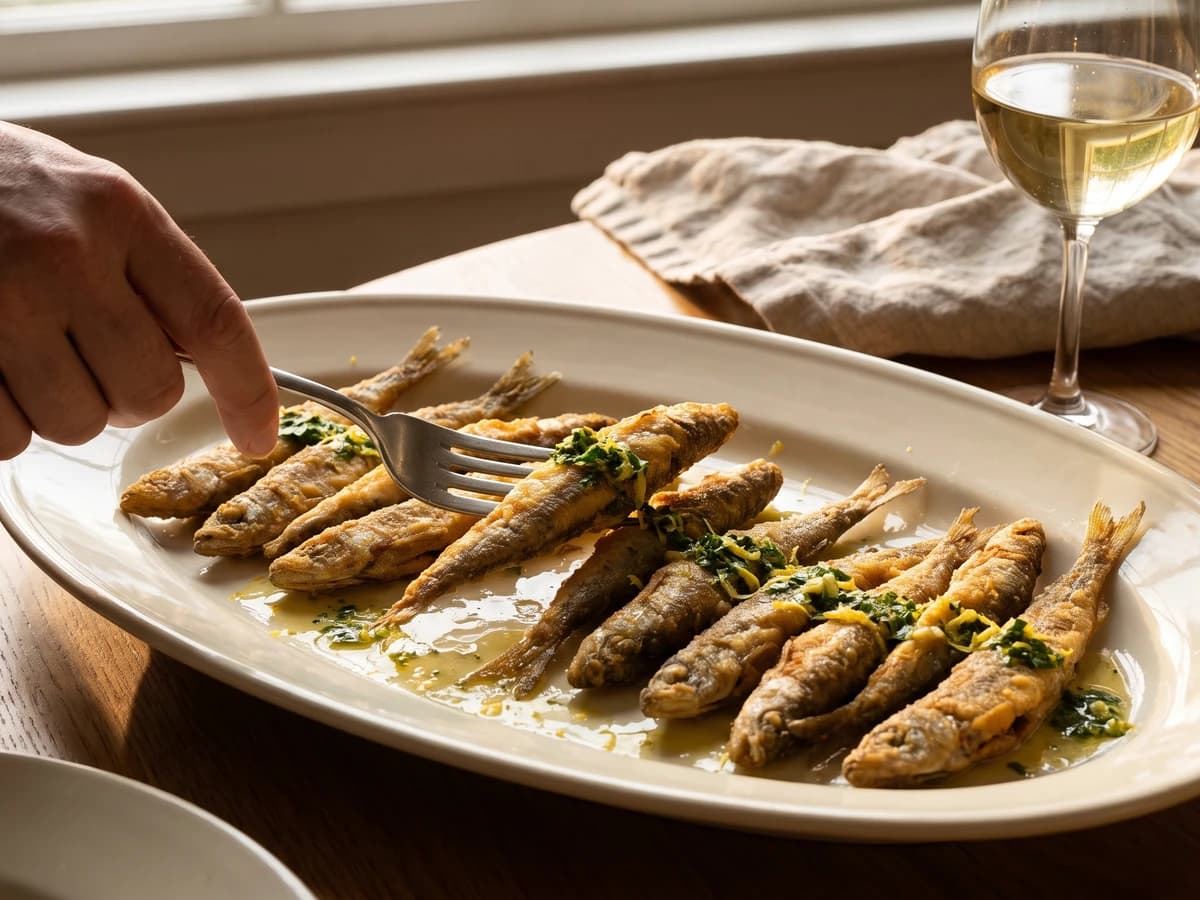
Éperlans à l’Anglaise turns small fish into a lesson in disciplined coating: boned smelts under a close, crisp crumb, pan-fried in clarified butter and finished with bright, half-melted maître d’hôtel butter.

Chef Juliette
Tiny smelts, shallot, mushrooms, white wine, gratin sauce, and fine bread raspings meet a fierce oven, where the fish must turn tender in the same breath the buttered crust bronzes.