
Chef Juliette
John Dory (St. Pierre)
John Dory has the delicacy of sole and the firmness of turbot. A light flouring, a quick butter sauté, and nut-brown beurre noisette show exactly why looks never mattered.
A cooking platform built around craft, culture, and the stories behind what we eat.
Created by Chef Juliette
Based on No. 1913, Cailles Nillson, from Le Guide Culinaire (1907) by Auguste Escoffier
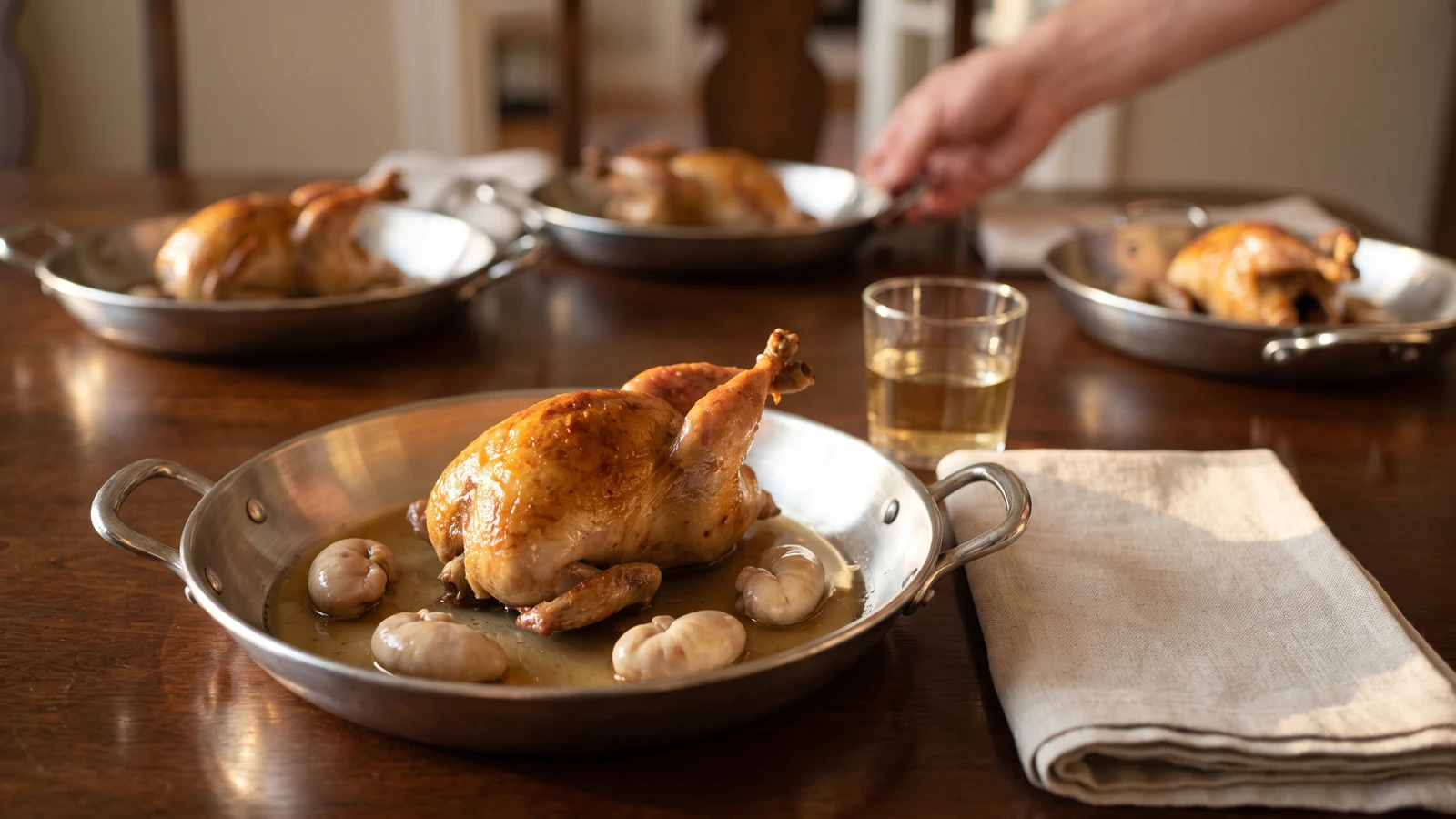
Whole quails braised with Château d’Yquem, settled into individual cassolettes and ringed with ivory cocks’ kidneys: a lesson in reducing, straining, and degreasing until the cooking liquor gleams.
Cailles Nillson (quails in Château-Yquem liquor with cocks’ kidneys) teaches one severe and useful lesson: richness needs clarity. The birds bring butter and deeply browned juices, the wine brings honeyed perfume, and the sixteen pale cocks’ kidneys bring their own delicacy. Before you touch the pan, know the one true thing about this dish: the cooking liquor must return to the quails perfectly strained and entirely free of grease.
The source directs the cook through Cailles au Château-Yquem, then changes the service: one bird in each small silver cassolette, surrounded by four very white cocks’ kidneys. Grand-kitchen service assumed a saucier at the stove, clear stock never off the fire, and silver cassolettes waiting in the hot cupboard. A salamander has no business here because nothing is gratinéed. At home, one covered sauté pan, gelatin-rich stock, a fine sieve, and four shallow ovenproof ramekins do the work. Silver is scaffolding and may go; individual portions, the kidney ring, and the twice-cleared liquor are the dish and must stay. One cook, one stove, one evening.
When it is right, each bronze bird sits in a shallow pool of golden liquor clear enough to show the cassolette beneath it, with four ivory kidneys making a neat ring. Brown the quails carefully, but give your greatest attention to the liquor: strain without pressing, degrease twice, and never thicken it with flour.
Cailles Nillson belongs to the Parisian grand dining-room repertoire, a named variation built directly on Cailles au Château-Yquem and distinguished by individual silver cassolettes and four pale cocks’ kidneys around every bird. Château d’Yquem comes from Sauternes in Bordeaux, but this is not a regional Bordelais preparation; it is Parisian service using a celebrated wine as its principal perfume. The silver is presentation, while the clear liquor and the white kidney ring define the Nillson garnish.
Quantity
16 (about 6 oz / 170 g total)
trimmed
Quantity
8 cups (1.9 L / 1.9 kg)
divided, for soaking, blanching, and poaching
Quantity
2 tablespoons (30 ml / 36 g)
divided
Quantity
1 tablespoon (15 ml / 15 g)
Quantity
4 (about 6 oz / 170 g each)
giblets removed and neatly trussed
Quantity
1 teaspoon (5 ml / 6 g)
Quantity
½ teaspoon (2.5 ml / 1 g)
Quantity
4 tablespoons (60 ml / 57 g)
divided
Quantity
1 (about ⅓ cup / 80 ml / 50 g)
thinly sliced
Quantity
2 sprigs
Quantity
1
Quantity
¾ cup (180 ml / 190 g)
Quantity
1¾ cups (420 ml / 420 g)
divided
| Ingredient | Quantity |
|---|---|
| small cocks’ kidneys, meaning rooster testiclestrimmed | 16 (about 6 oz / 170 g total) |
| cold waterdivided, for soaking, blanching, and poaching | 8 cups (1.9 L / 1.9 kg) |
| fine sea salt for the kidneysdivided | 2 tablespoons (30 ml / 36 g) |
| fresh lemon juice | 1 tablespoon (15 ml / 15 g) |
| oven-ready quailsgiblets removed and neatly trussed | 4 (about 6 oz / 170 g each) |
| fine sea salt for the quails | 1 teaspoon (5 ml / 6 g) |
| ground white pepper | ½ teaspoon (2.5 ml / 1 g) |
| unsalted butterdivided | 4 tablespoons (60 ml / 57 g) |
| large shallotthinly sliced | 1 (about ⅓ cup / 80 ml / 50 g) |
| fresh thyme | 2 sprigs |
| bay leaf | 1 |
| Château d’Yquem | ¾ cup (180 ml / 190 g) |
| clear, unsalted, gelatin-rich chicken stockdivided | 1¾ cups (420 ml / 420 g) |
Cover the cocks’ kidneys with 4 cups of the cold water and 1 tablespoon of the salt. Refrigerate for 30 minutes, then drain and rinse. Bring 2 cups fresh water to a gentle simmer, add the kidneys, and blanch for 1 minute. Lift them out, rinse under cold water, and peel away each translucent outer membrane without tearing the tender flesh. Bring the remaining 2 cups water to a bare simmer with the lemon juice and remaining tablespoon of salt. Poach the peeled kidneys for 4 to 6 minutes, until uniformly ivory and cooked to 165°F (74°C), then lift them onto a clean plate. Keep them covered; browning would destroy the white garnish the source requires.
Heat the oven to 375°F (190°C). Pat the quails completely dry, including inside the cavities, then season them with the teaspoon of salt and the white pepper. Tight trussing keeps the small birds compact enough to sit properly in their cassolettes. Wet skin will stew before it browns, so take the drying seriously.
Melt 3 tablespoons of the butter in a 12-inch lidded sauté pan over medium-high heat. When the foam subsides, add the quails and brown them on the breast, back, and both sides, about 6 to 8 minutes altogether. Aim for an even hazelnut bronze, not a dark crust that would make the liquor bitter. Transfer the birds to a plate. Lower the heat, add the remaining butter and shallot, and suer, meaning sweat without browning, for 2 minutes. Add the thyme and bay leaf.
Pour in the Château d’Yquem and scrape the pan floor until every browned deposit has dissolved into the wine. Reduce by half at a lively simmer; this cooks away raw alcohol while keeping the wine’s apricot and honeyed perfume. Add 1½ cups of the chicken stock, reserving ¼ cup for adjustment, then return the quails breast-side up. Cover and cook in the oven for 14 to 18 minutes, checking early, until the thickest part of each thigh reaches 165°F (74°C). Small birds seldom finish together, so lift each one when ready and keep it loosely covered. Longer cooking will not make quail more tender; it will only dry it.
Transfer the quails to a clean plate. Pour the cooking liquor through a fine-mesh sieve into a fat separator or narrow heatproof jug, letting it pass under its own weight. Do not press the shallot, because pressing clouds the liquor. Rest it for 5 minutes, then pour the clear liquid away from the first layer of butter and quail fat. Wash the pan before returning the degreased liquor to it.
Simmer the liquor gently until reduced to about 1¼ cups (300 ml). It should taste concentrated and feel lightly gelatinous on the lips, but it must remain a clear jus, never a flour-thickened sauce. Pass it a second time through a sieve lined with dampened muslin or an unbleached coffee filter, then skim away every remaining bead of fat. Test a spoonful on a cold saucer: it should cool to a clear, softly set film. If it is greasy or cloudy, do not serve it as it stands. Ça se rattrape: chill the liquor for 10 minutes, lift off the firming fat, and filter it once more. If reduction has made it too strong, loosen it with the reserved stock.
Warm four individual cassolettes or shallow ovenproof ramekins. Return the quails to the clear liquor over the gentlest heat and turn them once, just until hot throughout. Set one quail in each cassolette and arrange four warm cocks’ kidneys around it. Ladle the cooking liquor over each bird so it coats the breast and pools generously beneath it, leaving the ivory kidney ring visible. The liquor should gleam without an oily film. Serve at once. À table!
1 serving (about 210g)
Culinary guides, cultural storytelling, and the editorial depth that makes cooking meaningful.
Discover Culinary ExplorerChef Juliette
John Dory has the delicacy of sole and the firmness of turbot. A light flouring, a quick butter sauté, and nut-brown beurre noisette show exactly why looks never mattered.

Chef Juliette
Fresh haddock proves its delicacy in the meunière pan: a fine flour crust, moist pearly flakes, and beurre noisette sharpened with lemon and parsley, ready from one skillet in half an hour.
Chef Juliette
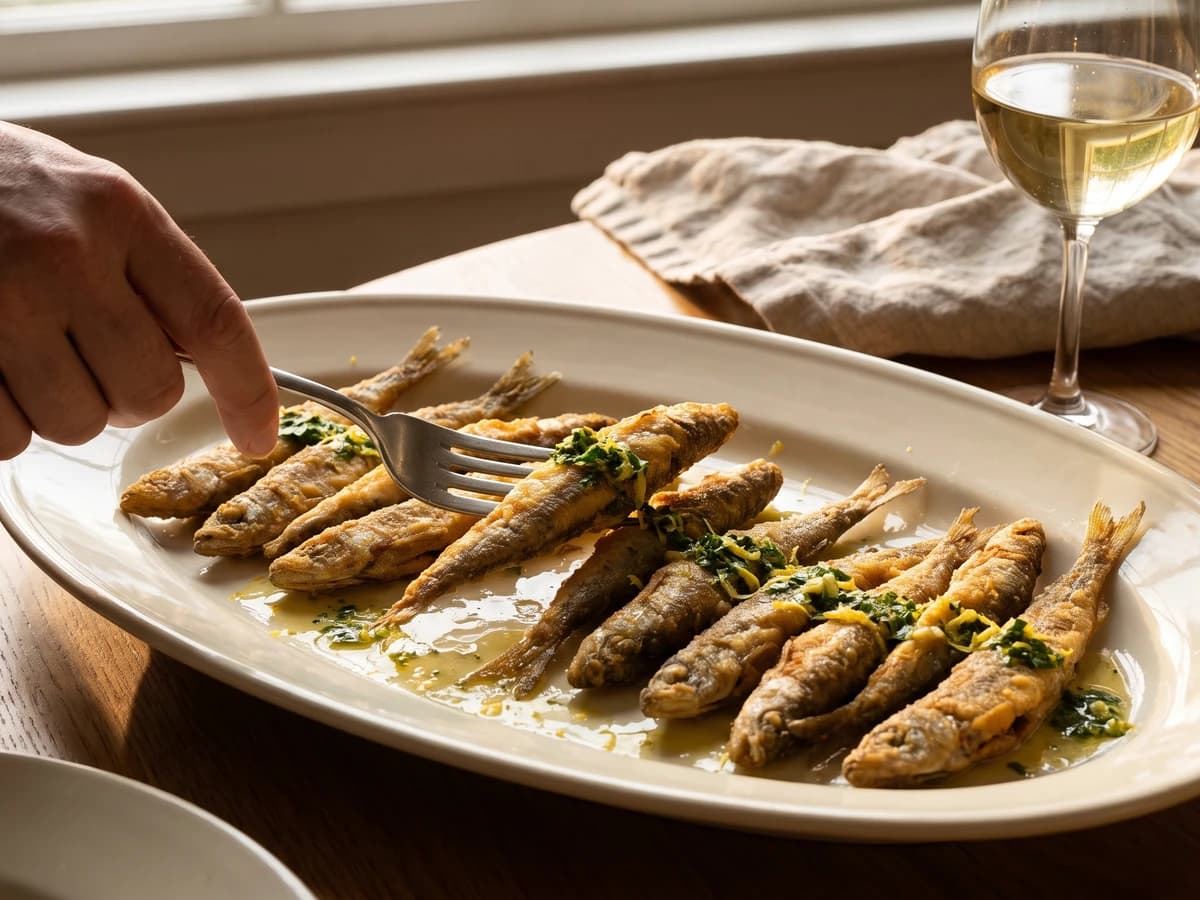
Éperlans à l’Anglaise turns small fish into a lesson in disciplined coating: boned smelts under a close, crisp crumb, pan-fried in clarified butter and finished with bright, half-melted maître d’hôtel butter.

Chef Juliette
Tiny smelts, shallot, mushrooms, white wine, gratin sauce, and fine bread raspings meet a fierce oven, where the fish must turn tender in the same breath the buttered crust bronzes.