
Chef Juliette
John Dory (St. Pierre)
John Dory has the delicacy of sole and the firmness of turbot. A light flouring, a quick butter sauté, and nut-brown beurre noisette show exactly why looks never mattered.
A cooking platform built around craft, culture, and the stories behind what we eat.
Created by Chef Juliette
Based on No. 1902, Cailles en Caisses, from Le Guide Culinaire (1907) by Auguste Escoffier
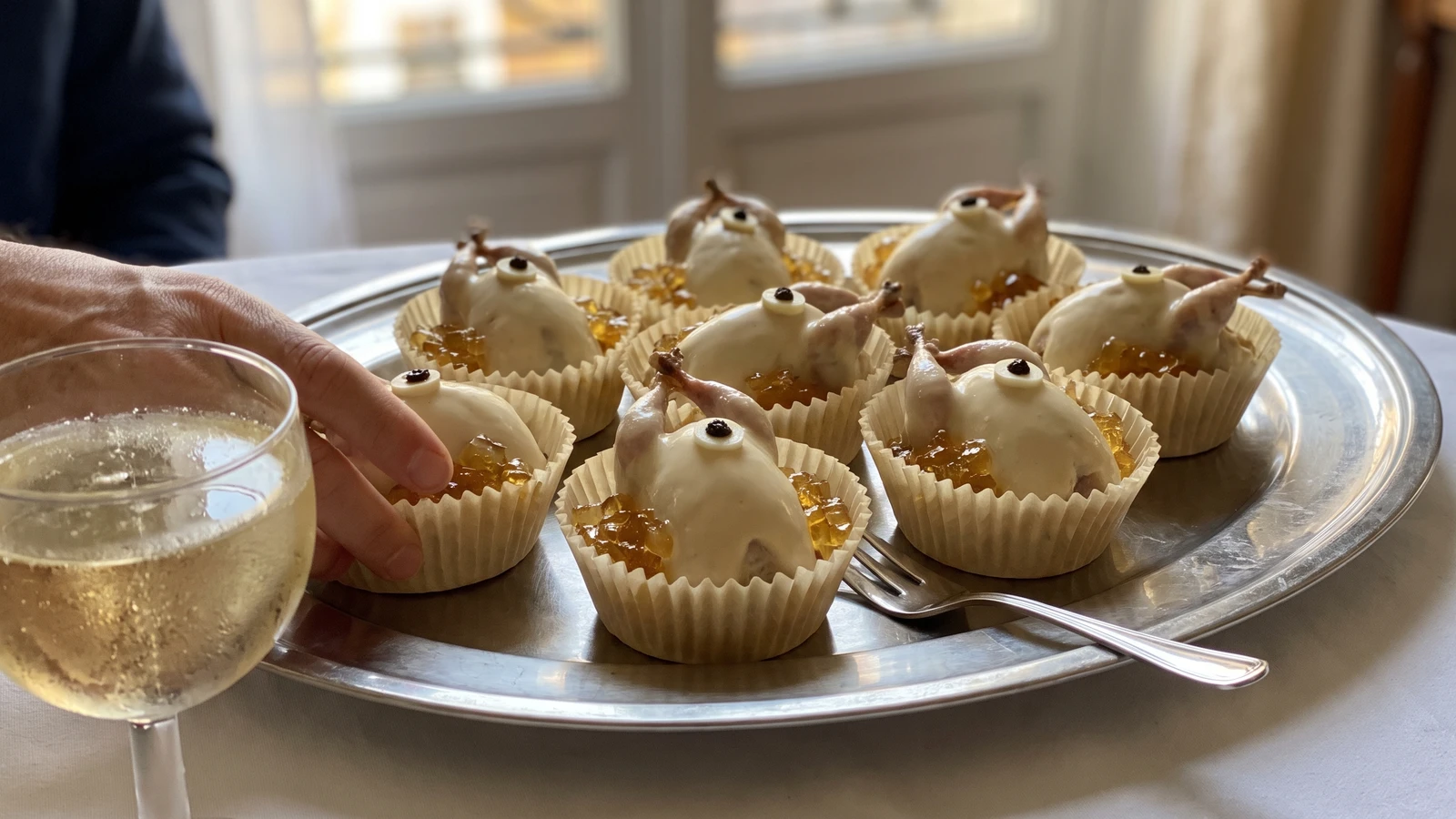
Chaud-froid quail, satin-coated and set in pleated cases with a bright cordon of chopped aspic: a cold centerpiece whose elegance depends on temperature, not fuss.
Cailles en Caisses (chaud-froid quail in individual pleated cases) teaches the discipline of cold saucing. The one true thing to know before touching a pan is this: a warm coating belongs on a thoroughly cold bird. If either temperature is wrong, the sauce slides or clots; at the right point it settles into a smooth ivory cloak.
The source kitchen assumed a saucier on staff, stock rich enough to set without encouragement, a cold larder, and rows of delicate porcelain cases. A salamander has no role here because this is cold work. The honest home equivalents are one sauté pan, good clear chicken stock reinforced with measured gelatin, the refrigerator, and food-safe pleated paper cases. Clarifying a cauldron of aspic and maintaining several sauces were brigade scaffolding and can go. Gently cooking the quail, setting the chaud-froid, giving every bird its own case, and bordering it with chopped jelly are the dish and must stay. One cook, one stove, one evening.
Served cold, the quail should be tender beneath a thin, savory coating, while the chopped aspic catches the light around it like little amber stones. The decorated heads belong to the source presentation and are included when a butcher can supply them safely cleaned; they are ceremony, not flavor. The step that decides everything is the coating: chill the birds completely, then cool the sauce until it flows slowly at 82 to 86°F (28 to 30°C).
Cailles en Caisses belongs to the formal cold-table repertoire of Paris, where chaud-froid preparations carried cooked poultry from the kitchen to elaborate banquet and buffet displays. The pleated cases protected each portion and turned a sauced bird into an individual service piece, while the chopped aspic supplied both preservation and brilliance. The decorated quail heads were a convention of presentation rather than a regional flavoring; the name chaud-froid describes the central paradox, poultry cooked hot, coated, and served cold.
Quantity
8, about 4 to 5 ounces (115 to 140 g) each
cleaned heads supplied separately if available
Quantity
2 cups (480 ml / 480 g)
chilled and divided
Quantity
1 tablespoon plus 1 teaspoon (20 ml / 12 g)
Quantity
3/4 cup (180 ml / 180 g)
divided
Quantity
2 1/2 teaspoons (12.5 ml / 15 g)
divided
Quantity
1/2 teaspoon (2.5 ml / 1 g)
divided
Quantity
5 tablespoons (75 ml / 70 g)
divided
Quantity
1 large (about 1/3 cup / 50 g)
finely chopped
Quantity
2 1/2 cups (600 ml / 600 g)
divided
Quantity
3 tablespoons (45 ml / 24 g)
Quantity
1/2 cup (120 ml / 120 g)
Quantity
2 teaspoons (10 ml / 6 g)
Quantity
2 tablespoons (30 ml / 30 g)
Quantity
2 teaspoons (10 ml / 10 g)
Quantity
1
Quantity
1 small (about 0.35 ounce / 10 g)
drained
| Ingredient | Quantity |
|---|---|
| oven-ready quailcleaned heads supplied separately if available | 8, about 4 to 5 ounces (115 to 140 g) each |
| clear unsalted chicken stock for the aspicchilled and divided | 2 cups (480 ml / 480 g) |
| unflavored powdered gelatin for the aspic | 1 tablespoon plus 1 teaspoon (20 ml / 12 g) |
| dry Madeiradivided | 3/4 cup (180 ml / 180 g) |
| fine sea saltdivided | 2 1/2 teaspoons (12.5 ml / 15 g) |
| finely ground white pepperdivided | 1/2 teaspoon (2.5 ml / 1 g) |
| unsalted butterdivided | 5 tablespoons (75 ml / 70 g) |
| shallotfinely chopped | 1 large (about 1/3 cup / 50 g) |
| unsalted chicken stock for cooking and the saucedivided | 2 1/2 cups (600 ml / 600 g) |
| plain flour | 3 tablespoons (45 ml / 24 g) |
| heavy cream | 1/2 cup (120 ml / 120 g) |
| unflavored powdered gelatin for the chaud-froid coating | 2 teaspoons (10 ml / 6 g) |
| cold water | 2 tablespoons (30 ml / 30 g) |
| fresh lemon juice | 2 teaspoons (10 ml / 10 g) |
| hard-boiled large egg white | 1 |
| preserved black truffledrained | 1 small (about 0.35 ounce / 10 g) |
Pour 1/2 cup (120 ml) of the cold aspic stock into a bowl and sprinkle the aspic gelatin evenly over it. Leave it for 10 minutes, until every grain is swollen. Heat the remaining 1 1/2 cups (360 ml) aspic stock with 1/4 cup (60 ml) Madeira and 1/2 teaspoon salt just to a tremble. Remove from the heat, stir in the bloomed gelatin until completely dissolved, and pass the mixture through a fine sieve into a shallow metal tray. The layer should be about 1/4 inch (6 mm) deep. Chill for at least 4 hours, until firm enough to cut cleanly.
Heat the oven to 425°F (220°C). Pat the quail thoroughly dry, bend the wing tips behind the backs, and tie the legs neatly together. Season inside and out with 1 1/2 teaspoons salt and half the white pepper. Keep any butcher-cleaned heads refrigerated separately. A wet bird colors poorly, and the finished coating cannot hide pale, rubbery skin.
Poêler, covered roasting in butter, gives the small birds color without drying them. Melt 2 tablespoons butter in a wide ovenproof sauté pan over medium-high heat. Brown the quail in two batches, turning until the breasts and legs are deep gold, then return all eight to the pan. Scatter in the shallot, pour in 1/2 cup (120 ml) chicken stock and 1/4 cup (60 ml) Madeira, and cover. Roast for 12 to 15 minutes, until the thickest part of each thigh reaches 165°F (74°C). If using the cleaned heads, add them at the edge of the pan for the final 6 minutes and turn once. Chilled poultry receives no second cooking, so take the temperature seriously.
Transfer the quail breast-side up to a parchment-lined tray and strain the cooking liquid into a bowl. Set a second tray lightly over the birds for 20 minutes so they cool in a compact, even shape; two unopened tins provide enough weight. Remove the top tray once the birds stop radiating heat, no later than 30 minutes after cooking, and refrigerate them uncovered for at least 2 hours. Chill the cooked heads separately. The quail must be cold and dry before coating.
Pour the strained cooking liquid into a saucepan with the remaining 1/4 cup (60 ml) Madeira and boil until reduced to about 1/2 cup (120 ml). In a second saucepan, melt the remaining 3 tablespoons butter, stir in the flour, and cook for 2 minutes without letting the roux brown. Whisk in the remaining 2 cups (480 ml) chicken stock a little at a time, then add the reduced cooking liquid. Simmer gently for 15 to 20 minutes, whisking occasionally, until the sauce naps the back of a spoon. Add the cream and simmer gently for 5 minutes. Hard boiling can make the cream grainy, so keep the surface at a quiet tremble.
While the sauce simmers, sprinkle the coating gelatin over the cold water and leave it for 5 minutes. Remove the sauce from the heat, whisk in the bloomed gelatin, and strain it into a clean bowl. Season with the remaining salt and white pepper, then add the lemon juice. Set the bowl over ice and stir steadily until the sauce reaches 82 to 86°F (28 to 30°C) and falls from the spoon like heavy cream. If it remains thin, keep stirring over ice. If it stiffens or turns lumpy, set the bowl over barely warm water and stir until fluid again. Ça se rattrape.
Set the chilled quail on a wire rack over a tray. Ladle the chaud-froid over each bird in one steady pour, covering the breast, legs, and neck opening with a thin, even coat. Let the excess fall away, then chill for 15 minutes. If the first coat shows a bare patch, apply a second thin spoonful after the first has set; do not brush at it, because brush marks remain visible. Chill for another 20 minutes, until the surface is firm and satin-smooth.
For the full source presentation, cut 16 tiny rounds from the hard-boiled egg white with the end of a narrow drinking straw, then remove each center with a clean coffee stirrer or the tip of a piping nozzle to make rings. Cut 16 smaller spots from the truffle. Fix an egg-white ring over each cooked head's eye position with a dab of chaud-froid, place a truffle spot in its center, and chill until set. If cleaned heads were unavailable, omit this display element rather than fabricating a substitute.
Chill a cutting board and a long knife for 15 minutes. Turn the firm aspic onto the cold board and chop it into even 1/8-inch (3 mm) jewels, lifting and cutting rather than crushing. The jelly must stay truly cold: if it begins to smear or cling to the blade, return everything to the refrigerator for 10 minutes, dry the knife, and continue. This narrow border catches light only when its cut edges remain distinct.
Arrange eight food-safe oval pleated cases on a chilled platter. Set one coated quail in each case. If using the decorated heads, tuck each neck beneath the front of its bird so the head sits upright and secure it with a small dab of set chaud-froid. Spoon a narrow cordon of chopped aspic around the base of every quail, keeping the border fine rather than burying the bird. Chill for 30 minutes and serve two cases per person, directly from the cold platter. À table!
1 serving (about 420g)
Culinary guides, cultural storytelling, and the editorial depth that makes cooking meaningful.
Discover Culinary ExplorerChef Juliette
John Dory has the delicacy of sole and the firmness of turbot. A light flouring, a quick butter sauté, and nut-brown beurre noisette show exactly why looks never mattered.

Chef Juliette
Fresh haddock proves its delicacy in the meunière pan: a fine flour crust, moist pearly flakes, and beurre noisette sharpened with lemon and parsley, ready from one skillet in half an hour.
Chef Juliette
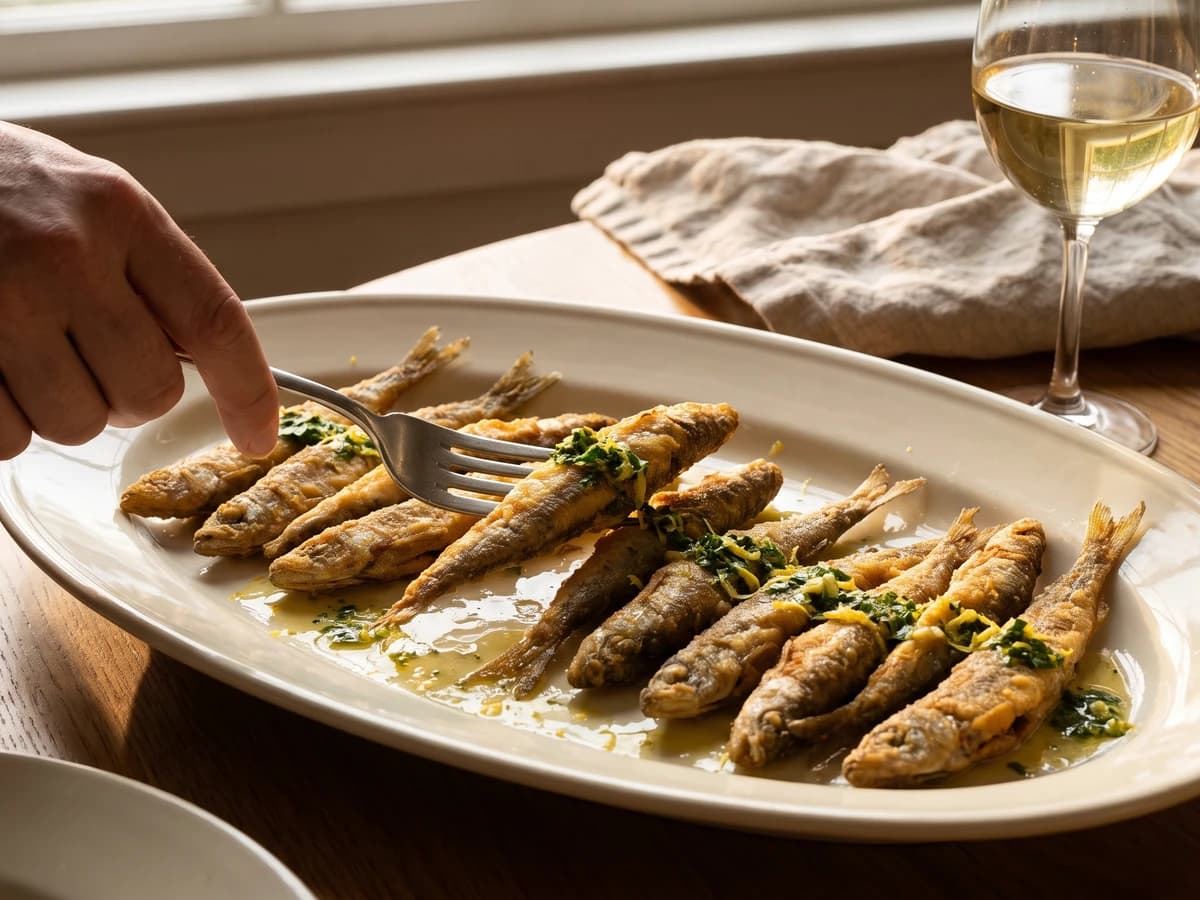
Éperlans à l’Anglaise turns small fish into a lesson in disciplined coating: boned smelts under a close, crisp crumb, pan-fried in clarified butter and finished with bright, half-melted maître d’hôtel butter.

Chef Juliette
Tiny smelts, shallot, mushrooms, white wine, gratin sauce, and fine bread raspings meet a fierce oven, where the fish must turn tender in the same breath the buttered crust bronzes.