
Chef Juliette
John Dory (St. Pierre)
John Dory has the delicacy of sole and the firmness of turbot. A light flouring, a quick butter sauté, and nut-brown beurre noisette show exactly why looks never mattered.
A cooking platform built around craft, culture, and the stories behind what we eat.
Created by Chef Juliette
Based on No. 1894, Cailles aux Raisins, from Le Guide Culinaire (1907) by Auguste Escoffier
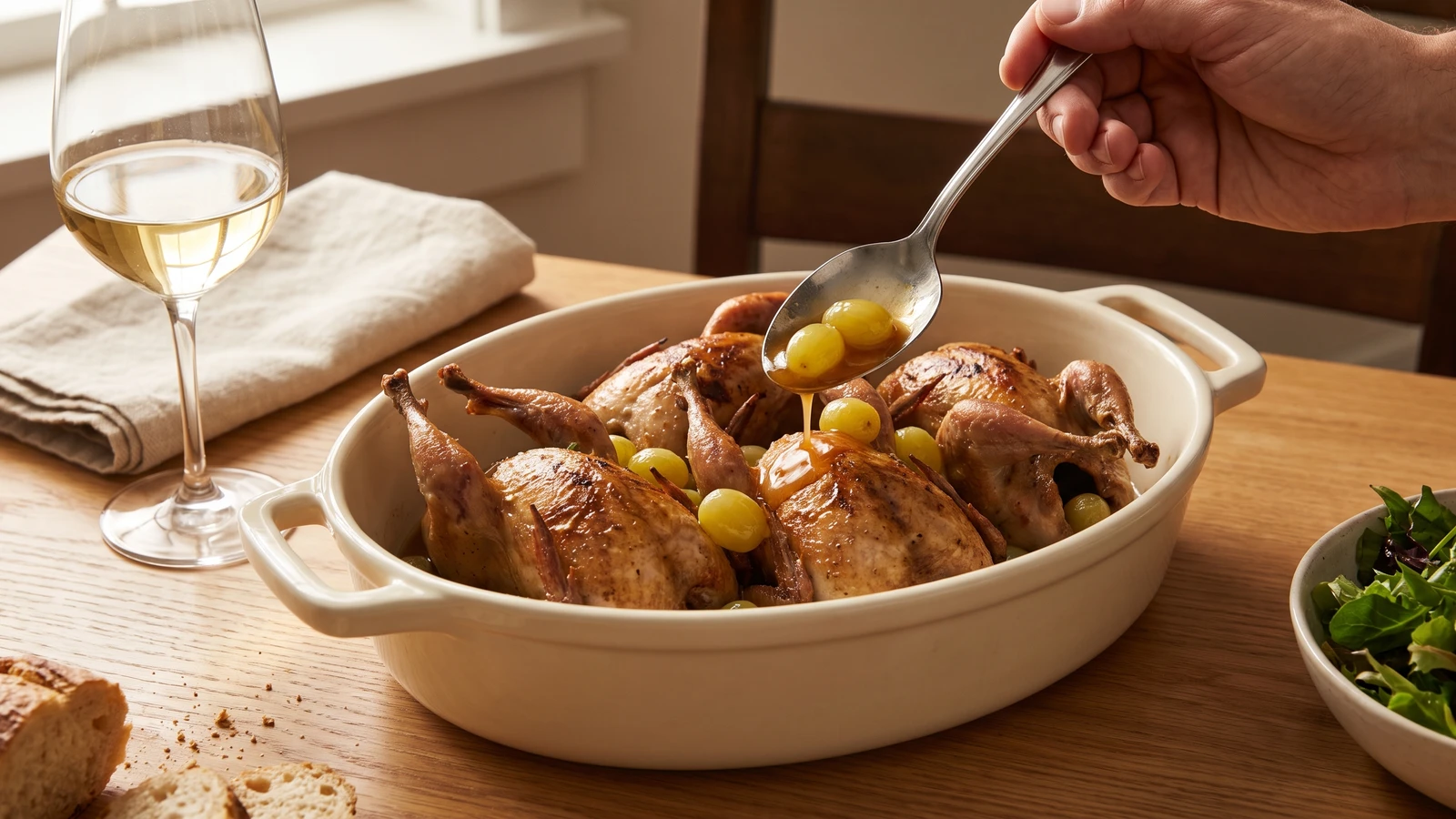
Cailles aux Raisins brings butter-browned quail, bright verjuice, and strong game fumet into one glossy pan sauce, with peeled grapes warmed just long enough to hold their shape and freshness.
Cailles aux Raisins (quail with grapes) teaches restraint in a pan sauce. The birds give the fond, the browned layer clinging to the pan; verjuice gives the cut; strong game fumet gives body. The peeled grapes arrive only after the sauce is finished. The one true thing to know before touching the pan is this: cooked grapes collapse, warmed grapes remain themselves.
The grand-kitchen formula assumed strong game fumet always ready, a saucier, the sauce cook, reducing the pan juices while another pair of hands peeled grapes, and a very hot cocotte waiting at service. At home, prepare the fumet and grapes before the birds meet the butter, use one ovenproof skillet, and warm the serving cocotte during the final minutes. What changed is scale and choreography, not the flavoring, sequence, or proportions. Eight small quails feed four generously. One cook, one stove, one evening.
The brigade's extra hands were scaffolding and can go. Cooking the birds in butter, déglacer, loosening the fond with dry white wine and verjuice, adding exactly half a tablespoon of fumet and one ounce of grapes per quail, these are the dish and must stay. Warm the grapes through and no further. That final half-minute decides everything.
Cailles aux Raisins belongs to the codified grand-kitchen repertoire of Paris rather than to one claimed province. It formalizes a pairing familiar to France's wine-growing tables, small game birds, grapes, and the tart juice of unripe fruit, then gives it classical precision through peeled grapes and concentrated game fumet. The dish is sometimes mistaken for a sweet fruit sauce, but verjuice keeps it savory and brisk, while the grapes remain a last-minute garnish rather than cooking down into compote.
Quantity
8, about 4 to 5 oz (115 to 140 g) each
pinfeathers removed
Quantity
1½ teaspoons (7.5 ml / 9 g)
Quantity
½ teaspoon (2.5 ml / 1 g)
Quantity
4 tablespoons (60 ml / 56 g)
divided
Quantity
1 tablespoon (15 ml / 15 g)
Quantity
2 teaspoons (10 ml / 10 g)
Quantity
4 tablespoons (60 ml / 60 g)
Quantity
1½ cups (355 ml / 225 g)
peeled
| Ingredient | Quantity |
|---|---|
| whole oven-ready quailspinfeathers removed | 8, about 4 to 5 oz (115 to 140 g) each |
| fine sea salt | 1½ teaspoons (7.5 ml / 9 g) |
| freshly ground black pepper | ½ teaspoon (2.5 ml / 1 g) |
| unsalted butterdivided | 4 tablespoons (60 ml / 56 g) |
| dry white wine | 1 tablespoon (15 ml / 15 g) |
| white verjuice | 2 teaspoons (10 ml / 10 g) |
| prepared strong game fumet | 4 tablespoons (60 ml / 60 g) |
| fresh green seedless grapespeeled | 1½ cups (355 ml / 225 g) |
Heat the oven to 425°F (220°C). Cut a shallow nick beside the stem of each grape, lower the fruit into boiling water for 8 to 10 seconds, then move it immediately to ice water. Slip off the skins, working from the nick, and dry the grapes thoroughly. Measure the wine, verjuice, and fumet now; once the quails are cooked, the sauce moves quickly.
Pat the quails completely dry inside and out. Tuck the wing tips underneath and tie the legs together if they splay widely, then season all over and inside with the salt and pepper. Let them stand for 15 minutes while the surface dries again. Moisture makes butter sputter and prevents the bronze skin the sauce depends upon.
Melt 1½ tablespoons of the butter in a 12 to 14-inch ovenproof sauté pan over medium-high heat. When the foam subsides, lay in four quails breast-side down. Brown for 2 to 3 minutes, then turn them onto each side for about 1 minute, moving them only when the skin releases cleanly. Transfer them to a plate and repeat with another 1½ tablespoons butter and the remaining birds. Keep the final tablespoon in reserve. If the butter solids turn black, lift out the birds, discard the burned fat, wipe away only the loose black specks, and continue over lower heat with the reserved butter. Ça se rattrape.
Return every quail to the skillet breast-side up, fitting them snugly without stacking. Add the reserved butter if it wasn't needed during browning, then roast for 6 to 9 minutes. Begin checking early: remove the birds when the thickest part of a thigh reaches 160°F (71°C) without the thermometer touching bone. During the final 2 minutes, place the empty cocotte in the oven to heat. Transfer the quails to the hot cocotte and leave them uncovered while the sauce is made; carryover heat should bring them to 165°F (74°C). Verify that temperature before serving, returning the cocotte to the oven briefly if needed.
Pour off the loose fat from the skillet while leaving its brown fond intact. Set the pan over medium heat, add the dry white wine and verjuice, and swill them over the entire floor of the utensil. Scrape with a wooden spoon until every savory brown deposit dissolves, then reduce for 30 to 45 seconds, until the liquid is sharp-smelling and nearly syrupy. The fond must be brown, never black; scorched deposits make a bitter sauce and should be left behind.
Add the strong game fumet, exactly 4 tablespoons, which preserves the book's proportion of half a tablespoon per quail. Boil briskly for 1 to 2 minutes, swirling the pan, until the sauce looks glossy and lightly coats a spoon. It should remain a concentrated jus, not thicken into gravy. If it reduces to a sticky glaze, whisk in hot water one teaspoon at a time until it flows again. Ça se rattrape. If it remains thin, give it another 20 seconds rather than reaching for flour.
Take the skillet off the heat, add the peeled grapes, and roll them through the sauce for 20 to 30 seconds. Warm them through and no further. If one begins to split, lift all the grapes out immediately and spoon them around the quails; don't let the fruit turn to pulp. Pour the glossy pan sauce over and around the birds in the hot cocotte, distributing exactly one ounce of grapes per quail. Serve at once. À table!
1 serving (about 225g)
Culinary guides, cultural storytelling, and the editorial depth that makes cooking meaningful.
Discover Culinary ExplorerChef Juliette
John Dory has the delicacy of sole and the firmness of turbot. A light flouring, a quick butter sauté, and nut-brown beurre noisette show exactly why looks never mattered.

Chef Juliette
Fresh haddock proves its delicacy in the meunière pan: a fine flour crust, moist pearly flakes, and beurre noisette sharpened with lemon and parsley, ready from one skillet in half an hour.
Chef Juliette
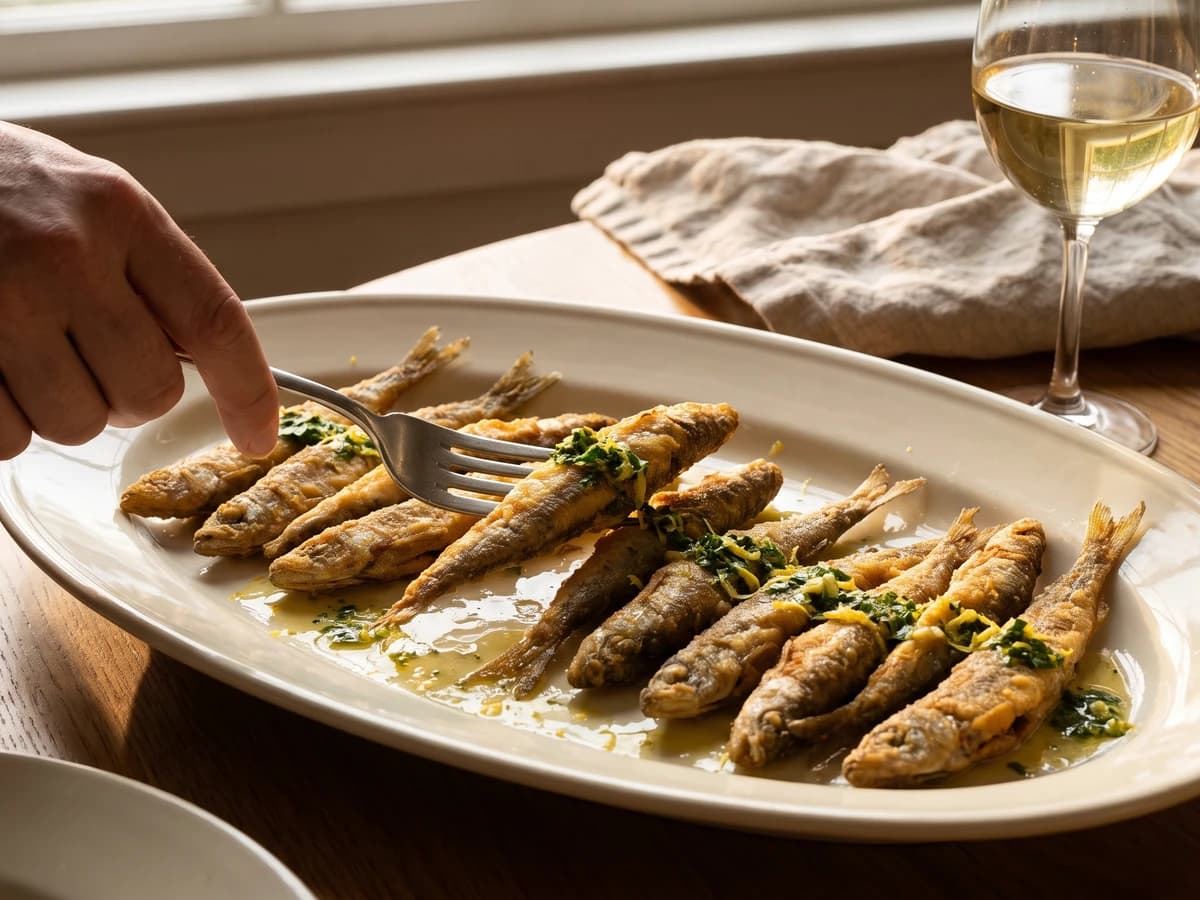
Éperlans à l’Anglaise turns small fish into a lesson in disciplined coating: boned smelts under a close, crisp crumb, pan-fried in clarified butter and finished with bright, half-melted maître d’hôtel butter.

Chef Juliette
Tiny smelts, shallot, mushrooms, white wine, gratin sauce, and fine bread raspings meet a fierce oven, where the fish must turn tender in the same breath the buttered crust bronzes.