
Chef Juliette
John Dory (St. Pierre)
John Dory has the delicacy of sole and the firmness of turbot. A light flouring, a quick butter sauté, and nut-brown beurre noisette show exactly why looks never mattered.
A cooking platform built around craft, culture, and the stories behind what we eat.

Created by Chef Juliette
Based on No. 1886, Cailles à la Dauphine, from Le Guide Culinaire (1907) by Auguste Escoffier
Vine leaf and bacon shelter each little bird while a firm purée of peas and lettuce holds it proudly: an old lesson in protecting lean meat and controlling moisture.
Cailles à la Dauphine (quails with pea-and-lettuce purée) teaches moisture twice: protect the lean little birds from the fierce oven, then drive enough water from their green bed that the second roasting warms it without turning it soupy. Before you touch a pan, know this one thing: the purée must stand in a soft mound. If it flows, it isn't ready.
The vine leaf buffers the breast and lends a quiet fragrance; the thin bacon bastes it. The old direction is brigade shorthand: a saucier tends the purée while another hand roasts the birds. Unlike many neighboring entries in the canon, it needs neither a stockpot never off the fire nor a salamander; labor and timing are the hidden luxuries. The home translation changes only the mise en place: line the dish and ready the pea pot first, then use an immersion blender instead of an extra round of passing and holding. That extra labor is scaffolding and can go. The vine leaf, bacon, firm reduction, ham lining, and two ten-minute roasts are the dish and must stay. One cook, one stove, one evening.
Done properly, the birds emerge bronze and glossy above a bright green purée, with savory ham hidden beneath. Draw a spoon through the reduced purée before assembling the dish. The path should remain clean for a moment and the sides shouldn't run back together. That is the step that decides Cailles à la Dauphine.
Cailles à la Dauphine belongs to the Parisian classical service table, where small birds were protected with vine leaves and bacon, then presented with a precisely named garnish. The title is easily mistaken for a claim on the province of Dauphiné, but dauphine is also the court title once given to the heir's wife; here it signals a formal grand-kitchen presentation rather than a documented farmhouse specialty of that region. Its passage to the bourgeois table was practical: quail, ham, garden peas, lettuce, and one ovenproof dish condensed the composition into something that could be carried directly to the table.
Quantity
4, each 5 to 6 ounces (140 to 170 g)
giblets removed
Quantity
1 teaspoon (5 ml / 6 g)
divided
Quantity
¼ teaspoon (1 ml / 0.5 g)
divided
Quantity
4
fresh and blanched or brined and thoroughly rinsed, patted dry
Quantity
3 tablespoons (45 ml / 42 g)
softened and divided
Quantity
4 slices, about 3 ounces (85 g) total
Quantity
4 cups (950 ml / 580 g)
fresh or frozen
Quantity
1 small head, about 5 ounces (140 g)
trimmed and finely shredded
Quantity
¼ cup (60 ml / 60 g)
Quantity
8 very thin slices, about 6 ounces (170 g) total
| Ingredient | Quantity |
|---|---|
| oven-ready whole quailgiblets removed | 4, each 5 to 6 ounces (140 to 170 g) |
| fine sea saltdivided | 1 teaspoon (5 ml / 6 g) |
| ground white pepperdivided | ¼ teaspoon (1 ml / 0.5 g) |
| large vine leavesfresh and blanched or brined and thoroughly rinsed, patted dry | 4 |
| unsalted buttersoftened and divided | 3 tablespoons (45 ml / 42 g) |
| very thin square slices unsmoked streaky bacon | 4 slices, about 3 ounces (85 g) total |
| shelled young peasfresh or frozen | 4 cups (950 ml / 580 g) |
| butter lettucetrimmed and finely shredded | 1 small head, about 5 ounces (140 g) |
| water | ¼ cup (60 ml / 60 g) |
| jambon de Paris or mild cooked ham | 8 very thin slices, about 6 ounces (170 g) total |
Heat the oven to 425°F (220°C), or 400°F (200°C) with a fan, with a rack in the upper-middle position. Line the bottom and sides of a 2-quart (1.9-liter) deep gratin dish with overlapping slices of ham, leaving no broad patches of bare dish. Measure the peas, shred the lettuce, and set the water and blender beside the stove. This mise en place is the honest home equivalent of the second pair of hands assumed by the original direction.
Pat the quails thoroughly dry, then season their cavities and outsides with half the salt and a pinch of the white pepper. Spread 1 tablespoon (15 ml / 14 g) of the butter over the vine leaves and wrap one leaf around each bird, buttered side against the flesh. Lay a bacon slice over each leaf-wrapped breast and secure the parcel with a single loop of kitchen twine. Arrange the quails breast-side up on a small rimmed roasting tray and roast for exactly 10 minutes. The bacon may only be beginning to color; this is the first roast, not the finish.
As soon as the quails enter the oven, put the peas, shredded lettuce, water, remaining 2 tablespoons (30 ml / 28 g) butter, remaining salt, and remaining white pepper into a wide saucepan. Cover and cook over medium-high heat for 4 to 6 minutes, stirring once, until the lettuce has collapsed and a pea crushes readily beneath the back of a spoon. Take the pan off the heat and blend with an immersion blender until smooth, keeping the blade submerged. Return the pan to medium heat and stir continuously until the purée is somewhat stiff, glossy, and able to hold a soft mound, about 3 to 5 minutes. Draw the spoon across the pan: its path should remain visible for a moment. If the purée runs back at once, keep reducing it before assembly. Ça se rattrape. If it becomes pasty, beat in hot water 1 teaspoon (5 ml / 5 g) at a time until it is supple but still holds its shape.
Remove the quails after their first 10 minutes and snip away the twine without disturbing the vine leaves or bacon. Spoon the stiff pea-and-lettuce purée into the ham-lined dish and smooth the surface. Half-plunge the quails into the purée, breast-side up, so the lower half of each bird is supported by the green bed while the bacon-covered breast remains visible. The purée must hold them where you place them; if they sink or the surface floods around them, lift the birds out and reduce the purée again before continuing.
Return the assembled dish to the oven for 10 minutes. The bacon should be burnished, the butter should gleam across the birds, and the purée should show a gentle bubbling edge without becoming loose. Check the thickest part of a thigh without touching bone; it must reach 165°F (74°C). If it falls short, roast in 2-minute intervals and check again. Carry the dish directly to the table and spoon some ham-lined purée beneath each quail. This dish waits for no one. À table!
1 serving (about 340g)
Culinary guides, cultural storytelling, and the editorial depth that makes cooking meaningful.
Discover Culinary ExplorerChef Juliette
John Dory has the delicacy of sole and the firmness of turbot. A light flouring, a quick butter sauté, and nut-brown beurre noisette show exactly why looks never mattered.

Chef Juliette
Fresh haddock proves its delicacy in the meunière pan: a fine flour crust, moist pearly flakes, and beurre noisette sharpened with lemon and parsley, ready from one skillet in half an hour.
Chef Juliette
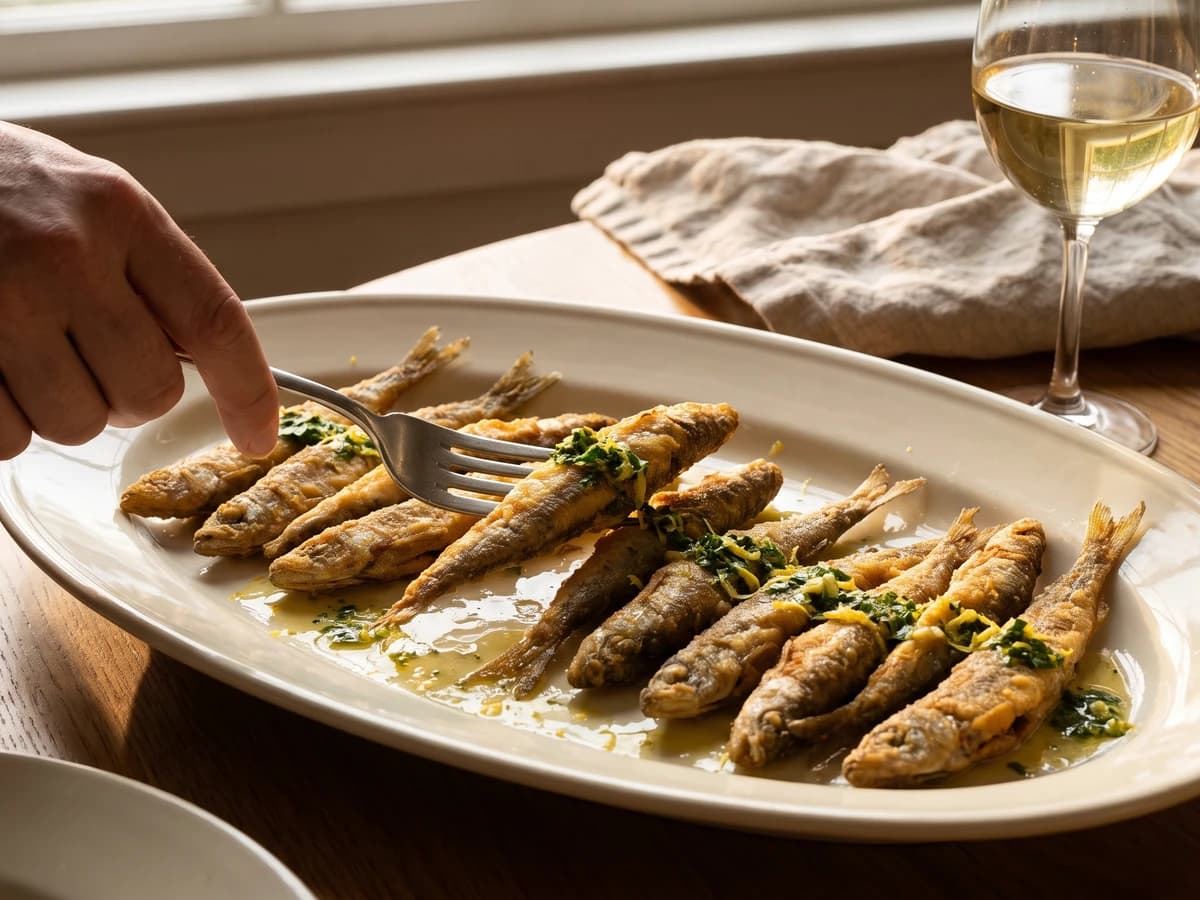
Éperlans à l’Anglaise turns small fish into a lesson in disciplined coating: boned smelts under a close, crisp crumb, pan-fried in clarified butter and finished with bright, half-melted maître d’hôtel butter.

Chef Juliette
Tiny smelts, shallot, mushrooms, white wine, gratin sauce, and fine bread raspings meet a fierce oven, where the fish must turn tender in the same breath the buttered crust bronzes.