
Chef Juliette
John Dory (St. Pierre)
John Dory has the delicacy of sole and the firmness of turbot. A light flouring, a quick butter sauté, and nut-brown beurre noisette show exactly why looks never mattered.
A cooking platform built around craft, culture, and the stories behind what we eat.

Created by Chef Juliette
Based on No. 1883, Quails, from Le Guide Culinaire (1907) by Auguste Escoffier
Cailles pochées teach the quiet art of poaching: plump birds held below a simmer in gelatinous veal stock, then glossed with a concentrated jus and real butter for a generous dinner-party main.
Cailles pochées au fond de veau (quails poached in veal stock) teach restraint. The one true thing to know before touching the pan is this: the stock must never boil. Gentle heat leaves the breasts succulent and lets the gelatinous fond carry the birds' delicate flavor; a rolling boil tightens them before you can blink.
The original entry assumed a rôtisseur tending a spit, a saucier at the stockpot, and excellent veal stock never off the fire. For four people, the honest equivalent is a snug covered sauté pan, finished veal stock from your freezer or a good prepared stock, and a measured little reinforcement of gelatin only when that stock lacks body. The brigade-sized bath and separate sauce station are scaffolding, so they go. The strong fond and gentle poach are the dish, so they stay. One cook, one stove, one evening.
The finished quails should be plump and pale gold, their skin taut rather than browned, with an amber jus gleaming over them. Keep the liquid at a bare tremble throughout. That quiet pan is the step that decides everything.
At Parisian tables of the classical canon, quail moved easily between the rôtisseur's spit and the saucier's stockpot, a small bird treated with the same discipline as larger poultry. The spit was preferred for roasting, while cooking in butter offered a practical saucepan method for households without one. Poaching in strong gelatinous veal stock was not a timid alternative; it was prized because the stock protected the lean flesh while lending it richness and a naturally glossy sauce.
Quantity
8 (about 3 lb / 1.4 kg total)
giblets removed
Quantity
6 cups (1.4 L / 1.4 kg)
unsalted or lightly salted
Quantity
2¼ teaspoons (11 ml / 7 g)
Quantity
1 teaspoon (5 ml / 6 g)
plus more only if needed
Quantity
½ teaspoon (2.5 ml / 1 g)
Quantity
3 tablespoons (45 ml / 42 g)
cut into small cubes
| Ingredient | Quantity |
|---|---|
| plump oven-ready quailsgiblets removed | 8 (about 3 lb / 1.4 kg total) |
| strong gelatinous veal stockunsalted or lightly salted | 6 cups (1.4 L / 1.4 kg) |
| powdered unflavored gelatin (optional) | 2¼ teaspoons (11 ml / 7 g) |
| fine sea saltplus more only if needed | 1 teaspoon (5 ml / 6 g) |
| finely ground white pepper | ½ teaspoon (2.5 ml / 1 g) |
| cold unsalted buttercut into small cubes | 3 tablespoons (45 ml / 42 g) |
Check the veal stock while it is cold. It should tremble like a loose jelly; if it pours like water, put ¼ cup (60 ml) in a small bowl, sprinkle the gelatin evenly over it, and leave it for 5 minutes. Warm the remaining stock gently in the sauté pan, whisk in the bloomed gelatin, and bring the liquid to 180 to 185°F (82 to 85°C). It should show an occasional lazy bubble, never a rolling boil.
Pat the quails dry inside and out. Tuck the wing tips beneath the backs, cross the legs, and tie each bird neatly with kitchen twine so the delicate extremities stay close to the body. Season the cavities and skins evenly with the salt and white pepper. Keep the birds cold until the stock is ready.
Lower the quails breast-side up into the hot stock in a snug single layer. The liquid should reach at least two-thirds of the way up the birds; if it does not, use a smaller pan rather than weakening the fond with a great deal of water. Cover the surface with a cartouche (parchment lid), add the pan lid, and hold the stock between 175 and 185°F (79 and 85°C). After 9 minutes, turn the quails breast-side down and cook for another 6 to 9 minutes, until the thickest part of the thigh reaches 165°F (74°C). If the stock begins boiling, pull the pan off the heat, uncover it, and add 2 tablespoons of cold water around the edge. Ça se rattrape. Resume only when the liquid has calmed.
Lift the quails carefully onto a warmed platter, turn them breast-side up, and cover them loosely with foil. Strain the poaching stock through a fine sieve and skim away any surface fat. Measure 2 cups (475 ml) back into the clean sauté pan and reserve the remainder; the birds should rest only while the sauce reduces, about 12 minutes.
Boil the measured stock briskly until it reduces to about ¾ cup (180 ml), tastes concentrated but not salty, and coats the back of a spoon with an amber glaze. Take the pan completely off the heat and monter au beurre (mount with butter), whisking in the cold cubes one at a time until the jus is glossy. If it looks oily, whisk in a spoonful of reserved stock. If it has reduced too far, loosen it the same way. Taste before adding any further salt.
Remove the twine and arrange two quails per warmed plate, or return all eight to the serving platter. Spoon the jus generously over the breasts and let a little pool beneath each bird. Bring the remaining sauce to the table separately and serve at once. À table!
1 serving (about 260g)
Culinary guides, cultural storytelling, and the editorial depth that makes cooking meaningful.
Discover Culinary ExplorerChef Juliette
John Dory has the delicacy of sole and the firmness of turbot. A light flouring, a quick butter sauté, and nut-brown beurre noisette show exactly why looks never mattered.

Chef Juliette
Fresh haddock proves its delicacy in the meunière pan: a fine flour crust, moist pearly flakes, and beurre noisette sharpened with lemon and parsley, ready from one skillet in half an hour.
Chef Juliette
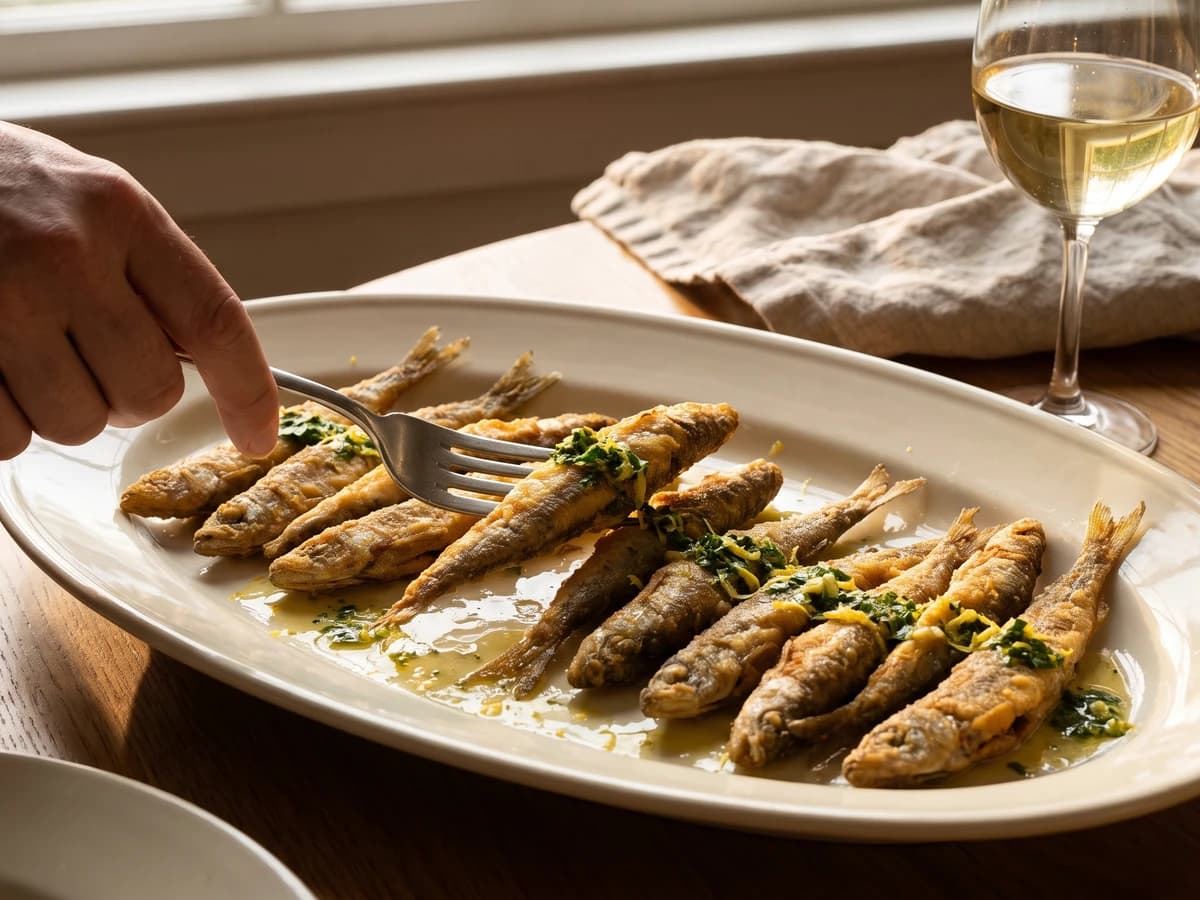
Éperlans à l’Anglaise turns small fish into a lesson in disciplined coating: boned smelts under a close, crisp crumb, pan-fried in clarified butter and finished with bright, half-melted maître d’hôtel butter.

Chef Juliette
Tiny smelts, shallot, mushrooms, white wine, gratin sauce, and fine bread raspings meet a fierce oven, where the fish must turn tender in the same breath the buttered crust bronzes.