
Chef Juliette
John Dory (St. Pierre)
John Dory has the delicacy of sole and the firmness of turbot. A light flouring, a quick butter sauté, and nut-brown beurre noisette show exactly why looks never mattered.
A cooking platform built around craft, culture, and the stories behind what we eat.
Created by Chef Juliette
Based on No. 1879, Mousses et Mousselines de Bécasse, from Le Guide Culinaire (1907) by Auguste Escoffier
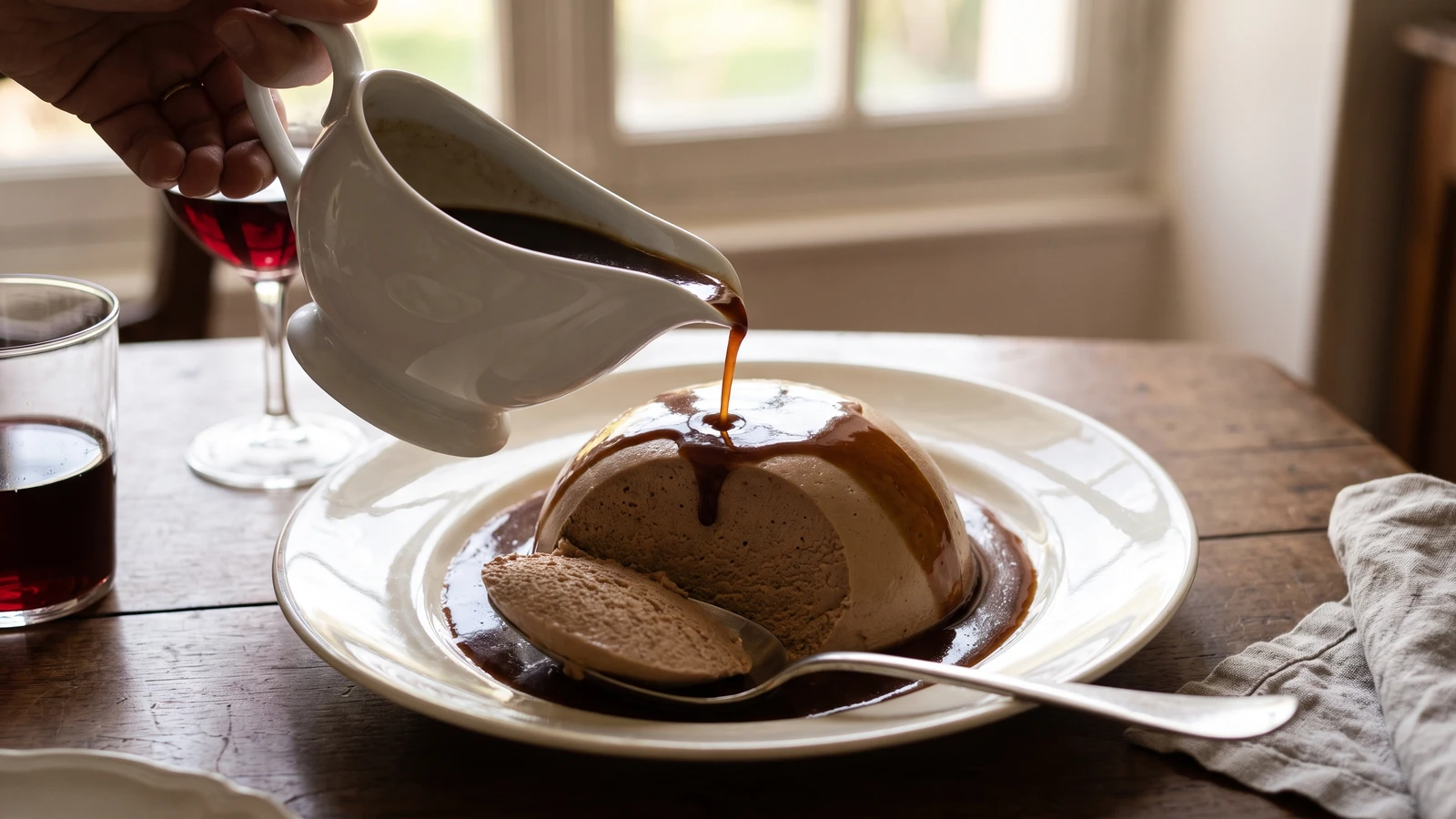
Mousse and mousselines are one woodcock farce in two forms, a generous sharing mould or four individual moulds, poached gently and served with fumet drawn only from their carcasses.
Mousses et Mousselines de Bécasse teach the discipline of the farce mousseline, a fine forcemeat kept cold from first mixing to final moulding. Mousse means the large form to share; mousselines are the same mixture divided among individual moulds. The one true thing to know before touching a pan is temperature: warmth loosens the farce, while boiling water contracts it into something coarse.
The original entry assumed a garde-manger preparing Mousses et Mousselines de Faisan (No. 1850), with bécasse substituted as the basic ingredient, while a saucier on staff reduced the carcasses beside a stock never off the fire. A salamander might wait nearby, but it has no honest work here because nothing is glazed or gratinéed. At home, one linked batch serves four, one saucepan draws the fumet, and an ordinary oven and bain-marie provide the gentle heat. One cook, one stove, one evening.
The brigade’s separate hands and banquet quantities were scaffolding, so they go. The proportions and method of the referenced preparation stay whole, as the source requires, along with three things that are the dish itself: the cold farce, restrained cooking, and a sauce based only on fumet, the concentrated stock drawn from the birds’ own carcasses and remains.
Work straight from the cold. If the farce begins to soften or shine before it reaches the moulds, stop and set the bowl over ice until it firms again. Ça se rattrape. Guarding that temperature is the step that decides the dish.
Mousses et mousselines de bécasse belong to the Parisian grand-kitchen repertoire of game, supplied by hunting country such as Sologne and the Landes, where the migratory bécasse has long been treated as a prized bird. The preparation carried its dark, aromatic flesh from the roasting spit and salmis pot into the moulded-forcemeat canon; contrary to a common reading, mousse and mousseline are not separate mixtures, but the same constituents and quantities presented in large or individual moulds. Its proper sauce begins with the bird itself, a fumet from the carcasses and remains rather than a borrowed brown sauce.
Quantity
1 home-scale batch (about 3 cups / 710 ml / 750 g) Mousses et Mousselines de Faisan (No. 1850)
prepared as directed with trimmed raw woodcock flesh replacing pheasant flesh by equal weight
Quantity
from 4 birds (about 1¼ lb / 560 g)
necks, wings, bones, and sound trimmings reserved from the referenced preparation
Quantity
3 cups (710 ml / 710 g)
Quantity
¼ teaspoon (1.25 ml / 1.5 g)
used only as needed after reduction
| Ingredient | Quantity |
|---|---|
| Mousses et Mousselines de Faisanprepared as directed with trimmed raw woodcock flesh replacing pheasant flesh by equal weight | 1 home-scale batch (about 3 cups / 710 ml / 750 g) Mousses et Mousselines de Faisan (No. 1850) |
| woodcock carcasses and edible remainsnecks, wings, bones, and sound trimmings reserved from the referenced preparation | from 4 birds (about 1¼ lb / 560 g) |
| cold water | 3 cups (710 ml / 710 g) |
| fine salt (optional)used only as needed after reduction | ¼ teaspoon (1.25 ml / 1.5 g) |
Prepare the Mousses et Mousselines de Faisan (No. 1850) exactly as its own entry directs, using woodcock flesh in place of pheasant by equal weight and changing no other constituent or ratio. Retain every sound carcass and edible trimming. Work with the linked preparation straight from the cold; if it softens or turns glossy before moulding, stop and nest the bowl over ice until it firms again. Ça se rattrape. Choose its large-mould form for mousse or four individual moulds for mousselines, since only the size changes.
Inspect the reserved carcasses carefully, removing shot, feathers, bruised tissue, and any green-stained or bitter organ material. Break the carcasses at their joints and set them with the sound remains in a broad heavy saucepan over medium heat. Turn them until the exposed surfaces bronze and their own fat begins to glisten. If the pan catches before the bones colour, add a tablespoon of the measured water and scrape immediately; browned is useful, burnt is not.
Add the remaining cold water and bring it slowly to the first tremble, skimming away the grey foam as it rises. Hold the liquid just below a full simmer, uncovered, for 35 to 40 minutes. A hard boil clouds the fumet and drives bitterness from the small bones, so lower the heat if the surface rolls. Strain through a fine sieve without crushing the remains; pressing gives more liquid but less clarity.
Return the strained fumet to a clean saucepan and boil it steadily until about 1 cup (240 ml / 240 g) remains. It should taste distinctly of woodcock and carry a light gloss, but it need not coat the spoon like a flour-thickened sauce. Season only after reduction. If it becomes too strong or salty, whisk in hot water one tablespoon at a time. Ça se rattrape. No roux, wine, cream, or borrowed brown sauce belongs here; the carcass fumet is the foundation and the finished sauce.
Time the linked preparation so the mousse or mousselines finish cooking as the fumet reaches its proper concentration. Let the moulds settle for 5 minutes while the fumet waits over the lowest heat. If moisture beads on the exposed surface, blot it gently with a clean towel. Do not brown the top under a broiler; the smooth, tender surface is correct.
Unmould the large mousse onto a warmed serving platter, or set one mousseline in the centre of each warmed plate. Spoon the reduced fumet around the base rather than burying the shape. Bring the large mousse to the table whole and portion it there; serve the mousselines one apiece. The sauce should pool generously enough for every spoonful. À table!
1 serving (about 185g)
Culinary guides, cultural storytelling, and the editorial depth that makes cooking meaningful.
Discover Culinary ExplorerChef Juliette
John Dory has the delicacy of sole and the firmness of turbot. A light flouring, a quick butter sauté, and nut-brown beurre noisette show exactly why looks never mattered.

Chef Juliette
Fresh haddock proves its delicacy in the meunière pan: a fine flour crust, moist pearly flakes, and beurre noisette sharpened with lemon and parsley, ready from one skillet in half an hour.
Chef Juliette
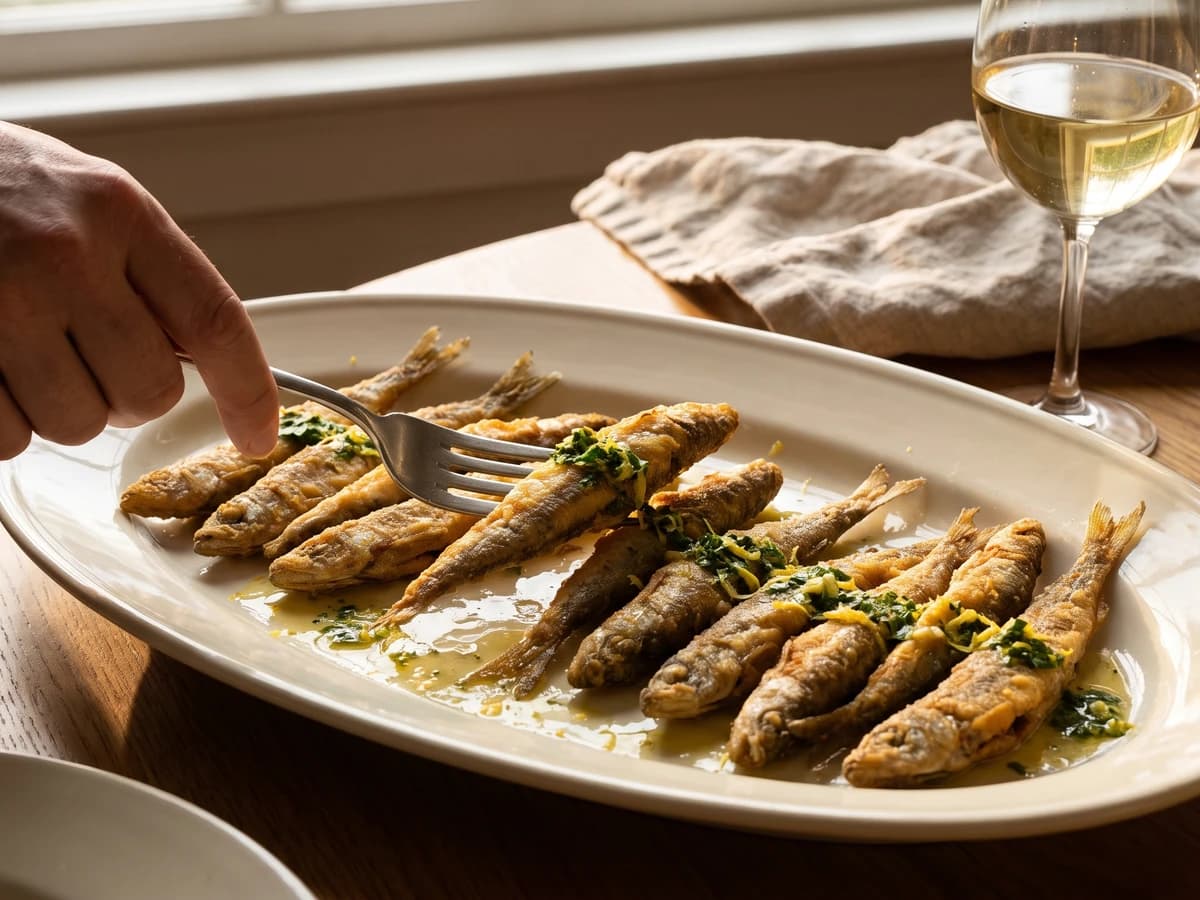
Éperlans à l’Anglaise turns small fish into a lesson in disciplined coating: boned smelts under a close, crisp crumb, pan-fried in clarified butter and finished with bright, half-melted maître d’hôtel butter.

Chef Juliette
Tiny smelts, shallot, mushrooms, white wine, gratin sauce, and fine bread raspings meet a fierce oven, where the fish must turn tender in the same breath the buttered crust bronzes.