
Chef Juliette
John Dory (St. Pierre)
John Dory has the delicacy of sole and the firmness of turbot. A light flouring, a quick butter sauté, and nut-brown beurre noisette show exactly why looks never mattered.
A cooking platform built around craft, culture, and the stories behind what we eat.
Created by Chef Juliette
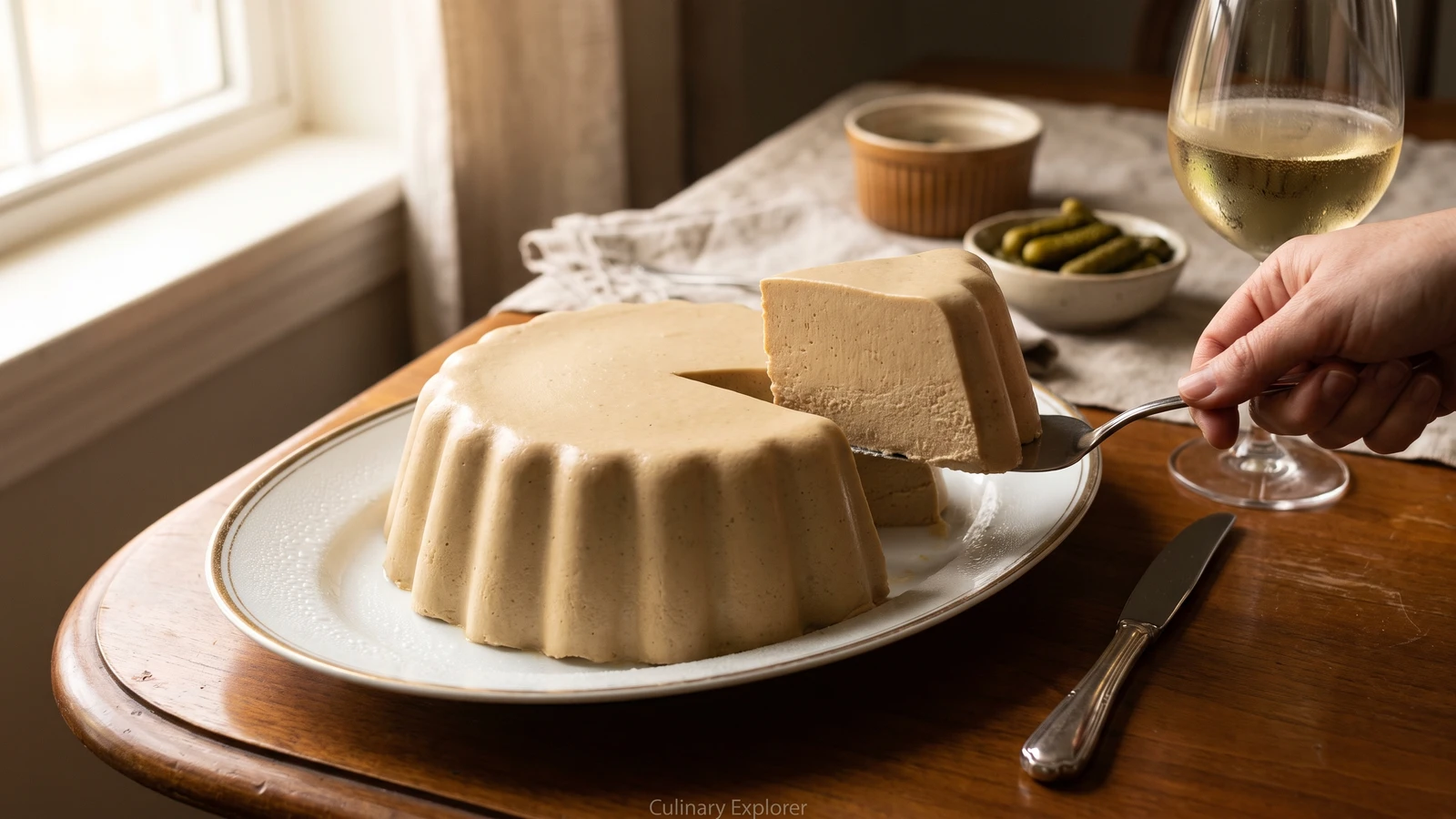
Based on No. 1859, Mousse de Faisan, from Le Guide Culinaire (1907) by Auguste Escoffier
Mousse de Faisan sets roasted game and half-whipped cream into a chilled, silken mould for four, proving that the classical cold table needs attention, not a brigade.
Mousse de Faisan, a cold pheasant mousse, teaches one indispensable lesson: cream folded into a cold savoury mousse must be half-whipped, supple enough to fall from the whisk in a thick ribbon. Take it to stiff peaks and the finished mousse turns dry and woolly on the tongue. That restraint is the dish.
The original assumed a garde-manger with a freshly roasted bird, prepared stock and jelly always at hand, several cooks passing the work between them, and a large mould intended for supper service. Your honest equivalent is one home-scale batch of the referenced fowl mousse made with roasted pheasant, a 1-litre mould, and an ordinary refrigerator. The separate hands were brigade scaffolding and can go. The smooth base, half-whipped cream, careful folding, and patient chill must stay.
Make the substitution plainly: pheasant replaces fowl measure for measure, while the proportions and sequence remain those of the source. The one moment that decides everything comes at the whisk. Stop before the cream holds a standing peak, and the mousse will cut cleanly yet melt as you eat it.
Mousse de faisan belongs to Parisian cuisine classique and the formal cold supper table, where the garde-manger, the cold-kitchen station, transformed roasted poultry and game into moulded dishes for several guests. Unlike a spreadable pâté, a classical mousse could be hot or cold and was defined by its lightened texture and moulded form. Pheasant brought the deeper flavour of the game course into that cold repertoire without changing the fowl-mousse grammar beneath it.
Quantity
1 home-scale batch, about 3 cups (720 ml / about 650 g), Mousse de Volaille Froide (No. 1711)
Quantity
2 tablespoons (30 ml / 30 g)
reserved for loosening if needed
Quantity
1 teaspoon (5 ml / 4 g)
for the mould
Quantity
Up to ¼ teaspoon (1.25 ml / 1.5 g)
only if needed after the cold taste
Quantity
Up to ⅛ teaspoon (0.6 ml / 0.3 g)
only if needed after the cold taste
| Ingredient | Quantity |
|---|---|
| Mousse de Volaille Froide, prepared with freshly roasted pheasant in place of fowl | 1 home-scale batch, about 3 cups (720 ml / about 650 g), Mousse de Volaille Froide (No. 1711) |
| cold heavy cream (optional)reserved for loosening if needed | 2 tablespoons (30 ml / 30 g) |
| neutral oilfor the mould | 1 teaspoon (5 ml / 4 g) |
| fine sea salt (optional)only if needed after the cold taste | Up to ¼ teaspoon (1.25 ml / 1.5 g) |
| finely ground white pepper (optional)only if needed after the cold taste | Up to ⅛ teaspoon (0.6 ml / 0.3 g) |
Chill a 1-litre metal mousse mould and a broad mixing bowl for 15 minutes. Brush the mould with the thinnest possible film of neutral oil, then turn it upside down on a towel so any excess drains away. You want release, not an oily surface.
Prepare Mousse de Volaille Froide (No. 1711) as one home-scale batch, replacing the fowl measure for measure with freshly roasted pheasant that is barely cooled but no longer hot. Preserve the referenced formula's proportions and sequence. When its cream is whipped, stop at demi-fouettée, half-whipped: the whisk should leave soft tracks, but the cream must still slide from it in a heavy ribbon. If the cream is merely too firm but remains smooth, fold in the reserved unwhipped cream one teaspoon at a time until it relaxes. Ça se rattrape. If it has turned grainy or shows butter flecks, begin that portion of cream again.
Chill a teaspoonful of the finished mixture for 5 minutes, then taste it. Cold mutes seasoning, so add the salt and white pepper only if the chilled sample asks for them. Fold any adjustment through with a broad spatula and as few strokes as possible; vigorous mixing knocks out the lightness you have just built.
Spoon the mousse into the chilled mould in three additions, pressing each gently into the fluting and corners with the back of the spoon. Tap the mould twice against a folded towel to release large air pockets, then level the top without compressing it. Cover closely and transfer it straight to the refrigerator.
Chill for at least 6 hours, preferably overnight, until the centre feels resilient under a light fingertip and no longer shifts when the mould is tilted. Do not freeze it to hurry the setting. Freezing tightens the cream and spoils the fine texture that the half-whipping protected.
Dip only the outside of the mould in warm water for 4 to 6 seconds, wipe it dry, and invert it onto a chilled serving plate. If it clings, cover it again, repeat the brief dip, and try once more; don't pull at the mousse. Let it stand for 10 minutes before cutting with a thin knife dipped in hot water and wiped dry between slices. Serve cool rather than icy. À table!
1 serving (about 170g)
Culinary guides, cultural storytelling, and the editorial depth that makes cooking meaningful.
Discover Culinary ExplorerChef Juliette
John Dory has the delicacy of sole and the firmness of turbot. A light flouring, a quick butter sauté, and nut-brown beurre noisette show exactly why looks never mattered.

Chef Juliette
Fresh haddock proves its delicacy in the meunière pan: a fine flour crust, moist pearly flakes, and beurre noisette sharpened with lemon and parsley, ready from one skillet in half an hour.
Chef Juliette
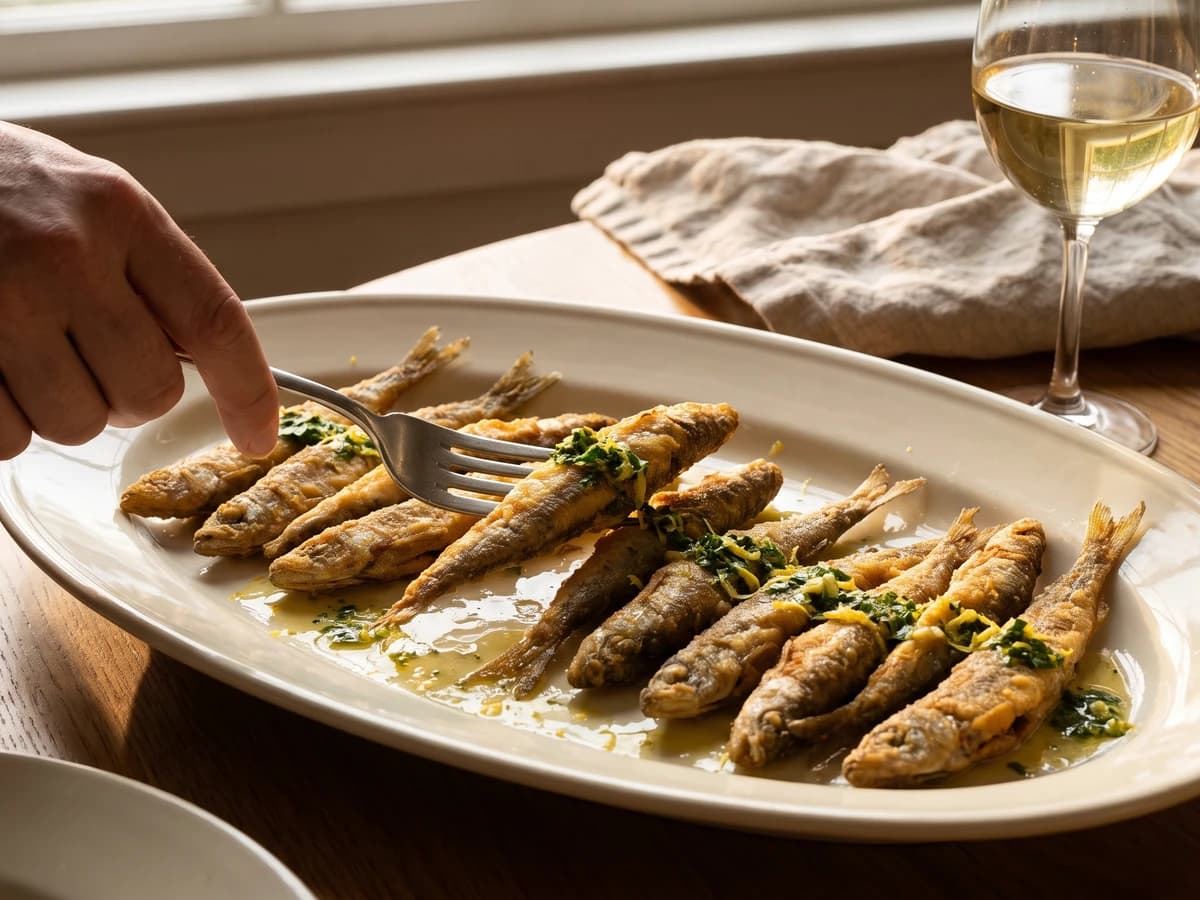
Éperlans à l’Anglaise turns small fish into a lesson in disciplined coating: boned smelts under a close, crisp crumb, pan-fried in clarified butter and finished with bright, half-melted maître d’hôtel butter.

Chef Juliette
Tiny smelts, shallot, mushrooms, white wine, gratin sauce, and fine bread raspings meet a fierce oven, where the fish must turn tender in the same breath the buttered crust bronzes.