
Chef Juliette
John Dory (St. Pierre)
John Dory has the delicacy of sole and the firmness of turbot. A light flouring, a quick butter sauté, and nut-brown beurre noisette show exactly why looks never mattered.
A cooking platform built around craft, culture, and the stories behind what we eat.

Created by Chef Juliette
Based on No. 1849, Pâté Chaud de Faisan, from Le Guide Culinaire (1907) by Auguste Escoffier
Pheasant roasted deliberately underdone, layered with game-liver gratin forcemeat, mushrooms, and truffle inside a burnished raised crust, then opened at the table for a glossy carcass-built salmis sauce.
Pâté Chaud de Faisan (hot raised pheasant pie) teaches one essential lesson: when meat will be cooked twice, the first cooking must stop early. The pheasant enters the crust distinctly underdone, then finishes inside the forcemeat without surrendering its juices. Roast it fully at the beginning and no sauce can return what the oven has taken.
The original kitchen assumed a saucier on staff, a stockpot never off the fire, prepared game forcemeat, and a cupboard of raised-pie moulds. It might also have kept a salamander ready for last-minute colour, though this pie earns its burnish from egg wash and the oven. At home, a deep springform pan replaces the Charlotte mould, reduced demi-glace gives backbone to ordinary stock, and the salmis cooks while the pie bakes. One cook, one stove, one evening.
The brigade scale and separate sauce station are scaffolding and can go. The under-roasting, game-liver gratin forcemeat, alternating layers, and sauce made from the carcass are the dish, so they stay. Watch the pheasant during that first roast. Everything that follows depends upon taking it out while the breast remains rosy and yielding.
Pâté chaud de faisan belongs to the grand Parisian kitchen and the country-house game table rather than to one French province. Pâté originally described food enclosed in pâte, or pastry, not merely a spreadable filling; in this form, the crust became both cooking vessel and presentation. The salmis completes the old economy of game cookery by turning the roasted carcass and clinging remains into the sauce served with the meat.
Quantity
1 home-scaled framework from Pâté Chaud de Caneton (No. 1752)
Quantity
2¾ cups (650 ml / 350 g)
Quantity
¾ cup plus 1 tablespoon (195 ml / 175 g)
cubed for the pastry
Quantity
1 teaspoon (5 ml / 6 g)
for the pastry
Quantity
1
for the pastry
Quantity
5 to 7 tablespoons (75 to 105 ml / 75 to 105 g)
Quantity
1 tablespoon (15 ml / 14 g)
for the mould
Quantity
1, about 2½ to 3 pounds (1.1 to 1.4 kg)
neck and giblets reserved if available
Quantity
2 tablespoons (30 ml / 28 g)
softened for roasting
Quantity
2 teaspoons (10 ml / 12 g)
for the pheasant and filling
Quantity
1 teaspoon (5 ml / 2 g)
Quantity
2⅔ cups (630 ml / 680 g) Gratin Forcemeat for Ordinary Hot, Raised Pies (No. 202)
made with game meat and game livers, then chilled
Quantity
3 tablespoons plus 2 teaspoons (55 ml / 65 g)
for the forcemeat
Quantity
3 cups (710 ml / 225 g)
cleaned, with one large mushroom reserved whole
Quantity
1 tablespoon (15 ml / 14 g)
for the mushrooms
Quantity
3 tablespoons (45 ml / 30 g)
drained and thinly sliced
Quantity
⅛ teaspoon (0.6 ml / 0.2 g)
finely powdered
Quantity
1 small pinch (0.3 ml / 0.1 g)
Quantity
1
for glazing
Quantity
1 tablespoon (15 ml / 15 g)
for glazing
Quantity
1 tablespoon (15 ml / 14 g)
for the salmis base
Quantity
1, about ¼ cup (60 ml / 40 g)
finely chopped
Quantity
¾ cup (180 ml / 180 g)
Quantity
2 cups (475 ml / 475 g)
Quantity
⅓ cup (80 ml / 95 g)
for the salmis
Quantity
2 tablespoons (30 ml / 28 g)
cubed for finishing the salmis
| Ingredient | Quantity |
|---|---|
| pastry-and-moulding framework | 1 home-scaled framework from Pâté Chaud de Caneton (No. 1752) |
| all-purpose flour | 2¾ cups (650 ml / 350 g) |
| cold unsalted buttercubed for the pastry | ¾ cup plus 1 tablespoon (195 ml / 175 g) |
| fine saltfor the pastry | 1 teaspoon (5 ml / 6 g) |
| large egg yolkfor the pastry | 1 |
| ice water | 5 to 7 tablespoons (75 to 105 ml / 75 to 105 g) |
| softened unsalted butterfor the mould | 1 tablespoon (15 ml / 14 g) |
| oven-ready pheasantneck and giblets reserved if available | 1, about 2½ to 3 pounds (1.1 to 1.4 kg) |
| unsalted buttersoftened for roasting | 2 tablespoons (30 ml / 28 g) |
| fine saltfor the pheasant and filling | 2 teaspoons (10 ml / 12 g) |
| freshly ground black pepper | 1 teaspoon (5 ml / 2 g) |
| Gratin Forcemeat for Ordinary Hot, Raised Piesmade with game meat and game livers, then chilled | 2⅔ cups (630 ml / 680 g) Gratin Forcemeat for Ordinary Hot, Raised Pies (No. 202) |
| very reduced demi-glacefor the forcemeat | 3 tablespoons plus 2 teaspoons (55 ml / 65 g) |
| small button or cremini mushroomscleaned, with one large mushroom reserved whole | 3 cups (710 ml / 225 g) |
| unsalted butterfor the mushrooms | 1 tablespoon (15 ml / 14 g) |
| preserved black truffledrained and thinly sliced | 3 tablespoons (45 ml / 30 g) |
| dried thymefinely powdered | ⅛ teaspoon (0.6 ml / 0.2 g) |
| ground bay leaf | 1 small pinch (0.3 ml / 0.1 g) |
| large egg yolkfor glazing | 1 |
| waterfor glazing | 1 tablespoon (15 ml / 15 g) |
| unsalted butterfor the salmis base | 1 tablespoon (15 ml / 14 g) |
| shallotfinely chopped | 1, about ¼ cup (60 ml / 40 g) |
| dry red wine | ¾ cup (180 ml / 180 g) |
| unsalted brown chicken or game stock | 2 cups (475 ml / 475 g) |
| very reduced demi-glacefor the salmis | ⅓ cup (80 ml / 95 g) |
| cold unsalted buttercubed for finishing the salmis | 2 tablespoons (30 ml / 28 g) |
Following the pastry-and-moulding framework of Pâté Chaud de Caneton (No. 1752), rub the cold butter into the flour and pastry salt until the mixture resembles coarse crumbs with a few lentil-sized flakes. Add the yolk and just enough ice water to make the dough hold when pressed. Knead it only twice, divide off one-third for the lid, flatten both portions, wrap, and chill for 45 minutes. If the dough crumbles after resting, ça se rattrape: work in cold water one teaspoon at a time. If it feels greasy, chill it again before rolling.
Butter an 18 cm (7-inch) deep springform pan or Charlotte mould thoroughly, especially where the base meets the sides. Roll the larger pastry portion about 3 mm thick and line the mould in one piece, leaving 2 cm hanging above the rim. Press it into the lower corner without stretching it, then chill the lined mould while the pheasant roasts. Patch a tear with cold pastry and press the join firmly; once filled and baked, nobody at the table will know.
Heat the oven to 220°C (425°F). Dry the pheasant, rub it with the softened butter, and season inside and out with half the remaining salt and pepper. Roast breast-side up for 20 to 25 minutes, until the skin is bronze but the thickest part of the breast registers only 52 to 55°C (125 to 130°F). Rest it for 15 minutes. The bird is deliberately underdone because the pie supplies the second cooking. If it passes 60°C (140°F), slice the breast very thinly and brush each slice with a little demi-glace before layering; ça se rattrape.
Beat the chilled Gratin Forcemeat for Ordinary Hot, Raised Pies (No. 202) with the 3 tablespoons plus 2 teaspoons of demi-glace until evenly combined. This keeps the book's proportion of four tablespoons of reduced sauce to 1⅔ pounds of forcemeat. Fry a teaspoonful in the mushroom pan, taste it, and correct the salt and pepper now. The test spoon is not fussiness; once the pie is closed, the seasoning is beyond reach.
Slice the small mushrooms, reserving their clean stems and trimmings for the salmis. Cut shallow grooves down the cap of the reserved large mushroom. Melt the mushroom butter over medium-high heat and sauté everything until browned and dry, cooking the whole cap beside the slices. Lift out the cap for the finish. Cool the slices completely before assembly, because warm mushrooms soften the forcemeat and make the pastry greasy.
Remove both breasts from the rested pheasant and cut them lengthwise into long, thin collops. Keep every bone, wing tip, leg, neck, browned scrap, and spoonful of roasting juice for the salmis. Work on a clean board and wash the knife after handling the underdone bird. Cover the sliced breast and keep it cool while the sauce begins.
Chop the carcass and remains into manageable pieces with poultry shears. Brown them hard in 1 tablespoon butter in a wide saucepan, then add the shallot and reserved mushroom trimmings and cook until the shallot colours. Pour in the red wine, scrape up the fond, and reduce by two-thirds. Add the stock, the ⅓ cup demi-glace, and the roasting juices. Simmer uncovered for 35 to 40 minutes while the pie is assembled and baked, crushing the bones once or twice with a spoon.
Spread a 1 cm layer of forcemeat over the pastry base and up the sides. Arrange a layer of pheasant collops over it, then cooked mushroom slices and truffle. Repeat the layers, pressing gently to remove air pockets, and finish with a complete covering of forcemeat. Sprinkle the powdered thyme and ground bay over the surface. Keep the layers distinct but close; loose packing leaves cavities that collapse when the pie is cut.
Roll the reserved pastry into a thin lid. Brush the exposed rim with the yolk beaten with water, lay on the lid, and seal it firmly to the overhang. Trim and crimp the edge, then cut a 2 cm opening in the centre. Brush the lid with the remaining glaze and chill the assembled pie for 15 minutes while the oven settles to 180°C (350°F). Cold pastry holds its architecture.
Set the mould on a preheated metal baking sheet and bake for about 1 hour, until the pastry is deeply golden and the centre of the forcemeat reaches 74°C (165°F). If the lid colours before the centre is ready, cover it loosely with foil and continue. A pale lower crust needs another 10 minutes on the lowest oven rack; colour, not the clock, tells you when pastry is cooked.
Strain the salmis through a fine sieve, pressing the carcass firmly, then discard the solids. Boil the sauce until it naps the back of a spoon and leaves a clear trail when you draw a finger through it. Remove it from the heat and whisk in the cold butter cube by cube. If it becomes oily, stop adding butter and whisk in one teaspoon of cold stock; ça se rattrape. Taste for salt and pepper.
Rest the pie for 10 minutes, release the mould, and invert it onto a warm serving platter so the original base faces upward. Ease off that pastry base, cut it into triangles, and arrange them around the exposed filling. Pour about ½ cup (120 ml) of salmis through the opening, place the grooved mushroom in the centre, and surround it with the reserved truffle slices. Send the remaining salmis separately in a warm jug. Cut generous wedges with a serrated knife. À table!
1 serving (about 620g)
Culinary guides, cultural storytelling, and the editorial depth that makes cooking meaningful.
Discover Culinary ExplorerChef Juliette
John Dory has the delicacy of sole and the firmness of turbot. A light flouring, a quick butter sauté, and nut-brown beurre noisette show exactly why looks never mattered.

Chef Juliette
Fresh haddock proves its delicacy in the meunière pan: a fine flour crust, moist pearly flakes, and beurre noisette sharpened with lemon and parsley, ready from one skillet in half an hour.
Chef Juliette
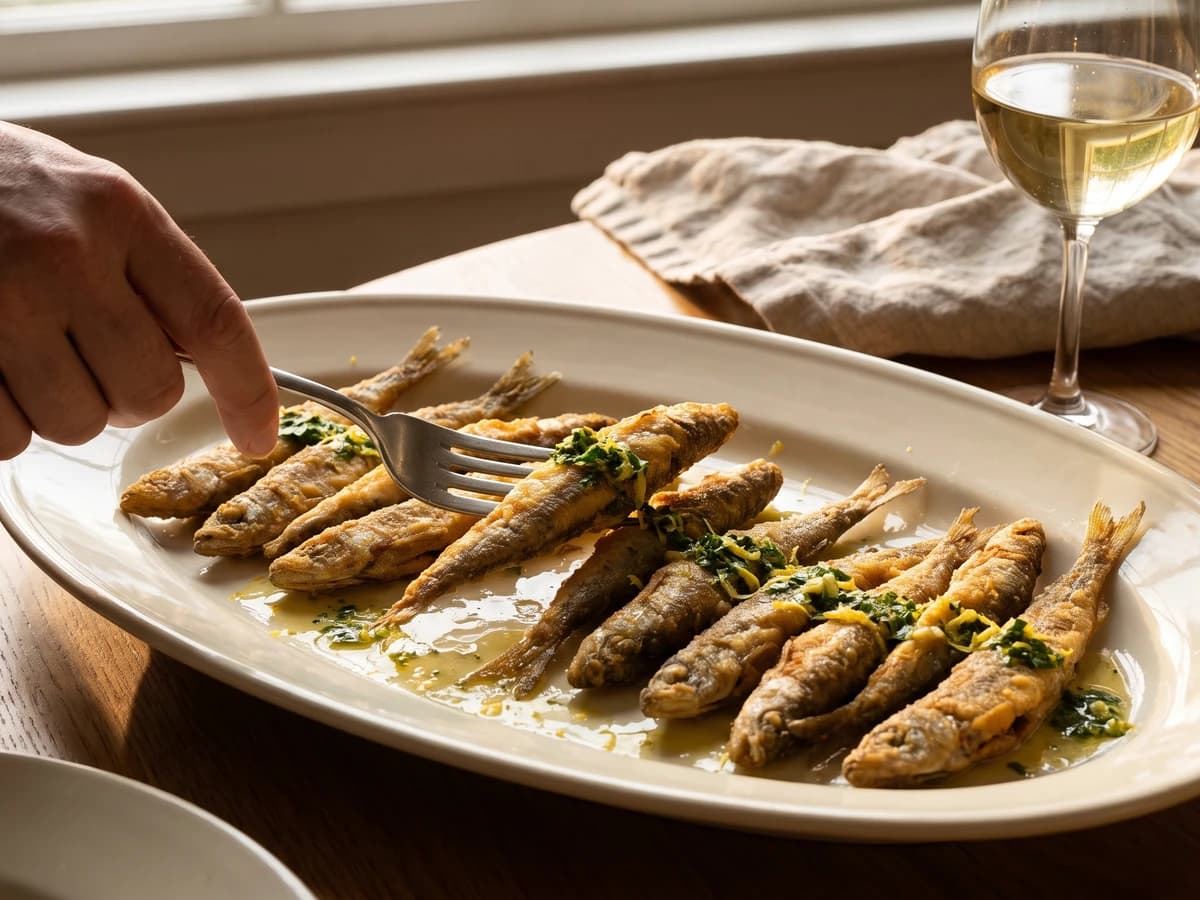
Éperlans à l’Anglaise turns small fish into a lesson in disciplined coating: boned smelts under a close, crisp crumb, pan-fried in clarified butter and finished with bright, half-melted maître d’hôtel butter.

Chef Juliette
Tiny smelts, shallot, mushrooms, white wine, gratin sauce, and fine bread raspings meet a fierce oven, where the fish must turn tender in the same breath the buttered crust bronzes.