
Chef Juliette
John Dory (St. Pierre)
John Dory has the delicacy of sole and the firmness of turbot. A light flouring, a quick butter sauté, and nut-brown beurre noisette show exactly why looks never mattered.
A cooking platform built around craft, culture, and the stories behind what we eat.

Created by Chef Juliette
Based on No. 1848, Sauté de Faisan, from Le Guide Culinaire (1907) by Auguste Escoffier
Sauté de Faisan rewards restraint: young pheasant cooked gently in butter, breast pulled early, and a short pan sauce reduced to a gloss and poured only when the platter is ready.
Sauté de Faisan (pheasant pieces sautéed in butter) teaches one severe and useful truth: sauce can enrich lean meat, but it cannot return moisture once the breast has been overcooked. The bird must leave the pan somewhat underdone, finish beneath its cover, and meet its sauce only at the last moment.
The original assumed a sauté cook, a saucier on staff, and stock never off the fire. Such kitchens also kept a salamander ready, but this entry has no use for it. At home, a wide skillet, a warmed platter, an instant-read thermometer, and a small measure of concentrated unsalted poultry stock do the work. The separate sauce station was brigade scaffolding and can go. What remains is the dish itself: young, plump birds, moderate heat, real butter, careful timing, and a short sauce made from the pan fond. Two small pheasants serve four without turning the evening into a shooting-lodge banquet. One cook, one stove, one evening.
Because the source leaves its sauce to common practice rather than calling for a separate preparation, this version keeps it spare: the bird's own fond, reduced poultry stock, resting juices, and cold butter. No fruit, mushrooms, Cognac, or herbs have been smuggled in. The one step that decides everything is taking the breast from the pan before it feels completely done.
Sauté de faisan belongs to the French game table, particularly the wooded hunting country of Sologne, where a young bird could receive the quick pan treatment used for tender poultry. In the grand kitchen it traveled as a game variation on poulet sauté: jointed, cooked in butter, arranged on a platter, then covered with sauce from the deglazed pan. Sauté here does not mean a hurried toss over fierce heat; it means carefully turned pieces cooked over moderate heat, and that moderation protects the pheasant from dryness.
Quantity
2 birds, 1½ to 2 pounds (680 to 900 g) each
each cut into 2 breast halves, 2 whole legs, and 2 wings; back and neck removed
Quantity
1 teaspoon (5 ml / 6 g)
Quantity
½ teaspoon (2.5 ml / 1 g)
Quantity
8 tablespoons (120 ml / 113 g)
divided, with 2 tablespoons chilled for finishing
Quantity
1¼ cups (300 ml / 300 g)
divided
| Ingredient | Quantity |
|---|---|
| young, plump pheasantseach cut into 2 breast halves, 2 whole legs, and 2 wings; back and neck removed | 2 birds, 1½ to 2 pounds (680 to 900 g) each |
| fine sea salt | 1 teaspoon (5 ml / 6 g) |
| freshly ground black pepper | ½ teaspoon (2.5 ml / 1 g) |
| unsalted butterdivided, with 2 tablespoons chilled for finishing | 8 tablespoons (120 ml / 113 g) |
| concentrated unsalted poultry stockdivided | 1¼ cups (300 ml / 300 g) |
Take the pheasants from the cold twenty minutes before cooking. Joint each bird like a chicken into two breast halves, two whole legs, and two wings; save the back and neck for another stockpot. Pat every piece thoroughly dry, then season with the salt and pepper. Warm an oval platter with hot water and dry it just before the first pieces are ready. A warm platter protects the rest without continuing to cook the breast.
Set a 12 to 13 inch heavy sauté pan over moderate heat and add 3 tablespoons of the butter. When it foams without smoking, lay in the legs and wings skin-side down, working in batches if they cannot sit without touching. Cook gently, turning every few minutes and basting with the butter, until the skin is hazelnut-gold, the wings register 165°F (74°C), and the thickest part of each leg reaches 165 to 170°F (74 to 77°C), about 14 to 18 minutes. Move finished pieces to the warmed platter. If the butter darkens too quickly, lift the pan from the heat and lower the flame. If its milk solids turn black and smell acrid, pour off that butter and restart with fresh butter; you may lose some fond, but not the supper.
Add enough fresh butter to leave the pan generously filmed, then place the breasts skin-side down over moderate heat. Cook for 4 to 5 minutes, until the skin is evenly golden rather than fiercely crusted. Turn, baste continuously, and cook for another 3 to 5 minutes, removing each breast when its thickest point reaches 160 to 162°F (71 to 72°C). It should still feel springy and somewhat underdone when it leaves the pan. The covered rest must carry it to 165°F (74°C) before serving; if it does not, return that piece to the pan over gentle heat for a minute. Once a pheasant breast is dry, there is no clever sauce that reverses it. The thermometer is cheaper than regret.
Arrange the legs toward the center of the warmed platter, with the breasts skin-side up and the wings around them, in the manner of a poulet sauté. Cover loosely with a lid or foil so the meat rests without its skin becoming wet. Pour off the excess cooking butter from the pan, leaving the clean bronze fond attached to its floor. Keep every juice that gathers on the platter; it belongs in the sauce.
Return the pan to medium-high heat and add 1 cup (240 ml / 240 g) of the poultry stock. Déglacer, meaning deglaze, by scraping every clean brown morsel into the liquid as it comes to a lively simmer. Add the resting juices and reduce until only about ½ cup (120 ml) remains and the sauce lightly coats a spoon, about 5 to 8 minutes. Short means concentrated and scant, enough to gloss the pheasant rather than drown it. If it becomes salty or too tight, loosen it with the reserved stock. If it remains thin, reduce it before adding the finishing butter.
Take the pan completely off the heat. Whisk in the 2 tablespoons of chilled butter, a small piece at a time, until the sauce forms a smooth, tawny emulsion with a clear gloss. If it separates into oily beads, don't pour it away. Ça se rattrape: put 1 tablespoon of cool reserved stock in a clean bowl, whisk in a spoonful of the broken sauce until smooth, then add the rest gradually. Confirm that every breast has reached 165°F (74°C), taste the sauce for seasoning, and pour it over the pheasant only as the platter goes to the table. À table!
1 serving (about 250g)
Culinary guides, cultural storytelling, and the editorial depth that makes cooking meaningful.
Discover Culinary ExplorerChef Juliette
John Dory has the delicacy of sole and the firmness of turbot. A light flouring, a quick butter sauté, and nut-brown beurre noisette show exactly why looks never mattered.

Chef Juliette
Fresh haddock proves its delicacy in the meunière pan: a fine flour crust, moist pearly flakes, and beurre noisette sharpened with lemon and parsley, ready from one skillet in half an hour.
Chef Juliette
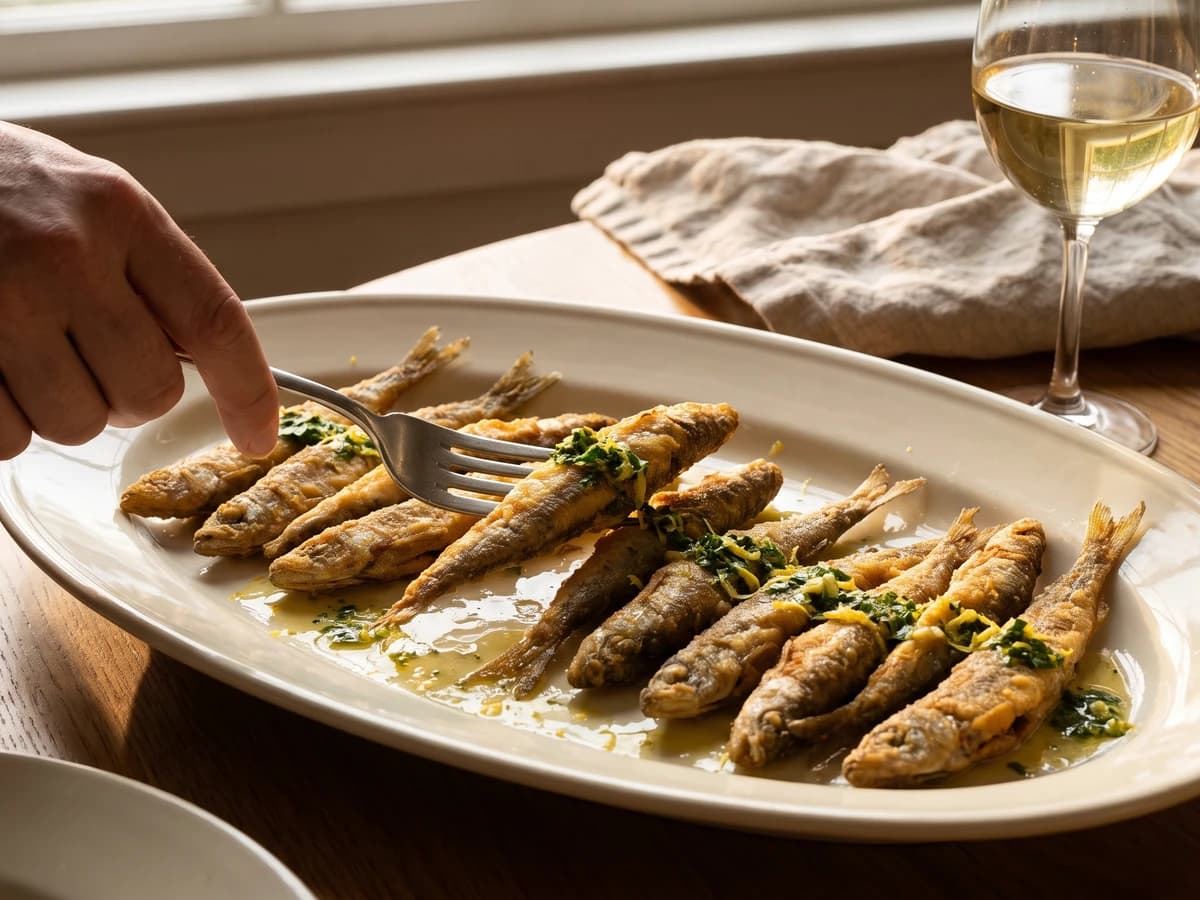
Éperlans à l’Anglaise turns small fish into a lesson in disciplined coating: boned smelts under a close, crisp crumb, pan-fried in clarified butter and finished with bright, half-melted maître d’hôtel butter.

Chef Juliette
Tiny smelts, shallot, mushrooms, white wine, gratin sauce, and fine bread raspings meet a fierce oven, where the fish must turn tender in the same breath the buttered crust bronzes.