
Chef Juliette
John Dory (St. Pierre)
John Dory has the delicacy of sole and the firmness of turbot. A light flouring, a quick butter sauté, and nut-brown beurre noisette show exactly why looks never mattered.
A cooking platform built around craft, culture, and the stories behind what we eat.

Created by Chef Juliette
Based on No. 1836, Faisan à la Crème, from Le Guide Culinaire (1907) by Auguste Escoffier
Whole pheasant cooked in butter with quartered onion, then basted under tangy cream until the bird is burnished and the sauce gleams ivory around it, ready for the table in its saucepan.
Faisan à la Crème (pheasant with cream) teaches one true thing: cream belongs in the final quarter of the cooking, when it can catch the bird's butter and juices without boiling itself into curds. Pheasant is lean, so the basting is not decoration. It is the dish.
The source entry assumes a young whole bird, a heavy saucepan, and a cook who can judge three-quarters done by touch. It calls for no saucier, stockpot, or salamander, and I won't invent them. For one cook, one stove, one evening, an instant-read thermometer replaces the practiced thumb, while a low oven gives the saucepan the steady heat a watchful burner once demanded. Its quarter pint of cream becomes a scant two-thirds cup, a direct household measure for the same one-bird proportion.
The thermometer and oven are useful scaffolding. The butter, quartered onion, late cream, continual basting, and service in the saucepan must stay, because they are Faisan à la Crème. Keep the cream below a hard simmer once it enters the pan. That is the step that decides everything.
Faisan à la crème belongs to the cuisine bourgeoise of France's autumn hunting table, particularly in the north and center, where a young pheasant could go directly from the day's bag into a covered saucepan. Grand kitchens carried pheasant toward elaborate garnishes and game sauces, but this preparation preserved the household grammar of butter, onion, and cream within the classical repertory. Cream does not make the dish automatically Norman; its identity lies in the late, lightly acidulated cream that softens lean game without hiding it.
Quantity
1 bird, 3 to 3 1/2 pounds (1.35 to 1.6 kg)
giblets removed
Quantity
4 tablespoons (60 ml / 57 g)
Quantity
1 medium (about 7 ounces / 200 g)
peeled and quartered through the root
Quantity
Scant 2/3 cup (150 ml / 150 g)
Quantity
1/2 teaspoon (2.5 ml / 2.5 g)
use only with heavy cream
Quantity
1 1/4 teaspoons (6 ml / 7.5 g)
Quantity
1/2 teaspoon (2.5 ml / 1 g)
| Ingredient | Quantity |
|---|---|
| young whole pheasantgiblets removed | 1 bird, 3 to 3 1/2 pounds (1.35 to 1.6 kg) |
| unsalted butter | 4 tablespoons (60 ml / 57 g) |
| medium yellow onionpeeled and quartered through the root | 1 medium (about 7 ounces / 200 g) |
| full-fat cultured sour cream, or heavy cream | Scant 2/3 cup (150 ml / 150 g) |
| fresh lemon juice (optional)use only with heavy cream | 1/2 teaspoon (2.5 ml / 2.5 g) |
| fine sea salt | 1 1/4 teaspoons (6 ml / 7.5 g) |
| freshly ground black pepper | 1/2 teaspoon (2.5 ml / 1 g) |
Heat the oven to 325°F (165°C). Pat the pheasant completely dry inside and out, tuck the wing tips underneath, and tie the legs together if the bird is not already trussed. Season the cavity and skin evenly with the salt and pepper. A wet bird dilutes the butter and colors poorly, so give the drying more attention than the trussing.
Melt the butter in a heavy, lidded saucepan over medium heat until it foams. Add the pheasant and arrange the onion quarters around it. Turn the bird patiently for 8 to 10 minutes, letting the breast, legs, and back become butter-gold while the cut faces of the onion take light color. Do not chase a dark crust, which would make the butter bitter before the bird is cooked. If the milk solids darken too quickly, lift the pan from the heat for 30 seconds and continue over a gentler flame.
Set the pheasant breast side up, cover the saucepan, and place it in the oven. Cook for 30 to 35 minutes, opening the pan twice to spoon the butter and bird juices over the breast and legs. The bird is three-quarters done when the thickest part of the breast reads 140 to 145°F (60 to 63°C) and the thigh reads about 150 to 155°F (66 to 68°C), with the thermometer clear of bone. If it is cooler, cover and continue for 5 minutes before testing again. The cream must not go in early, or its acidity and long exposure to heat will make the sauce grainy.
Whisk the sour cream until smooth. If using ordinary heavy cream, stir in the lemon juice now to sharpen it as the source directs. Reserve 1 tablespoon of the cream for finishing or rescue, then whisk 2 tablespoons of the hot buttery pan juices into the remainder. Spoon the tempered cream over the pheasant and around the onion, coating the breast and legs generously. Tempering is the home cook's protection against a sudden split; it changes no flavor and preserves the source's intent.
Return the uncovered saucepan to the oven and cook for 15 to 20 minutes, basting the bird with the cream every 4 to 5 minutes. The sauce should tremble gently at the edges, never boil hard. The pheasant is ready when the breast reaches 165°F (74°C), the thigh reaches at least 170°F (77°C), and the juices at the leg joint run clear. If the sauce turns grainy or releases an oily rim, do not pour it out. Ça se rattrape: transfer the bird to a warm plate, whisk the broken sauce a spoonful at a time into the reserved cold cream, then return the smooth sauce and bird to the saucepan. If more cooking is needed, lower the oven to 300°F (150°C) before continuing.
Rest the pheasant in its saucepan, loosely covered, for 10 minutes. Spoon the sauce over it once more and check the consistency: it should be nappante, coating the back of a spoon while still flowing freely. If it is too tight, loosen it with a teaspoon of warm water; if it is loose, set the pan over the lowest heat for a minute while basting, without letting the cream boil. Bring the saucepan directly to the table, carve the bird, and spoon the onion and cream over each serving. À table!
1 serving (about 260g)
Culinary guides, cultural storytelling, and the editorial depth that makes cooking meaningful.
Discover Culinary ExplorerChef Juliette
John Dory has the delicacy of sole and the firmness of turbot. A light flouring, a quick butter sauté, and nut-brown beurre noisette show exactly why looks never mattered.

Chef Juliette
Fresh haddock proves its delicacy in the meunière pan: a fine flour crust, moist pearly flakes, and beurre noisette sharpened with lemon and parsley, ready from one skillet in half an hour.
Chef Juliette
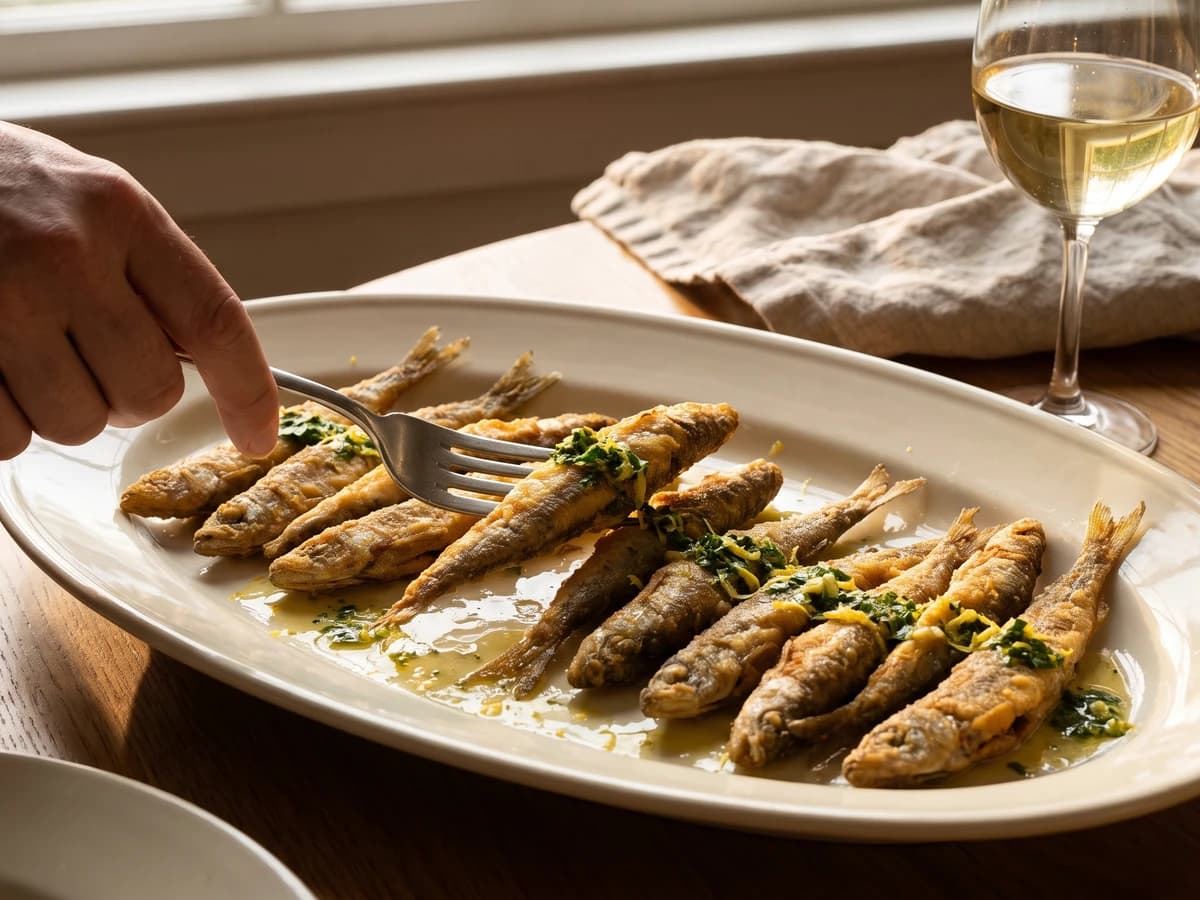
Éperlans à l’Anglaise turns small fish into a lesson in disciplined coating: boned smelts under a close, crisp crumb, pan-fried in clarified butter and finished with bright, half-melted maître d’hôtel butter.

Chef Juliette
Tiny smelts, shallot, mushrooms, white wine, gratin sauce, and fine bread raspings meet a fierce oven, where the fish must turn tender in the same breath the buttered crust bronzes.