
Chef Juliette
John Dory (St. Pierre)
John Dory has the delicacy of sole and the firmness of turbot. A light flouring, a quick butter sauté, and nut-brown beurre noisette show exactly why looks never mattered.
A cooking platform built around craft, culture, and the stories behind what we eat.
Created by Chef Juliette
Based on No. 1834, Faisan en Chartreuse, from Le Guide Culinaire (1907) by Auguste Escoffier
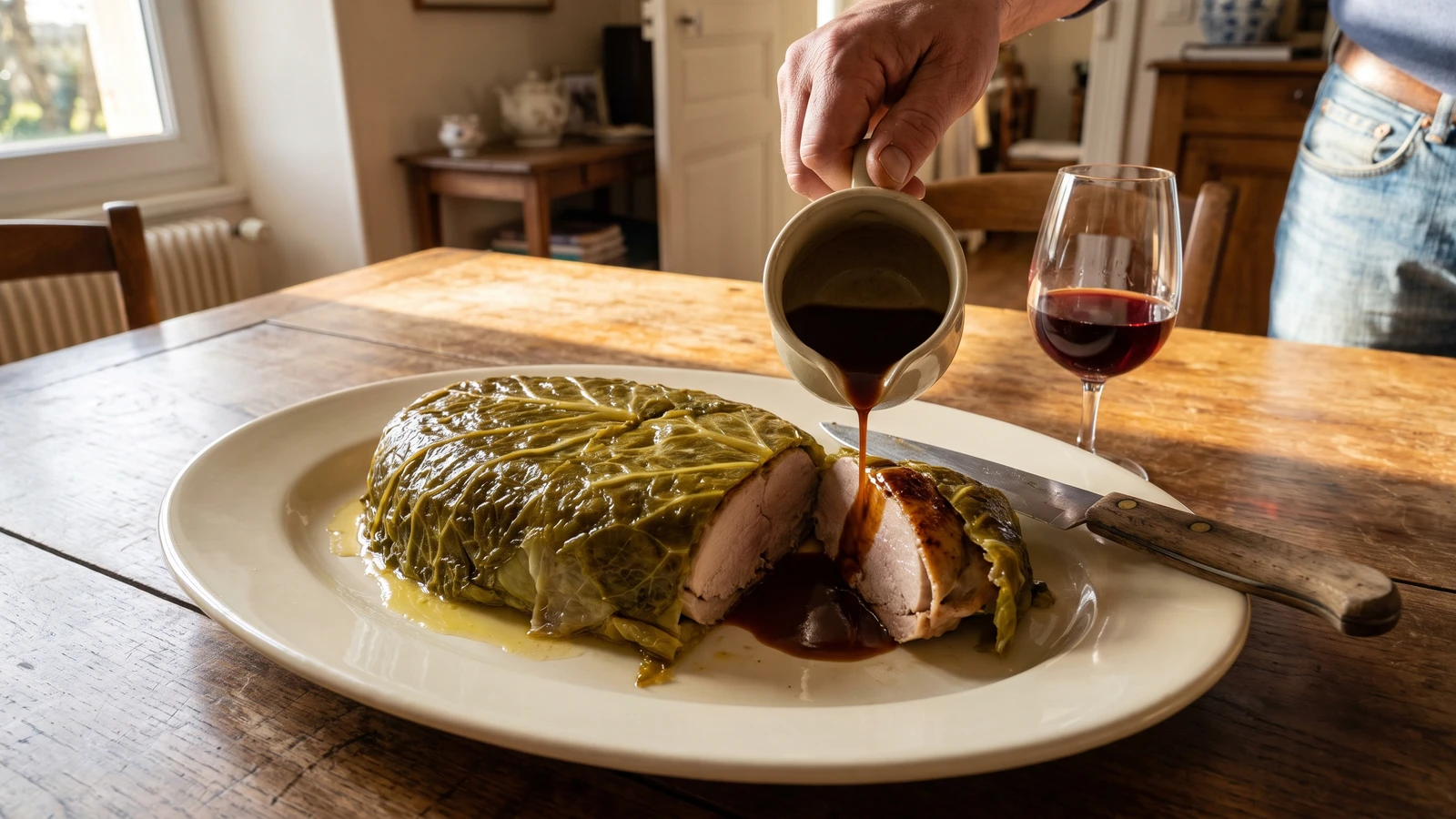
A tender pheasant, only just poêlé, disappears inside savory braised cabbage, then emerges as a burnished chartreuse with pheasant-scented demi-glace alongside. The lesson is timing: deep flavor outside, delicacy protected within.
Faisan en Chartreuse (pheasant in a braised cabbage mould) teaches a discipline before it teaches a shape: two pheasants enter the kitchen, and they have entirely different jobs. The mature bird braises with the cabbage until it has surrendered its flavor, then it is discarded. The tender bird is cooked separately, only just done, and protected inside that savory cabbage shell. Confuse the two and the dish makes no sense.
The brigade version assumed an old game bird to spare, a saucier tending excellent half-glaze, stock never off the fire, and an oval chartreuse mould built for the purpose. A salamander contributes nothing here. At home, one good prepared demi-glace, pheasant fumet, and a deep heatproof bowl do the work, scaled for four people and sequenced for one cook, one stove, one evening. Decorative rows of turned vegetables, forcemeat linings, and repeated strainings belong to the scaffolding of other chartreuses, not this entry. The two-bird logic, the separate Poëlings, the pressed cabbage, and the fumet-scented sauce must stay.
Drain and press the cabbage properly before you line the mould. It must be supple and moist, never dripping; excess liquor loosens the shell and steals the clean turn-out. That is the step that decides the chartreuse.
Faisan en Chartreuse belongs to the codified grand-kitchen repertoire of Paris, where chartreuse named a moulded construction of vegetables around a rich center. Other chartreuses displayed precise rows of carrot, turnip, peas, and beans, while the cabbage branch became a natural casing for pigeon and feathered game at bourgeois tables. Despite the name, this preparation contains no Chartreuse liqueur; its distinctive rule is the two-bird discipline, with a mature pheasant flavoring the cabbage and a tender one reserved for serving.
Quantity
1 bird for the Braised Cabbage (No. 2100), 2½ to 3 pounds (1.1 to 1.4 kg)
oven-browned and discarded after braising
Quantity
1 home-scale batch Braised Cabbage (No. 2100), about 6 cups (1.4 L / 1 kg)
prepared from 2½ pounds (1.1 kg) raw cabbage, kept warm and thoroughly drained
Quantity
1 bird prepared by Poëlings (No. 250), 2 to 2½ pounds (900 g to 1.1 kg)
kept whole and cooked only just through
Quantity
2 tablespoons (30 ml / 28 g)
divided
Quantity
1½ cups (360 ml / 360 g)
Quantity
½ cup (120 ml / 120 g)
2 tablespoons reserved for adjustment
Quantity
1 teaspoon (5 ml / 6 g)
Quantity
½ teaspoon (2.5 ml / 1 g)
| Ingredient | Quantity |
|---|---|
| mature stewing pheasantoven-browned and discarded after braising | 1 bird for the Braised Cabbage (No. 2100), 2½ to 3 pounds (1.1 to 1.4 kg) |
| braised cabbageprepared from 2½ pounds (1.1 kg) raw cabbage, kept warm and thoroughly drained | 1 home-scale batch Braised Cabbage (No. 2100), about 6 cups (1.4 L / 1 kg) |
| tender young pheasantkept whole and cooked only just through | 1 bird prepared by Poëlings (No. 250), 2 to 2½ pounds (900 g to 1.1 kg) |
| unsalted butterdivided | 2 tablespoons (30 ml / 28 g) |
| excellent veal or game demi-glace, the half-glaze | 1½ cups (360 ml / 360 g) |
| pheasant fumet2 tablespoons reserved for adjustment | ½ cup (120 ml / 120 g) |
| fine sea salt | 1 teaspoon (5 ml / 6 g) |
| freshly ground black pepper | ½ teaspoon (2.5 ml / 1 g) |
Heat the oven to 425°F (220°C). Dry the mature pheasant, season it with half the salt and pepper, and rub it with 1 tablespoon (15 ml / 14 g) of the butter. Roast until deeply browned on every side, about 25 to 30 minutes; complete tenderness does not matter because this bird is giving its flavor to the cabbage, not going to the table.
Prepare the Braised Cabbage (No. 2100) as its own finished component, adding the browned mature pheasant at the beginning of its braise so the bird sits among the cabbage and its liquor. After the prescribed gentle cooking, lift out the pheasant and discard it as the entry directs. Drain the cabbage for 15 minutes, then press it lightly in the colander until no free liquor runs. If it remains wet, spread it in a wide pan over low heat and turn it gently for several minutes. Ça se rattrape. Keep it covered and warm.
Time the tender pheasant so it finishes as the cabbage drains. Season it with the remaining salt and pepper, then prepare it whole by Poëlings (No. 250), keeping the heat gentle and browning it only after the flesh is nearly cooked. Withdraw it when the breast reaches 160°F (71°C) and the inner thigh reaches at least 165°F (74°C), then rest it for 10 minutes; carryover heat finishes the breast without drying it. If the breast is ready before the thighs, shield the breast with foil and continue only until the thigh is safe.
Put the demi-glace and all but the reserved 2 tablespoons of pheasant fumet into a small saucepan. Simmer gently until reduced to about 1½ cups (360 ml / 360 g), glossy enough to nappe, or coat, the back of a spoon. Strain it into a warmed sauceboat. If it tightens while waiting, loosen it with the reserved fumet; if it is thin, return it to the pan for another brief reduction. Do not boil it hard once the body is right.
Fill a 3-quart (2.8 L) deep oval heatproof bowl or chartreuse mould with very hot water for 5 minutes, then empty and dry it. Coat the interior thinly with the remaining 1 tablespoon (15 ml / 14 g) butter. Press about two-thirds of the warm Braised Cabbage (No. 2100) over the bottom and sides in an even layer about ½ inch (1.25 cm) thick, closing every gap without crushing the cabbage into paste.
Set the whole tender pheasant prepared by Poëlings (No. 250) into the mould breast downward, tucking the legs close to the body. Pack warm cabbage gently around the sides so no hollow pockets remain, then cover the back of the bird completely with the remaining cabbage. Press only enough to join the layers. The cabbage is a close envelope, not mortar.
Let the filled mould stand for 5 minutes so the cabbage settles around the bird. Place a warmed oval platter over it, hold platter and mould firmly together, and invert in one confident movement. Lift the mould straight up. If it clings, set the mould back down and lay a hot damp towel over it for 20 seconds before trying again. If a patch of cabbage tears, press it back with the back of a warm spoon. Ça se rattrape, and sauce has excellent manners.
Bring the chartreuse to the table whole, with the pheasant fumet half-glaze in its sauceboat. Cut through the cabbage shell, carve the pheasant beneath, and give each person both tender bird and a generous spoonful of cabbage. Pass the sauce separately, exactly as the dish intends. À table!
1 serving (about 440g)
Culinary guides, cultural storytelling, and the editorial depth that makes cooking meaningful.
Discover Culinary ExplorerChef Juliette
John Dory has the delicacy of sole and the firmness of turbot. A light flouring, a quick butter sauté, and nut-brown beurre noisette show exactly why looks never mattered.

Chef Juliette
Fresh haddock proves its delicacy in the meunière pan: a fine flour crust, moist pearly flakes, and beurre noisette sharpened with lemon and parsley, ready from one skillet in half an hour.
Chef Juliette
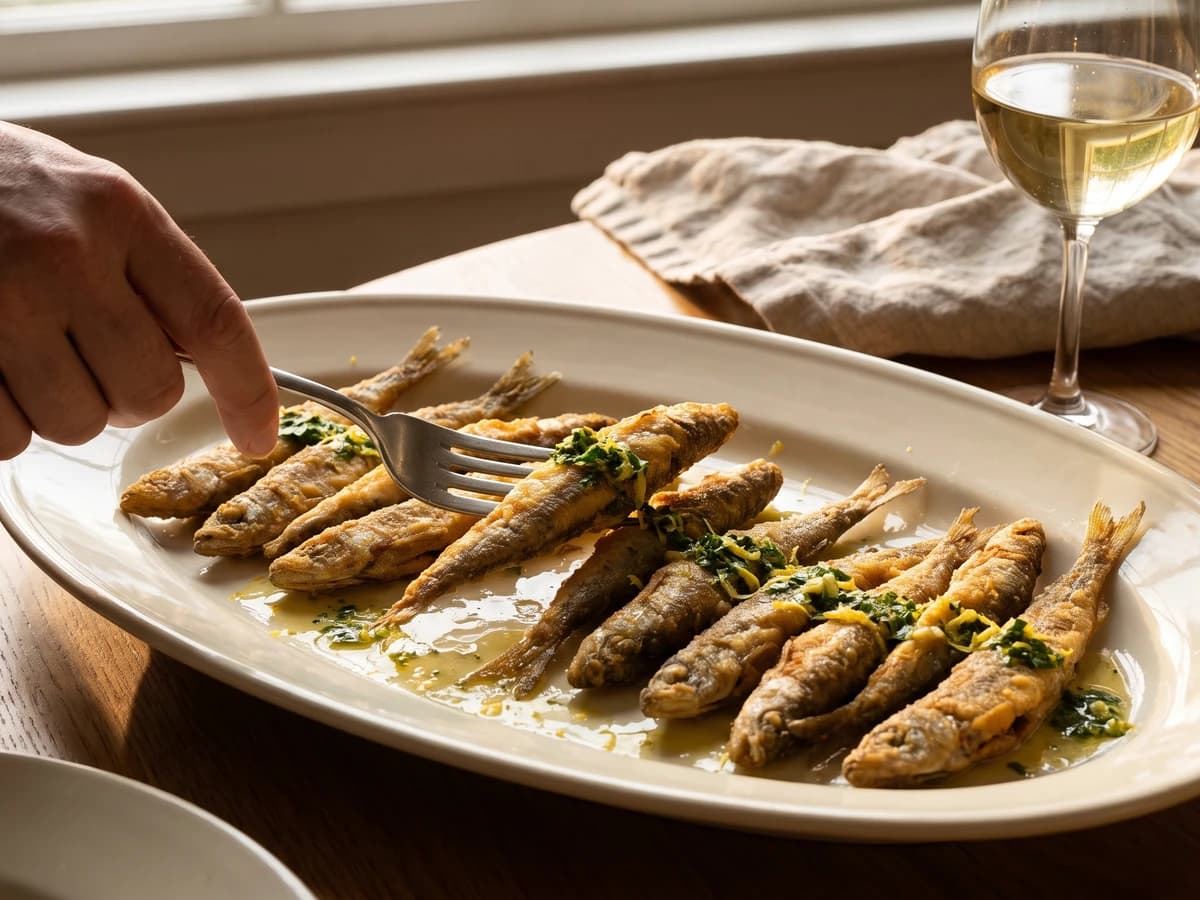
Éperlans à l’Anglaise turns small fish into a lesson in disciplined coating: boned smelts under a close, crisp crumb, pan-fried in clarified butter and finished with bright, half-melted maître d’hôtel butter.

Chef Juliette
Tiny smelts, shallot, mushrooms, white wine, gratin sauce, and fine bread raspings meet a fierce oven, where the fish must turn tender in the same breath the buttered crust bronzes.