
Chef Juliette
John Dory (St. Pierre)
John Dory has the delicacy of sole and the firmness of turbot. A light flouring, a quick butter sauté, and nut-brown beurre noisette show exactly why looks never mattered.
A cooking platform built around craft, culture, and the stories behind what we eat.
Created by Chef Juliette
Based on No. 1833, Faisan en Cocotte, from Le Guide Culinaire (1907) by Auguste Escoffier
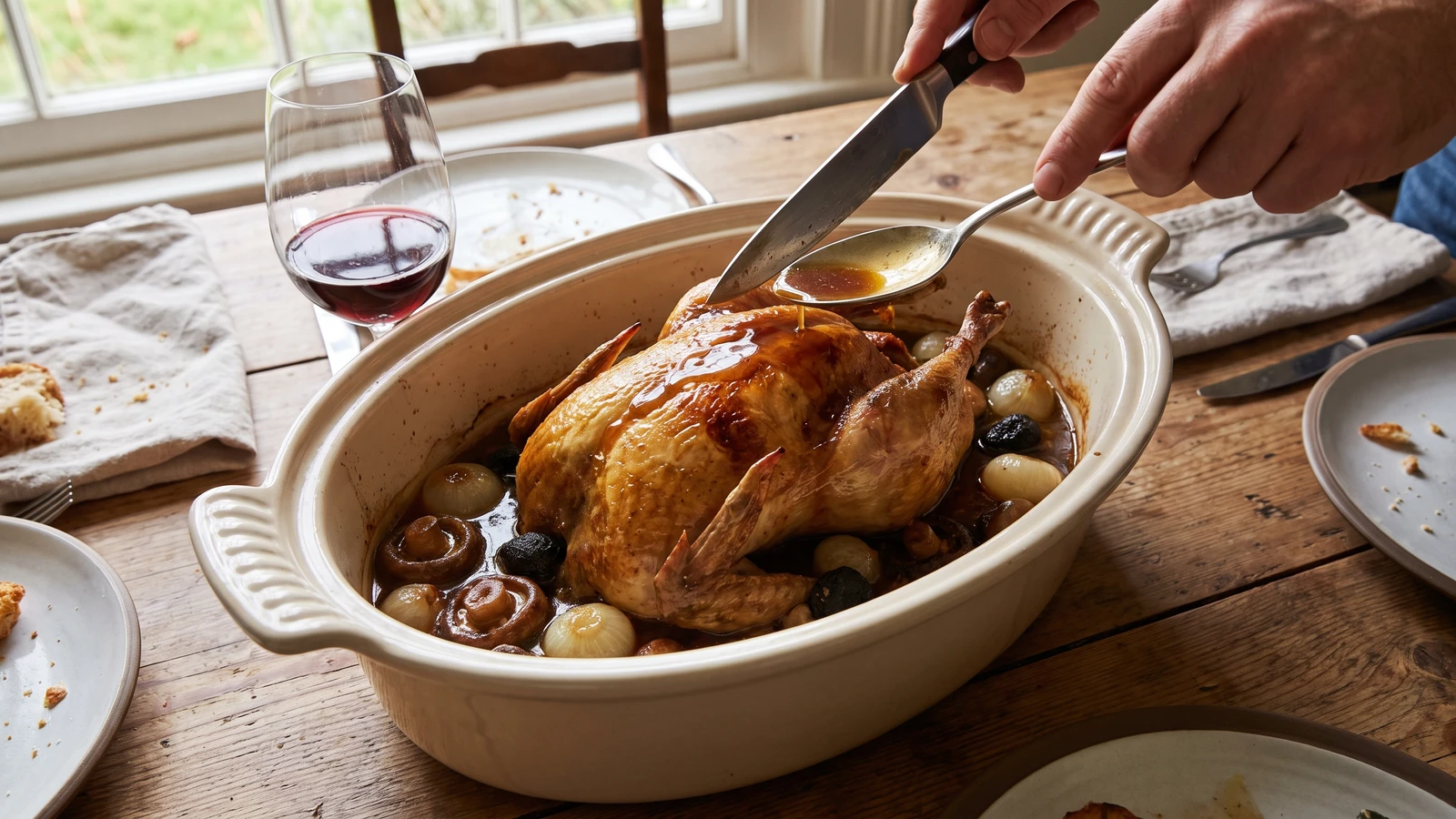
Faisan en Cocotte keeps pheasant nearly dry in butter, then brings in pearl onions, mushroom caps, and turned black truffle at precisely two-thirds cooking before building its glossy jus.
Faisan en Cocotte (pheasant cooked and served in its cocotte) teaches one decisive principle: this is a poêling, not a wet braise. The pheasant cooks nearly dry in butter, and the stock waits until the bird is done. Add liquid sooner and you exchange the concentrated savour of roasted game for the softer character of a braise.
The brigade assumed a saucier within reach, brown veal stock never off the fire, a seasoned earthenware cocotte, and another pair of hands turning the garnish. At home, one pheasant feeds four from a snug 4-quart enameled cocotte, while a small skillet handles the onions and mushrooms. A salamander isn't what makes the dish; the uncovered oven gives the final colour, with a household broiler kept only as rescue. The spare hands and earthenware lore are scaffolding. Butter-led cooking, stock added afterward, and the timing of the garnish are the dish. One cook, one stove, one evening.
When it is right, the skin is burnished, the small onions shine with butter, and black truffle perfumes a light mahogany jus rather than disappearing beneath it. Mark the two-thirds point before you begin: the onions, mushroom heads, and olive-shaped truffles go in then, never sooner.
Faisan en cocotte belongs to the French hunting table as disciplined by the Parisian grand kitchen, where a whole game bird was cooked and presented in the same earthenware vessel. Despite the name, en cocotte here is not a wet braise: it is a special poëling, nearly dry and butter-led, with stock introduced only after the pheasant is cooked. Its garnish separates it from faisan en casserole, and the olive-shaped truffles deliberately replace the potatoes commonly arranged around domestic fowl.
Quantity
1 bird (2½ to 3 lb / 1.1 to 1.4 kg), for Poëlings (No. 250)
pinfeathers removed and thoroughly dried
Quantity
⅝ cup (150 ml / 142 g)
divided
Quantity
16 onions (about 1½ cups / 360 ml / 250 g)
peeled
Quantity
12 caps (about 2 cups / 480 ml / 225 g)
stems removed
Quantity
1 small truffle (1 to 1½ oz / 30 to 40 g)
scrubbed
Quantity
1 cup (240 ml / 240 g)
Quantity
1½ teaspoons (7.5 ml / 8 g)
divided
Quantity
½ teaspoon (2.5 ml / 1 g)
| Ingredient | Quantity |
|---|---|
| oven-ready pheasantpinfeathers removed and thoroughly dried | 1 bird (2½ to 3 lb / 1.1 to 1.4 kg), for Poëlings (No. 250) |
| unsalted butterdivided | ⅝ cup (150 ml / 142 g) |
| small pearl onionspeeled | 16 onions (about 1½ cups / 360 ml / 250 g) |
| small button mushroom capsstems removed | 12 caps (about 2 cups / 480 ml / 225 g) |
| fresh black trufflescrubbed | 1 small truffle (1 to 1½ oz / 30 to 40 g) |
| rich unsalted brown veal stock | 1 cup (240 ml / 240 g) |
| fine sea saltdivided | 1½ teaspoons (7.5 ml / 8 g) |
| freshly ground black pepper | ½ teaspoon (2.5 ml / 1 g) |
Take the pheasant from the cold 30 minutes before cooking. Inspect the cavity and skin for pinfeathers and, if it is wild, any remaining shot. Pat every surface dry, then season inside and out with 1 teaspoon of the salt and all the pepper. Tie the legs together loosely. Heat the oven to 350°F (180°C). A dry bird lets the butter coat and colour it properly; surface moisture pushes the cooking toward a braise before you have begun.
Leave the pearl onions whole and trim the mushroom caps into neat, regular rounds. Cut the truffle into 12 to 16 pieces, then tourner each one, trimming it into a small olive shape with a sharp paring knife. Save every truffle trimming for eggs or another sauce. The tournage is classical presentation, but uniform size also lets each piece warm at the same rate.
Melt 6 tablespoons (90 ml / 85 g) of the butter in the snug cocotte. Set the pheasant breast-side up in the butter, spoon the butter generously over it, cover, and begin Poëlings (No. 250) in its en cocotte form. Keep the cooking dry: no stock, water, or wine enters the vessel now. Baste at 10-minute intervals, closing the lid promptly each time. For a pheasant of this size, 30 minutes is the approximate two-thirds point.
While the pheasant cooks, melt 2 tablespoons (30 ml / 28 g) of butter in a small skillet over low heat. Add the pearl onions with ¼ teaspoon of salt, cover, and roll them through the butter every few minutes until their outer layers are nearly tender and lightly golden, about 12 minutes. If they colour before softening, add 1 tablespoon of water, lower the heat, and cover again; ça se rattrape. Let the water evaporate before lifting them out. Add the remaining 2 tablespoons (30 ml / 28 g) of butter to the skillet, raise the heat, and cook the mushroom caps until their moisture has escaped and their edges are golden, about 5 minutes. Season them with the remaining ¼ teaspoon salt.
At the 30-minute mark, lift the cocotte lid and surround the pheasant with the buttered onions, cooked mushroom caps, and olive-shaped truffles. Spoon the fragrant cooking butter over everything. Do not add this garnish sooner. The onions would lose their shape, the mushrooms would shrivel, and the truffle would spend its finest aroma inside the oven instead of at the table.
Complete Poëlings (No. 250) with the cocotte uncovered, basting once or twice, until the pheasant is burnished and both the deepest breast and inner thigh register 165°F (74°C), about 12 to 18 minutes more. If the skin colours too quickly, rest the lid slightly ajar over the bird. If the meat reaches temperature while the skin remains pale, transfer the garnish to a warm plate and give the bird 60 to 90 seconds under a household broiler, watching continuously. Lift the pheasant and garnish out together and rest them loosely covered while you make the jus.
Leave the cooking butter in the cocotte. Add the brown veal stock and bring it to a gentle simmer, scraping the browned glaze from the vessel floor. Let stock and butter remain in contact for 10 minutes so the stock recovers the flavour carried by the fat, then spoon away the excess butter and reduce the liquid only until it becomes a light, glossy jus. If it looks greasy, stop boiling and skim it patiently; if it reduces too far, loosen it with a spoonful of unsalted stock or water. Ça se rattrape. Taste for salt only after reduction.
Return the pheasant, onions, mushroom caps, and truffle olives to the cocotte. Spoon the jus over the breast and around the garnish, then hold the dish over the lowest heat for 2 minutes without allowing the sauce to boil. Present the bird whole, carve the breasts and legs at the table, and give each serving its share of the garnish and jus. À table!
1 serving (about 320g)
Culinary guides, cultural storytelling, and the editorial depth that makes cooking meaningful.
Discover Culinary ExplorerChef Juliette
John Dory has the delicacy of sole and the firmness of turbot. A light flouring, a quick butter sauté, and nut-brown beurre noisette show exactly why looks never mattered.

Chef Juliette
Fresh haddock proves its delicacy in the meunière pan: a fine flour crust, moist pearly flakes, and beurre noisette sharpened with lemon and parsley, ready from one skillet in half an hour.
Chef Juliette
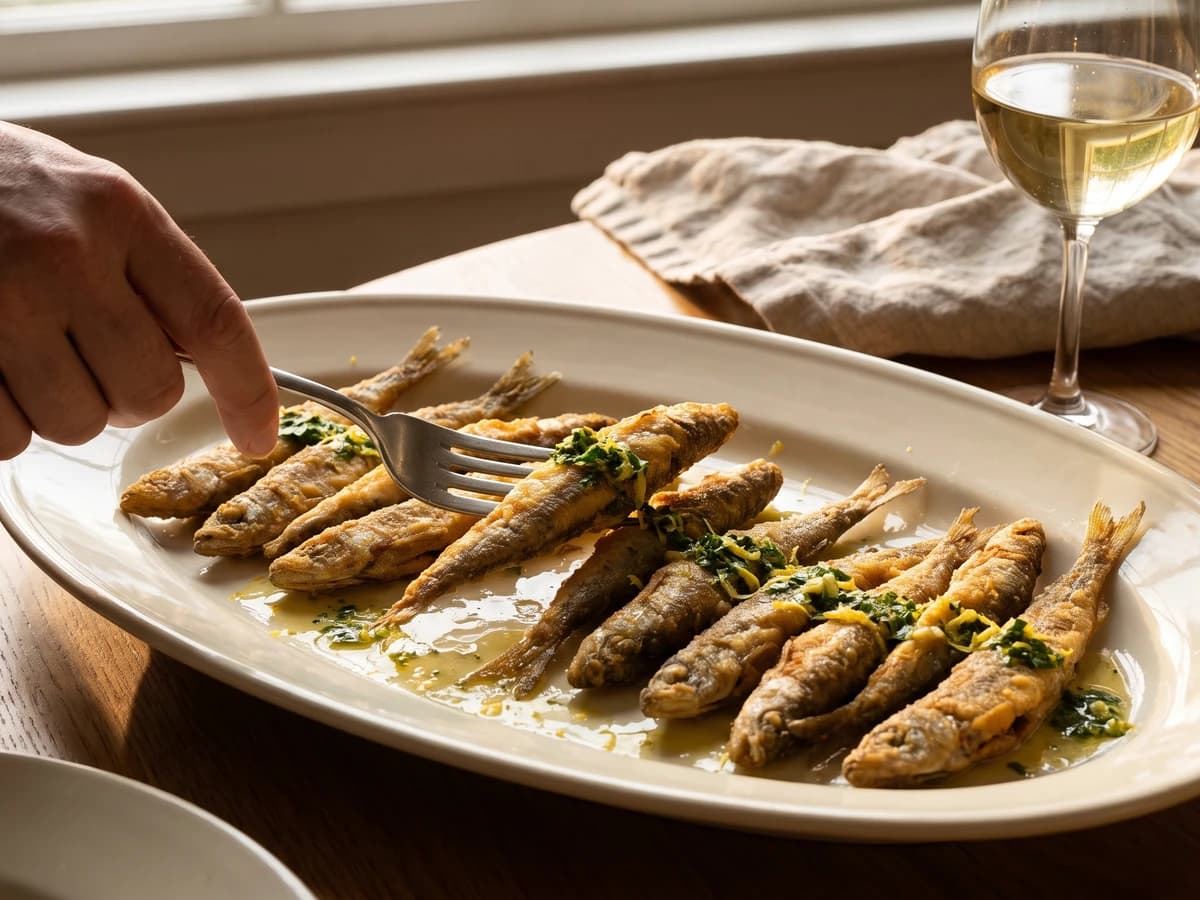
Éperlans à l’Anglaise turns small fish into a lesson in disciplined coating: boned smelts under a close, crisp crumb, pan-fried in clarified butter and finished with bright, half-melted maître d’hôtel butter.

Chef Juliette
Tiny smelts, shallot, mushrooms, white wine, gratin sauce, and fine bread raspings meet a fierce oven, where the fish must turn tender in the same breath the buttered crust bronzes.