
Chef Juliette
John Dory (St. Pierre)
John Dory has the delicacy of sole and the firmness of turbot. A light flouring, a quick butter sauté, and nut-brown beurre noisette show exactly why looks never mattered.
A cooking platform built around craft, culture, and the stories behind what we eat.

Created by Chef Juliette
Based on No. 1826, Young Wild Rabbit (Lapereaux), from Le Guide Culinaire (1907) by Auguste Escoffier
Lapereaux sautés teaches the whole sauté family: brown the young rabbit cleanly, capture the fond with wine and stock, then finish the sauce with cold butter for gloss and tenderness.
Lapereaux sautés (sautéed young wild rabbits) teaches one true thing before you touch the pan: youth decides the method. A young wild rabbit is supple enough for the quick browning and brief covered cooking of a poulet sauté, while an older one will remain tough however politely you ask. The little lentil-shaped bone beside the patella gives the game dealer a useful clue. Distinct means young; shrunken or fused into the joint means the animal belongs in stock or forcemeat.
The classical entry assumes a cook who already knows the whole sauté family, a saucier tending a stockpot, and enough hands to brown, strain, reduce, and mount the sauce separately. Here, two small rabbits feed four, good unsalted chicken stock stands in for the perpetual stockpot, and one broad pan carries the dish from browning to table. Passing the sauce through a fine strainer is brigade scaffolding and can go. The fond, the wine reduction, the gentle cooking, and the final butter mounting are the dish itself and must stay. One cook, one stove, one evening.
When it is right, the rabbit is deeply golden at the edges, the saddle remains juicy, and the sauce pools around it with a clear butter gloss. Dry the pieces thoroughly and brown them in uncrowded batches. That clean, patient browning is the step that decides everything after it.
Lapin de garenne belongs to French chasse cookery, particularly the game country of Sologne and the bourgeois table that translated the hunter's bag into orderly sautés, civets, and forcemeats. The classical canon treats a young wild rabbit as remarkably versatile, suitable for the preparations used for poulet sauté or hare, while sending an older animal to the stockpot. The lentil-shaped bone near the patella was a practical market test: it diminishes and joins the articulation as the rabbit ages.
Quantity
2 rabbits, 3 to 3½ pounds (1.4 to 1.6 kg) total
dressed and jointed into forelegs, hind legs, and saddle pieces
Quantity
2 teaspoons (10 ml / 12 g)
Quantity
1 teaspoon (5 ml / 2 g)
Quantity
¼ cup (60 ml / 30 g)
Quantity
½ cup (120 ml / 113 g)
divided, with 5 tablespoons clarified for browning and 3 tablespoons cubed and chilled
Quantity
½ cup (120 ml / 80 g)
finely chopped
Quantity
1 cup (240 ml / 240 g)
Quantity
1½ cups (360 ml / 360 g)
divided
Quantity
1 bouquet garni
Quantity
1 tablespoon (15 ml / 15 g)
Quantity
¼ cup (60 ml / 15 g)
finely chopped
| Ingredient | Quantity |
|---|---|
| young wild rabbitsdressed and jointed into forelegs, hind legs, and saddle pieces | 2 rabbits, 3 to 3½ pounds (1.4 to 1.6 kg) total |
| fine sea salt | 2 teaspoons (10 ml / 12 g) |
| freshly ground black pepper | 1 teaspoon (5 ml / 2 g) |
| all-purpose flour | ¼ cup (60 ml / 30 g) |
| unsalted butterdivided, with 5 tablespoons clarified for browning and 3 tablespoons cubed and chilled | ½ cup (120 ml / 113 g) |
| shallotsfinely chopped | ½ cup (120 ml / 80 g) |
| dry white wine | 1 cup (240 ml / 240 g) |
| good unsalted chicken stockdivided | 1½ cups (360 ml / 360 g) |
| bouquet garni of parsley stems, thyme, and bay leaf | 1 bouquet garni |
| fresh lemon juice | 1 tablespoon (15 ml / 15 g) |
| flat-leaf parsleyfinely chopped | ¼ cup (60 ml / 15 g) |
Confirm that the rabbits are genuinely young before beginning. The flesh should feel supple, and the little lentil-shaped bone beside the patella should remain distinct rather than shrunken into the joint. Trim away bruised tissue, wipe the pieces clean, and dry every surface thoroughly. Season with the salt and pepper, then leave the pieces at room temperature for 15 minutes while you prepare the pan.
If the butter is not already clarified, melt 5 tablespoons gently in a small pan. Skim away the pale foam and pour the clear golden fat away from the milky sediment. Clarified butter gives the rabbit the flavor it deserves while tolerating the heat needed for real browning. Keep the remaining 3 tablespoons cubed and cold for finishing the sauce.
Dust the rabbit lightly with the flour and shake off every loose patch. Heat a broad, heavy sauté pan over medium-high heat, add the clarified butter, and brown the pieces in two batches, beginning with the legs. Give each piece room and leave it untouched until the underside is a deep hazelnut gold, then turn and color the other sides. Set each browned piece on a plate. If the fond begins to blacken, lower the heat and remove only the burnt specks with a damp paper towel, leaving the brown glaze behind. Ça se rattrape. Add a spoonful more clarified butter if the pan looks dry.
Pour away excess fat, leaving about 1 tablespoon and all the good brown fond. Add the shallots and cook over medium heat until softened but not colored, about 2 minutes. Pour in the white wine and scrape the pan floor thoroughly with a wooden spoon. Boil until the wine has reduced to about one-third of its original volume and smells rounded rather than sharp. Add 1¼ cups (300 ml / 300 g) of the stock and the bouquet garni, reserving the rest of the stock for adjustment.
Return the hind legs and forelegs to the pan, bring the liquid to the barest simmer, cover, and cook for 12 minutes. Add the saddle pieces, cover again, and continue gently for 12 to 18 minutes. Turn the pieces once and keep the liquid at a quiet tremble. The meat is ready when it feels tender at the joints and every piece reaches at least 160°F (71°C). If the legs remain rubbery, add some reserved stock, cover, and continue at the gentlest simmer until tender. The cooking becomes a longer braise, but dinner is saved.
Transfer the rabbit to a warm serving dish and cover it loosely. Discard the bouquet garni, then boil the cooking liquid until it becomes nappant, thick enough to coat the back of a spoon while still flowing freely. If it tightens too far, loosen it with reserved stock. If it remains thin, reduce it before adding the butter. Take the pan completely off the heat and whisk in the cold butter one cube at a time. Should the sauce turn greasy or separate, whisk in 1 tablespoon of cold stock off the heat until it comes together. Ça se rattrape. Finish with the lemon juice and taste for salt.
Spoon the glossy sauce over and around the rabbit, leaving some browned surfaces visible, then scatter with the chopped parsley. Bring the serving dish straight to the table with bread or buttered noodles for catching the sauce. Never apologize at your own table. À table!
1 serving (about 300g)
Culinary guides, cultural storytelling, and the editorial depth that makes cooking meaningful.
Discover Culinary ExplorerChef Juliette
John Dory has the delicacy of sole and the firmness of turbot. A light flouring, a quick butter sauté, and nut-brown beurre noisette show exactly why looks never mattered.

Chef Juliette
Fresh haddock proves its delicacy in the meunière pan: a fine flour crust, moist pearly flakes, and beurre noisette sharpened with lemon and parsley, ready from one skillet in half an hour.
Chef Juliette
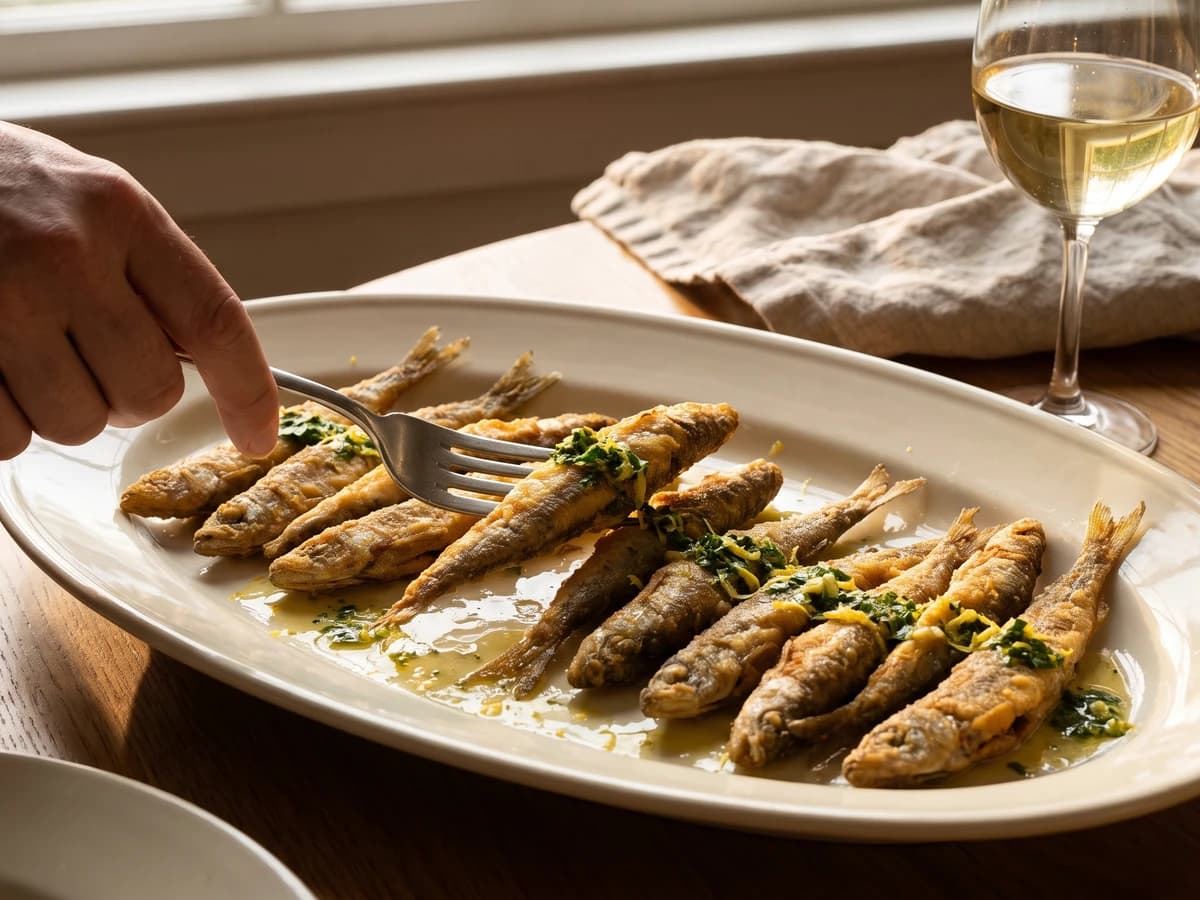
Éperlans à l’Anglaise turns small fish into a lesson in disciplined coating: boned smelts under a close, crisp crumb, pan-fried in clarified butter and finished with bright, half-melted maître d’hôtel butter.

Chef Juliette
Tiny smelts, shallot, mushrooms, white wine, gratin sauce, and fine bread raspings meet a fierce oven, where the fish must turn tender in the same breath the buttered crust bronzes.