
Chef Juliette
John Dory (St. Pierre)
John Dory has the delicacy of sole and the firmness of turbot. A light flouring, a quick butter sauté, and nut-brown beurre noisette show exactly why looks never mattered.
A cooking platform built around craft, culture, and the stories behind what we eat.
Created by Chef Juliette
Based on No. 1814, Râble de Lièvre au Genièvre, from Le Guide Culinaire (1907) by Auguste Escoffier
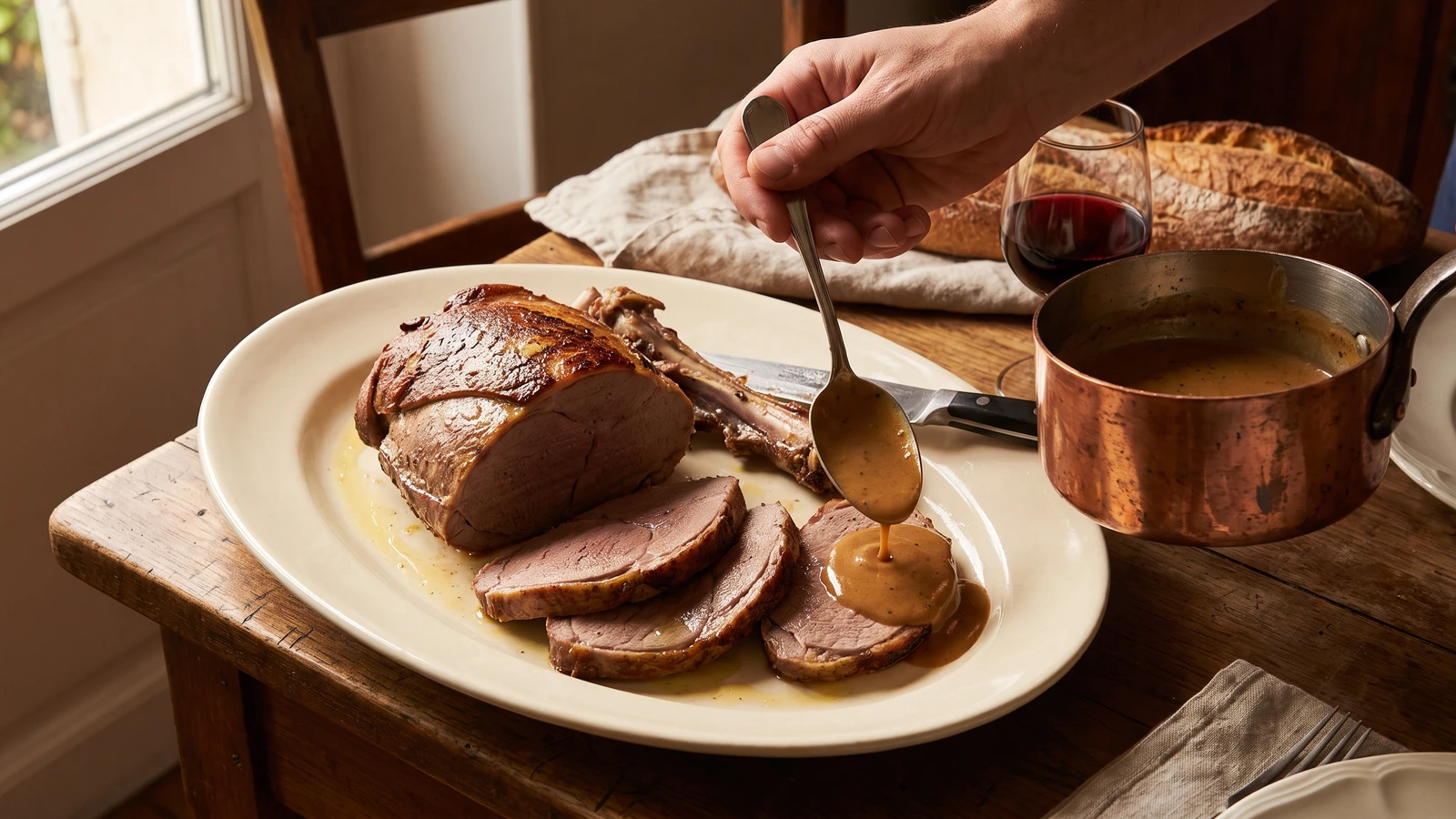
A roasted saddle of hare, kept juicy beneath its browned surface, with gin, poivrade, cream, and juniper drawn into one strained sauce: the lesson is reduction with restraint.
Râble de lièvre au genièvre (saddle of hare with gin and juniper) teaches the discipline of the pan reduction. The meat is lean and quick, so roast by temperature, not hope; it must rest at the very moment gin and marinade lift its fond, the browned film fixed to the roasting dish, into sauce. That shared clock is the one true thing to know before you touch the pan.
The brigade formula assumed a saucier with poivrade, the peppery game sauce, ready from a stockpot never off the fire, a five-quart vessel of Cooked Marinade for Venison (No. 168), and another pair of hands at the roasting dish. At home, prepare those finished components ahead, use one flameproof dish for browning, roasting, and reduction, and scale the marinade to what one râble needs. The bulk batch and constant tending were service scaffolding; roasting on the marinade vegetables, reducing gin and marinade by half, then adding cream, poivrade, and exactly four juniper berries are the dish, and they stay.
Dry the saddle thoroughly, brown it before it meets the vegetables, and trust the thermometer. While the hare rests, the same dish gives you a glossy, peppery sauce with juniper held in check by cream. One cook, one stove, one evening at the fire.
Râble de lièvre au genièvre belongs to the French table de chasse, the game supper served in wooded districts such as Sologne and the Ardennes, rather than to one province alone. In the classical canon, râble means the back carrying both loins, the hare's tender roasting cut; poivrade, cream, and the roasting fond carried it from country game cooking into grand kitchens without disguising its wild character. The use of gin and crushed juniper together is deliberate: the spirit lifts the fond while the berries leave their resinous perfume, then their skins are strained away.
Quantity
1 large saddle, about 2¼ pounds (1 kg)
silver skin removed
Quantity
2 cups (480 ml / about 490 g) Cooked Marinade for Venison (No. 168)
fully chilled
Quantity
1 cup (240 ml / about 150 g) retained from Cooked Marinade for Venison (No. 168)
fully chilled and well drained
Quantity
1¼ teaspoons (6 ml / 7 g)
Quantity
½ teaspoon (2.5 ml / 1 g)
Quantity
2 tablespoons (30 ml / 28 g)
divided
Quantity
¼ cup (60 ml / 55 g)
Quantity
6 tablespoons plus 1 teaspoon (95 ml / 95 g)
Quantity
2 tablespoons (30 ml / about 32 g)
Quantity
4 berries (about ½ teaspoon / 1 g)
freshly crushed
Quantity
1 tablespoon (15 ml / 15 g)
held for rescuing a grainy sauce
Quantity
Up to 2 tablespoons (30 ml / 30 g)
for correcting an over-reduced sauce
| Ingredient | Quantity |
|---|---|
| bone-in saddle of haresilver skin removed | 1 large saddle, about 2¼ pounds (1 kg) |
| Cooked Marinade for Venisonfully chilled | 2 cups (480 ml / about 490 g) Cooked Marinade for Venison (No. 168) |
| cooked aromatic vegetables from the marinadefully chilled and well drained | 1 cup (240 ml / about 150 g) retained from Cooked Marinade for Venison (No. 168) |
| fine sea salt | 1¼ teaspoons (6 ml / 7 g) |
| freshly ground black pepper | ½ teaspoon (2.5 ml / 1 g) |
| unsalted butterdivided | 2 tablespoons (30 ml / 28 g) |
| dry gin | ¼ cup (60 ml / 55 g) |
| heavy cream | 6 tablespoons plus 1 teaspoon (95 ml / 95 g) |
| finished Poivrade Sauce | 2 tablespoons (30 ml / about 32 g) |
| juniper berriesfreshly crushed | 4 berries (about ½ teaspoon / 1 g) |
| cold heavy cream (optional)held for rescuing a grainy sauce | 1 tablespoon (15 ml / 15 g) |
| water (optional)for correcting an over-reduced sauce | Up to 2 tablespoons (30 ml / 30 g) |
When the Cooked Marinade for Venison (No. 168) is completely cold, measure 2½ tablespoons (37 ml) of clean liquid into a covered cup for the sauce. Keep the cooked vegetables retained from Cooked Marinade for Venison (No. 168) covered separately. Set the râble in a close-fitting nonreactive dish or food-safe bag, pour over the remaining marinade, and refrigerate for 8 to 12 hours, turning once. Cold matters: warm marinade begins cooking the lean surface before the oven has any say in it.
Remove the râble from the cold 30 minutes before roasting. Lift it from the marinade, discard the liquid that touched the raw meat, and dry every surface thoroughly. Let the vegetables from Cooked Marinade for Venison (No. 168) drain until no liquid runs from them. Heat the oven to 425°F (220°C), then season the hare evenly with the salt and pepper. A wet saddle pales and simmers; a dry one gives the roasting dish the fond this sauce requires.
Set a small flameproof roasting dish over medium-high heat and melt 1 tablespoon of the butter. When the foam subsides, brown the râble on its meaty sides and edges for 5 to 6 minutes, moving it only when each surface releases cleanly. Lift it out, add the drained marinade vegetables and remaining butter, and spread them across the dish. Set the râble bone-side down on the vegetables and spoon the butter over it. Roast for 12 to 20 minutes, beginning your checks early, until a thermometer inserted horizontally into the thickest loin without touching bone reads 155°F (68°C). Transfer the râble to a warm board and rest it loosely covered for 10 minutes while you make the sauce.
Leave the vegetables and browned fond in the roasting dish. Take the dish completely off the heat before adding the gin, then pour in the reserved 2½ tablespoons of clean Cooked Marinade for Venison (No. 168). Return the dish to medium heat, scraping and tilting until every bronze patch dissolves into the liquid. Boil steadily until the gin and marinade are reduced by half, about 4 to 6 minutes. If you reduce too far and the liquid turns sticky, add water 1 tablespoon at a time and scrape it smooth again.
Lower the heat. Add the measured heavy cream, the finished Poivrade Sauce, and all four crushed juniper berries, in that order. Hold the sauce at a gentle simmer for 2 to 3 minutes, stirring, until it is nappant, lightly coating the back of a spoon. If the acidic reduction makes the cream look grainy, remove the dish from the heat and whisk in the optional tablespoon of cold cream. Ça se rattrape. Pass the sauce through a fine-mesh strainer into a warm sauceboat, pressing lightly for the liquid but not forcing the exhausted vegetables through. The berry skins have done their work.
After the full rest, confirm that the centre of the râble has reached 160°F (71°C). If it has not, return it to a 350°F (180°C) oven for 3 to 5 minutes, then rest it briefly again. Run a sharp knife close along each side of the backbone, lift away the two loins, and cut them crosswise into thick slices. Arrange them on a warm platter and pass the sauce separately, as the dish requires, so the browned surface reaches the table intact. À table!
1 serving (about 185g)
Culinary guides, cultural storytelling, and the editorial depth that makes cooking meaningful.
Discover Culinary ExplorerChef Juliette
John Dory has the delicacy of sole and the firmness of turbot. A light flouring, a quick butter sauté, and nut-brown beurre noisette show exactly why looks never mattered.

Chef Juliette
Fresh haddock proves its delicacy in the meunière pan: a fine flour crust, moist pearly flakes, and beurre noisette sharpened with lemon and parsley, ready from one skillet in half an hour.
Chef Juliette
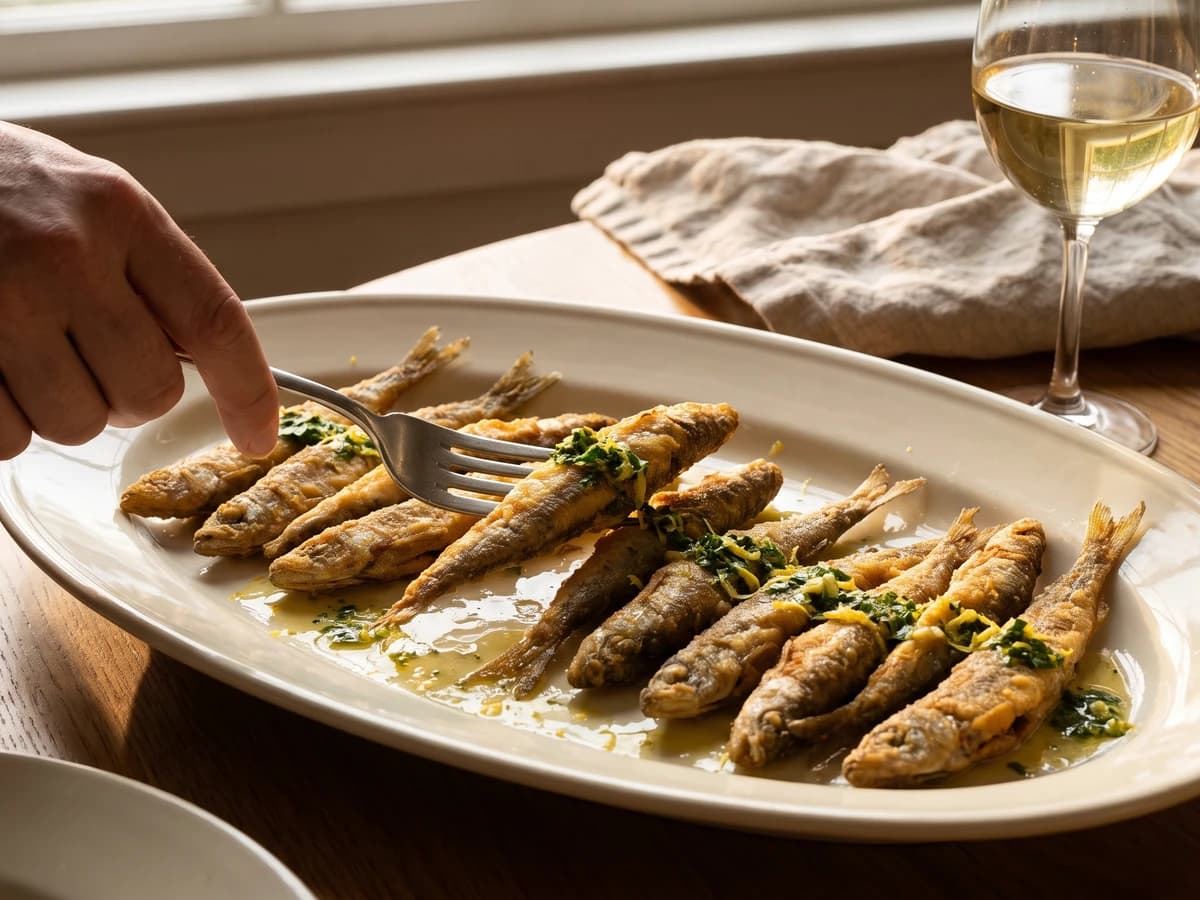
Éperlans à l’Anglaise turns small fish into a lesson in disciplined coating: boned smelts under a close, crisp crumb, pan-fried in clarified butter and finished with bright, half-melted maître d’hôtel butter.

Chef Juliette
Tiny smelts, shallot, mushrooms, white wine, gratin sauce, and fine bread raspings meet a fierce oven, where the fish must turn tender in the same breath the buttered crust bronzes.