
Chef Juliette
John Dory (St. Pierre)
John Dory has the delicacy of sole and the firmness of turbot. A light flouring, a quick butter sauté, and nut-brown beurre noisette show exactly why looks never mattered.
A cooking platform built around craft, culture, and the stories behind what we eat.
Created by Chef Juliette
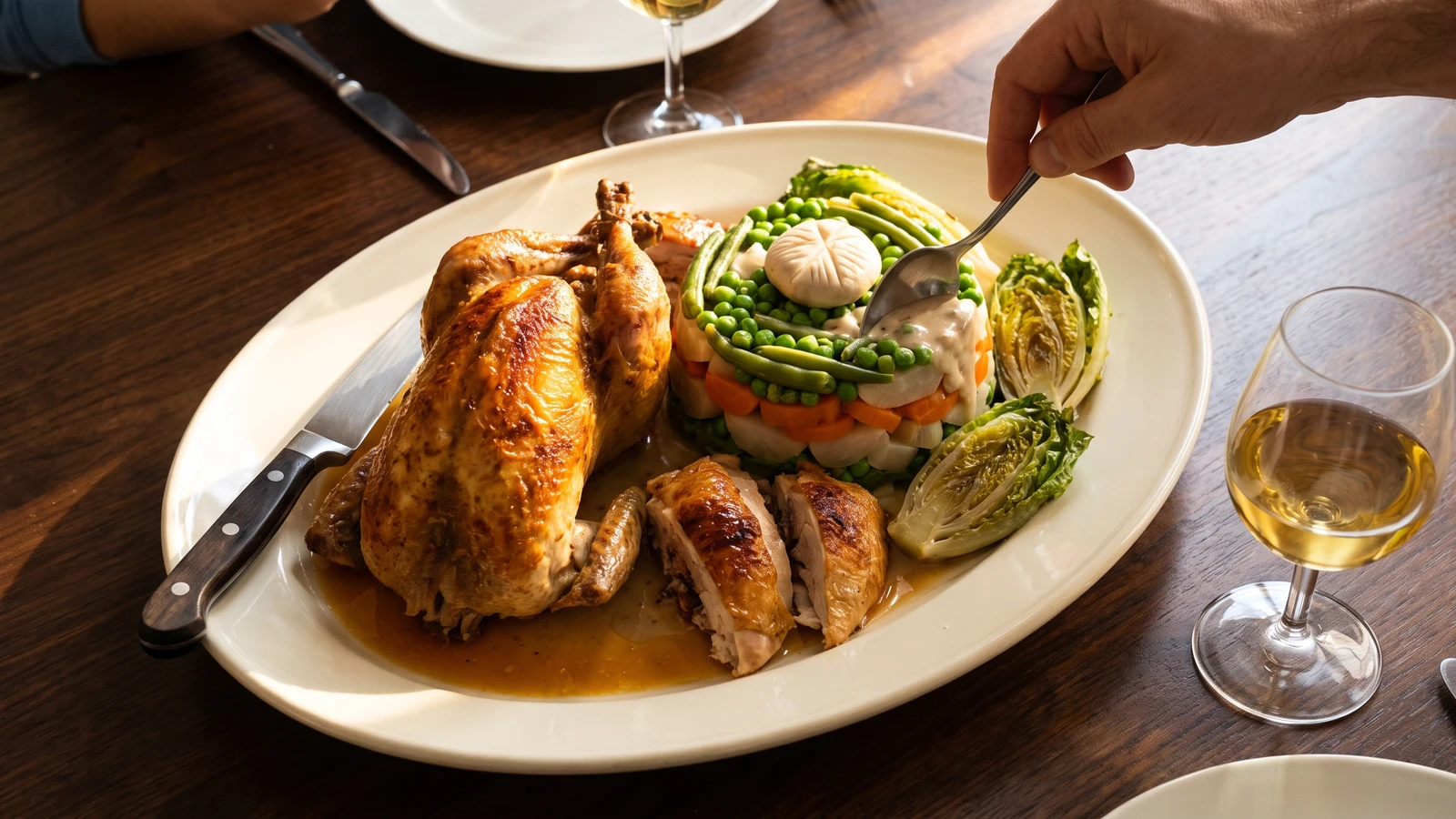
Based on No. 1774, Pintades (Guinea Fowl), from Le Guide Culinaire (1907) by Auguste Escoffier
Guinea fowl is not pheasant and never pretends to be. Barded with pork, roasted by temperature, and set beside Chartreuse de Ris de Veau (No. 1220), it carries the game-bird repertoire beautifully.
Pintade rôtie en chartreuse (roast guinea fowl with sweetbread chartreuse) teaches one true thing: guinea fowl is lean, so its breast must be protected and taken from the heat the moment it is cooked. Treat it like a plump chicken and wait politely for the legs, and the breast dries. Barding, an instant-read thermometer, and the nerve to separate lagging legs solve the matter.
The source gives no separate guinea-fowl formula. It sends the bird into the pheasant repertoire and points specifically to Chartreuse de Ris de Veau (No. 1220), so that finished preparation remains whole rather than being dismantled inside this recipe. A grand kitchen could call on a roast cook, a saucier, a stockpot never off the fire, and a prepared chartreuse from another station. At home, make the chartreuse ahead, roast one bird over its sauce vegetables, and build the jus from the pan fond. The separate stations are brigade scaffolding and can go. The barding, the reduction, and the finished chartreuse stay because they are the dish. If a last touch of color is needed, the home broiler replaces the salamander.
This is generous cooking, not complicated theater: one burnished bird, one gleaming molded garnish, one sauce made from what the roasting pan gives you. Watch the breast temperature closely. Everything else can wait, but the breast cannot.
Guinea fowl has no single provincial claim in France; its French home is the national market and the classical roast course, where cooks valued it as a lean, faintly gamey bird between chicken and pheasant. The canon is candid that pintade is not pheasant, yet after the shooting season it carried pheasant preparations such as à la Bohémienne, à la crème, en salmis, en chartreuse, and à la choucroûte with honest usefulness. Serving it en chartreuse joined the roast course to the grand kitchen's molded compositions of forcemeat, sweetbread, mushrooms, and individually cooked vegetables.
Quantity
1 bird, 3 to 3½ pounds (1.4 to 1.6 kg)
giblets removed
Quantity
2 teaspoons (10 ml / 12 g)
divided
Quantity
¾ teaspoon (3.75 ml / 1.5 g)
divided
Quantity
5 tablespoons (75 ml / 71 g)
3 tablespoons softened and 2 tablespoons cold and cubed
Quantity
8 very thin strips, 4 ounces (115 g)
Quantity
2, about 3 ounces (85 g)
peeled and quartered
Quantity
1, about 4 ounces (115 g)
cut into large pieces
Quantity
1, about 2 ounces (55 g)
cut into large pieces
Quantity
4 sprigs
Quantity
1
Quantity
½ cup (120 ml / 120 g)
Quantity
1½ cups (360 ml / 360 g)
Quantity
1 prepared Chartreuse de Ris de Veau (No. 1220)
made from its own entry and kept whole in its mold until serving
| Ingredient | Quantity |
|---|---|
| whole oven-ready guinea fowlgiblets removed | 1 bird, 3 to 3½ pounds (1.4 to 1.6 kg) |
| fine sea saltdivided | 2 teaspoons (10 ml / 12 g) |
| freshly ground black pepperdivided | ¾ teaspoon (3.75 ml / 1.5 g) |
| unsalted butter3 tablespoons softened and 2 tablespoons cold and cubed | 5 tablespoons (75 ml / 71 g) |
| fresh pork fatback or unsmoked pork belly | 8 very thin strips, 4 ounces (115 g) |
| medium shallotspeeled and quartered | 2, about 3 ounces (85 g) |
| medium carrotcut into large pieces | 1, about 4 ounces (115 g) |
| celery stalkcut into large pieces | 1, about 2 ounces (55 g) |
| thyme | 4 sprigs |
| bay leaf | 1 |
| dry white wine | ½ cup (120 ml / 120 g) |
| unsalted light chicken stock | 1½ cups (360 ml / 360 g) |
| Chartreuse de Ris de Veau (No. 1220)made from its own entry and kept whole in its mold until serving | 1 prepared Chartreuse de Ris de Veau (No. 1220) |
Have the prepared Chartreuse de Ris de Veau (No. 1220) ready in its mold. Its formula remains a separate finished preparation, exactly as the source intends. If it was made ahead and chilled, keep it covered while you prepare the bird and set aside a deep pan for reheating it later in a bain-marie, a water bath.
Pat the guinea fowl dry inside and out. Season the cavity and skin with 1¾ teaspoons of the salt and ½ teaspoon of the pepper, then refrigerate it uncovered for 30 minutes. A dry surface browns; a damp one softens beneath the barding. Take the bird from the cold while the oven heats to 425°F (220°C).
Scatter the shallots, carrot, celery, thyme, and bay leaf in a flameproof roasting pan. Rub the bird with the softened butter, working a little beneath the breast skin without tearing it. Lay the fatback strips across the breast and tie them gently in place with kitchen twine. Do not cinch the bird into a hard parcel; loose trussing holds its shape while letting heat reach the thigh joints. Set it breast-side up over the vegetables.
Roast for 20 minutes, then lower the oven to 375°F (190°C). Remove the fatback, pour ½ cup (120 ml / 120 g) of the stock around the bird, and baste the breast with the buttery pan juices. Continue roasting for 30 to 40 minutes, basting twice, until the thickest part of the breast reaches 165°F (74°C) and the thigh approaches 175°F (79°C). Temperature decides this dish, not the clock. If the breast is ready while the thighs remain below 165°F (74°C), lift the bird out, detach the legs at their joints, and return only the legs to the pan. The breast rests safely instead of drying while the legs finish.
Transfer the breast and finished legs to a warm board. Rest them for 20 minutes, covering only the exposed cut surfaces loosely with foil so the skin stays crisp. Pour any juices released during the rest into the sauce. Resting is part of roasting, not an interval to skip; it keeps the first carving stroke from emptying the bird onto the board.
Pour off the excess fat from the roasting pan, leaving about 1 tablespoon and every browned deposit clinging beneath it. Set the flameproof pan over low heat, or scrape everything into a saucepan. Add the wine and bring it to a lively simmer, scraping until the fond, the browned foundation on the pan floor, dissolves. Reduce the wine by two-thirds, add the remaining stock and the resting juices, then simmer until about ¾ cup (180 ml) remains and it lightly coats a spoon. Strain, taste with the remaining salt and pepper, and take it off the heat. Monter au beurre, whisk in the cold butter a cube at a time, until the jus gleams. If it separates into oily streaks, stop. Ça se rattrape: whisk 1 teaspoon of cold water in a clean saucepan, then add the split jus gradually while whisking.
While the bird rests, reheat the chilled Chartreuse de Ris de Veau (No. 1220) gently in its covered mold, using a bain-marie over low heat. Keep the water below a boil so the finished forcemeat stays tender, and warm the center to 165°F (74°C). Follow its own entry for settling and unmolding; the component remains whole, with its arrangement intact.
Turn the chartreuse onto the center of a warmed oval platter. Remove the guinea fowl breasts from the bone and slice them across the grain into generous pieces; separate each leg into thigh and drumstick. Arrange the poultry around the molded garnish, spoon enough jus over the bird to make the skin and cut surfaces gleam, and send the rest in a warm sauceboat. À table!
1 serving (about 425g)
Culinary guides, cultural storytelling, and the editorial depth that makes cooking meaningful.
Discover Culinary ExplorerChef Juliette
John Dory has the delicacy of sole and the firmness of turbot. A light flouring, a quick butter sauté, and nut-brown beurre noisette show exactly why looks never mattered.

Chef Juliette
Fresh haddock proves its delicacy in the meunière pan: a fine flour crust, moist pearly flakes, and beurre noisette sharpened with lemon and parsley, ready from one skillet in half an hour.
Chef Juliette
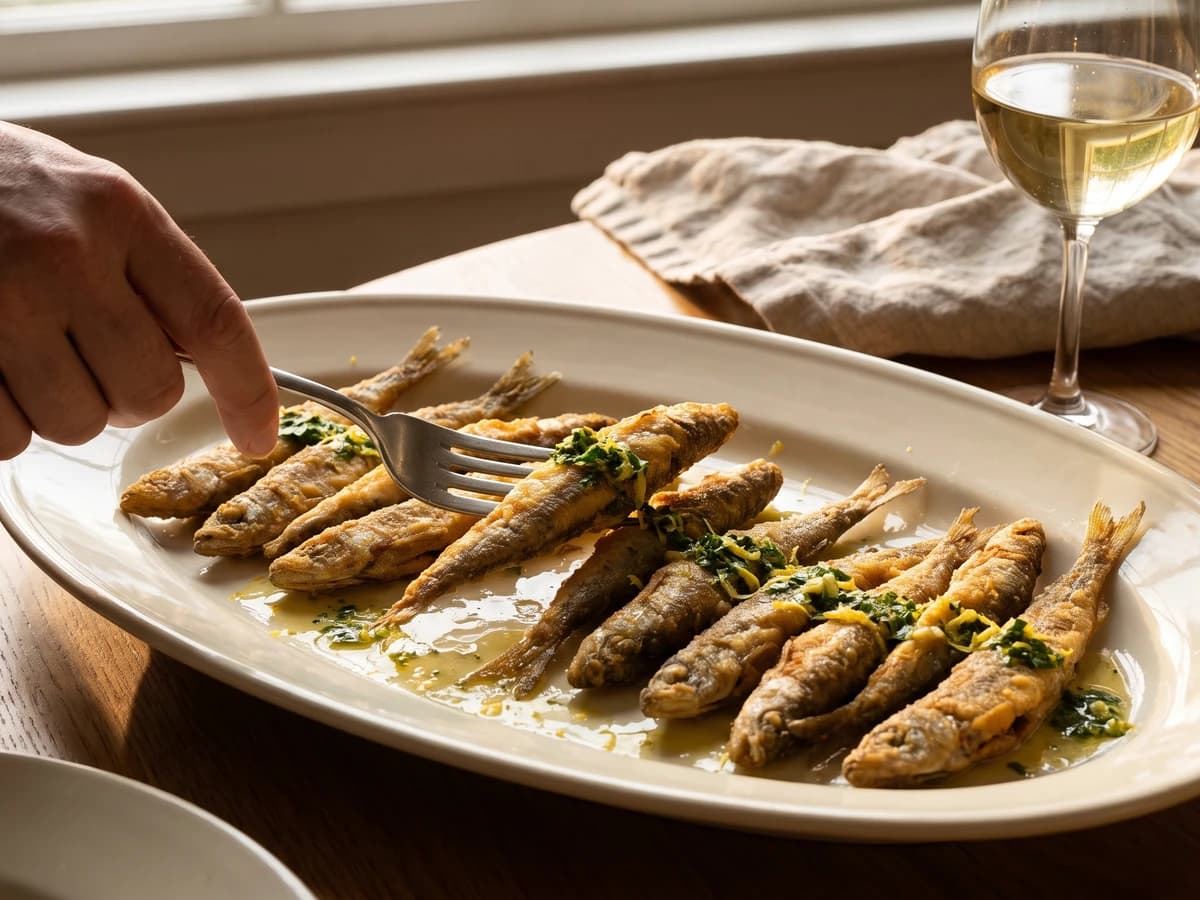
Éperlans à l’Anglaise turns small fish into a lesson in disciplined coating: boned smelts under a close, crisp crumb, pan-fried in clarified butter and finished with bright, half-melted maître d’hôtel butter.

Chef Juliette
Tiny smelts, shallot, mushrooms, white wine, gratin sauce, and fine bread raspings meet a fierce oven, where the fish must turn tender in the same breath the buttered crust bronzes.