
Chef Juliette
John Dory (St. Pierre)
John Dory has the delicacy of sole and the firmness of turbot. A light flouring, a quick butter sauté, and nut-brown beurre noisette show exactly why looks never mattered.
A cooking platform built around craft, culture, and the stories behind what we eat.
Created by Chef Juliette
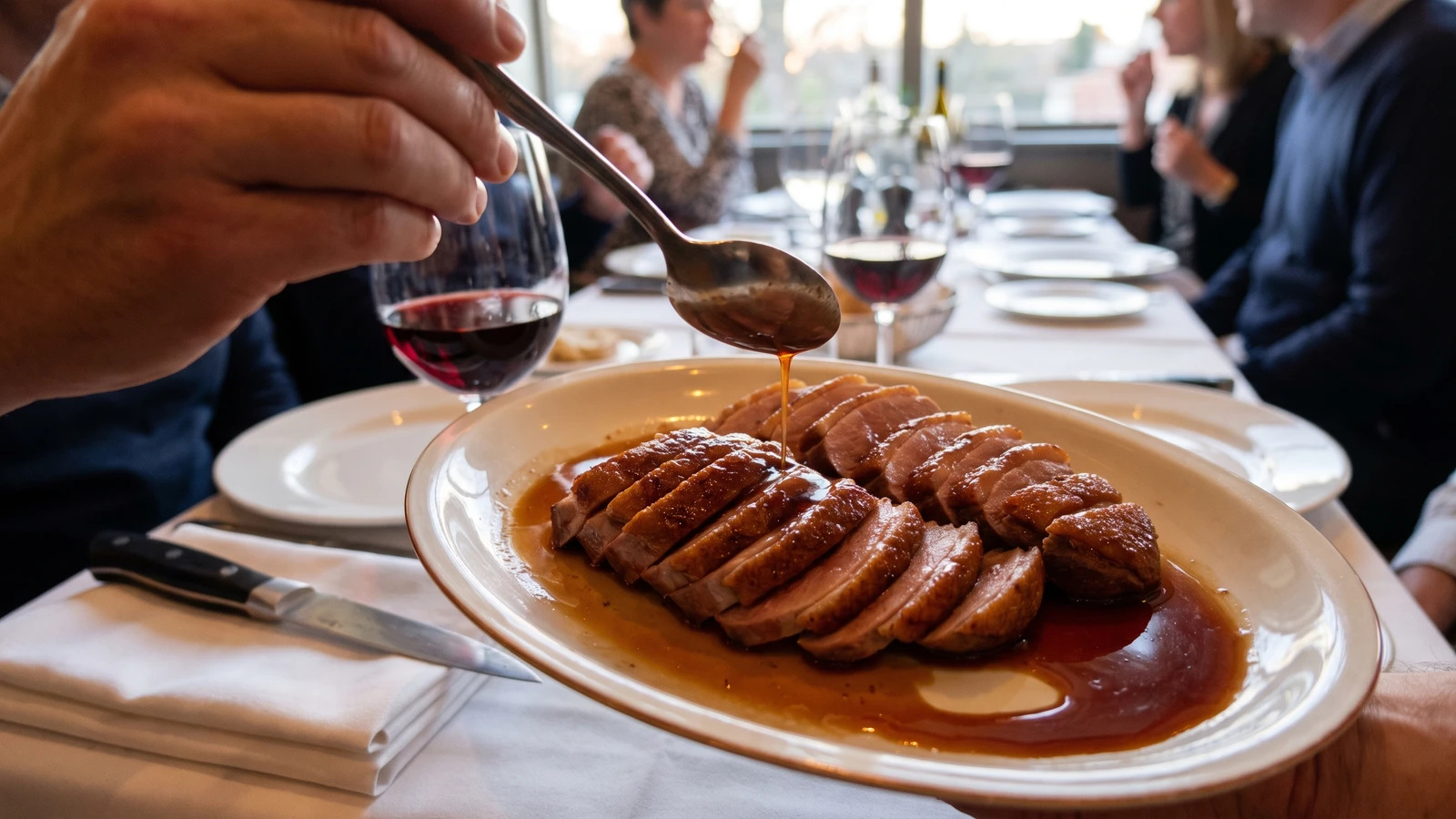
Based on No. 1761, Caneton Rouennais à la Presse, from Le Guide Culinaire (1907) by Auguste Escoffier
Twenty minutes in a fierce oven, then the breast is sliced while the carcass gives its last richness to red wine. Gentle heat turns those collops glossy, never boiled and never delayed.
Caneton Rouennais à la Presse (pressed Rouen-style duckling) teaches control at the very edge of heat. The one true thing to know before touching the pan is this: the pressed liquor and breast collops must become thoroughly hot, but they must never boil. A boil tightens the carcass proteins into grey grains and hardens the thinly sliced breast. Gentle heat gives you supple duck under a glossy, wine-dark sauce.
The original service assumed a table carver, a heavy screw duck press, a chafer, and enough hands to move from oven to platter without losing a minute. A home kitchen needs none of that scaffolding. Poultry shears, a deep steel saucepan, a stout rolling pin, a strong sieve, and the lowest burner provide the honest equivalent for one duckling. The table-side performance can go, and a wide sauté pan replaces the chafer because your serving platter should not meet a naked flame. No stockpot, roux, salamander, butter enrichment, or garnish appears in the entry, so none belongs here. One cook, one stove, one evening.
The twenty-minute roast, immediate carving, red wine forced through the warm carcass, mere drops of brandy, and no-boil reheating are not scaffolding. They are Caneton Rouennais. Have the warm platter, wine, tools, and gentle burner ready before the duck leaves the oven. Speed without panic is the step that decides the dish.
Caneton Rouennais à la Presse belongs to Rouen in Normandy, where a young duck was roasted briefly, carved, and its warm carcass pressed so none of its rich liquor escaped. The method traveled from Norman dining rooms to formal Parisian table service, where the metal press became spectacle, but its grammar remained Rouen's: red wine through the crushed carcass, then breast collops warmed in the resulting sauce. The broader preparation is often called canard au sang because retained blood enriched the pressing; this particular entry adds no separate blood and relies only on what the roasted carcass yields, good red wine, and a few drops of brandy.
Quantity
1 duckling (4½ to 5 lb / 2 to 2.3 kg)
giblets removed
Quantity
1 cup (240 ml / 238 g)
Quantity
8 drops (about 0.4 ml / 0.4 g)
Quantity
2 teaspoons (10 ml / 12 g)
divided
Quantity
1 teaspoon (5 ml / 2 g)
divided
| Ingredient | Quantity |
|---|---|
| young Rouen duckling or Pekin duckgiblets removed | 1 duckling (4½ to 5 lb / 2 to 2.3 kg) |
| good dry, supple red wine | 1 cup (240 ml / 238 g) |
| Cognac or other grape brandy | 8 drops (about 0.4 ml / 0.4 g) |
| fine sea saltdivided | 2 teaspoons (10 ml / 12 g) |
| freshly ground black pepperdivided | 1 teaspoon (5 ml / 2 g) |
Heat the oven to 475°F (245°C) with a rack in the upper-middle position. Set a roasting rack inside a deep metal pan. Beside the stove, arrange a large board with a moat, a sharp slicing knife, poultry shears, a deep stainless-steel saucepan, a stout wooden rolling pin, a sturdy fine-mesh sieve, a ladle, and a wide sauté pan. Measure the wine and brandy now. Fill the serving platter with hot water so it becomes lukewarm, then dry it just before carving. Once the duck comes out, the sequence must not stop.
Pat the duckling completely dry, including the cavity. Season it inside and out with 1½ teaspoons of the salt and ½ teaspoon of the pepper. Set it breast-side up on the rack and roast for exactly twenty minutes, without basting or lowering the heat. The skin should become taut and deeply burnished while the breast remains underdone at the centre. Do not rest the bird. Carry it straight to the carving board with the warm platter waiting.
Remove both legs cleanly at the hip joints. They are not served in this preparation. Set them in a separate small roasting pan, lower the oven to 425°F (220°C), and continue cooking them until their thickest part reaches at least 165°F (74°C), usually another twenty to thirty minutes. Do not chill them half-cooked; set a timer and keep them for another meal. Run the slicing knife tightly along each side of the breastbone and lift off the breast fillets with their skin intact. Slice each crosswise on a slight bias into collops, thin slices about ¼ inch (6 mm) thick. Lay them overlapping on the lukewarm platter, season with the remaining salt and pepper, and collect every carving juice.
Pour the roasting juices into a small vessel and let them settle briefly. Spoon off the clear surface fat and save it for potatoes, then add the dark juices and all carving juices to the deep saucepan. Using poultry shears, cut the still-warm rib cage, breastbone, and backbone into pieces about 1½ to 2 inches (4 to 5 cm) across. Add one-third of the wine and pound firmly with the blunt end of the rolling pin, crushing the bones and soft tissue against the bottom of the pan. Add the remaining wine in two additions as you continue pounding for three to four minutes. Tip everything into the sturdy sieve set over the wide sauté pan, then press with the back of the ladle until the solids yield no more than an occasional drop. Discard the pressed carcass.
Stir the drops of brandy into the pressed liquor. Set the sauté pan over the lowest heat and stir continuously, moving the pan partly off the burner whenever the heat gathers too quickly. Bring the liquor to at least 165°F (74°C), but never let a bubble break the surface and do not reduce it. Slide in the seasoned collops with any juice from their platter, spoon the sauce over them, and heat gently until the sauce recovers 165°F (74°C) and the slices are hot throughout, about two to four minutes. If fine grey grains begin to appear, pull the pan from the heat immediately, lift out the duck, and strain the sauce through a clean warm sieve before returning everything to an even gentler burner. Ça se rattrape. The sauce will be a little lighter, but it will remain clean rather than curdled.
Arrange the collops once more on the warm platter, skin edges showing, and spoon every drop of the pressed sauce over and around them. Carry the platter directly to the table. Caneton Rouennais does not improve while waiting, and no garnish should distract from the burnished skin and wine-dark liquor. À table!
1 serving (about 235g)
Culinary guides, cultural storytelling, and the editorial depth that makes cooking meaningful.
Discover Culinary ExplorerChef Juliette
John Dory has the delicacy of sole and the firmness of turbot. A light flouring, a quick butter sauté, and nut-brown beurre noisette show exactly why looks never mattered.

Chef Juliette
Fresh haddock proves its delicacy in the meunière pan: a fine flour crust, moist pearly flakes, and beurre noisette sharpened with lemon and parsley, ready from one skillet in half an hour.
Chef Juliette
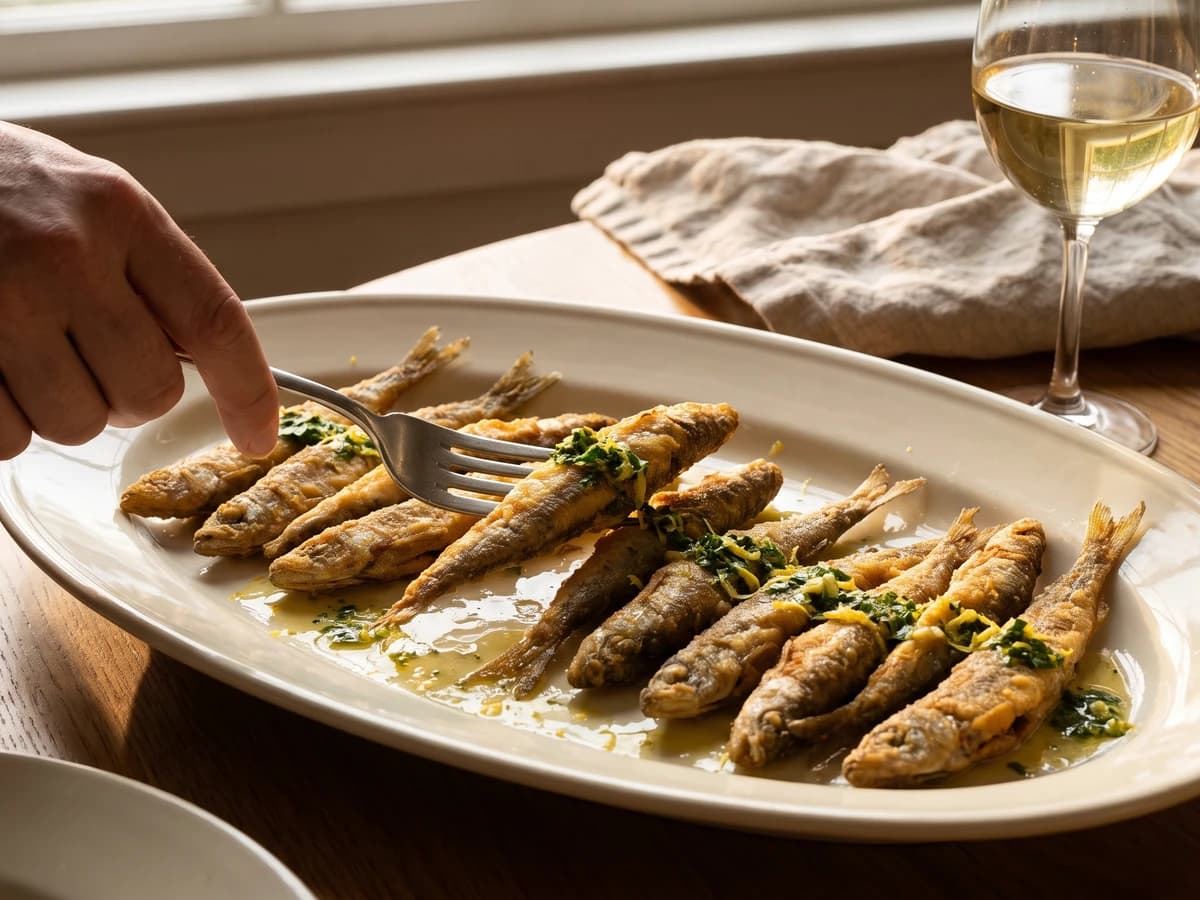
Éperlans à l’Anglaise turns small fish into a lesson in disciplined coating: boned smelts under a close, crisp crumb, pan-fried in clarified butter and finished with bright, half-melted maître d’hôtel butter.

Chef Juliette
Tiny smelts, shallot, mushrooms, white wine, gratin sauce, and fine bread raspings meet a fierce oven, where the fish must turn tender in the same breath the buttered crust bronzes.