
Chef Juliette
John Dory (St. Pierre)
John Dory has the delicacy of sole and the firmness of turbot. A light flouring, a quick butter sauté, and nut-brown beurre noisette show exactly why looks never mattered.
A cooking platform built around craft, culture, and the stories behind what we eat.
Created by Chef Juliette
Based on No. 1758, Caneton Rouennais au Champagne, from Le Guide Culinaire (1907) by Auguste Escoffier
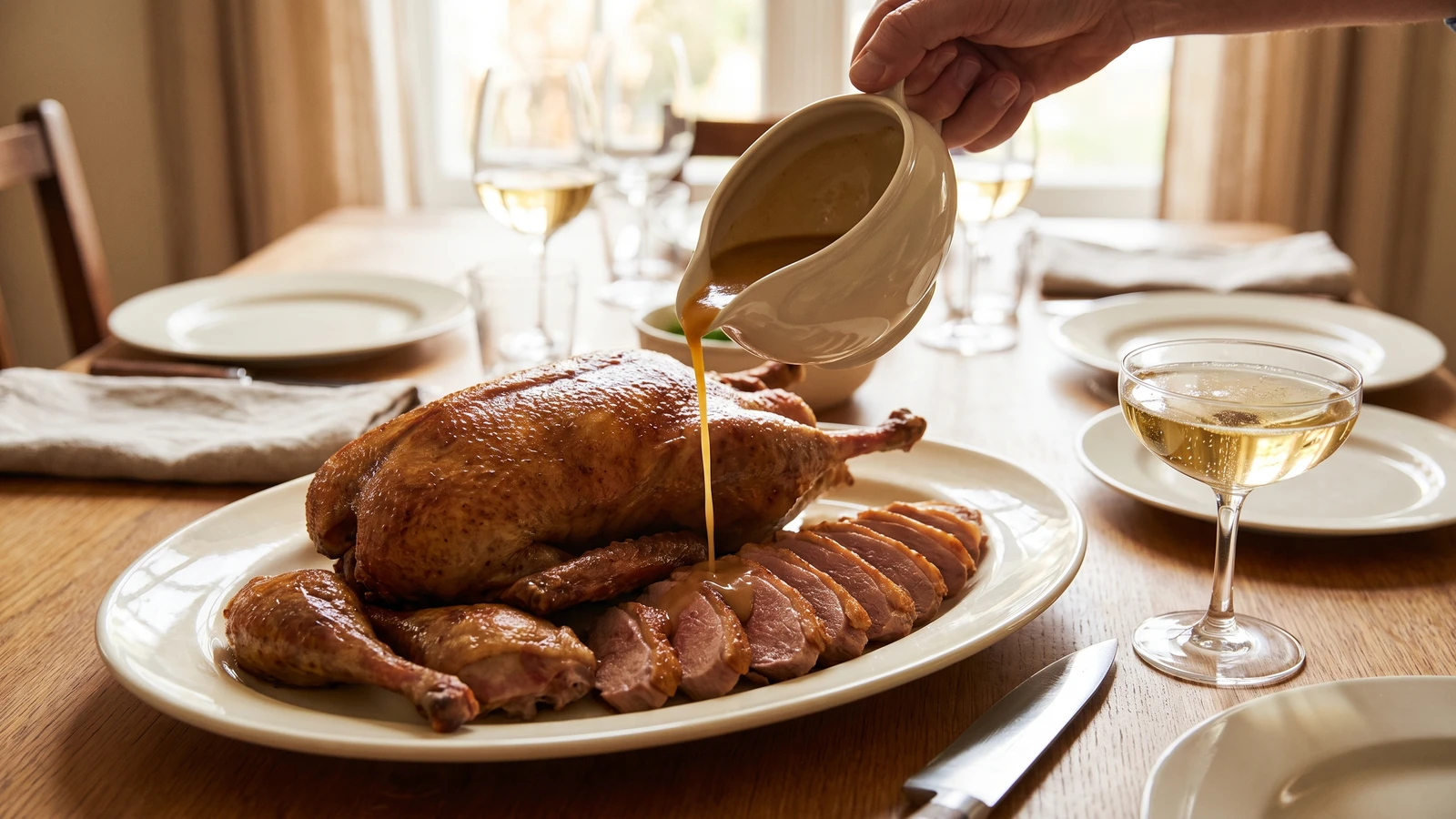
A butter-poëled Rouen duckling, its savory pan liquor sharpened with dry Champagne and rounded by veal stock, teaches the discipline of reduction: concentrate the wine, preserve the fond, then strain and degrease.
Caneton Rouennais au Champagne (Rouen duckling with Champagne sauce) teaches an unfashionable but exact truth: don't degrease the poëling-liquor too soon. The butter has carried the savor of the duck and its aromatics through the cooking. Let the Champagne reduce in that liquor, then give the thickened veal stock ten minutes with it before lifting away the fat. Skim first and you throw out the bridge between bird and sauce.
The original expected the duckling to arrive from Poëlings (No. 250), a saucier on staff, thickened veal stock never off the fire, and muslin ready for the final strain. Your kitchen needs one cooking vessel, one 4½-pound duckling prepared through the linked component, good reduced veal stock, and damp cheesecloth set inside a fine sieve. Saint Marceaux becomes any dry brut Champagne because the house named on the bottle is not the technique. The book already works by the duckling, so its honest home scale is four servings, and the Champagne-to-stock ratio remains exactly three to one. The brigade handoff is scaffolding and goes. The poëling and reduction stay. A salamander had no work here, so one is not invented.
Finished properly, the duckling wears a butter-bronze skin while the sauce runs clear, glossy, and amber-brown from its warm sauceboat. It tastes first of concentrated duck, then of Champagne's acidity, with veal stock supplying quiet depth underneath. Watch the Champagne rather than the clock: it must lose its raw wine smell and reduce to one-third without scorching. That reduction is the step that decides everything.
Caneton rouennais belongs to Rouen and the lower Seine in Normandy, where duck rearing supplied bourgeois tables and grand kitchens with birds prized for their full flesh and rich cooking liquor. Au Champagne is a classical service variation: wine from Champagne brightens the Norman bird while thickened veal stock gives the sauce body, so the wine names the finish rather than the dish's home. It should not be confused with canard à la rouennaise or canard au sang, whose identity rests on a blood-bound sauce; this preparation is strained clear and served separately.
Quantity
1 duckling, about 4½ lb (2 kg), prepared according to Poëlings (No. 250)
kept warm after cooking
Quantity
1 cup plus 3 tablespoons (285 ml / 280 g)
Quantity
6 tablespoons plus 1 teaspoon (95 ml / 100 g)
| Ingredient | Quantity |
|---|---|
| whole Rouen duckling, with all poëling-liquor reservedkept warm after cooking | 1 duckling, about 4½ lb (2 kg), prepared according to Poëlings (No. 250) |
| dry brut Champagne | 1 cup plus 3 tablespoons (285 ml / 280 g) |
| fonds de veau lié (thickened veal stock) | 6 tablespoons plus 1 teaspoon (95 ml / 100 g) |
Prepare the duckling according to Poëlings (No. 250), following that linked formula through cooking and browning. If checking with a thermometer, the thickest part of the thigh should register at least 165°F (74°C) without touching bone. Lift the burnished bird onto a warm platter and tent it loosely while it rests. Leave the butter, juices, fond, and aromatic poëling-liquor in the cooking vessel. Don't degrease it yet; the retained butter still holds flavor needed by the sauce.
Set the cooking vessel over medium-high heat and pour in the Champagne. Scrape the bottom thoroughly, loosening every brown trace of fond, then bring the liquid to a lively boil. Reduce for 8 to 12 minutes, until roughly one-third of the added wine remains, the bubbles have become small and glossy, and the sharp smell of raw alcohol has disappeared. Keep the butter in the pan. If the reduction races nearly dry but smells clean, take it off the heat and swirl in 1 tablespoon of water; ça se rattrape. If it smells scorched, begin the sauce again in a clean pan, because burnt butter keeps its bitterness.
Lower the heat and stir in the fonds de veau lié. Hold the sauce at a bare simmer for 10 minutes, still without skimming, so the stock remains in contact with the aromatic butter and draws its flavor into the liquid. It should lightly nappe, or coat, the back of a spoon. If it remains thin, simmer for another 2 or 3 minutes. If it tightens too far, loosen it a teaspoon at a time with hot water or additional stock. Taste for balance, remembering that the prepared stock supplies the seasoning.
Dampen butter muslin or a double layer of cheesecloth with cold water, wring it thoroughly, and use it to line a fine-mesh sieve. Strain the sauce into a small clean pan without pressing the vegetables or sediment through the cloth. Let it settle for a minute, then remove the clear surface fat with a separator or by drawing a chilled spoon across the top. The finished sauce should be clear amber-brown and glossy, not oily. If it remains cloudy, pass it through fresh damp cloth once more. Keep it warm over the gentlest heat, never boiling.
Carve the rested duckling into breast slices and leg portions, then arrange them generously on the warm platter. Pour the sauce into a heated sauceboat and send it to the table beside the bird, exactly as the preparation intends. Don't cover the duckling with sauce before serving; keeping it apart preserves the burnished skin and lets each guest take as much as desired. À table!
1 serving (about 275g)
Culinary guides, cultural storytelling, and the editorial depth that makes cooking meaningful.
Discover Culinary ExplorerChef Juliette
John Dory has the delicacy of sole and the firmness of turbot. A light flouring, a quick butter sauté, and nut-brown beurre noisette show exactly why looks never mattered.

Chef Juliette
Fresh haddock proves its delicacy in the meunière pan: a fine flour crust, moist pearly flakes, and beurre noisette sharpened with lemon and parsley, ready from one skillet in half an hour.
Chef Juliette
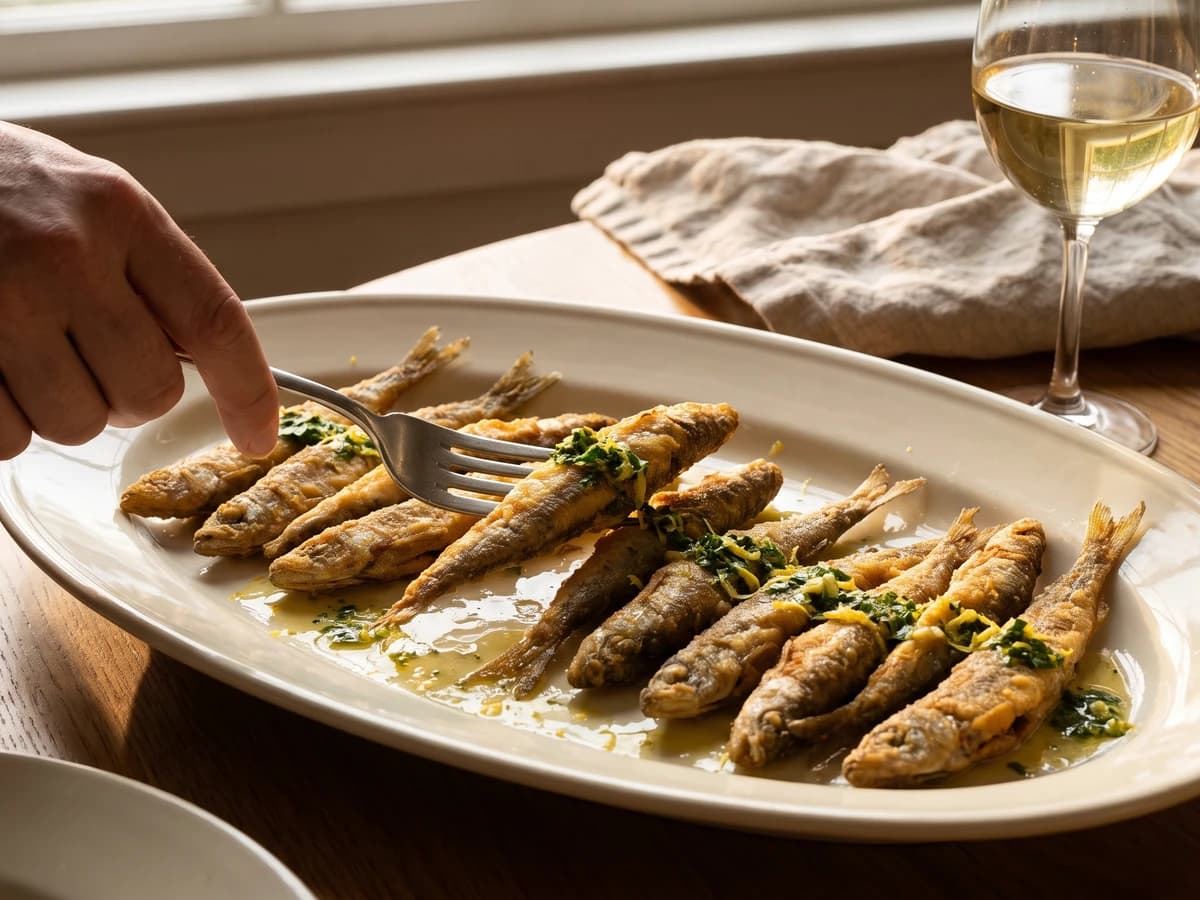
Éperlans à l’Anglaise turns small fish into a lesson in disciplined coating: boned smelts under a close, crisp crumb, pan-fried in clarified butter and finished with bright, half-melted maître d’hôtel butter.

Chef Juliette
Tiny smelts, shallot, mushrooms, white wine, gratin sauce, and fine bread raspings meet a fierce oven, where the fish must turn tender in the same breath the buttered crust bronzes.