
Chef Juliette
John Dory (St. Pierre)
John Dory has the delicacy of sole and the firmness of turbot. A light flouring, a quick butter sauté, and nut-brown beurre noisette show exactly why looks never mattered.
A cooking platform built around craft, culture, and the stories behind what we eat.
Created by Chef Juliette
Based on No. 1732, Timbale de Foie Gras à l’Alsacienne, from Le Guide Culinaire (1907) by Auguste Escoffier
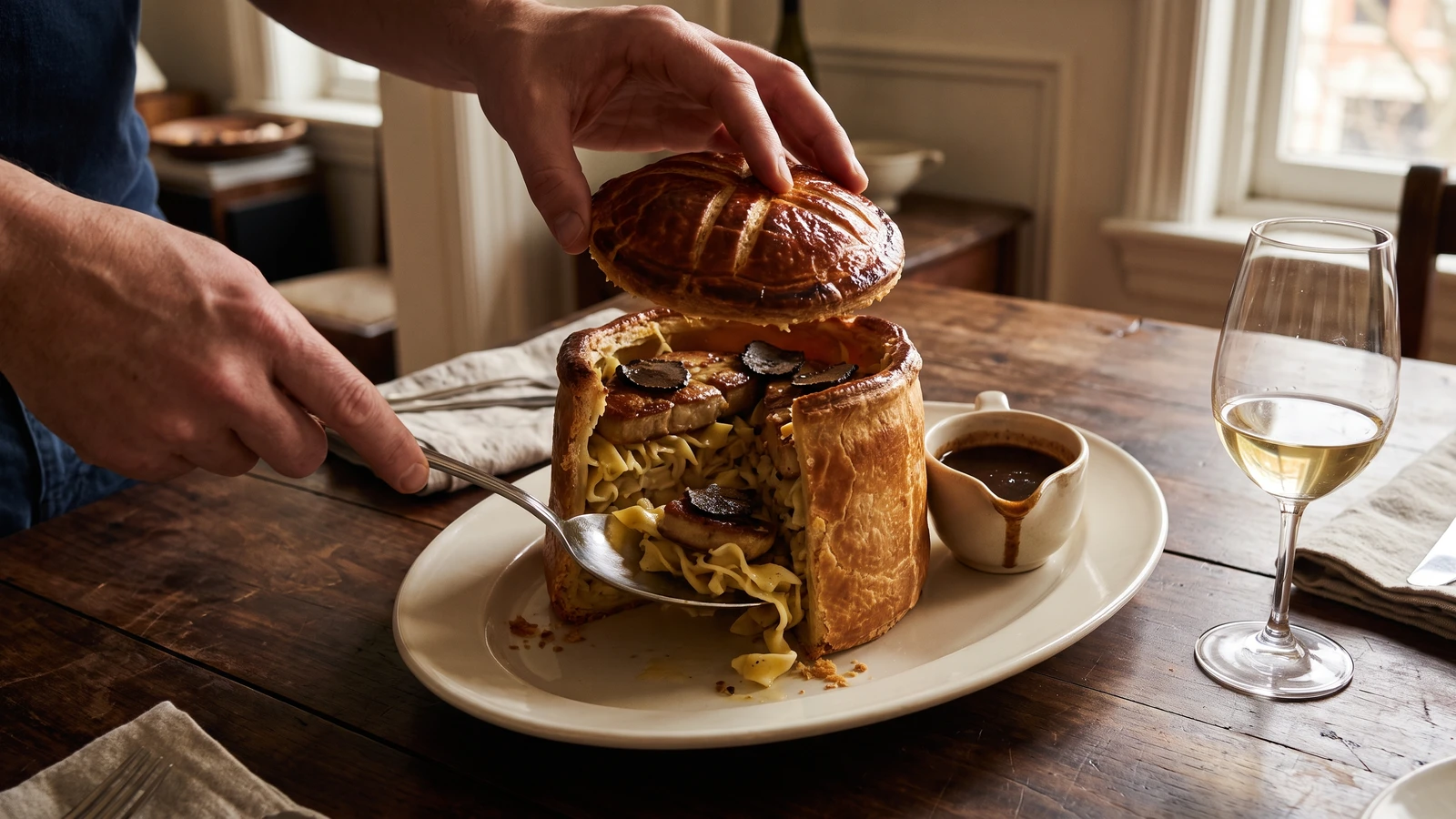
Timbale de Foie Gras à l’Alsacienne hides creamy egg noodles, butter-sautéed foie gras, and black truffle inside a crisp pastry wall, with glossy truffled Sauce suprême waiting beside it.
Timbale de Foie Gras à l’Alsacienne (Alsatian foie gras timbale) teaches containment: a crisp pastry wall must hold a generous, creamy filling without surrendering to it. The one true thing to know before you touch a pan is this: bake the shell completely dry, keep every filling hot but never wet, and assemble only when the table is ready. Fill it early and the noodles soften the pastry wall.
The original entry assumed an ordinary timbale crust from the pastry station, a saucier with Sauce suprême (chicken velouté enriched with cream), stock never off the fire, and enough hands to sauté the foie gras while another cook dressed the noodles. A salamander adds nothing here; crispness comes from thorough blind-baking. One cook uses an 18 cm springform mould, good chicken stock, and a saucepan. The pastry station and simultaneous hands are brigade scaffolding, so they go. The crisp crust, creamed noodles, butter-sautéed collops, truffle layers, and sauce served separately are the dish, so every one stays.
The book crowns the filling with raw buttered noodles. In a home kitchen, those final strands receive a thirty-second blanch, enough to remove the taste and risk of raw flour while preserving their separate, springy shape; that is the sole change to the sequence. Your decisive moment is assembly: layer quickly, set on the lid, and serve before the cream reaches the pastry. One cook, one stove, one evening.
In the classical repertory, à l’Alsacienne connects this dish to Alsace through Strasbourg’s foie gras tradition and the region’s deep affection for egg noodles; black truffle marks the grand-kitchen register rather than an everyday farmhouse pot. The timbale belongs to formal service, where an edible pastry case gathered several prepared components into a single table centerpiece before passing into bourgeois holiday cooking. It is often mistaken for a rustic Alsatian pie, but its identity is more exact: an Alsatian larder arranged according to the grammar of the national canon.
Quantity
2⅔ cups (630 ml / 320 g)
Quantity
2 tablespoons (30 ml / 16 g)
Quantity
½ cup (120 ml / 115 g)
cut into small cubes
Quantity
1 teaspoon (5 ml / 6 g)
Quantity
1
beaten
Quantity
¼ cup (60 ml / 60 g)
as needed
Quantity
1 tablespoon (15 ml / 14 g)
Quantity
About 4 loosely packed cups (950 ml / 255 g)
Quantity
½ cup (120 ml / 120 g)
Quantity
3 tablespoons (45 ml / 42 g)
divided
Quantity
1 small lobe (about 11 ounces / 310 g)
kept very cold
Quantity
1 tablespoon (15 ml / 14 g)
Quantity
¼ cup, loosely packed (60 ml / 30 g)
thinly sliced
Quantity
2 tablespoons (30 ml / 28 g)
Quantity
2 tablespoons (30 ml / 16 g)
Quantity
1½ cups (360 ml / 360 g)
Quantity
½ cup (120 ml / 120 g)
Quantity
1 tablespoon (15 ml / 15 g)
Quantity
1 tablespoon (15 ml / 14 g)
Quantity
as needed
| Ingredient | Quantity |
|---|---|
| all-purpose flour for the pâte à timbale | 2⅔ cups (630 ml / 320 g) |
| all-purpose flour for rolling | 2 tablespoons (30 ml / 16 g) |
| cold unsalted buttercut into small cubes | ½ cup (120 ml / 115 g) |
| fine salt | 1 teaspoon (5 ml / 6 g) |
| large eggbeaten | 1 |
| ice wateras needed | ¼ cup (60 ml / 60 g) |
| softened unsalted butter for the mould | 1 tablespoon (15 ml / 14 g) |
| fresh egg noodles | About 4 loosely packed cups (950 ml / 255 g) |
| heavy cream for the noodles | ½ cup (120 ml / 120 g) |
| unsalted butter for the noodlesdivided | 3 tablespoons (45 ml / 42 g) |
| fresh raw goose or duck foie graskept very cold | 1 small lobe (about 11 ounces / 310 g) |
| unsalted butter for sautéing | 1 tablespoon (15 ml / 14 g) |
| black trufflethinly sliced | ¼ cup, loosely packed (60 ml / 30 g) |
| unsalted butter for the Sauce suprême | 2 tablespoons (30 ml / 28 g) |
| all-purpose flour for the Sauce suprême | 2 tablespoons (30 ml / 16 g) |
| unsalted chicken stock | 1½ cups (360 ml / 360 g) |
| heavy cream for the Sauce suprême | ½ cup (120 ml / 120 g) |
| truffle essence, preferably truffle juice or strained preserved-truffle liquor | 1 tablespoon (15 ml / 15 g) |
| cold unsalted butter for finishing the sauce | 1 tablespoon (15 ml / 14 g) |
| fine salt and freshly ground white pepper | as needed |
Beat the egg and reserve 1 tablespoon in the cold for sealing the pastry. Mix the 320 g flour with the measured salt, then rub in the cold butter until the mixture resembles fine crumbs, with no large flakes that could weaken the wall. Add the remaining egg and 3 tablespoons of the ice water, mixing until the dough gathers; add the final spoonful of water only if dry flour remains. Knead briefly until smooth, flatten into a disc, wrap, and chill for 45 minutes. Pâte à timbale must be tender enough to eat but sturdy enough to stand.
Butter an 18 cm wide, 8 cm deep springform or loose-bottomed mould. Reserve one-third of the dough for the lid and repairs. On the rolling flour, roll the remainder 3 mm thick; cut an 18 cm circle for the base and a band about 9 cm wide and 58 cm long for the wall. Press the band against the mould, overlap its ends by 1 cm, and seal the wall firmly to the base with a fingertip dampened in water. If the dough tears, patch it with a thin scrap and press the edges smooth. The repair disappears in the baking. Chill for 20 minutes.
Heat the oven to 190°C / 375°F. Line the pastry with crumpled parchment and fill it to the rim with baking weights or dried beans, which support the tall wall while it sets. Bake for 25 minutes, then remove the paper and weights and lower the oven to 180°C / 350°F. Brush the interior lightly with the reserved beaten egg and bake for another 12 to 15 minutes, until deep butter-gold, dry, and rigid. Roll the reserved dough 3 mm thick, cut a 17½ cm lid, score it decoratively without cutting through, and bake it on a lined sheet for 18 to 20 minutes. If a crack opens in the shell, press on a thin scrap of raw dough while the pastry is still hot and return it to the oven for 5 minutes. Cool for 10 minutes before releasing the mould.
Melt the 2 tablespoons of butter in a saucepan over medium-low heat. Stir in the 2 tablespoons of flour and cook the roux for 2 minutes without letting it colour. Whisk in the chicken stock a little at a time, scraping into every corner, then simmer gently for 12 to 15 minutes. Add the cream and continue until the Sauce suprême coats the back of a spoon but still pours freely, about 6 minutes. If small lumps remain, pass it through a fine sieve. Ça se rattrape. Cover the surface and hold the sauce warm without adding the truffle essence or finishing butter yet.
If using preserved truffle, drain it and reserve its liquor for the sauce. Slice the truffle thinly. Cut the cold foie gras into 8 collops, thick oval slices about 1 cm deep, using a knife dipped in hot water and wiped dry between cuts. Pat them dry, season lightly with salt and white pepper, and return them to the cold. Cold foie gras keeps its shape when it reaches the pan.
Bring a large pot of salted water to a boil. Reserve about 40 g of the fresh noodles for the top; blanch these for only 30 seconds, drain them thoroughly, and toss them with 1 tablespoon of butter so the strands remain separate. Cook the remaining noodles until just tender, usually 2 to 3 minutes, and drain them very well. Reserve 1 tablespoon of the cream, reduce the rest in the empty pot until slightly thickened, then add 2 tablespoons of butter and the cooked noodles. Toss over low heat until the cream clings and no liquid gathers beneath them. If they tighten too far, add the reserved cream. The noodles may gleam, but they must not puddle, because loose cream will undo the crust.
Heat a wide skillet until properly hot, then add the tablespoon of butter. When its foam subsides, sauté the cold foie gras collops without crowding, about 45 seconds to 1 minute per side, until bronze at the surfaces and hot through the centre while still holding their shape. If they begin melting before they colour, lift them out immediately, pour off the rendered fat, let the pan become hotter, and return them for 10 seconds per side. Transfer to a warm plate and season once more with restraint.
Set the freestanding pastry shell on its serving platter and divide the creamed noodles mentally into four portions. Spoon in the first portion, arrange 4 foie gras collops over it, add the second portion of noodles, and cover it with the truffle slices. Follow with the third portion, the remaining foie gras, and the final creamed noodles. If liquid has collected beneath the noodles, stop and reduce them again before filling; the rescue must happen before the cream touches the crust. Scatter the barely blanched buttered strands over the top exactly where the source places its raw noodles, then set on the pastry lid.
Bring the Sauce suprême back to a bare simmer, then remove it from the heat. Stir in the truffle essence and monter au beurre, whisk in the cold finishing butter until the sauce turns glossy. Do not boil it afterward. If the sauce separates, whisk 1 tablespoon of cold stock in a clean warm saucepan, then add the broken sauce gradually until it comes together. Taste for salt and white pepper, and pour it into a warm sauceboat.
Carry the timbale whole to the table. Cut the pastry lid into four wedges, then use a small serrated knife to divide the wall while a broad spoon supports the noodles and foie gras within. Pass the truffled Sauce suprême separately, never poured into the shell, so each serving receives sauce while the remaining pastry stays crisp. À table!
1 serving (about 450g)
Culinary guides, cultural storytelling, and the editorial depth that makes cooking meaningful.
Discover Culinary ExplorerChef Juliette
John Dory has the delicacy of sole and the firmness of turbot. A light flouring, a quick butter sauté, and nut-brown beurre noisette show exactly why looks never mattered.

Chef Juliette
Fresh haddock proves its delicacy in the meunière pan: a fine flour crust, moist pearly flakes, and beurre noisette sharpened with lemon and parsley, ready from one skillet in half an hour.
Chef Juliette
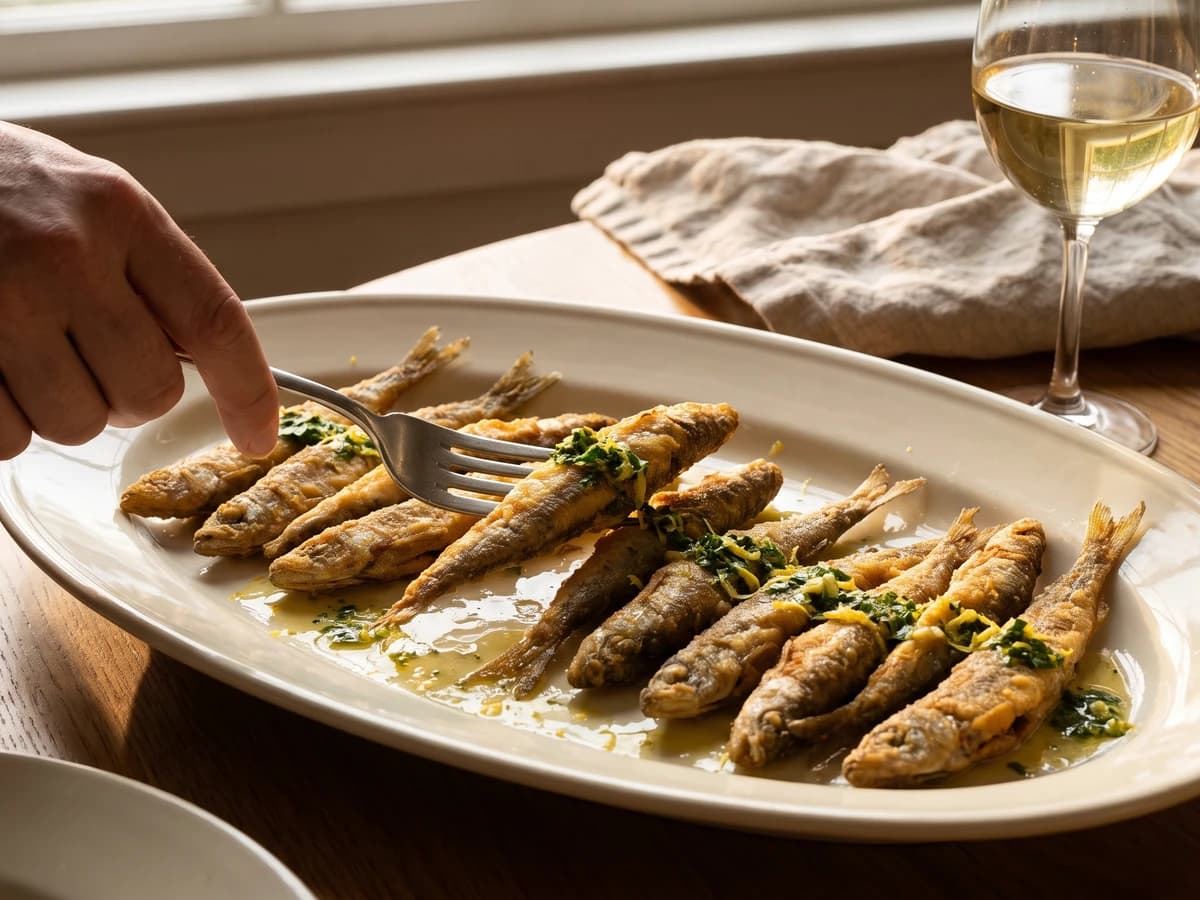
Éperlans à l’Anglaise turns small fish into a lesson in disciplined coating: boned smelts under a close, crisp crumb, pan-fried in clarified butter and finished with bright, half-melted maître d’hôtel butter.

Chef Juliette
Tiny smelts, shallot, mushrooms, white wine, gratin sauce, and fine bread raspings meet a fierce oven, where the fish must turn tender in the same breath the buttered crust bronzes.