
Chef Juliette
John Dory (St. Pierre)
John Dory has the delicacy of sole and the firmness of turbot. A light flouring, a quick butter sauté, and nut-brown beurre noisette show exactly why looks never mattered.
A cooking platform built around craft, culture, and the stories behind what we eat.
Created by Chef Juliette
Based on No. 1709, Pain de Volaille Froid, from Le Guide Culinaire (1907) by Auguste Escoffier
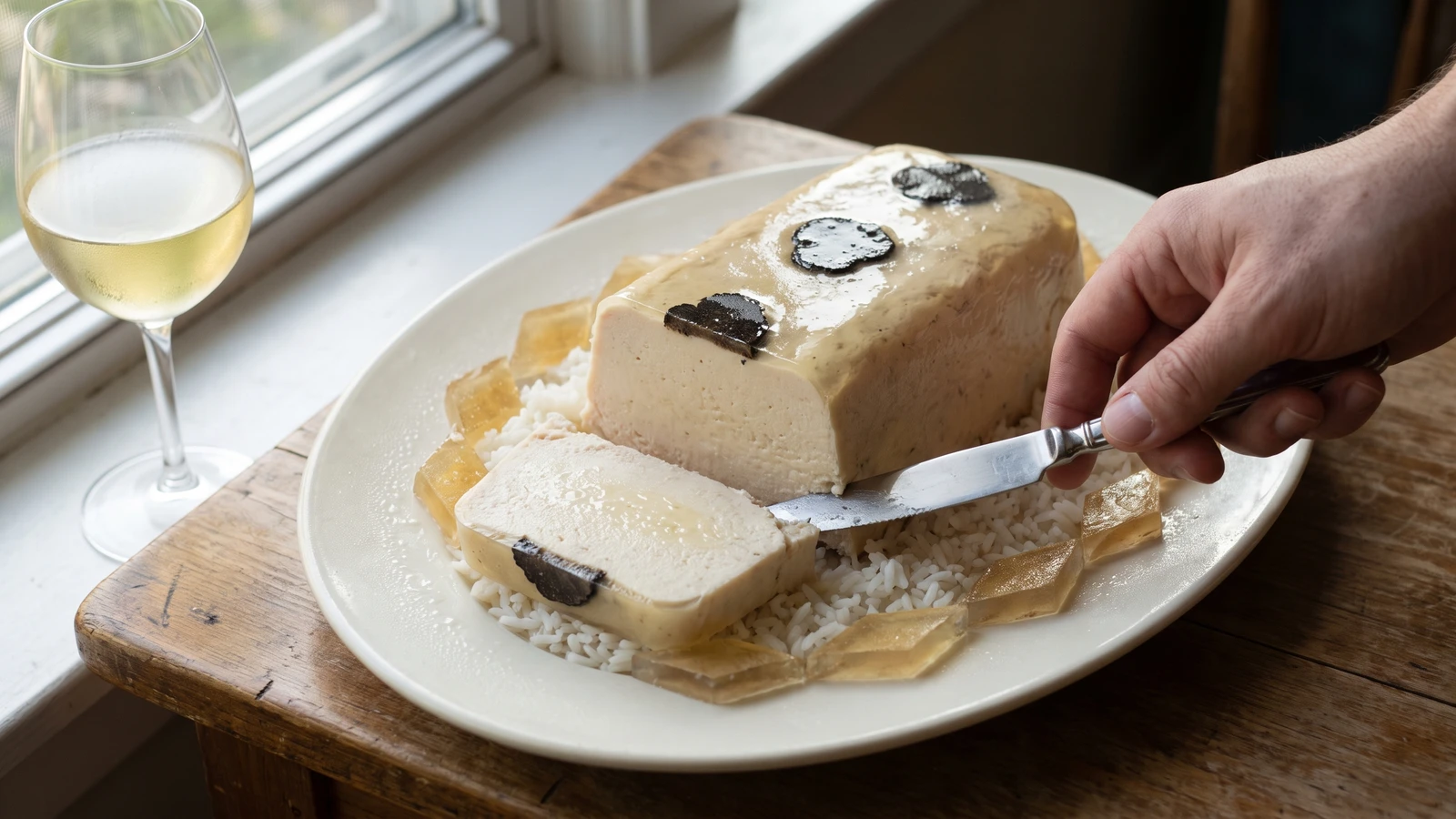
A pale, truffled pain of poêled chicken held by a hollandaise-style emulsion and aspic. Keep the yolks off direct heat, and it unmolds into cool, silken slices for the dinner table.
Pain de Volaille Froid (cold molded chicken loaf) teaches the discipline of making a warm emulsion for cold service. The one true thing to know before touching a pan is this: the yolks must never meet direct heat. They should thicken gently with the concentrated poëling liquor, then accept the butter little by little, or the filling turns grainy instead of smooth.
The original assumed a tender chicken prepared by another station, a saucier minding the yolks, strong veal stock never off the fire, a tammy for sieving, and a mould packed in ice. At home, concentrated low-salt veal stock replaces the perpetual stockpot, a bowl over barely simmering water replaces the side of the range, and a food processor followed by a fine-mesh sieve does the tammy's work. The elaborate ice packing and hand pounding are brigade scaffolding and may go. The pale poëling, the yolk-and-butter emulsion, the truffled lining, the rice cushion, and the aspic croûtons stay because they are the dish.
There is one further change for one cook: bone and sieve the chicken before beginning the emulsion. A brigade could perform those jobs at once, but a home cook should have the purée and chilled mould waiting before the yolks meet the reduction. One cook, one stove, one evening of work, then the refrigerator takes the night watch. Set up the gentle water bath first, because once the emulsion begins, it deserves your whole attention.
Pain de volaille froid belongs to the Parisian grand-kitchen repertoire of cold entrées, carried from formal service into bourgeois dining rooms and traiteur displays. Here pain means a molded loaf, not bread: truffled breast collops form the visible lining, while the remaining meat and skin are sieved into a butter-rich body so every part of the bird has its place. Aspic and the rice cushion helped a chilled centerpiece remain neat through a long service, and the smaller home timbale preserves that purpose without the banquet scale.
Quantity
1, about 3½ lb (1.6 kg), to be cooked pale and just done by Poëlings (No. 250)
poëling liquor reserved
Quantity
2 tablespoons (30 ml / 30 g)
Quantity
2 tablespoons (30 ml / 28 g), flambéed and cooled; use 1 tablespoon (15 ml / 14 g) burned brandy
Quantity
3 large (about 3 tablespoons / 54 g), plus 1 extra only if needed for rescue
Quantity
¾ cup (180 ml / 170 g)
cool and cut into small cubes
Quantity
1½ leaves (about 3 g)
softened in cold water and squeezed dry
Quantity
2 tablespoons (30 ml / 30 g)
Quantity
1½ cups (360 ml / 360 g), for the mould coating in Another Method of Preparing Aspics de Filets de Soles (No. 916), the truffle, and the croûtons
warmed only until fluid
Quantity
1 small, about 1 oz (30 g)
thinly sliced
Quantity
2 cups (480 ml / 370 g)
cooled promptly
Quantity
only as needed
| Ingredient | Quantity |
|---|---|
| very tender whole chickenpoëling liquor reserved | 1, about 3½ lb (1.6 kg), to be cooked pale and just done by Poëlings (No. 250) |
| strong, low-salt veal stock | 2 tablespoons (30 ml / 30 g) |
| Cognac or brandy | 2 tablespoons (30 ml / 28 g), flambéed and cooled; use 1 tablespoon (15 ml / 14 g) burned brandy |
| pasteurized egg yolks | 3 large (about 3 tablespoons / 54 g), plus 1 extra only if needed for rescue |
| very fresh unsalted buttercool and cut into small cubes | ¾ cup (180 ml / 170 g) |
| gold-strength gelatin leavessoftened in cold water and squeezed dry | 1½ leaves (about 3 g) |
| boiling water | 2 tablespoons (30 ml / 30 g) |
| clear chicken aspic jellywarmed only until fluid | 1½ cups (360 ml / 360 g), for the mould coating in Another Method of Preparing Aspics de Filets de Soles (No. 916), the truffle, and the croûtons |
| black trufflethinly sliced | 1 small, about 1 oz (30 g) |
| cooked white ricecooled promptly | 2 cups (480 ml / 370 g) |
| fine sea salt | only as needed |
Prepare the chicken by Poëlings (No. 250), following that method while observing the instruction specific to this dish: do not let the skin colour, and remove the bird as soon as it is just cooked through. The thickest part must reach 165°F (74°C), but no further. Transfer the chicken to a tray, reserve all the buttery poëling liquor and vegetables, and cool the bird promptly until it can be handled safely.
Leave the butter with the reserved poëling vegetables for now. Add the strong veal stock and 1 tablespoon (15 ml / 14 g) of the cooled burned brandy, then simmer gently for 10 minutes so the stock recovers the savour held in the butter. Strain through a fine sieve, pressing the vegetables lightly, then remove every trace of surface grease. Boil the strained liquor until exactly 2 tablespoons (30 ml / 30 g) remain. Measure it rather than guessing, because this concentration gives the emulsion its flavour without making it loose. Let it cool until warm.
Clothe a chilled 1-quart (950 ml) timbale or charlotte mould with chicken aspic jelly according to Another Method of Preparing Aspics de Filets de Soles (No. 916), using the book's coating method but the poultry jelly required here. Keep the coated mould cold. Pour about ¾ cup (180 ml / 180 g) of the remaining jelly into a shallow pan in a layer about ¼ inch (6 mm) thick and chill it for the croûtons, reserving the rest in a fluid, barely warm state.
Lift off the breast fillets and remove their skin. Cut the fillets across the grain into wide, thin collops. Dip each truffle slice into the half-melted aspic, place one on each collop, and arrange the collops closely over the bottom and sides of the coated mould, truffle facing outward. Completely bone the remaining chicken, retaining the cooked skin but rejecting bones, cartilage, and sinew. Process the meat and skin to a very fine paste, then press it through a fine-mesh sieve. Keep the purée covered at cool room temperature for no more than 30 minutes while the emulsion is made.
Set a heatproof bowl over a saucepan of barely simmering water, making certain the bowl never touches the water. Whisk the 2 tablespoons of reduced poëling liquor with the 3 yolks until pale, thick, and able to hold the whisk's trace. Take the bowl off the heat and whisk in the butter one small cube at a time, returning the bowl to the gentle water only when the butter stops melting. Keep the mixture below 150°F (65°C). Direct heat scrambles the yolks and makes the finished pain grainy. If butter begins to pool but there are no curds, remove the bowl and whisk in 1 teaspoon of cold water. If fine egg grains appear, strain immediately, whisk the spare yolk with 1 teaspoon of cold water in a clean bowl, then add the strained mixture back little by little over the gentlest water bath. Ça se rattrape, provided you move before the curds harden.
Dissolve the softened gelatin in the 2 tablespoons of boiling water, then whisk it thoroughly into the finished emulsion. Pass the sauce through the clean fine-mesh sieve, the honest home equivalent of the tammy. Add the sieved chicken purée in three portions, mixing each completely before the next. Taste and add salt only if needed, remembering that cold softens seasoning. The filling should be smooth, thick, and barely fluid. If cold chicken makes the butter set in flecks, warm the bowl over the water bath for five seconds at a time while stirring. Do not let the mixture become hot enough to melt the aspic lining.
Spoon the filling carefully into the lined mould, pressing it into the curves without disturbing the breast collops. Tap the mould twice on a folded towel to release hidden air pockets, level the top, cover, and refrigerate for at least 6 hours, preferably overnight. The gelatin, butter, and chicken must set as one body before unmoulding; impatience here produces a slump, and no serving platter can argue with gravity.
Pack the cold rice into a low, firm cushion on a chilled serving platter, making it slightly smaller than the mould. Cut the set jelly from the shallow pan into croûtons, small diamonds of aspic jelly, and keep them cold. Wrap the mould for five seconds in a towel wrung from warm water, dry it, then invert it squarely onto the rice. If it resists, repeat for two seconds rather than soaking it and softening the emulsion. Ring the rice with the aspic croûtons, let the pain stand for 10 minutes, and cut it with a thin knife dipped in warm water and wiped dry. À table!
1 serving (about 440g)
Culinary guides, cultural storytelling, and the editorial depth that makes cooking meaningful.
Discover Culinary ExplorerChef Juliette
John Dory has the delicacy of sole and the firmness of turbot. A light flouring, a quick butter sauté, and nut-brown beurre noisette show exactly why looks never mattered.

Chef Juliette
Fresh haddock proves its delicacy in the meunière pan: a fine flour crust, moist pearly flakes, and beurre noisette sharpened with lemon and parsley, ready from one skillet in half an hour.
Chef Juliette
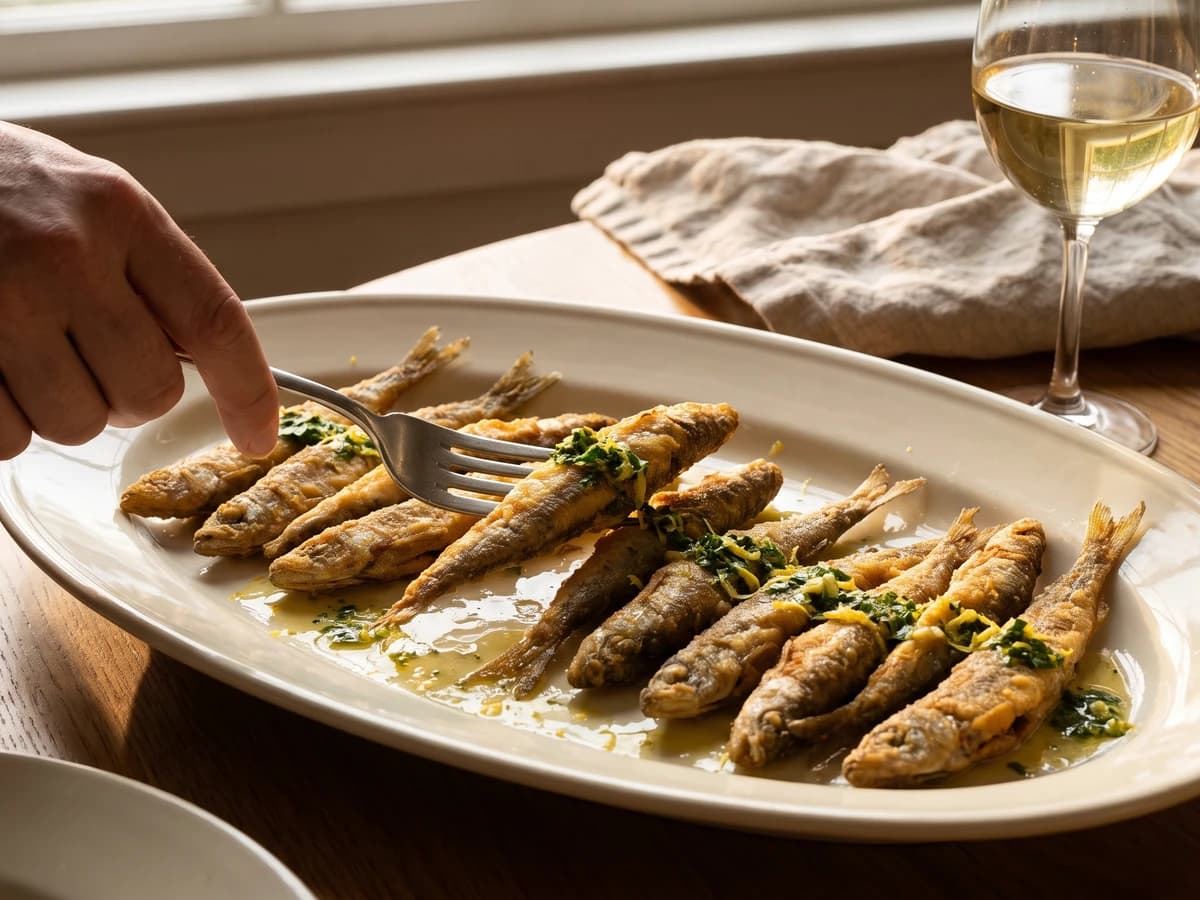
Éperlans à l’Anglaise turns small fish into a lesson in disciplined coating: boned smelts under a close, crisp crumb, pan-fried in clarified butter and finished with bright, half-melted maître d’hôtel butter.

Chef Juliette
Tiny smelts, shallot, mushrooms, white wine, gratin sauce, and fine bread raspings meet a fierce oven, where the fish must turn tender in the same breath the buttered crust bronzes.