
Chef Juliette
John Dory (St. Pierre)
John Dory has the delicacy of sole and the firmness of turbot. A light flouring, a quick butter sauté, and nut-brown beurre noisette show exactly why looks never mattered.
A cooking platform built around craft, culture, and the stories behind what we eat.

Created by Chef Juliette
Based on No. 1642, Poulet de Grains Mascotte, from Le Guide Culinaire (1907) by Auguste Escoffier
A butter-browned grain-fed chicken, olive-cut potatoes, concentrated veal gravy, and black truffle sealed together for ten fragrant minutes: Mascotte proves that restraint can still feel magnificent.
Poulet de Grains Mascotte (grain-fed chicken Mascotte) teaches poëling, the discipline of browning a young bird in butter, cooking it gently under cover, then sealing truffle against it for the final ten minutes. The one true thing is simple: truffle goes on late and the lid stays shut. Add it early and its fragrance thins; lift the lid and you've perfumed the room instead of the chicken.
The entry assumed a saucier beside a stockpot never off the fire, two spoonfuls of concentrated veal gravy ready on command, and a separate warm cocotte for service. At home, use a good prepared brown veal gravy and one heavy lidded cocotte for browning, cooking, and serving; the second vessel is brigade scaffolding and can go. The butter cooking of Poëlings (No. 250), the exact four ounces of olive-cut potatoes, the two ounces of truffle, and the covered finish are the dish and stay. This is scaled to one small chicken for four: one cook, one stove, one evening.
Have the truffle sliced and the gravy measured before the chicken is nearly done. Once those slices meet the bird, cover the cocotte immediately and leave it closed for the full ten minutes. That final seal decides the dish.
Poulet de Grains Mascotte belongs to the Parisian grand-kitchen language of named garnishes, not to a provincial farmhouse table. Mascotte is not a sauce: here it means the exact company of olive-shaped buttered potatoes and sliced truffle around a small chicken, finished and served in its cocotte. The preparation traveled readily into cuisine bourgeoise because the cooking vessel could come directly to the table, even though professional kitchens often kept a separate warmed cocotte for presentation.
Quantity
1 chicken, 3 to 3½ pounds (1.4 to 1.6 kg)
giblets removed
Quantity
1¼ teaspoons (6 ml / 7 g)
Quantity
½ teaspoon (2.5 ml / 1 g)
Quantity
4 tablespoons (60 ml / 56 g), for Poëlings (No. 250)
Quantity
¾ cup (180 ml / 115 g; 4 oz)
weighed after turning into olive shapes
Quantity
2 tablespoons (30 ml / 30 g)
Quantity
about ½ cup loosely packed (120 ml / 57 g; 2 oz)
sliced thinly; preserved truffles well drained
| Ingredient | Quantity |
|---|---|
| small grain-fed chickengiblets removed | 1 chicken, 3 to 3½ pounds (1.4 to 1.6 kg) |
| fine sea salt | 1¼ teaspoons (6 ml / 7 g) |
| finely ground white pepper | ½ teaspoon (2.5 ml / 1 g) |
| unsalted butter, divided | 4 tablespoons (60 ml / 56 g), for Poëlings (No. 250) |
| peeled waxy potatoesweighed after turning into olive shapes | ¾ cup (180 ml / 115 g; 4 oz) |
| concentrated brown veal gravy | 2 tablespoons (30 ml / 30 g) |
| fresh black truffle or whole preserved black trufflessliced thinly; preserved truffles well drained | about ½ cup loosely packed (120 ml / 57 g; 2 oz) |
Set a rack in the middle of the oven and heat it to 350°F (180°C). Dry the chicken thoroughly, including the cavity, then season it inside and out with the salt and white pepper. Truss it into a compact shape so the breast stays plump and the legs cook close to the body. With a small paring knife, turn the peeled potatoes into even olive shapes about 1½ inches (4 cm) long, weighing out four ounces after trimming. Their shape isn't plating theater; equal dimensions let every potato finish cooking with the bird.
Melt 2 tablespoons (30 ml / 28 g) of the butter in a heavy lidded cocotte over medium heat. When it foams, lay in the chicken breast-side down and brown it patiently on the breast, both legs, and the back, turning with tongs until the skin is an even deep gold, 8 to 12 minutes. The butter may turn hazelnut brown, but it must not blacken. If the milk solids scorch, lift out the chicken, wipe away the bitter butter, and begin again with 1 tablespoon of the reserved butter. Ça se rattrape. Oil would make browning easier, but butter is the flavor of the dish and stays.
Lift the browned chicken onto a plate. Add 1 tablespoon (15 ml / 14 g) of the reserved butter and the olive-cut potatoes to the cocotte, then roll them through the butter for 4 to 5 minutes, until glossy and beginning to color at their narrow edges. Return the chicken breast-side up and arrange the potatoes around it. Dot the bird with the final tablespoon of butter.
Cover the cocotte and place it in the oven. This is the essential method of Poëlings (No. 250): gentle covered cooking with butter, not a braise, so add no stock or water at this stage. Cook for 30 to 40 minutes, basting the chicken once or twice with the butter from the bottom. Begin checking at 30 minutes. It is nearly ready for its finish when the breast registers 155 to 158°F (68 to 70°C), the thigh has reached at least 165°F (74°C), and the potatoes yield to the point of a knife without breaking apart.
Set the cocotte over low heat and spoon away any large excess of butter, leaving about 1 tablespoon and all the browned juices behind. Pour the concentrated brown veal gravy around the chicken, stirring it gently through the butter and fond without wetting the crisp skin. Arrange the potatoes neatly around the bird, then lay every slice of truffle over the breast and legs. Cover at once. Lower the oven to 325°F (165°C), the home equivalent of the gentler front of the oven, and cook for exactly 10 minutes without lifting the lid. The gravy must mingle with the flavored butter, but it must never boil.
After ten minutes, check the thickest part of the breast without touching bone; it must reach 165°F (74°C), while the thigh should approach 175°F (79°C). If it is short of that mark, replace the lid and return the cocotte to the oven in 5-minute intervals. The truffle remains enclosed, so its perfume is protected while the chicken finishes. Spoon the glossy juices over the bird and bring the cocotte directly to the table, potatoes surrounding it and truffle still laid across the skin. Serve it as it stands. À table!
1 serving (about 250g)
Culinary guides, cultural storytelling, and the editorial depth that makes cooking meaningful.
Discover Culinary ExplorerChef Juliette
John Dory has the delicacy of sole and the firmness of turbot. A light flouring, a quick butter sauté, and nut-brown beurre noisette show exactly why looks never mattered.

Chef Juliette
Fresh haddock proves its delicacy in the meunière pan: a fine flour crust, moist pearly flakes, and beurre noisette sharpened with lemon and parsley, ready from one skillet in half an hour.
Chef Juliette
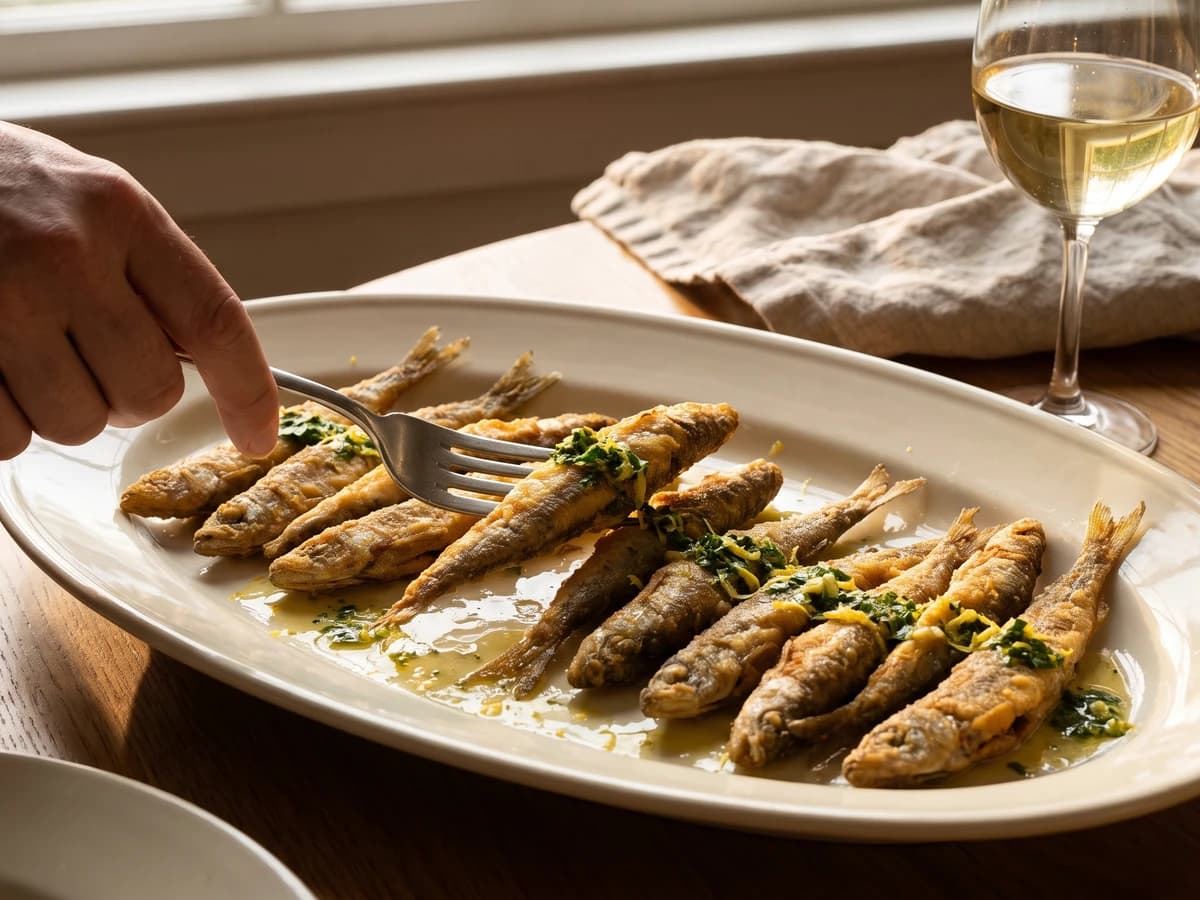
Éperlans à l’Anglaise turns small fish into a lesson in disciplined coating: boned smelts under a close, crisp crumb, pan-fried in clarified butter and finished with bright, half-melted maître d’hôtel butter.

Chef Juliette
Tiny smelts, shallot, mushrooms, white wine, gratin sauce, and fine bread raspings meet a fierce oven, where the fish must turn tender in the same breath the buttered crust bronzes.