
Chef Juliette
John Dory (St. Pierre)
John Dory has the delicacy of sole and the firmness of turbot. A light flouring, a quick butter sauté, and nut-brown beurre noisette show exactly why looks never mattered.
A cooking platform built around craft, culture, and the stories behind what we eat.

Created by Chef Juliette
Based on No. 1638, Poulet de Grains aux Fonds d’Artichauts, from Le Guide Culinaire (1907) by Auguste Escoffier
A young chicken bronzed in butter, cocotte-cooked with five raw artichoke bottoms, and finished with veal jus and lemon: a spare classical formula whose success rests on timing, gentle heat, and a proper fond.
Poulet de Grains aux Fonds d’Artichauts (grain-fed chicken with artichoke bottoms) teaches cuisson en cocotte, gentle covered cooking in a heavy pot. The one true thing to know is this: the artichoke bottoms go in raw, freshly sliced and immediately coated in butter, so they cook in the bird’s juices rather than waiting at the edge as a garnish.
The formula assumed a saucier on staff and veal stock never off the fire, which meant a spoonful of concentrated veal gravy was always ready. It needed no salamander because the bird is browned before the covered cooking, not gratinéed afterward. At home, a good prepared veal jus replaces the standing stockpot, while one cocotte handles both browning and oven cooking. The separate sauté pan and sauce station are brigade scaffolding, so they go; one young chicken and five artichoke bottoms remain because that proportion is the dish. Four generous portions, one cook, one stove, one evening.
When it is right, the bird is butter-gold, the artichokes are tender without collapsing, and the small quantity of sauce gleams rather than floods the platter. Lemon should brighten the final spoonful without announcing itself. Do not trim the artichokes until the chicken is browned and the oven awaits it. That timing matters most.
Poulet de grains aux fonds d’artichauts belongs to the Parisian classical table, where cocotte preparations paired tender young poultry with carefully trimmed vegetables and a concentrated meat jus. Poulet de grains describes the feeding and quality of the bird, not a grain garnish, while fonds d’artichauts means the fleshy bases freed from their leaves and choke, not quartered canned hearts. Though artichokes suggest the Mediterranean to some cooks, the butter and veal-gravy finish place this preparation in the national classical kitchen rather than Provençal olive-oil cookery.
Quantity
1, 3½ pounds (1.6 kg)
giblets removed and skin thoroughly dried
Quantity
5, yielding about 10 to 12 ounces (285 to 340 g) of trimmed raw bottoms
leaves, stems, and chokes removed
Quantity
4 tablespoons (60 ml / 57 g)
divided
Quantity
1¾ teaspoons (9 ml / 10 g)
divided
Quantity
½ teaspoon (2.5 ml / 1 g)
Quantity
1 tablespoon (15 ml / 16 g)
preferably a good prepared unsalted veal jus
Quantity
6 to 8 drops (about 0.6 ml / 0.6 g), plus additional drops only if needed
added drop by drop
| Ingredient | Quantity |
|---|---|
| young whole chicken, preferably grain-fedgiblets removed and skin thoroughly dried | 1, 3½ pounds (1.6 kg) |
| large fresh globe artichokesleaves, stems, and chokes removed | 5, yielding about 10 to 12 ounces (285 to 340 g) of trimmed raw bottoms |
| unsalted butterdivided | 4 tablespoons (60 ml / 57 g) |
| fine sea saltdivided | 1¾ teaspoons (9 ml / 10 g) |
| freshly ground black pepper | ½ teaspoon (2.5 ml / 1 g) |
| concentrated veal gravypreferably a good prepared unsalted veal jus | 1 tablespoon (15 ml / 16 g) |
| fresh lemon juiceadded drop by drop | 6 to 8 drops (about 0.6 ml / 0.6 g), plus additional drops only if needed |
Heat the oven to 350°F (180°C), with a rack in the lower-middle position. Tuck the chicken’s wing tips beneath it, then season the cavity and exterior with 1½ teaspoons (7.5 ml / 8.5 g) of the salt and all the pepper. The skin must be dry before it meets the butter. Moisture blocks browning, and the fond from that browning supplies the backbone of this very small sauce.
Melt 2 tablespoons (30 ml / 28 g) of the butter in a 5 to 6-quart (4.7 to 5.7-liter) cocotte over medium heat. When the foam subsides, lay in the chicken and brown it patiently on the breast, both leg sides, and the back, turning with tongs and a wooden spoon for support. Allow 10 to 14 minutes altogether. You want an even golden bronze, not scorched mahogany. If the butter turns black or smells bitter, lift out the chicken, wipe away the burnt solids, and continue with 1 tablespoon of the reserved butter. Ça se rattrape. A little less butter on the artichokes is better than bitterness in the sauce. Transfer the browned bird to a plate and pull the cocotte off the heat.
Add the remaining butter to the warm cocotte and let it melt off the heat. Working with one artichoke at a time, pull away the leaves, cut the stem flush with the base, and pare off every tough green leaf base until a smooth pale disk remains. Scoop out the fuzzy choke completely with a teaspoon. Slice the raw bottom across into pieces ¼ inch (6 mm) thick, dropping them directly into the melted butter and turning them to coat before trimming the next artichoke. Season with the remaining ¼ teaspoon (1.25 ml / 1.5 g) salt. If a cut surface tans slightly, do not discard it. Ça se rattrape: coat it at once, keep moving, and the final drops of lemon will restore freshness. Do not soak the slices, because water prevents the butter from clinging properly.
Spread the buttered artichoke slices across the cocotte floor and around the sides, then settle the chicken breast-side up among them. Cover tightly and cook in the oven for 50 minutes before testing. Continue for another 5 to 15 minutes as needed, until the thickest part of the thigh reaches at least 165°F (74°C) without the thermometer touching bone and a knife slips easily through an artichoke slice. Add no liquid. The covered pot traps the bird’s own juices, and cooking the raw artichokes with the chicken is the method that must stay. If the chicken finishes before the artichokes, lift it to a warm platter and return the covered cocotte to the oven for 5 to 10 minutes. If the artichokes finish first, lift them gently with a slotted spoon and let the bird continue.
Transfer the chicken and artichokes to a warm platter, handling the tender slices gently, and rest the bird for 10 minutes. Set the uncovered cocotte over medium heat. If it holds more than about ¼ cup (60 ml) of thin chicken juices, reduce them until only a shallow, concentrated layer remains, scraping the fond into the liquid. Lower the heat, add the concentrated veal gravy, and stir for 30 to 60 seconds, just until the juices turn glossy and lightly coat a spoon. This is a small jus, not a gravy boat. If it separates into clear fat and dark liquid, take the pot off the heat and whisk in a teaspoon of the juices collected beneath the resting chicken, or a teaspoon of warm water. Ça se rattrape.
Take the cocotte off the heat and add 6 to 8 drops of lemon juice. Taste before adding another drop. The lemon should lift the butter and artichoke, never turn the sauce sour. Return the artichoke slices to the jus and turn them once to glaze. Carve the rested chicken into serving pieces, arrange them generously with the artichokes, and spoon over every drop of the sauce. À table!
1 serving (about 290g)
Culinary guides, cultural storytelling, and the editorial depth that makes cooking meaningful.
Discover Culinary ExplorerChef Juliette
John Dory has the delicacy of sole and the firmness of turbot. A light flouring, a quick butter sauté, and nut-brown beurre noisette show exactly why looks never mattered.

Chef Juliette
Fresh haddock proves its delicacy in the meunière pan: a fine flour crust, moist pearly flakes, and beurre noisette sharpened with lemon and parsley, ready from one skillet in half an hour.
Chef Juliette
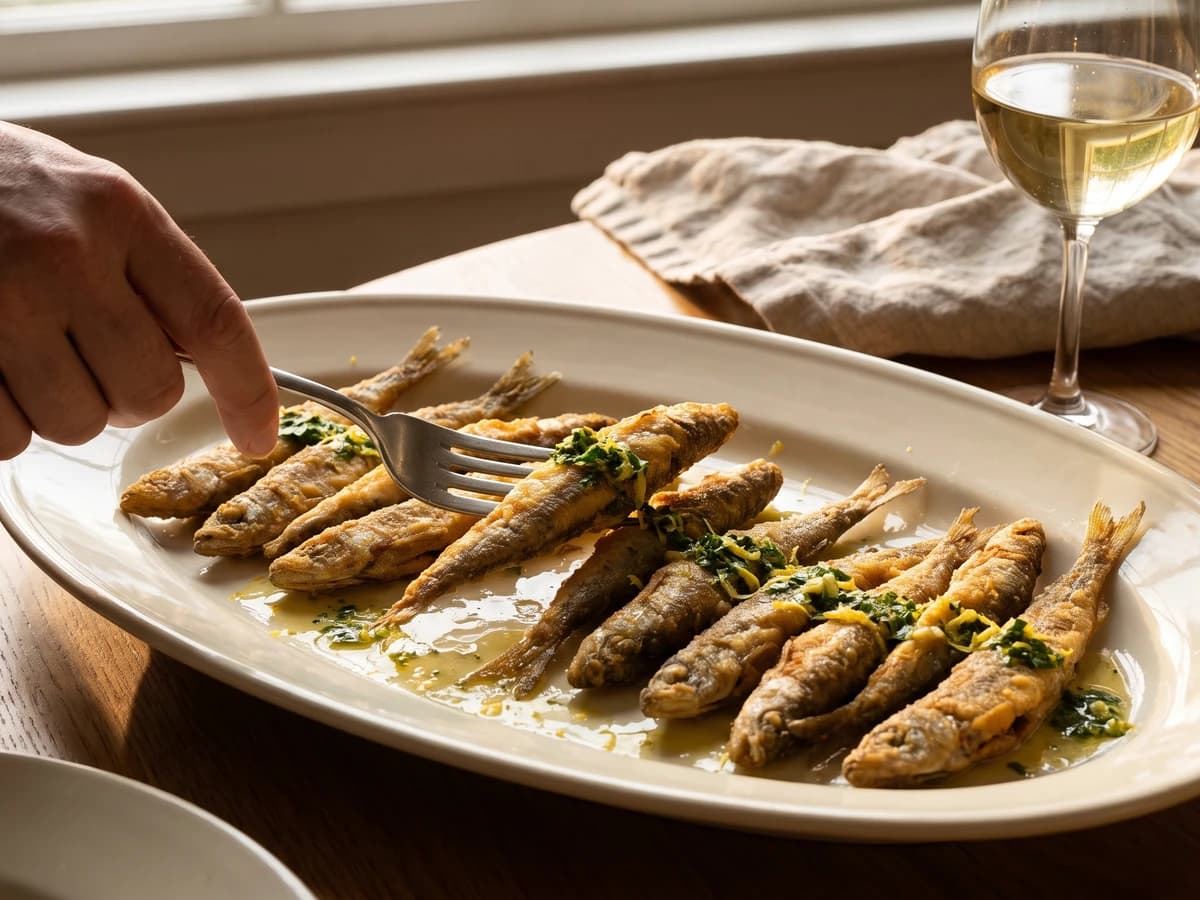
Éperlans à l’Anglaise turns small fish into a lesson in disciplined coating: boned smelts under a close, crisp crumb, pan-fried in clarified butter and finished with bright, half-melted maître d’hôtel butter.

Chef Juliette
Tiny smelts, shallot, mushrooms, white wine, gratin sauce, and fine bread raspings meet a fierce oven, where the fish must turn tender in the same breath the buttered crust bronzes.