
Chef Juliette
John Dory (St. Pierre)
John Dory has the delicacy of sole and the firmness of turbot. A light flouring, a quick butter sauté, and nut-brown beurre noisette show exactly why looks never mattered.
A cooking platform built around craft, culture, and the stories behind what we eat.
Created by Chef Juliette
Based on No. 1613, Suprêmes de Volaille à la Polignac, from Le Guide Culinaire (1907) by Auguste Escoffier
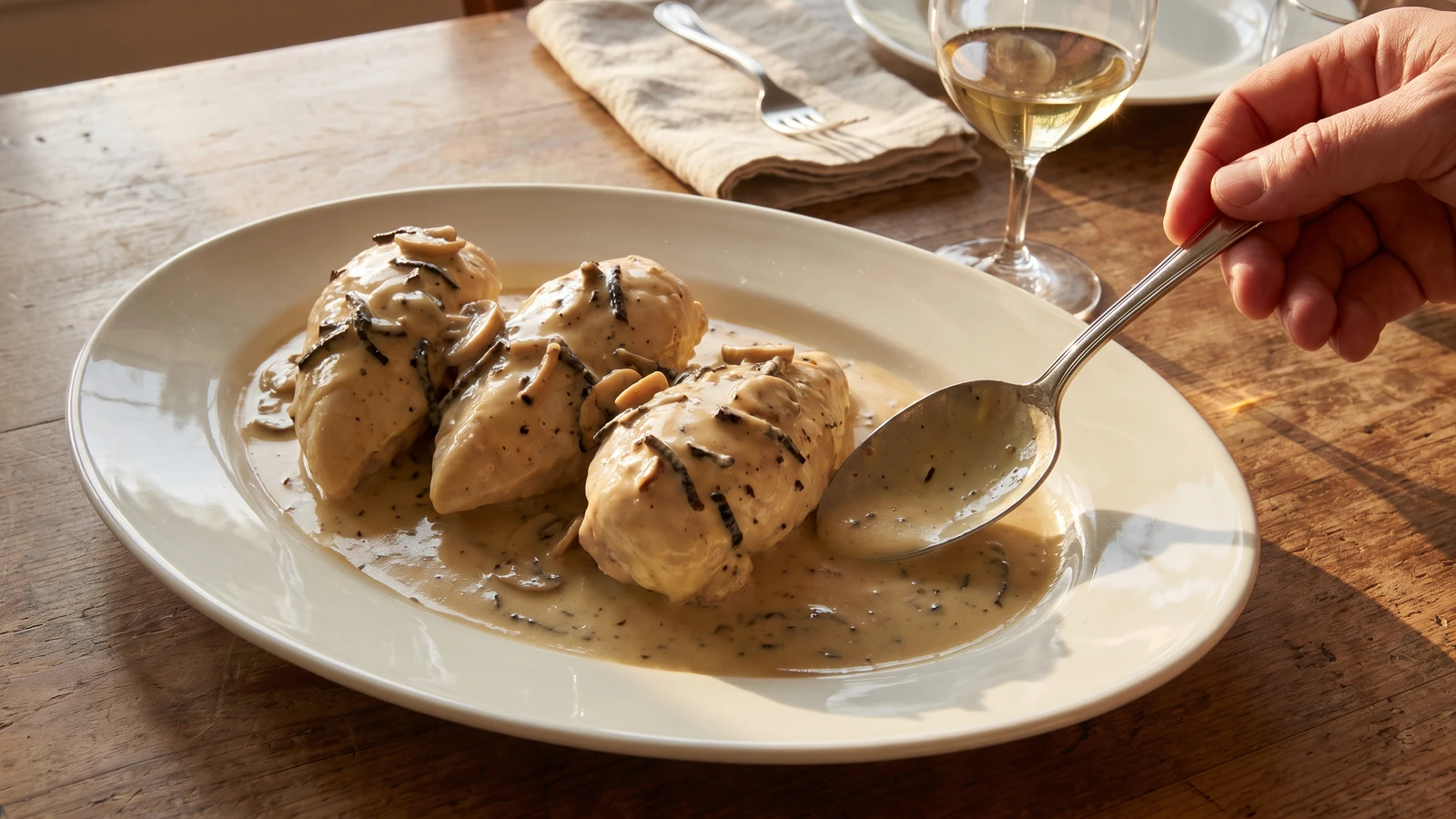
Dry-poached chicken suprêmes stay pale and tender beneath sauce suprême, its ivory gloss threaded with black truffle and mushroom. The chicken whispers, the sauce speaks, and careful heat makes the dish.
Suprêmes de Volaille à la Polignac (dry-poached chicken breast with truffle and mushroom sauce suprême) teaches a hard, useful lesson: when the garnish is quiet and the chicken is cooked without liquor, the sauce has nowhere to hide. Suprême means the best breast fillet, and here it must remain pale, tender, and juicy beneath an ivory sauce carrying an exact julienne of mushroom and black truffle, cut into fine matchsticks. The one true thing before you touch a pan is this: the sauce is the dish.
The original entry assumed a saucier beside you, finished poultry stock never off the fire, and enough prepared sauce suprême for brigade service. A salamander never enters this dish, and we won't add one for theater. At home, we build one small velouté from strong chicken stock, finish only what four suprêmes need with cream and cold butter, and use a covered sauté pan with buttered parchment for the dry poach. That trims the brigade's scaffolding, not the dish. The pale roux, the reduction, the cream, and the julienne stay because they are the dish. One cook, one stove, one evening.
You are looking for restraint, not austerity: no wine, no Cognac, no browned surface, only tender chicken, a glossy sauce, the earthiness of mushroom, and the perfume of truffle. The last reduction matters most. Stop at nappe, when the sauce coats the back of a spoon but still falls from it in a soft ribbon; the butter and garnish will tighten it once more.
Suprêmes de Volaille à la Polignac belongs to the Parisian grand-kitchen repertoire of named à la dishes, not to the domestic cooking of Polignac in the Velay. It traveled through grand dining rooms and private-house kitchens as a recognizable service formula: the finest breast fillets cooked without liquor, then coated with sauce suprême carrying a precise julienne of truffle and mushroom. The Polignac title reflects the canon's custom of honoring prominent houses at the dining table; the method itself is classical poultry cookery, not a regional Polignac larder.
Quantity
4 fillets (about 1½ lb / 680 g total)
Quantity
1 teaspoon (5 ml / 6 g)
divided
Quantity
¼ teaspoon (1.25 ml / 0.6 g)
divided
Quantity
2 tablespoons (30 ml / 28 g)
softened
Quantity
2 tablespoons (30 ml / 28 g)
Quantity
3½ tablespoons (52 ml / 28 g)
Quantity
2 cups (480 ml / 480 g)
divided, with 2 tablespoons reserved
Quantity
1½ cups (360 ml / 115 g)
cut julienne-fashion
Quantity
1 tablespoon (15 ml / 14 g)
Quantity
1 small truffle (about ¾ oz / 20 g)
cut julienne-fashion
Quantity
½ cup (120 ml / 120 g)
divided, with 1 tablespoon reserved
Quantity
2 tablespoons (30 ml / 28 g)
cut into small cubes
| Ingredient | Quantity |
|---|---|
| skinless, boneless chicken breast fillets | 4 fillets (about 1½ lb / 680 g total) |
| fine sea saltdivided | 1 teaspoon (5 ml / 6 g) |
| ground white pepperdivided | ¼ teaspoon (1.25 ml / 0.6 g) |
| unsalted butter for dry-poachingsoftened | 2 tablespoons (30 ml / 28 g) |
| unsalted butter for the roux | 2 tablespoons (30 ml / 28 g) |
| all-purpose flour | 3½ tablespoons (52 ml / 28 g) |
| strong unsalted chicken stockdivided, with 2 tablespoons reserved | 2 cups (480 ml / 480 g) |
| white button mushroomscut julienne-fashion | 1½ cups (360 ml / 115 g) |
| unsalted butter for the mushrooms | 1 tablespoon (15 ml / 14 g) |
| fresh or whole preserved black trufflecut julienne-fashion | 1 small truffle (about ¾ oz / 20 g) |
| heavy creamdivided, with 1 tablespoon reserved | ½ cup (120 ml / 120 g) |
| cold unsalted buttercut into small cubes | 2 tablespoons (30 ml / 28 g) |
Heat the oven to 325°F (165°C). Wipe the mushrooms clean, slice them thinly, then stack the slices and cut them julienne-fashion into match-shaped rods about 1 inch (2.5 cm) long. Cut the truffle the same way and keep it tightly covered so its perfume stays where it belongs. Fold the thin end of each suprême underneath itself rather than pounding the meat; an even shape cooks evenly while preserving the fillet's texture. Cut a round of parchment to fit inside the covered sauté pan and butter one side with a little of the dry-poaching butter.
Melt the roux butter in the saucier over medium-low heat without letting it color. Stir in the flour and cook this roux blanc, or white roux, for 2 minutes, stirring constantly until it smells faintly of warm biscuits but remains pale. Hold back 2 tablespoons of stock, then whisk the rest into the roux a little at a time. Bring it just to a boil, lower the heat, and simmer gently for 18 to 20 minutes, skimming the surface and stirring along the pan floor. The velouté, the pale stock-bound foundation of sauce suprême, should reduce to about 1½ cups (360 ml / 360 g). If the roux forms lumps, take the pan off the heat and whisk firmly, then pass the sauce through the fine-mesh sieve. Ça se rattrape.
While the velouté simmers, melt the mushroom butter in the covered sauté pan over medium-low heat. Add the mushroom julienne with a pinch of the measured salt, cover, and let it soften in its own moisture for 2 minutes. Uncover and cook for another 3 to 4 minutes, stirring gently, until the released moisture has evaporated but the mushrooms remain pale. Transfer them to a bowl and wipe out the pan. Browning would muddy the ivory sauce; patience, not high heat.
Coat the wiped sauté pan generously with the remaining softened dry-poaching butter. Season the suprêmes on both sides with most of the remaining salt and white pepper, then arrange them rounded-side up without crowding. Lay the parchment directly against them, buttered-side down, and cover the pan tightly. Cook in the oven without stock, wine, or any other liquor for 14 to 18 minutes, checking at 12 minutes, until the thickest part of each fillet reaches 165°F (74°C). This is the dry poach: enclosed gentle heat and butter, with only the chicken's own moisture. If thinner pieces finish first, lift them onto the warm platter under the parchment while the others continue. Rest all four suprêmes for 5 minutes and save their clear juices.
Return the strained velouté to gentle heat and whisk in any clear juices released by the resting chicken. Add all but the reserved tablespoon of cream and simmer for 5 to 8 minutes, stirring often, until the sauce reaches nappe, thick enough to coat the back of a spoon while still flowing generously. If it becomes too tight, loosen it teaspoon by teaspoon with the reserved stock; if it is thin, reduce it before adding the butter. Stir in the mushroom julienne and warm it for 1 minute. Take the pan completely off the heat, fold in the truffle julienne, then whisk in the cold butter one cube at a time. Do not boil the finished sauce. If it turns oily or begins to separate, whisk the reserved cold cream in a clean bowl, add a spoonful of sauce, then rebuild the rest gradually. Ça se rattrape.
Taste the sauce and correct it with the remaining salt and white pepper. Arrange the whole suprêmes on the warmed platter with their rounded sides uppermost. Coat each one generously with sauce suprême, distributing the truffle and mushroom julienne evenly, then spoon the remaining sauce around them. Serve at once, while the sauce flows softly and its butter still gleams. À table!
1 serving (about 300g)
Culinary guides, cultural storytelling, and the editorial depth that makes cooking meaningful.
Discover Culinary ExplorerChef Juliette
John Dory has the delicacy of sole and the firmness of turbot. A light flouring, a quick butter sauté, and nut-brown beurre noisette show exactly why looks never mattered.

Chef Juliette
Fresh haddock proves its delicacy in the meunière pan: a fine flour crust, moist pearly flakes, and beurre noisette sharpened with lemon and parsley, ready from one skillet in half an hour.
Chef Juliette
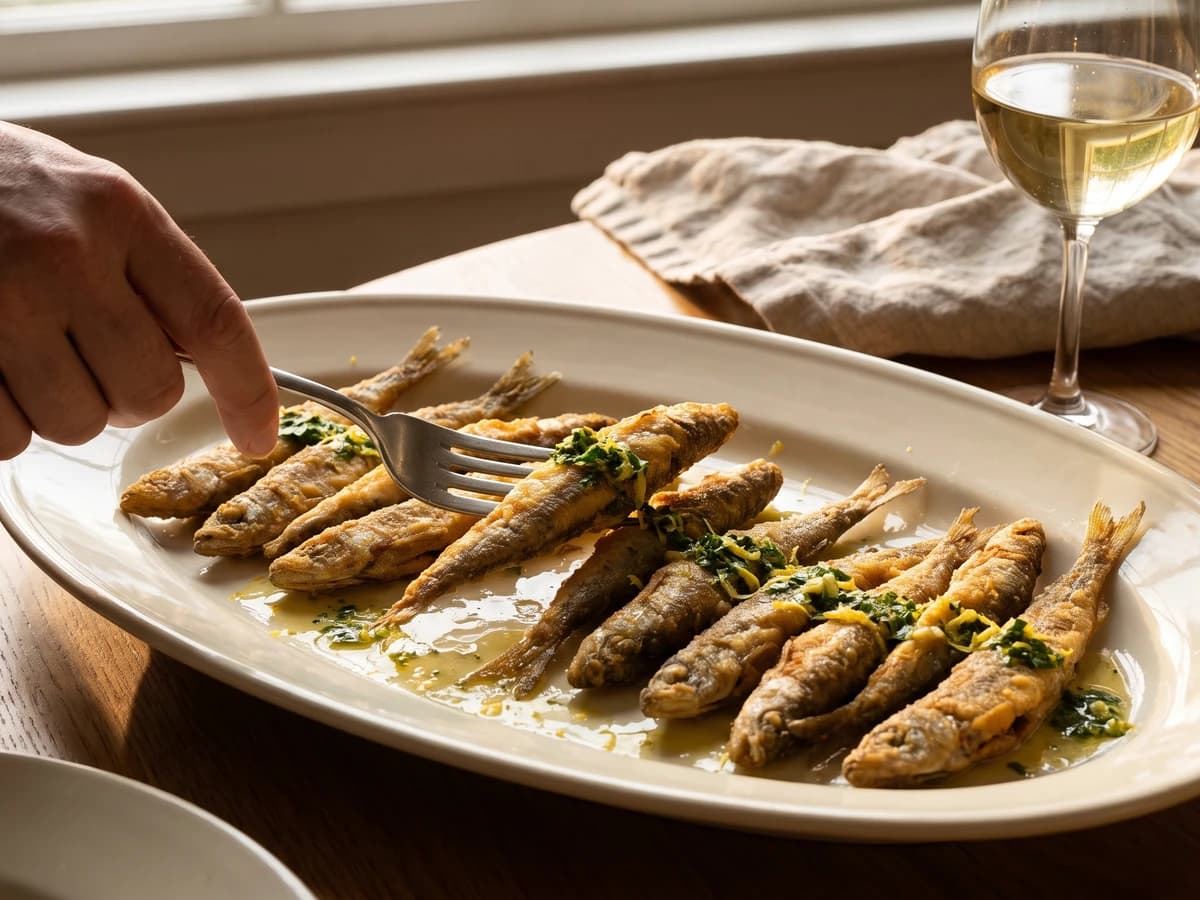
Éperlans à l’Anglaise turns small fish into a lesson in disciplined coating: boned smelts under a close, crisp crumb, pan-fried in clarified butter and finished with bright, half-melted maître d’hôtel butter.

Chef Juliette
Tiny smelts, shallot, mushrooms, white wine, gratin sauce, and fine bread raspings meet a fierce oven, where the fish must turn tender in the same breath the buttered crust bronzes.