
Chef Juliette
John Dory (St. Pierre)
John Dory has the delicacy of sole and the firmness of turbot. A light flouring, a quick butter sauté, and nut-brown beurre noisette show exactly why looks never mattered.
A cooking platform built around craft, culture, and the stories behind what we eat.
Created by Chef Juliette
Based on No. 1546, Poulet Sauté à la Doria, from Le Guide Culinaire (1907) by Auguste Escoffier
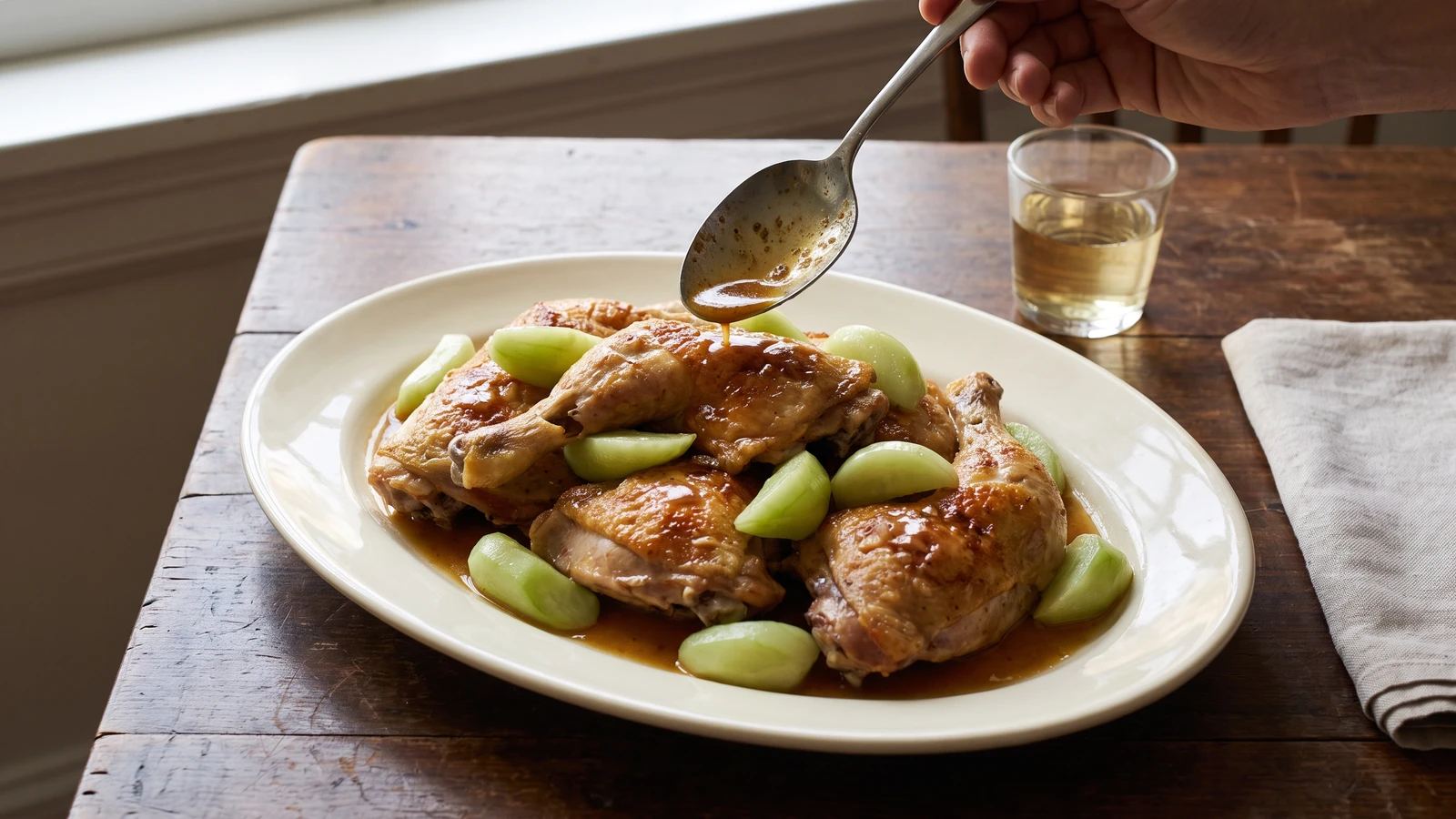
A quick classical sauté of bronzed chicken and tender cucumber finished with lemon, veal gravy, and beurre noisette, where timing the cucumber makes the difference between a glossy garnish and a watery pan.
Poulet Sauté à la Doria (sautéed chicken with cucumber) teaches a narrow, useful lesson: a watery vegetable can belong in a pan sauce if you control its cut and its cooking. Doria signals cucumber in the classical vocabulary, here shaped into small garlic cloves so every piece cooks at the same pace. The chicken must bronze; the cucumber must stay pale, tender, and intact.
The original recipe assumed a saucier on staff and veal gravy from a stockpot never off the fire. For one cook and four plates, I keep its half-pound of prepared cucumber and ounce-and-a-half of finishing butter, use one small jointed chicken, and reach for one tablespoon of prepared veal demi-glace loosened to a pourable gravy. The brigade scaffolding was the standing sauce and extra hands, so those go; the sequence, the fond, the lemon, and the beurre noisette (hazelnut-browned butter) are the dish and stay.
Cook the cucumber only while the browned chicken finishes in the oven. Give it too long and it slumps, sheds water, and steals the gloss from the sauce; catch it just tender, and the final spoonful tastes of chicken, lemon, and nut-brown butter with clean cucumber underneath. That short oven stew is the step that matters most.
Poulet Sauté à la Doria belongs to the codified Parisian grand-kitchen repertoire, not to a single provincial farmhouse tradition. In classical menu language, Doria tells the kitchen to expect cucumber, often carefully turned, and this version stews it beside the chicken before finishing the fond with veal gravy, lemon, and beurre noisette. The name traveled from brigade menus to bourgeois tables because its refinement lies in knife work and timing rather than rare ingredients.
Quantity
1, about 3½ pounds (1.6 kg)
cut into 8 serving pieces
Quantity
1 teaspoon (5 ml / 6 g), plus more if needed
Quantity
¼ teaspoon (1 ml / 0.5 g)
Quantity
1 tablespoon (15 ml / 14 g)
Quantity
1 tablespoon (15 ml / 14 g)
Quantity
1 large, yielding about 1¾ cups (415 ml / 225 g) after trimming
peeled, seeded, and tourné into garlic-clove shapes
Quantity
1 tablespoon (15 ml / 15 g)
Quantity
¼ teaspoon (1 ml / 1 g)
Quantity
3 tablespoons (45 ml / 43 g)
| Ingredient | Quantity |
|---|---|
| small whole chickencut into 8 serving pieces | 1, about 3½ pounds (1.6 kg) |
| fine sea salt | 1 teaspoon (5 ml / 6 g), plus more if needed |
| finely ground white pepper | ¼ teaspoon (1 ml / 0.5 g) |
| neutral oil, such as grapeseed oil | 1 tablespoon (15 ml / 14 g) |
| unsalted butter, for browning | 1 tablespoon (15 ml / 14 g) |
| English cucumberpeeled, seeded, and tourné into garlic-clove shapes | 1 large, yielding about 1¾ cups (415 ml / 225 g) after trimming |
| prepared veal gravy, or diluted veal demi-glace | 1 tablespoon (15 ml / 15 g) |
| fresh lemon juice | ¼ teaspoon (1 ml / 1 g) |
| unsalted butter, for the beurre noisette | 3 tablespoons (45 ml / 43 g) |
Heat the oven to 375°F (190°C) with a rack in the middle. Halve the peeled cucumber lengthwise and scrape out the wet seed channel. Cut the firm flesh into short lengths, then tourner (trim into even, tapered shapes) each piece until it resembles a plump garlic clove. Weigh the finished pieces so you have 8 ounces (225 g), then dry them well. Don't salt the cucumber now; salt draws out the very water the dish is trying to control.
Dry the chicken thoroughly and season it with the salt and white pepper. Heat the oil in a 12-inch (30 cm) ovenproof sauté pan over medium-high heat, then add the browning butter. When its foam subsides, lay in the chicken skin-side down without crowding, working in two batches if necessary. Brown until the skin is a deep, even gold, about 5 minutes, then turn and colour the second side for 2 to 3 minutes. Move each piece to a plate as it is ready. Pale chicken gives the final gravy nothing to hold onto, so let the fond form before you move it.
Lower the heat to medium and spoon away excess fat, leaving about 1 tablespoon and every browned speck of fond. Add the dry cucumber and turn it through the fat for 1 minute without letting it colour. Return the chicken skin-side up, arranging the cucumber around it, then cover and place the pan in the oven. Check after 15 minutes and cook only until the breast reaches 165°F (74°C), the legs reach at least 170°F (77°C), and the cucumber yields to a knife while holding its shape, about 15 to 20 minutes. If the cucumber is ready before the chicken, lift it out with a slotted spoon and keep it warm while the bird finishes. Ça se rattrape; leaving it in would turn it to water.
While the chicken finishes, melt the remaining 3 tablespoons of butter in a small, light-coloured saucepan over medium heat. Swirl as it foams; when the foam thins, the milk solids turn amber, and the butter smells distinctly of toasted hazelnuts, remove it from the heat and pour it into a heatproof cup to stop the cooking. If it smells acrid or the specks turn black, begin again. Burnt butter cannot be reasoned with.
Transfer the cooked chicken to a warm platter and arrange the cucumber over and around it. Set the sauté pan over medium-high heat. If the cucumber and chicken have left more than 2 tablespoons of liquid, boil it down until it looks lightly syrupy and the fond begins to show again. Déglacer (loosen the browned fond) with the prepared veal gravy and lemon juice, scraping the pan thoroughly for 30 to 45 seconds. This is the swilling liquor of the original recipe, concentrated rather than abundant.
Take the pan off the heat and pour in the warm beurre noisette, swirling until the veal gravy, lemon, fond, and butter gather into a glossy liquor. Taste before adding more salt. If the butter separates into greasy streaks, whisk in 1 teaspoon of hot water off the heat until the gloss returns. Spoon every drop over the chicken and cucumber. The sauce should lacquer the pieces and pool modestly beneath them, not drown the platter. À table!
1 serving (about 270g)
Culinary guides, cultural storytelling, and the editorial depth that makes cooking meaningful.
Discover Culinary ExplorerChef Juliette
John Dory has the delicacy of sole and the firmness of turbot. A light flouring, a quick butter sauté, and nut-brown beurre noisette show exactly why looks never mattered.

Chef Juliette
Fresh haddock proves its delicacy in the meunière pan: a fine flour crust, moist pearly flakes, and beurre noisette sharpened with lemon and parsley, ready from one skillet in half an hour.
Chef Juliette
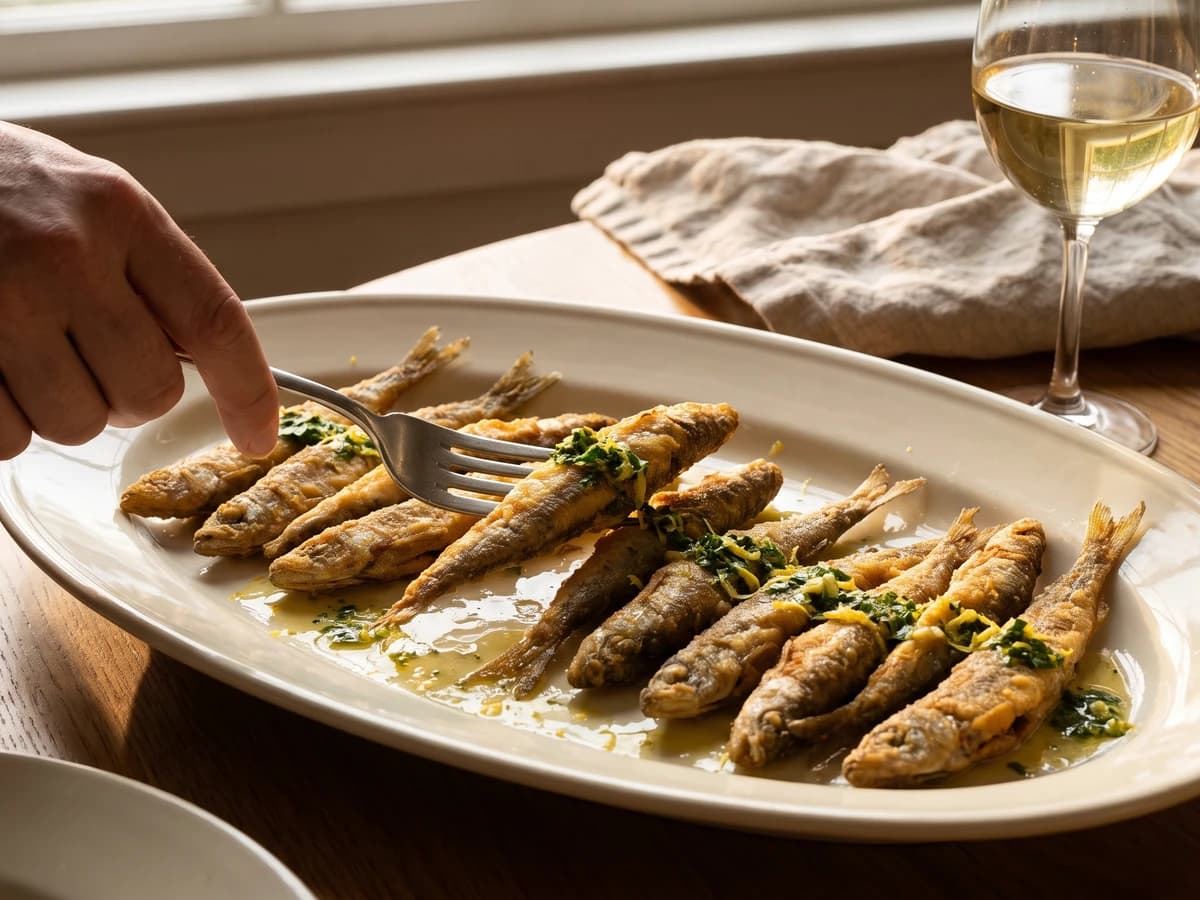
Éperlans à l’Anglaise turns small fish into a lesson in disciplined coating: boned smelts under a close, crisp crumb, pan-fried in clarified butter and finished with bright, half-melted maître d’hôtel butter.

Chef Juliette
Tiny smelts, shallot, mushrooms, white wine, gratin sauce, and fine bread raspings meet a fierce oven, where the fish must turn tender in the same breath the buttered crust bronzes.