
Chef Juliette
John Dory (St. Pierre)
John Dory has the delicacy of sole and the firmness of turbot. A light flouring, a quick butter sauté, and nut-brown beurre noisette show exactly why looks never mattered.
A cooking platform built around craft, culture, and the stories behind what we eat.

Created by Chef Juliette
Based on No. 1532, Poulets Sautés, from Le Guide Culinaire (1907) by Auguste Escoffier
The master sauté for poultry: jointed chicken coloured hard in clarified butter, cooked piece by piece to tenderness, then reunited with a pan sauce made from every bronze trace of fond.
Poulets Sautés (sautéed chicken) is the master method beneath a whole family of garnished chicken sautés: colour a jointed bird in clarified butter, finish each piece only until tender, then déglacer the pan, dissolving the fond with liquid. The one true thing is this: the bronze film on the pan floor is not debris. It is the sauce, so brown boldly without letting it turn black. C'est la même grammaire.
The source entry assumed a medium, fleshy chicken à la Reine, eviscerated and jointed at the stove, a stockpot never off the fire, and a saucier ready with whatever sauce the later variation required. It called for no salamander. At home, one tender market chicken, a broad lidded skillet, and good gelatin-rich stock do the work. Because this master entry cites no supplementary sauce, the standalone version stops with stock reduced over the fond and a little cold butter for the body a service stock would have supplied. No absent formula is invented. One cook, one stove, one evening.
The exact service jointing, feet, claws, and covered entrée dish were brigade scaffolding, so they can go. The back and wingtips enrich the reduction instead of forming a bony layer beneath the meat. Hard colouring, staggered removal of the tender pieces, swilling the pan, and reducing the liquor are the dish itself, and they stay. Watch the fond while the chicken colours: chestnut brown and roasted-smelling is right; bitter-black is too far.
Poulets Sautés belong to the cuisine bourgeoise and the classical service kitchens of Paris, although the method became national rather than the property of one region. Household cooks and staffed kitchens shared the same sequence, while the latter multiplied it into garnished variations by adding prepared sauces after the pan was swilled. The term chicken à la Reine names a medium, fleshy, tender class of bird suited to quick cooking, not a royal garnish; likewise, Sauté here means browned in a pan and finished under cover, not continuously tossed over fierce heat.
Quantity
1 (3¾ to 4 pounds / 1.7 to 1.8 kilograms)
cut into 8 bone-in pieces, with the back and wingtips reserved
Quantity
1½ teaspoons (7.5 ml / 9 g)
Quantity
½ teaspoon (2.5 ml / 1 g)
Quantity
4 tablespoons (60 ml / 56 g)
Quantity
1 cup (240 ml / 240 g)
divided
Quantity
1 tablespoon (15 ml / 14 g)
cut into small pieces
| Ingredient | Quantity |
|---|---|
| whole tender chickencut into 8 bone-in pieces, with the back and wingtips reserved | 1 (3¾ to 4 pounds / 1.7 to 1.8 kilograms) |
| fine sea salt | 1½ teaspoons (7.5 ml / 9 g) |
| freshly ground black pepper | ½ teaspoon (2.5 ml / 1 g) |
| clarified butter | 4 tablespoons (60 ml / 56 g) |
| unsalted gelatin-rich chicken stockdivided | 1 cup (240 ml / 240 g) |
| cold unsalted buttercut into small pieces | 1 tablespoon (15 ml / 14 g) |
Heat the oven to 425°F (220°C). Separate the chicken into breasts, wings, thighs, and drumsticks, or ask the butcher to do it, keeping the back and wingtips for the sauce. Pat every surface thoroughly dry, then season the pieces moderately with the salt and pepper. Wet skin steams against the pan instead of colouring, so take the drying seriously.
Heat 3 tablespoons (45 ml / 42 g) of the clarified butter in a 12-inch (30 cm) oven-safe sauté pan over medium-high heat until it shimmers. Keep the remaining tablespoon nearby. Add the back, wingtips, thighs, and drumsticks, then the breasts and wings as space permits, working in two batches if the pieces cannot sit without touching. Colour them quickly and evenly, beginning skin-side down, until every piece is a strong burnished gold. Turn only when the meat releases cleanly from the pan. If the fond races from chestnut toward black, lift out the chicken and add 1 tablespoon (15 ml / 15 g) of the measured stock to dissolve the still-brown portion into a cup. Wipe away the black specks, dry the pan, and continue with the reserved clarified butter. Return the rescued liquid during deglazing. Truly black fond is bitter, so discard it rather than building the sauce upon it.
Return all the chicken pieces and browned trimmings to the pan in a single layer, cover tightly, and place the pan in the oven. After 8 minutes, begin testing the breasts and wings; transfer each to a warm plate as soon as its thickest part reaches 165°F (74°C). Continue cooking the thighs and drumsticks for 7 to 10 minutes longer, until they reach about 175°F (79°C) and feel tender beside the bone. Removing the pieces in stages is not fuss. It keeps the breast succulent while the firmer legs finish.
Move all the edible chicken to the warm plate, keeping the back and wingtips beside the pan. Pour the cooking fat into a heatproof bowl, never down the sink, while leaving every brown trace attached to the pan. Reserve 2 tablespoons (30 ml / 30 g) of the stock, then set the pan over medium-high heat and déglacer with the rest, scraping firmly with a wooden spoon until the fond dissolves. Return any rescued browning liquid and add the back and wingtips. Simmer until the stock is reduced by about half and tastes concentrated, 5 to 8 minutes, then remove and discard the bony trimmings.
Return the thighs and drumsticks to the reduced sauce and turn them at a bare simmer for 1 to 2 minutes. If the sauce is still watery, remove the chicken and reduce the liquid alone; boiling cooked meat merely hardens it. Add the breasts and wings, then take the pan completely off the heat. Swirl in the cold butter until the sauce becomes glossy and lightly coats the pieces. If it looks greasy or separates, lift out the chicken and whisk in a teaspoon of the reserved cold stock. Ça se rattrape. Add more reserved stock only if the sauce has tightened too far.
Settle the thighs and drumsticks toward the bottom and centre of the pan, with the breasts and wings above them, then spoon the small quantity of concentrated sauce over every piece. Bring the sauté pan directly to the table on a sturdy trivet. This is not a chicken swimming in gravy; the sauce should cling, gleam, and gather in a shallow pool beneath it. À table!
1 serving (about 310g)
Culinary guides, cultural storytelling, and the editorial depth that makes cooking meaningful.
Discover Culinary ExplorerChef Juliette
John Dory has the delicacy of sole and the firmness of turbot. A light flouring, a quick butter sauté, and nut-brown beurre noisette show exactly why looks never mattered.

Chef Juliette
Fresh haddock proves its delicacy in the meunière pan: a fine flour crust, moist pearly flakes, and beurre noisette sharpened with lemon and parsley, ready from one skillet in half an hour.
Chef Juliette
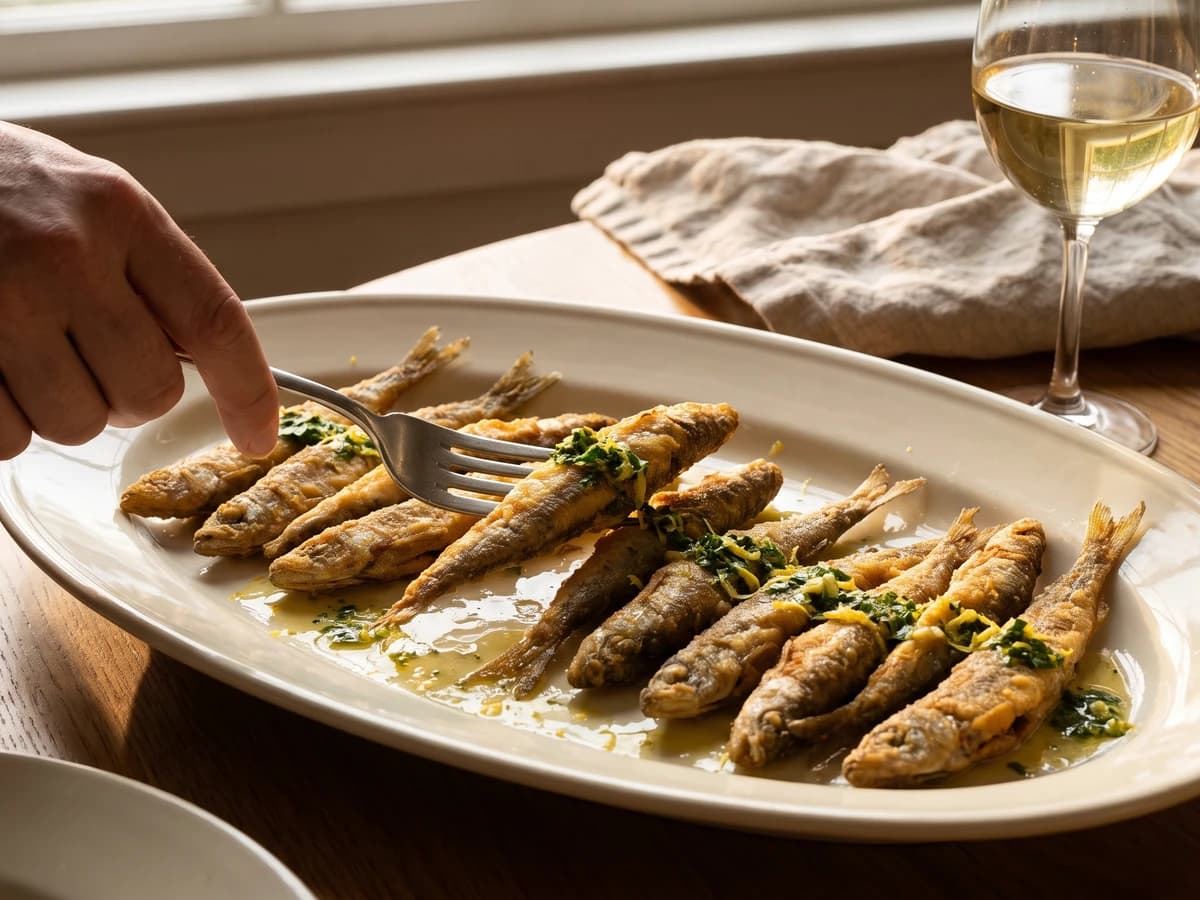
Éperlans à l’Anglaise turns small fish into a lesson in disciplined coating: boned smelts under a close, crisp crumb, pan-fried in clarified butter and finished with bright, half-melted maître d’hôtel butter.

Chef Juliette
Tiny smelts, shallot, mushrooms, white wine, gratin sauce, and fine bread raspings meet a fierce oven, where the fish must turn tender in the same breath the buttered crust bronzes.