
Chef Juliette
John Dory (St. Pierre)
John Dory has the delicacy of sole and the firmness of turbot. A light flouring, a quick butter sauté, and nut-brown beurre noisette show exactly why looks never mattered.
A cooking platform built around craft, culture, and the stories behind what we eat.

Created by Chef Juliette
Based on No. 1483, Poularde à l’Indienne, from Le Guide Culinaire (1907) by Auguste Escoffier
A whole chicken gently poached, coated in glossy curry velouté, and brought to the table with a rice timbale: proof that curry powder needs butter and patience before it needs sauce.
Poularde à l’Indienne (poached young hen with a curry-scented poultry sauce) teaches one true thing: curry powder must cook in butter before the velouté touches it. Stir raw powder into a finished sauce and it remains dusty and sharp; give it a quiet minute in foaming butter and its perfume becomes round, warm, and part of the sauce rather than something floating through it.
The brigade entry assumed a true poularde, a stockpot never off the fire, a saucier holding velouté, and another pair of hands tending the rice. At home, a plump young chicken stands in for the difficult-to-find poularde, good unsalted stock becomes richer as the bird poaches, and one saucepan makes the velouté before becoming the curry pan. Elaborate trussing and separate sauce stations were service scaffolding, so they can go. The gentle poach, the butter-cooked curry, and the separately prepared rice are the dish, so they stay. One cook, one stove, one evening.
The finished bird should be tender and pale beneath a butter-gold sauce that clings from breast to leg, with dry, distinct grains of rice standing beside it in a generous timbale. Don't chase roast color from a poached chicken. Watch the curry butter instead: that brief, fragrant minute decides the whole plate.
Poularde à l’Indienne belongs to the Parisian classical table, where the designation à l’Indienne signaled French saucework scented with curry powder rather than a dish from any single Indian region. Curry entered these kitchens through colonial trade routes and was folded into the familiar grammar of butter, roux, stock, and cream, then traveled from grand service to bourgeois dinner tables. The chicken remains gently poached and mild by design; the spice gives perfume and color to the sauce, not a claim that the dish represents Indian cooking.
Quantity
1, 3½ to 4 lb (1.6 to 1.8 kg)
giblets removed
Quantity
2 teaspoons (10 ml / 12 g)
divided
Quantity
1 teaspoon (5 ml / 3 g)
Quantity
8 cups (1.9 L / 1.9 kg)
Quantity
Up to 2 cups (475 ml / 475 g)
only as needed to cover
Quantity
½ cup (120 ml / 75 g)
sliced
Quantity
1 cup (240 ml / 100 g)
sliced and thoroughly washed
Quantity
¾ cup (180 ml / 120 g)
quartered
Quantity
½ cup (120 ml / 50 g)
sliced
Quantity
1
Quantity
3 tablespoons (45 ml / 42 g)
for the roux
Quantity
¼ cup (60 ml / 30 g)
Quantity
2 tablespoons (30 ml / 28 g)
for the curry
Quantity
1 tablespoon (15 ml / 8 g)
Quantity
½ cup (120 ml / 120 g)
Quantity
2 teaspoons (10 ml / 10 g)
Quantity
¼ teaspoon (1 ml / 0.5 g)
Quantity
3½ cups (840 ml / 650 g) Riz à l’Indienne (No. 2254)
Quantity
1 tablespoon (15 ml / 14 g)
for the rice mold
| Ingredient | Quantity |
|---|---|
| whole young chickengiblets removed | 1, 3½ to 4 lb (1.6 to 1.8 kg) |
| fine sea saltdivided | 2 teaspoons (10 ml / 12 g) |
| black peppercorns | 1 teaspoon (5 ml / 3 g) |
| unsalted chicken stock | 8 cups (1.9 L / 1.9 kg) |
| cold water (optional)only as needed to cover | Up to 2 cups (475 ml / 475 g) |
| carrotsliced | ½ cup (120 ml / 75 g) |
| leeksliced and thoroughly washed | 1 cup (240 ml / 100 g) |
| yellow onionquartered | ¾ cup (180 ml / 120 g) |
| celerysliced | ½ cup (120 ml / 50 g) |
| bouquet garni of parsley stems, thyme, and bay leaf | 1 |
| unsalted butterfor the roux | 3 tablespoons (45 ml / 42 g) |
| all-purpose flour | ¼ cup (60 ml / 30 g) |
| unsalted butterfor the curry | 2 tablespoons (30 ml / 28 g) |
| mild curry powder | 1 tablespoon (15 ml / 8 g) |
| heavy cream | ½ cup (120 ml / 120 g) |
| fresh lemon juice | 2 teaspoons (10 ml / 10 g) |
| ground white pepper | ¼ teaspoon (1 ml / 0.5 g) |
| prepared Riz à l’Indienne | 3½ cups (840 ml / 650 g) Riz à l’Indienne (No. 2254) |
| unsalted butterfor the rice mold | 1 tablespoon (15 ml / 14 g) |
Season the chicken inside and out with 1 teaspoon of the salt, then tie the legs together loosely so the bird keeps its shape without being bound like a parcel. Set it breast-side up in a snug 6-quart pot with the peppercorns, carrot, leek, onion, celery, and bouquet garni. Pour in the cold stock and only enough water to cover the bird. Bring the liquid up slowly until it barely trembles, skimming away the grey foam as it rises. Hold it between 175°F and 185°F (80°C and 85°C), turning the bird once if its breast rises above the liquid, until the breast reaches 165°F (74°C) and the thigh reaches about 170°F (77°C), usually 45 to 55 minutes after the first tremble. If the pot boils, pull it off the heat for two minutes and add a small splash of cold water before continuing gently. The chicken isn't lost, but a hard boil tightens the breast and tears the skin.
Lift the chicken carefully onto a rack set over a tray, cover it loosely, and let it rest while you make the sauce. Strain the poaching liquor through a fine sieve and skim away surface fat. Measure 2½ cups (600 ml) for the velouté and keep another cup nearby for adjustments. Taste before adding salt: if the liquor seems weak, simmer it until its chicken flavor is distinct; if it is already salty, dilute it with water rather than reducing it.
Melt 3 tablespoons of butter in a 2-quart saucepan over medium-low heat. Stir in the flour and cook this roux blanc (white roux) for 2 minutes, stirring constantly and allowing no color. Whisk in the 2½ cups of hot poaching liquor gradually, beginning with a few spoonfuls so the roux loosens smoothly before the rest goes in. Simmer gently for 10 to 12 minutes, whisking around the corners, until the raw flour taste is gone and the velouté is nappé (able to coat the back of a spoon). Pour it into a heatproof jug and wipe out the saucepan.
Melt the remaining 2 tablespoons of sauce butter in the saucepan over medium-low heat. Stir in the curry powder and cook it in the foaming butter for 60 to 90 seconds, until the aroma turns rounded and fragrant but no dark specks appear. This order is the dish. Whisk the warm velouté into the curry butter a little at a time, then add the cream and simmer gently for 5 to 8 minutes, until the Sauce Indienne returns to a glossy nappé consistency. Finish with the lemon juice, white pepper, and enough of the remaining salt to make the flavor clear. If the sauce lumps, don't pour it out. Ça se rattrape: take it off the heat, whisk in 2 tablespoons of hot poaching liquor, then pass it through the fine sieve. Loosen an over-tight sauce with more liquor; simmer a thin one a little longer.
Bring the prepared Riz à l’Indienne (No. 2254) to serving temperature according to its own entry. Butter a warm 1-quart bowl, spoon in the rice, and press just firmly enough to close large gaps without crushing the separate grains. Let it stand for 2 minutes, then invert it onto its own warm platter as the source directs, separate from the chicken. If the timbale hesitates, wrap the bowl briefly in a hot damp towel and lift again.
Remove the string from the chicken and drain any liquid from its cavity. Set the whole bird on a warm oval platter and blot away pooled juices, because water beneath the bird will thin the sauce you worked to build. Spoon the Sauce Indienne over the breast and legs in a generous, even coat, reserving the rest in a warm sauceboat. If fresh juices loosen the coating, return them to the saucepan and simmer the sauce for 30 seconds before trying again. Any small tear in the poached skin disappears beneath the velouté. Bring the chicken and its separate rice timbale to the table together, carve, and pass the extra sauce. À table!
1 serving (about 525g)
Culinary guides, cultural storytelling, and the editorial depth that makes cooking meaningful.
Discover Culinary ExplorerChef Juliette
John Dory has the delicacy of sole and the firmness of turbot. A light flouring, a quick butter sauté, and nut-brown beurre noisette show exactly why looks never mattered.

Chef Juliette
Fresh haddock proves its delicacy in the meunière pan: a fine flour crust, moist pearly flakes, and beurre noisette sharpened with lemon and parsley, ready from one skillet in half an hour.
Chef Juliette
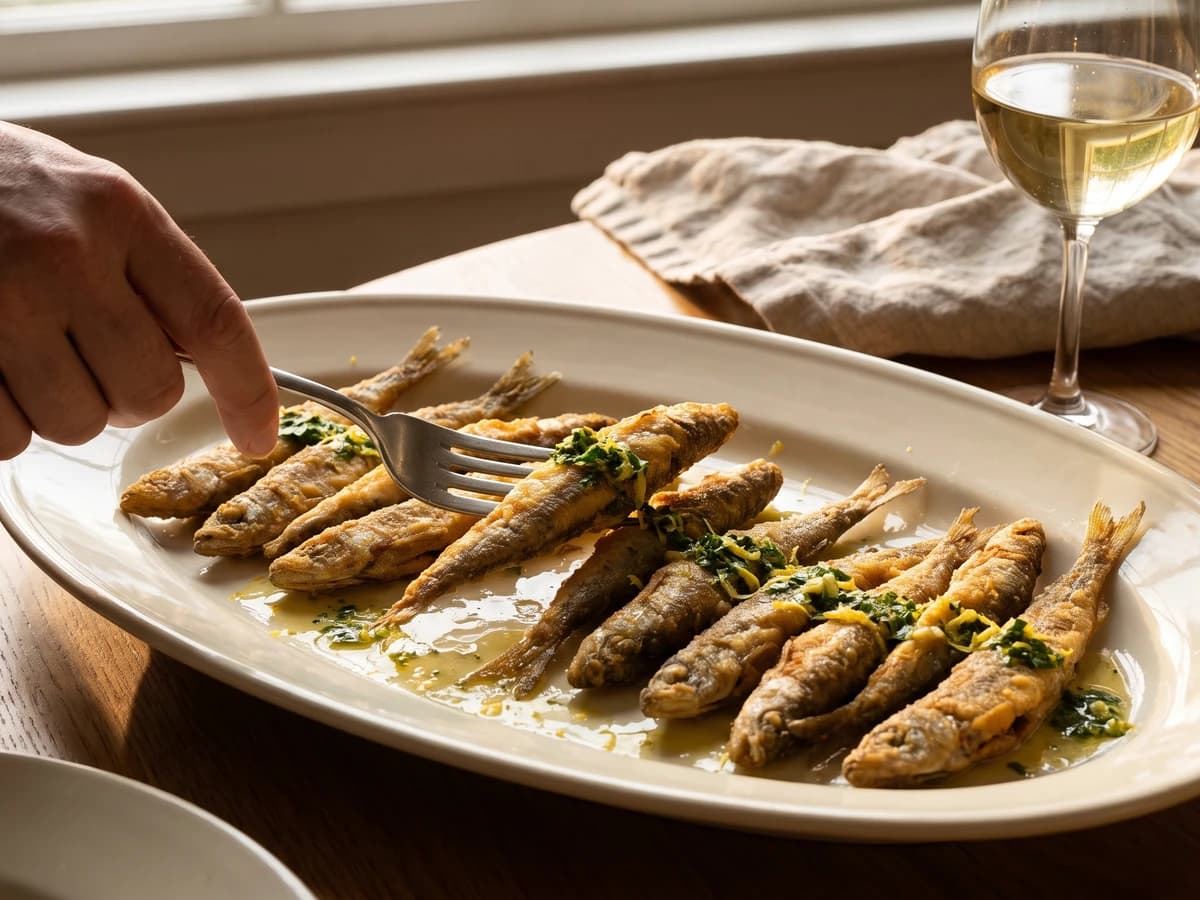
Éperlans à l’Anglaise turns small fish into a lesson in disciplined coating: boned smelts under a close, crisp crumb, pan-fried in clarified butter and finished with bright, half-melted maître d’hôtel butter.

Chef Juliette
Tiny smelts, shallot, mushrooms, white wine, gratin sauce, and fine bread raspings meet a fierce oven, where the fish must turn tender in the same breath the buttered crust bronzes.