
Chef Juliette
John Dory (St. Pierre)
John Dory has the delicacy of sole and the firmness of turbot. A light flouring, a quick butter sauté, and nut-brown beurre noisette show exactly why looks never mattered.
A cooking platform built around craft, culture, and the stories behind what we eat.

Created by Chef Juliette
Based on No. 1481, Poularde à la Hongroise, from Le Guide Culinaire (1907) by Auguste Escoffier
A butter-poêled pullet, glossy with paprika-and-onion sauce Hongroise, arrives ringed by tomato pilaf timbales. The lesson is simple and absolute: wake paprika gently in butter, because scorched paprika turns bitter at once.
Poularde à la Hongroise (butter-roasted pullet with paprika sauce) teaches the discipline of paprika. Wake it gently in warm butter and its color deepens, its sweetness opens, and the sauce gains a warm, peppery perfume. Scorch it and bitterness takes the whole pan. That is the one true thing to know before you begin.
The original recipe assumed a saucier with velouté ready, a stockpot never off the fire, and enough hands to baste a whole poularde while someone else molded the pilaf. Here, Poëlings (No. 250) is carried out in a snug lidded cocotte, the velouté is built quickly from good chicken stock, and four small ramekins replace a drawer of timbale molds. One cook, one stove, one evening.
The elaborate wrapping with pork fat and buttered paper is brigade scaffolding and can go. The butter cooking, the absence of liquid around the bird, the final coloring, the tomato folded through the pilaf, and the extra sauceboat are the dish itself, so they stay. Your deciding moment comes when the paprika meets the butter: low heat, ten seconds, then wine at once.
Poularde à la Hongroise belongs to the Parisian classical table, where à la Hongroise signaled paprika, onion, and a velouté-family sauce rather than a claim to reproduce a Hungarian household dish. Its grand-kitchen path remains visible on the platter: a butter-poêled bird, sauce presented both on the meat and in a sauceboat, and molded pilaf carrying diced tomato. As paprika became familiar in French professional kitchens, the preparation traveled into hotel dining rooms and bourgeois dining rooms while retaining its French structure and Hungarian accent.
Quantity
1 bird (about 4 lb / 1.8 kg), prepared using Poëlings (No. 250)
Quantity
2 tablespoons (30 ml / 28 g)
Quantity
2 tablespoons (30 ml / 16 g)
Quantity
2 cups (480 ml / 480 g)
warmed
Quantity
2 tablespoons (30 ml / 28 g)
Quantity
1 small onion (about 1/2 cup / 80 g)
very finely chopped
Quantity
2 teaspoons (10 ml / 5 g)
Quantity
1/2 cup (120 ml / 120 g)
Quantity
1/2 cup (120 ml / 120 g)
Quantity
2 tablespoons (30 ml / 28 g)
diced
Quantity
as needed
Quantity
1/4 teaspoon (1.25 ml / 0.6 g)
Quantity
2 tablespoons (30 ml / 28 g)
Quantity
1 small onion (about 1/2 cup / 80 g)
finely chopped
Quantity
1 cup (240 ml / 185 g)
Quantity
1 1/2 cups (360 ml / 360 g)
warmed
Quantity
1
Quantity
2 tomatoes (about 3/4 cup / 120 g)
peeled, seeded, and cut into small dice
Quantity
1 tablespoon (15 ml / 14 g)
| Ingredient | Quantity |
|---|---|
| whole poularde or plump small roasting chicken | 1 bird (about 4 lb / 1.8 kg), prepared using Poëlings (No. 250) |
| unsalted butter for the velouté | 2 tablespoons (30 ml / 28 g) |
| all-purpose flour | 2 tablespoons (30 ml / 16 g) |
| unsalted chicken stock for the saucewarmed | 2 cups (480 ml / 480 g) |
| unsalted butter for the paprika base | 2 tablespoons (30 ml / 28 g) |
| yellow onion for the saucevery finely chopped | 1 small onion (about 1/2 cup / 80 g) |
| fresh sweet Hungarian paprika | 2 teaspoons (10 ml / 5 g) |
| dry white wine | 1/2 cup (120 ml / 120 g) |
| heavy cream | 1/2 cup (120 ml / 120 g) |
| cold unsalted butter for finishingdiced | 2 tablespoons (30 ml / 28 g) |
| fine salt | as needed |
| ground white pepper | 1/4 teaspoon (1.25 ml / 0.6 g) |
| unsalted butter for the pilaf | 2 tablespoons (30 ml / 28 g) |
| yellow onion for the pilaffinely chopped | 1 small onion (about 1/2 cup / 80 g) |
| long-grain white rice | 1 cup (240 ml / 185 g) |
| unsalted chicken stock for the pilafwarmed | 1 1/2 cups (360 ml / 360 g) |
| bay leaf | 1 |
| firm plum tomatoespeeled, seeded, and cut into small dice | 2 tomatoes (about 3/4 cup / 120 g) |
| softened unsalted butter for the timbale molds | 1 tablespoon (15 ml / 14 g) |
Set the oven to 350°F (180°C). Prepare the seasoned pullet using Poëlings (No. 250), keeping that referenced preparation whole. For this four-serving scale, a snug 5-quart lidded cocotte is the honest equivalent of the deep professional vessel, and a 4-pound bird generally needs 60 to 75 minutes. Do not add liquid while it cooks; poêler means roasting gently with butter under cover, not braising. Uncover for the final coloring specified in the preparation, and begin the sauce while the bird cooks.
Melt the 2 tablespoons butter for the velouté in a medium saucepan over gentle heat. Stir in the flour and cook this blond roux, the pale butter-and-flour thickener, for 2 minutes without letting it color. Add the 2 cups warm stock a little at a time, whisking each addition smooth before the next. Simmer gently for 10 minutes, skimming any foam, until the velouté lightly coats a spoon. If small lumps form, take the pan off the heat and whisk briskly; the finished sauce will also be strained.
Melt the 2 tablespoons butter for the paprika base in a second saucepan over low heat. Add the finely chopped onion with a pinch of salt and sweat it for 6 to 8 minutes, stirring often, until soft and translucent but not browned. Pull the pan off the heat, stir in the paprika for no more than 10 seconds, then pour in the white wine immediately. If the paprika develops black flecks or an acrid smell, stop. Burned paprika cannot be diluted into obedience; discard this small base, wipe the pan, and begin it again. Ça se rattrape. Return the sound base to medium heat and reduce the wine by about two-thirds, until only a syrupy layer remains around the onion.
Whisk the hot velouté into the paprika-and-wine reduction and hold it at a bare simmer for 5 minutes. Add the cream and simmer for another 3 to 5 minutes, until the sauce nappes, coating the back of a spoon in a smooth, glossy layer. Pass it through a fine sieve into a clean saucepan. Off the heat, whisk in the cold diced butter a few pieces at a time, then season with salt and white pepper. If the sauce looks oily, whisk 1 tablespoon of cold stock in a clean bowl and add the troubled sauce gradually until it comes together. Keep it warm without boiling.
About 30 minutes before the pullet is ready, melt the pilaf butter in a lidded saucepan over medium-low heat. Sweat the chopped onion without coloring for 4 minutes, add the rice, and stir for 2 minutes until each grain looks pearly at the edges. Add the 1 1/2 cups warm stock, the bay leaf, and a measured pinch of salt. Bring it just to a boil, cover tightly, and cook over the lowest heat for 15 minutes without stirring. Take it off the heat and leave it covered for 10 minutes. If the liquid has vanished while the rice remains firm, add 2 tablespoons of stock, cover, and cook gently for another 3 minutes.
When the pullet has completed Poëlings (No. 250) and reached its safe internal temperature, transfer it to a warm board or platter and cover it loosely. Rest for 15 minutes so the juices settle into the meat. Strain and reserve any clean poëling juices; a spoonful can loosen the sauce Hongroise if needed, but do not replace the paprika sauce with ordinary roasting juices.
Remove the bay leaf and fluff the rested pilaf with a fork. Blot the tomato dice dry, then fold them through gently so they remain distinct red cubes rather than dissolving into the rice. Butter four 4-ounce (120 ml) ramekins, pack the pilaf in firmly without crushing it, and let the molds stand for 5 minutes. Wet rice or watery tomato makes a timbale slump, so if the mixture seems loose, leave it uncovered for a few minutes before molding.
Set the whole rested pullet on a warmed oval platter. Spoon enough sauce Hongroise over it to coat the skin in a glossy layer without hiding its bronze color. Invert the four tomato pilaf timbales around the bird, lifting each ramekin straight upward. Pour the remaining sauce into a warm sauceboat and send it separately, exactly as the dish requires. Present the pullet whole, then carve it at the table or just before serving. À table!
1 serving (about 580g)
Culinary guides, cultural storytelling, and the editorial depth that makes cooking meaningful.
Discover Culinary ExplorerChef Juliette
John Dory has the delicacy of sole and the firmness of turbot. A light flouring, a quick butter sauté, and nut-brown beurre noisette show exactly why looks never mattered.

Chef Juliette
Fresh haddock proves its delicacy in the meunière pan: a fine flour crust, moist pearly flakes, and beurre noisette sharpened with lemon and parsley, ready from one skillet in half an hour.
Chef Juliette
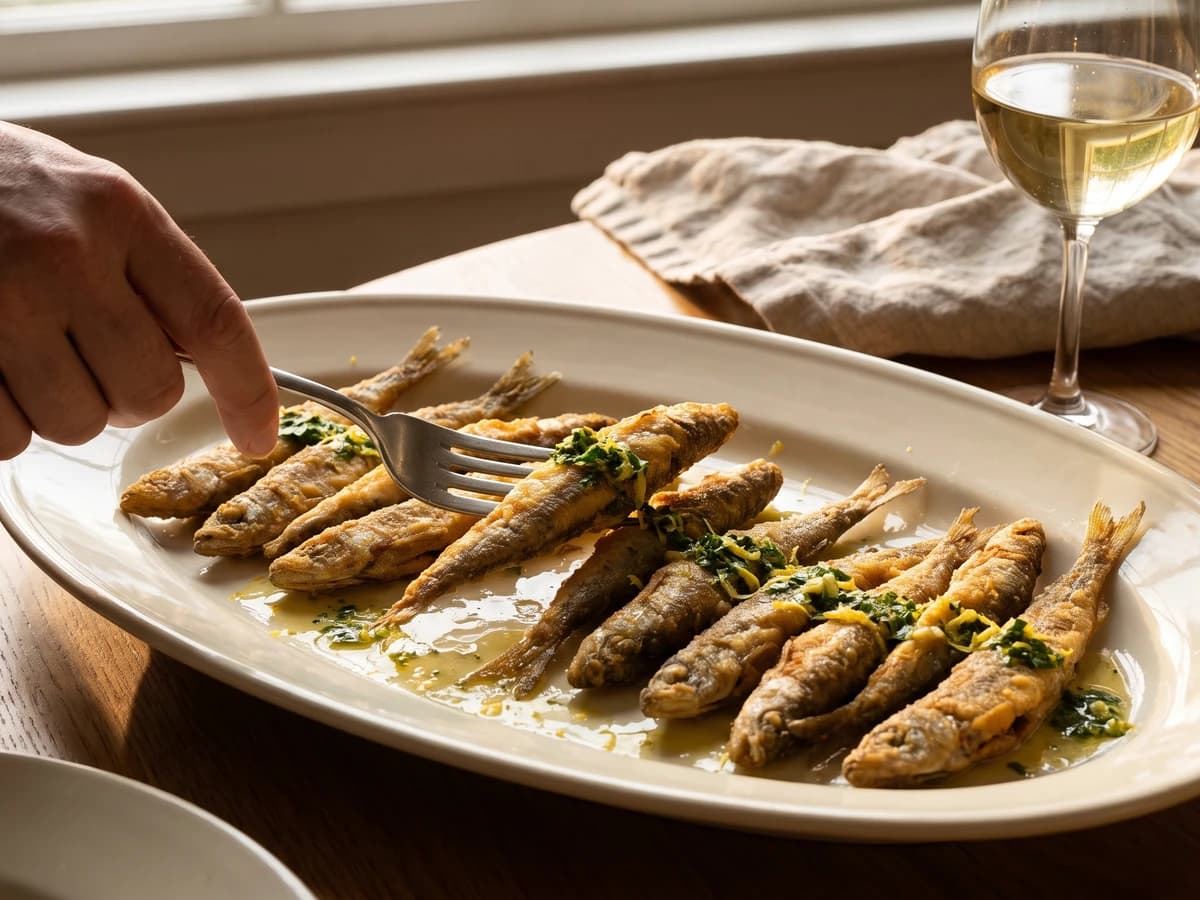
Éperlans à l’Anglaise turns small fish into a lesson in disciplined coating: boned smelts under a close, crisp crumb, pan-fried in clarified butter and finished with bright, half-melted maître d’hôtel butter.

Chef Juliette
Tiny smelts, shallot, mushrooms, white wine, gratin sauce, and fine bread raspings meet a fierce oven, where the fish must turn tender in the same breath the buttered crust bronzes.