
Chef Juliette
John Dory (St. Pierre)
John Dory has the delicacy of sole and the firmness of turbot. A light flouring, a quick butter sauté, and nut-brown beurre noisette show exactly why looks never mattered.
A cooking platform built around craft, culture, and the stories behind what we eat.
Created by Chef Juliette
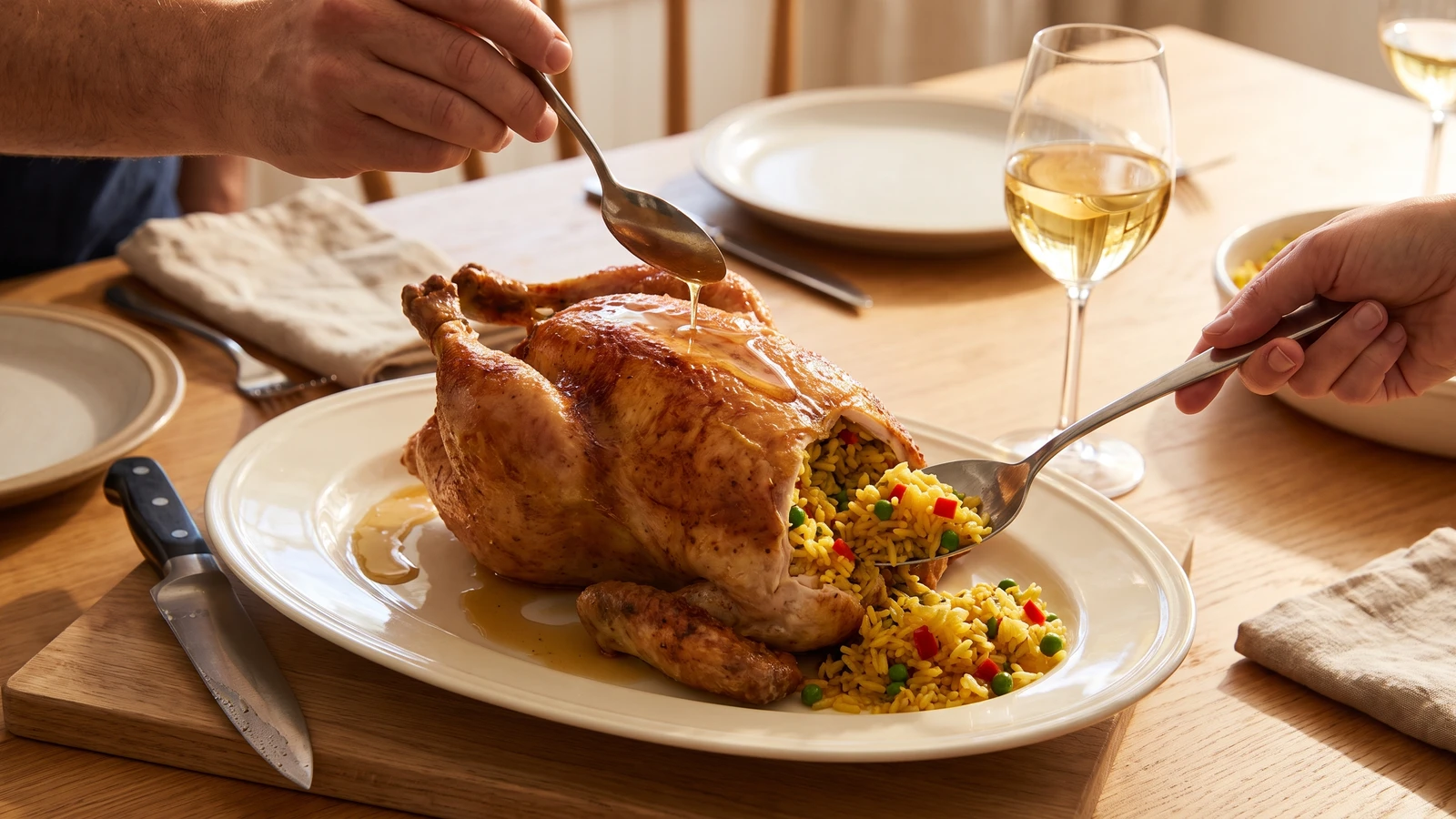
Based on No. 1480, Poularde à la Grecque, from Le Guide Culinaire (1907) by Auguste Escoffier
Poularde à la Grecque teaches concentration without disguise: a rice-stuffed bird poëled in butter, then coated with its own deeply reduced chicken stock, lightly bound with arrowroot and nothing else.
Poularde à la Grecque (rice-stuffed chicken gently roasted in butter) teaches the cleanest lesson in sauce work: arrowroot cannot create flavor. The stock must be reduced until every spoonful tastes unmistakably of chicken before it is bound, because this glaze has no roux, cream, or mother sauce behind which to hide.
The entry assumed a finished pot of Riz à la Grecque (No. 2253), a saucier on staff, stock never off the fire, a deep poëling vessel, and a salamander ready if the skin needed color. Your home equivalents are one plump chicken, a snug lidded cocotte, excellent unsalted stock infused in the roasting pot, and the broiler only if necessary. The separate saucier and bulk stockpot are brigade scaffolding and can go. The prepared rice, the dry butter cooking of Poëlings (No. 250), the stock's contact with the buttery matignon, the hard reduction, and the arrowroot binding must stay. They are the dish.
Cook gently without adding liquid, then uncover the bird so it bronzes while the rice reaches a safe, tender heat at its center. The moment that decides the plate comes later: taste the reduction before the arrowroot goes in. If it tastes thin, keep reducing. Thickness is not concentration.
Poularde à la Grecque belongs to the Parisian classical table, where named garnitures organized dishes by composition rather than claiming literal foreign ancestry. Here, à la Grecque points to the prescribed pilaf garnish, Riz à la Grecque (No. 2253), not to a Greek household preparation, while poëling protects a fine poultry bird with butter and gentle enclosed heat. It passed naturally from grand kitchens to bourgeois dinner tables because its display rests on familiar materials disciplined with unusual precision.
Quantity
1 (4 to 4½ lb / 1.8 to 2 kg), for Poëlings (No. 250)
Quantity
2 cups (475 ml / 400 g) prepared Riz à la Grecque (No. 2253)
cooled until just warm
Quantity
1¾ teaspoons (9 ml / 10 g)
Quantity
1 teaspoon (5 ml / 2 g)
Quantity
1
finely diced
Quantity
1
finely diced
Quantity
1
finely diced
Quantity
2 sprigs
Quantity
1
Quantity
6 tablespoons (90 ml / 85 g)
melted
Quantity
3 cups (710 ml / 710 g)
preferably gelatin-rich
Quantity
2 teaspoons (10 ml / 6 g)
Quantity
1 tablespoon (15 ml / 15 g)
| Ingredient | Quantity |
|---|---|
| whole poularde or plump roasting chicken | 1 (4 to 4½ lb / 1.8 to 2 kg), for Poëlings (No. 250) |
| prepared Riz à la Grecquecooled until just warm | 2 cups (475 ml / 400 g) prepared Riz à la Grecque (No. 2253) |
| fine sea salt | 1¾ teaspoons (9 ml / 10 g) |
| freshly ground black pepper | 1 teaspoon (5 ml / 2 g) |
| small yellow onionfinely diced | 1 |
| medium carrotfinely diced | 1 |
| celery stalkfinely diced | 1 |
| thyme | 2 sprigs |
| bay leaf | 1 |
| unsalted buttermelted | 6 tablespoons (90 ml / 85 g) |
| strong unsalted chicken stockpreferably gelatin-rich | 3 cups (710 ml / 710 g) |
| arrowroot | 2 teaspoons (10 ml / 6 g) |
| cold water | 1 tablespoon (15 ml / 15 g) |
Heat the oven to 325°F (165°C) with a rack in the lower-middle position. Pat the chicken thoroughly dry inside and out, then season the cavity with one-third of the salt and pepper. Spoon in the prepared Riz à la Grecque (No. 2253) without pressing it down; the rice must sit loosely so heat can reach its center. Refrigerate any excess for reheating beside the bird. Tie the legs together and tuck the wing tips underneath, then season the outside.
Scatter the onion, carrot, celery, thyme, and bay leaf across the bottom of a heavy lidded cocotte that holds the chicken snugly. This raw matignon is an aromatic bed, not a side dish, so keep the dice fine and even. Set the chicken breast-side up over the vegetables, pour four tablespoons of the melted butter across it, and cover tightly.
Cook the stuffed bird by Poëlings (No. 250) for 75 minutes, basting it every 25 minutes with the butter and juices gathering in the cocotte. Add no stock or water during this stage. Moistening now would turn the poëling into a braise and soften the flavor you are trying to concentrate. If the vegetables begin to scorch, transfer the chicken and any unburned matignon to a clean cocotte, add the reserved butter, and lower the oven slightly. Ça se rattrape.
Remove the lid, raise the oven to 400°F (200°C), and brush the bird with the remaining melted butter. Roast uncovered for 25 to 35 minutes, basting once or twice, until the skin is evenly burnished. The center of the rice must register 165°F (74°C), and the thickest part of the thigh should reach at least 170°F (77°C) without the probe touching bone. If the skin is ready before the filling, replace the lid slightly ajar and lower the oven to 350°F (175°C). If the filling is ready but the skin remains pale, give the bird one or two careful minutes under the broiler.
Transfer the chicken to a warmed platter and rest it loosely covered for 20 minutes. Reserve ¼ cup (60 ml / 60 g) of the chicken stock for adjustments, then pour the remainder into the cocotte without first removing the butter. Scrape up the browned traces and simmer the stock with the buttery matignon for 10 minutes. That contact recovers the flavor held in the fat. Strain through a fine sieve into a clean saucepan, let it settle briefly, then remove the fat carefully from the surface.
Boil the strained stock briskly until it measures about 1 cup (240 ml / 240 g) and tastes deep, clear, and unmistakably of chicken, about 12 to 20 minutes. Judge it by flavor before volume. Arrowroot supplies body, not character, so a weak reduction must stay on the heat. Once the stock tastes right, reduce the heat to a gentle simmer.
Stir the arrowroot into the cold water until perfectly smooth. Whisk half the slurry into the simmering reduction and wait 20 seconds before deciding whether it needs more. Add only enough to make a light glaze that coats the back of a spoon while remaining fluid. Do not boil it hard afterward, because prolonged boiling weakens arrowroot. If the glaze turns too thick, whisk in the reserved hot stock a spoonful at a time; if it forms small lumps, strain it once more. Ça se rattrape.
Remove the trussing string and spoon enough glaze over the whole poularde to give the burnished skin a clear amber sheen. Present it on the warmed platter, then carve and spoon the Riz à la Grecque (No. 2253) beside each portion. Coat the chicken with the remaining reduction, letting a little pool around the rice. No cream, no extra butter whisked into the finish, no decorative sauce family. Just concentration. À table!
1 serving (about 445g)
Culinary guides, cultural storytelling, and the editorial depth that makes cooking meaningful.
Discover Culinary ExplorerChef Juliette
John Dory has the delicacy of sole and the firmness of turbot. A light flouring, a quick butter sauté, and nut-brown beurre noisette show exactly why looks never mattered.

Chef Juliette
Fresh haddock proves its delicacy in the meunière pan: a fine flour crust, moist pearly flakes, and beurre noisette sharpened with lemon and parsley, ready from one skillet in half an hour.
Chef Juliette
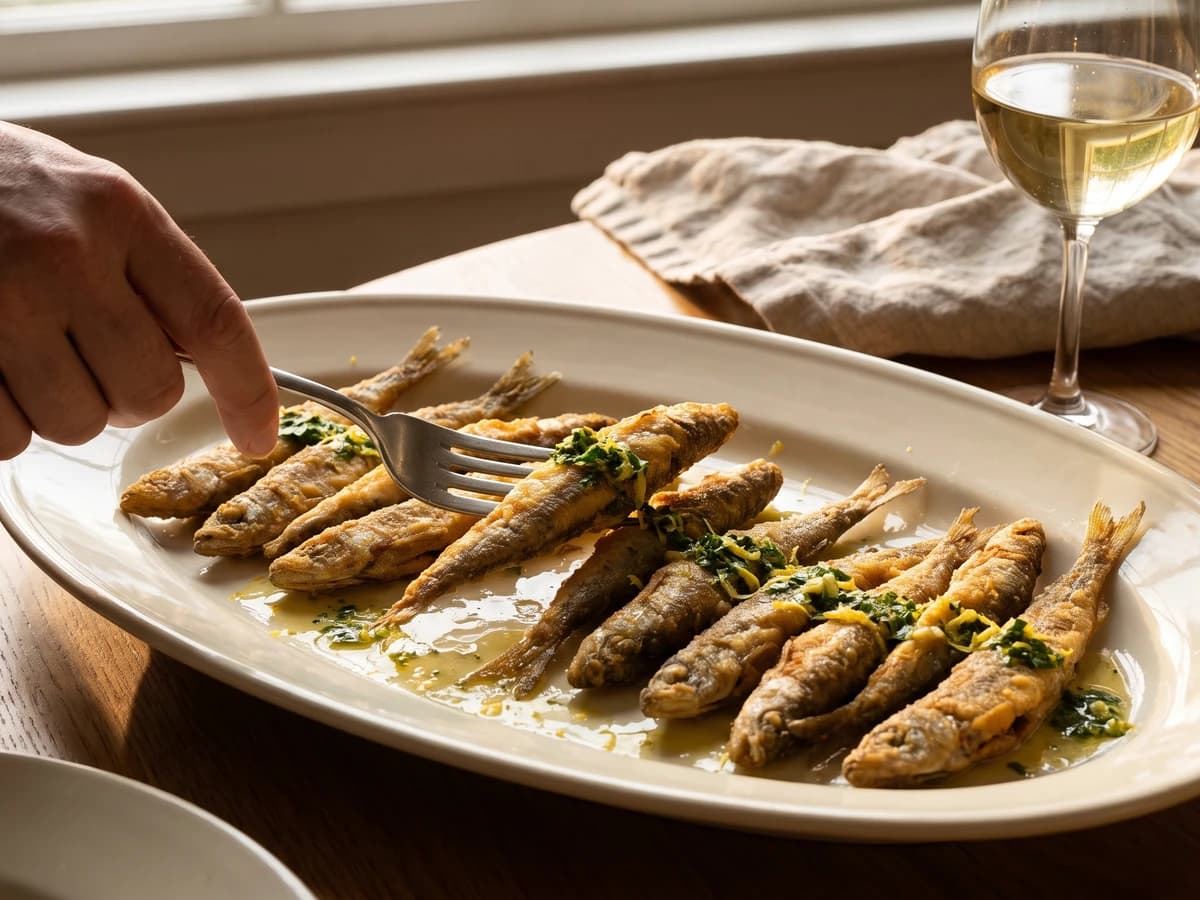
Éperlans à l’Anglaise turns small fish into a lesson in disciplined coating: boned smelts under a close, crisp crumb, pan-fried in clarified butter and finished with bright, half-melted maître d’hôtel butter.

Chef Juliette
Tiny smelts, shallot, mushrooms, white wine, gratin sauce, and fine bread raspings meet a fierce oven, where the fish must turn tender in the same breath the buttered crust bronzes.