
Chef Juliette
John Dory (St. Pierre)
John Dory has the delicacy of sole and the firmness of turbot. A light flouring, a quick butter sauté, and nut-brown beurre noisette show exactly why looks never mattered.
A cooking platform built around craft, culture, and the stories behind what we eat.

Created by Chef Juliette
Based on No. 1414, Saucisses de Francfort et de Strasbourg, from Le Guide Culinaire (1907) by Auguste Escoffier
Two fine smoked sausages, poached below a boil for ten minutes and no longer, with apple sauce and horseradish beside them, or choucroute beneath: restraint is the entire technique.
Saucisses de Francfort et de Strasbourg (Frankfurt and Strasbourg sausages) teach restraint at its most useful. The one true thing to know before touching the pan is this: the water begins at a boil, but the sausages must not continue boiling. A gentle poach warms the filling while keeping the casings taut and the meat juicy; another few careless minutes make both varieties tough.
The original entry assumes a professional service pantry, with fully cooked sausages from the charcutier, a generous saucepanful of water, and braised choucroute already waiting beside the stove. At home, a four-quart pan, eight sausages, and a small pot of prepared choucroute are the honest equivalents. Scaling down the service is scaffolding and can go. The brief poach is the dish and must stay. One cook, one stove, one evening.
When they are right, the sausages feel plump beneath the tongs, their casings smooth and intact, with no fat leaking into the water. If the water boils again, move the pan off the heat at once; ça se rattrape when caught quickly. Lowering the heat the instant the sausages enter is the step that matters most.
Saucisse de Francfort takes its name from Frankfurt, while saucisse de Strasbourg belongs to Strasbourg and the Alsatian charcuterie tradition; French manuals paired them because both are finely made, lightly smoked cooked sausages suited to the same brief poach. Their pairing does not erase their separate homes: the Frankfurt style traveled into the French classical pantry through charcuterie, while the Strasbourg sausage remained tied to the Alsatian table. Braised choucroute is therefore the natural accompaniment, though grated horseradish and apple sauce preserve the sharper and sweeter condiments long served with smoked sausages along France's eastern border.
Quantity
4 (about 12 oz / 340 g)
Quantity
4 (about 12 oz / 340 g)
Quantity
10 cups (2.4 L / 2.4 kg)
Quantity
4 cups (950 ml / 900 g)
heated
Quantity
1 cup (240 ml / 245 g)
served separately
Quantity
1/4 cup (60 ml / 30 g)
finely grated and served separately
| Ingredient | Quantity |
|---|---|
| fully cooked saucisses de Francfort | 4 (about 12 oz / 340 g) |
| fully cooked saucisses de Strasbourg | 4 (about 12 oz / 340 g) |
| water | 10 cups (2.4 L / 2.4 kg) |
| prepared braised choucrouteheated | 4 cups (950 ml / 900 g) |
| unsweetened apple sauce (optional)served separately | 1 cup (240 ml / 245 g) |
| fresh horseradish (optional)finely grated and served separately | 1/4 cup (60 ml / 30 g) |
Warm the prepared braised choucroute in a covered saucepan over the gentlest heat, turning it occasionally so the bottom does not catch. Keep its braising juices with it; if it seems dry, loosen it with a spoonful of the measured water. Put the apple sauce and grated horseradish into separate small dishes. The choucroute is a finished accompaniment here, so keep its braise whole rather than folding another recipe into this brief preparation.
Pour the water into a wide saucepan with enough room for all eight sausages to lie without crowding. Bring it to a full boil. Have the sausages and a timer beside the stove before proceeding, because the ten-minute limit begins as soon as they enter.
Lower the saucisses de Francfort and saucisses de Strasbourg carefully into the boiling water with tongs, then immediately reduce the heat to its lowest setting. The surface should settle to the faintest tremble, about 175°F / 80°C, with no rolling bubbles. Poach for 8 to 10 minutes and never longer. If the water returns to a boil, move the pan off the burner until it calms, then continue over lower heat; ça se rattrape. If one casing splits, lift that sausage out at once and tuck it beneath the choucroute when serving rather than cooking the others longer.
Lift the sausages from the water with tongs or a wire skimmer, taking care not to pierce them, and let them drain briefly on a clean towel. Spread the hot choucroute over a warm platter and arrange the sausages on top. Bring the grated horseradish and apple sauce separately so each person can choose, but let the choucroute remain the generous foundation. Serve at once. À table!
1 serving (about 465g)
Culinary guides, cultural storytelling, and the editorial depth that makes cooking meaningful.
Discover Culinary ExplorerChef Juliette
John Dory has the delicacy of sole and the firmness of turbot. A light flouring, a quick butter sauté, and nut-brown beurre noisette show exactly why looks never mattered.

Chef Juliette
Fresh haddock proves its delicacy in the meunière pan: a fine flour crust, moist pearly flakes, and beurre noisette sharpened with lemon and parsley, ready from one skillet in half an hour.
Chef Juliette
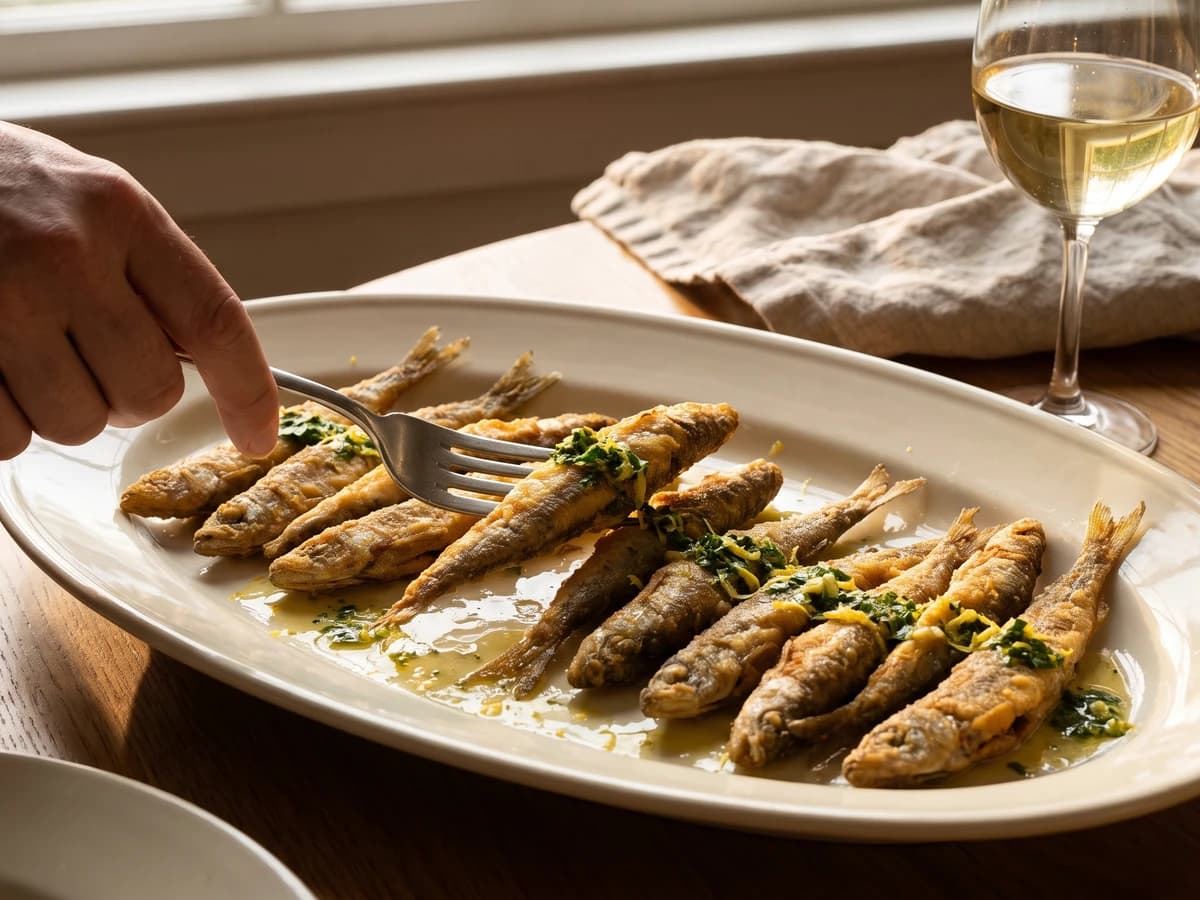
Éperlans à l’Anglaise turns small fish into a lesson in disciplined coating: boned smelts under a close, crisp crumb, pan-fried in clarified butter and finished with bright, half-melted maître d’hôtel butter.

Chef Juliette
Tiny smelts, shallot, mushrooms, white wine, gratin sauce, and fine bread raspings meet a fierce oven, where the fish must turn tender in the same breath the buttered crust bronzes.