
Chef Juliette
John Dory (St. Pierre)
John Dory has the delicacy of sole and the firmness of turbot. A light flouring, a quick butter sauté, and nut-brown beurre noisette show exactly why looks never mattered.
A cooking platform built around craft, culture, and the stories behind what we eat.
Created by Chef Juliette
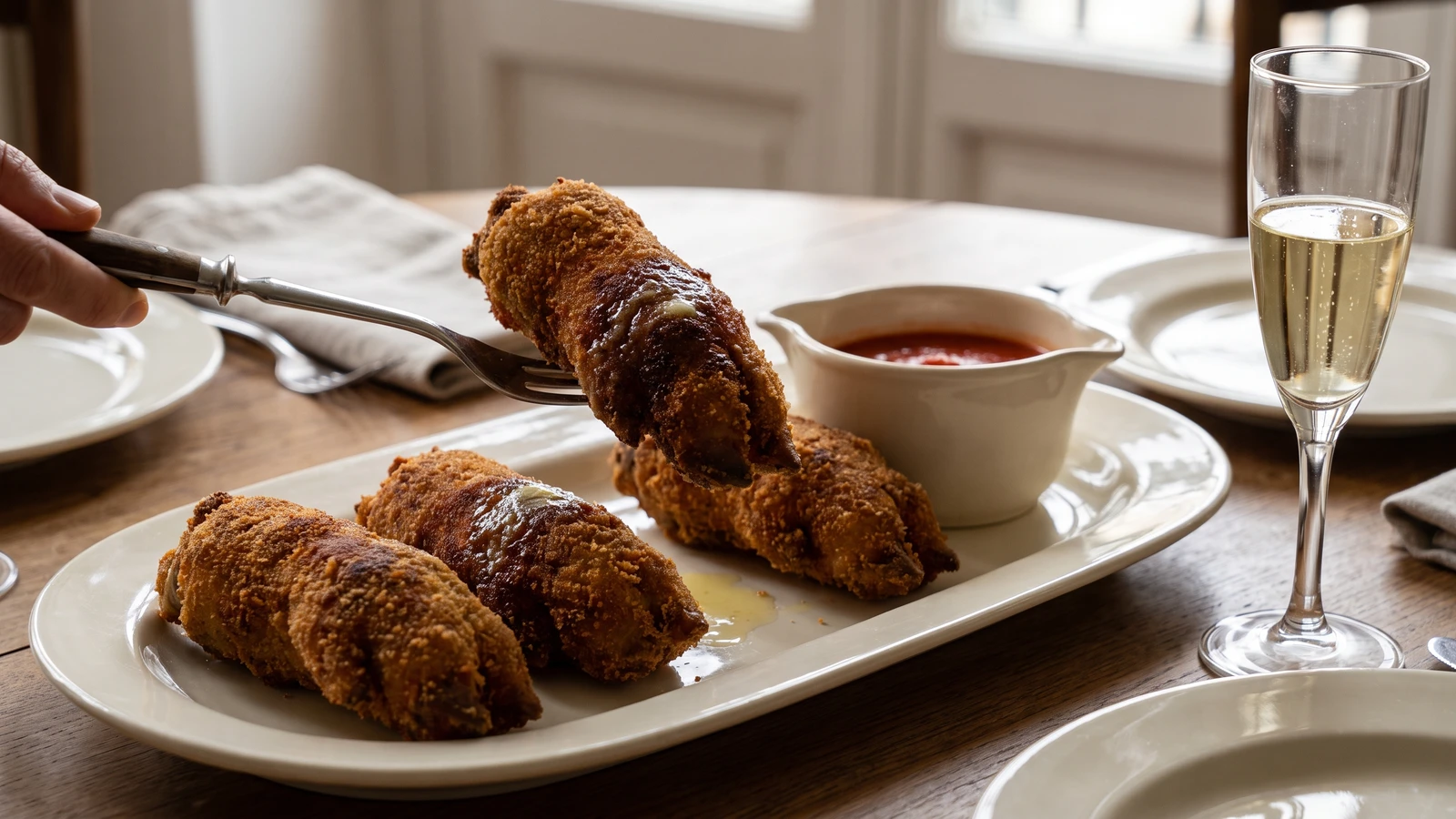
Based on No. 1404, Pieds de Porc Panes, from Le Guide Culinaire (1907) by Auguste Escoffier
Pieds de porc panés teach two heats: a fierce start for a crisp buttered crust, then gentle warmth through the gelatin-rich center, served plain or with tomato purée apart.
Pieds de porc panés (breaded pig’s trotters) teach the discipline of two heats. The grate must be fiercely hot so the buttered crumb sets at once, but the cooking after that must be gentle enough to warm the gelatin-rich foot without blackening its coat. The one true thing to know before touching a pan is that the feet must already be completely cooked, cold, and breaded. This grill is a finish, not a tenderizing fire.
The original entry assumed a brigade had cooked, chilled, and breaded the trotters before service, with a charcoal grill kept ready for the final order. At home, a good butcher handles that preliminary work, and a preheated wire rack under the broiler stands in honestly for both grill and salamander. The preliminary cooking is scaffolding that this entry leaves outside the recipe; the generous butter, hot grate, gentle finish, and careful turning are the dish itself, so every one stays. Four trotters make four servings, scaled for one cook, one stove, one evening.
Done properly, the crumb is deep butter-gold and crisp, while the center remains yielding and rich with gelatin. Serve the trotters plainly or offer smooth tomato purée in a separate sauceboat, never poured over the crust. The step that decides everything is the first turn: wait until the coating has seized and releases cleanly before you move a trotter.
Breaded, grilled pig’s trotters are most closely tied to Sainte-Menehould, in the Argonne country of Champagne, where inns served feet cooked for hours, cooled, crumbed, and browned to order. The classical repertoire carried that service from the regional table to the professional grill while keeping its logic intact: long cooking makes the foot tender, while the final grill makes it crisp. The common mistake is to imagine that the grill cooks the trotter; it only reheats and bronzes work already done.
Quantity
4 (about 3½ lb / 1.6 kg total)
butcher-prepared and kept whole
Quantity
½ cup (120 ml / 113 g)
melted
Quantity
1 cup (240 ml / 245 g)
warmed and served separately
| Ingredient | Quantity |
|---|---|
| fully cooked, chilled, breaded pig’s trottersbutcher-prepared and kept whole | 4 (about 3½ lb / 1.6 kg total) |
| unsalted buttermelted | ½ cup (120 ml / 113 g) |
| finished smooth tomato purée (optional)warmed and served separately | 1 cup (240 ml / 245 g) |
Keep the trotters chilled until the grill is ready, because cold gelatin gives them enough structure to survive turning. Confirm that they are fully cooked until yielding, firmly chilled, and already breaded. If they are raw or merely blanched, stop; this short finishing method cannot make them tender or safe. Press any loose patches of crumb gently back into place with a dry palm.
Set an oven rack about 6 inches (15 cm) below the broiler. Fit a sturdy ovenproof wire rack inside a rimmed sheet pan and preheat both under a high broiler for 8 minutes. The hot metal gives the coating the very hot grate required by the source; moving the pan farther from the element after the crust sets supplies the gentler finishing heat.
Melt the butter over low heat without letting it color. Reserve about 2 tablespoons (30 ml / 28 g), then brush the rest copiously over every surface of the trotters. Copiously is the instruction, and it matters: butter carries the heat into the crumbs and gives them their bronze coat. Using a wide spatula underneath and tongs only to steady each foot, place the trotters on the hot rack with space between them.
Broil on high for 2 to 4 minutes, watching continuously, until the upper coating looks dry, deep butter-gold, and firmly set. Move the pan to about 10 inches (25 cm) below the element or reduce the broiler to low. Slide the spatula completely beneath each trotter, steady it with the tongs, and turn without squeezing. Brush with the reserved butter and finish gently for 8 to 12 minutes, turning once more only if needed, until the center is thoroughly hot and registers 165°F (74°C) in the thickest flesh away from bone. If the crumbs darken before the center is hot, move the pan into a 350°F (180°C) oven for 5 to 8 minutes. If a patch tears, stop turning, face the damaged area upward, press the loose coating back gently, and let the softer heat set it. Ça se rattrape.
Transfer the trotters to a warm platter with the same spatula-and-tongs support. Serve them at once, plain as the source first directs, or bring the warm tomato purée separately in a small sauceboat. Do not pour it over the trotters, because the crisp coating would soften before the first bite. No garnish is needed. À table!
1 serving (about 310g)
Culinary guides, cultural storytelling, and the editorial depth that makes cooking meaningful.
Discover Culinary ExplorerChef Juliette
John Dory has the delicacy of sole and the firmness of turbot. A light flouring, a quick butter sauté, and nut-brown beurre noisette show exactly why looks never mattered.

Chef Juliette
Fresh haddock proves its delicacy in the meunière pan: a fine flour crust, moist pearly flakes, and beurre noisette sharpened with lemon and parsley, ready from one skillet in half an hour.
Chef Juliette
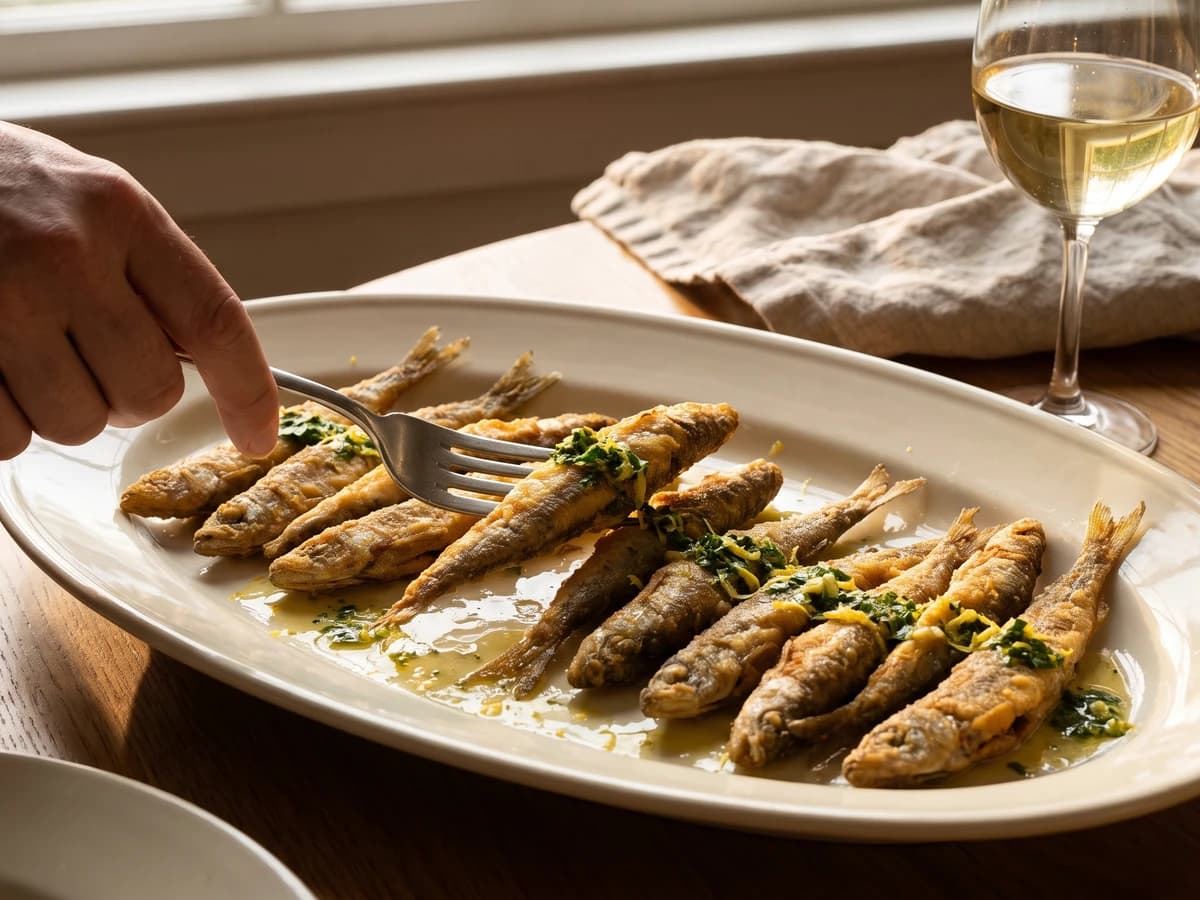
Éperlans à l’Anglaise turns small fish into a lesson in disciplined coating: boned smelts under a close, crisp crumb, pan-fried in clarified butter and finished with bright, half-melted maître d’hôtel butter.

Chef Juliette
Tiny smelts, shallot, mushrooms, white wine, gratin sauce, and fine bread raspings meet a fierce oven, where the fish must turn tender in the same breath the buttered crust bronzes.