
Chef Juliette
John Dory (St. Pierre)
John Dory has the delicacy of sole and the firmness of turbot. A light flouring, a quick butter sauté, and nut-brown beurre noisette show exactly why looks never mattered.
A cooking platform built around craft, culture, and the stories behind what we eat.

Created by Chef Juliette
Based on No. 1402, Oreilles à la Sainte Menehould, from Le Guide Culinaire (1907) by Auguste Escoffier
Oreilles à la Sainte-Menehould turns a humble cut into a lesson in patience: pig's ears poached tender, chilled firm, mustard-coated, buttered, crumbed, and grilled gently until the crust is bronze and crisp.
Oreilles à la Sainte-Menehould (Sainte-Menehould-style pig's ears) teaches that texture comes in two acts. The poach makes the cartilage yielding and rich; the gentle grill gives the mustard-and-raspings crust its bronze crispness. Before you touch a pan, know the one true thing: the ears must be completely tender before they cool, because the grill can crisp them but it cannot soften them.
The old entry assumed a garde-manger had already delivered the ears cooked and cold, a stockpot of aromatic liquor never left the fire, raspings waited in a bin, and a salamander stood ready for the final colouring. At home, one pot of lightly aromatic water does the poaching, finely grated dry bread replaces the raspings bin, and a low broiler with the rack set well below its element replaces the salamander. No saucier is needed because the source serves the ears plain, with apple sauce only as a separate accompaniment. Four ears make four generous servings. One cook, one stove, one evening.
Cleaning, blanching, and lightly pressing the ears are practical home-kitchen scaffolding. The cooling, lengthwise cut, Dijon mustard, melted butter, fine crumbs, and gentle grilling are the dish itself, so that sequence stays untouched. Give the poach all the time it asks for; tenderness before chilling is the step that decides everything.
Oreilles à la Sainte-Menehould belong to Sainte-Menehould in the Marne, at Champagne's eastern edge, where patient cooking transformed the pig's firm extremities into prized table food. In the classical vocabulary, à la Sainte-Menehould became a precise working method: cook until thoroughly tender, cool, coat with mustard and crumbs, then grill gently. The town's pigs' feet are better known, but the ears follow the same local grammar and traditionally arrive plain, with apple sauce served apart rather than poured over their crust.
Quantity
4 large (about 1¾ lb / 800 g)
well cleaned
Quantity
3 quarts (2.8 L / 2.8 kg), plus more for blanching
Quantity
1 tablespoon (15 ml / 18 g)
Quantity
1 medium
quartered
Quantity
1 medium
cut into thick pieces
Quantity
1
Quantity
8
Quantity
¼ cup (60 ml / 65 g)
Quantity
3 tablespoons (45 ml / 43 g)
melted
Quantity
¾ cup (180 ml / 75 g)
Quantity
1½ cups (360 ml / 375 g)
for serving
| Ingredient | Quantity |
|---|---|
| pig's earswell cleaned | 4 large (about 1¾ lb / 800 g) |
| cold water | 3 quarts (2.8 L / 2.8 kg), plus more for blanching |
| fine sea salt | 1 tablespoon (15 ml / 18 g) |
| yellow onionquartered | 1 medium |
| carrotcut into thick pieces | 1 medium |
| bouquet garni of parsley stems, thyme, and bay leaf | 1 |
| black peppercorns | 8 |
| Dijon mustard | ¼ cup (60 ml / 65 g) |
| unsalted buttermelted | 3 tablespoons (45 ml / 43 g) |
| fine dry breadcrumbs or raspings | ¾ cup (180 ml / 75 g) |
| unsweetened apple sauce (optional)for serving | 1½ cups (360 ml / 375 g) |
Inspect the ears carefully, removing any remaining hairs and scraping away discoloured patches. Rinse inside every fold. Put the ears in the pot, cover generously with fresh cold water, and bring to a boil for 5 minutes. Drain, rinse the ears, and wash the pot. This blanching is useful home-kitchen scaffolding: it clears away residue and gives the final poaching liquor a clean taste.
Return the blanched ears to the clean pot with the measured cold water, salt, onion, carrot, bouquet garni, and peppercorns. Bring the liquid just to a simmer, skim the surface, then lower the heat until only an occasional bubble rises. Partially cover and cook for 2½ to 3 hours, adding a little hot water if the ears cease to be submerged. They are ready when a skewer passes through the thick base without a rubbery push and the tip bends easily. The clock advises; the skewer decides. If they remain resistant, continue in 20-minute intervals. A grill cannot repair an undercooked ear.
Lift the tender ears onto a parchment-lined tray and discard the poaching liquor and aromatics. Cover with a second sheet of parchment, set another tray on top, and add a light weight, about 2 lb / 900 g. Let them cool for 20 minutes, then refrigerate under the weight for about 1 hour, until cold and firm. Pat them thoroughly dry and cut each ear lengthwise from tip to base into two long pieces. The light pressing keeps them flat enough to grill evenly without crushing their character.
Set an oven rack about 8 inches / 20 cm below the broiler and preheat the broiler on low. Arrange the ear halves on an oven-safe rack set over a rimmed sheet pan. Brush both sides evenly with Dijon mustard, brush or trickle over the melted butter, then press on a thin, complete layer of raspings. Mustard first, butter second, crumbs last: that sequence makes the crust. If the coating slides, the ears were damp or received too much butter. Pat on more dry crumbs and chill them for 10 minutes. Ça se rattrape.
Broil the ears gently for 6 to 8 minutes on the first side, then turn them carefully and grill the second side for another 5 to 7 minutes. They should be hot through, at least 165°F / 74°C at the thick base, with a dry bronze crust, crisp edges, and small points of melted butter gleaming between the crumbs. Distance is your control here. If one patch darkens too quickly, cover it with a small piece of foil and lower the tray while the rest catches up.
Transfer the ears to a warm platter and serve them immediately, two long halves per person. They are traditionally served plain. If you offer the apple sauce, put it in a bowl beside the platter so each person takes a spoonful and the crisp crust remains crisp. À table!
1 serving (about 290g)
Culinary guides, cultural storytelling, and the editorial depth that makes cooking meaningful.
Discover Culinary ExplorerChef Juliette
John Dory has the delicacy of sole and the firmness of turbot. A light flouring, a quick butter sauté, and nut-brown beurre noisette show exactly why looks never mattered.

Chef Juliette
Fresh haddock proves its delicacy in the meunière pan: a fine flour crust, moist pearly flakes, and beurre noisette sharpened with lemon and parsley, ready from one skillet in half an hour.
Chef Juliette
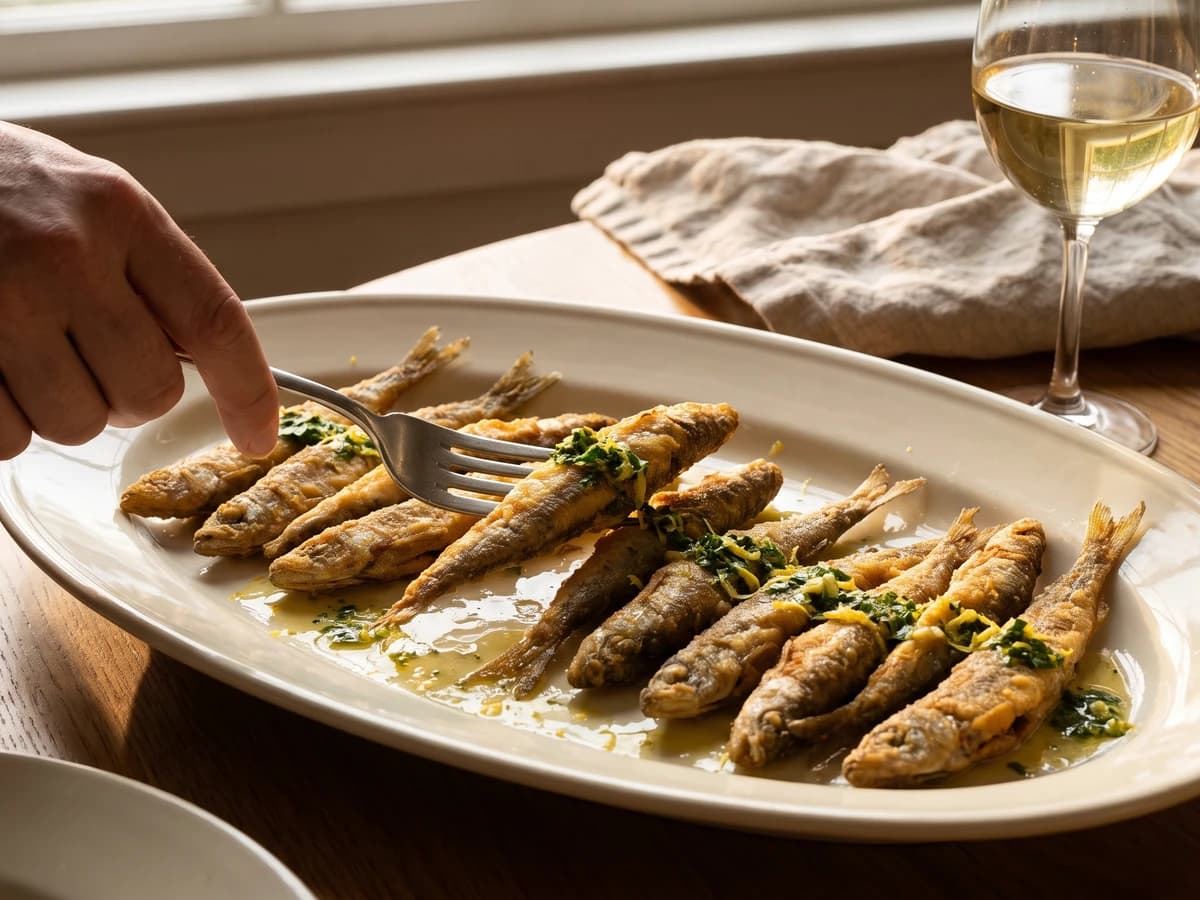
Éperlans à l’Anglaise turns small fish into a lesson in disciplined coating: boned smelts under a close, crisp crumb, pan-fried in clarified butter and finished with bright, half-melted maître d’hôtel butter.

Chef Juliette
Tiny smelts, shallot, mushrooms, white wine, gratin sauce, and fine bread raspings meet a fierce oven, where the fish must turn tender in the same breath the buttered crust bronzes.